Archives for category: pottery

brush standW70xD50xH20mm, China

Continuing with the stationary items, this ceramic ware is a brush holder.  A holder for the small brush, unlike the previous brush rests where they are lay horizontally, the brush here are inserted into the small holes and left standing.  The small container is for keeping a bit of water in case the brush has gotten a bit dried.  This kind of brush stand are usually used by the people who are writing all the time, e.g. the doctor, the pawn shop owner, the restaurant manager etc.

arm rest

W50xL180xH50mm, China

Any guess of what this piece of bamboo is for?

You probably have one of those ergonomic mouse pad with a gel support at the wrist?  Well, this is the traditional waist rest for Chinese calligraphy, not only does it support the arm, it also prevents the ink from rubbing onto the sleeves and the perspiration of the hand from making the paper moist.  This member of the stationary is called a “Bi Ge”, arm rest.  The name “Bi Ge” apparently came from the imperial chamber for secret books, also pronounced as “Bi Ge”.

Now for the second surprise, the material of this Bi Ge is not bamboo but ceramic!

bowl

bowlDIA120xH50mm, China

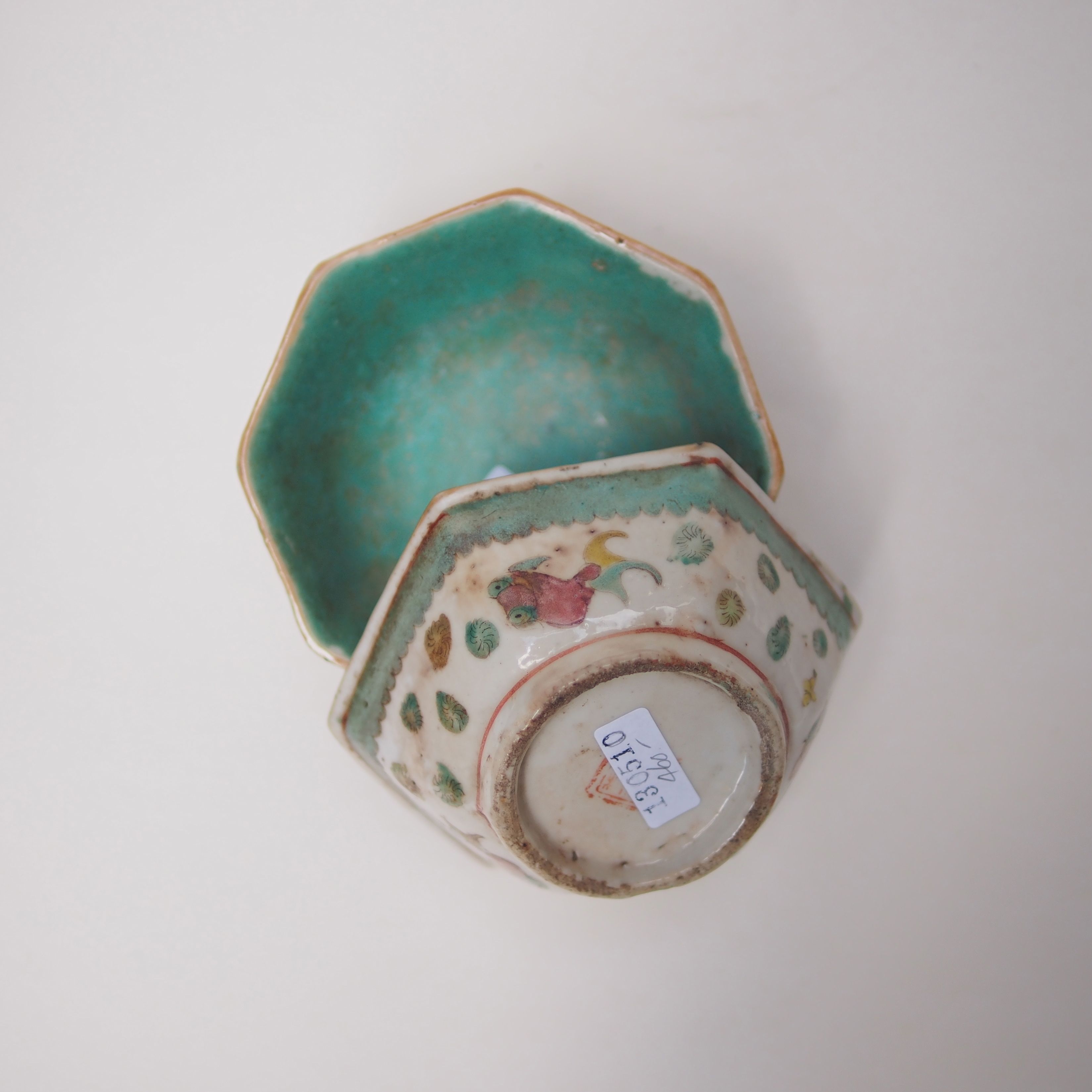
This pair of octagonal bowls are decorated with goldfish, a traditional blessing symbol.  Gold 金 (Jin) Fish 魚 (Yu), the word “fish” shares the same pronunciation with the word surplus 餘 (Yu).  A lot of chinese decoration symbols follow the play of homophone, these might all be a bit superstitious and arbitrary but in the days of old rural China when  life is hard, these kind of blessing is an expression hope for a better life.  Even in today’s world, these kind of subtle tradition carries on e.g. in Hong Kong, an Empty 空(Hung) Residence 宅 (Zaak) would be call a Blessed 吉(Ji) Residence, as the word “emtpy” 空(Hung) has the same pronunciation as 兇 (Hung) – a murder house.  Changing a word that make no sense to the original meaning just for the sake of avoiding a bad homophone.

Anyway, ain’t these goldfish the cutest?!

DIA190xH160mm, China

 This beautiful painted pot is a container for rice porridge (congee), a nourishing dish for the elderly.  Though this is an object that would only be found in wealthy families, it seems that elaborated  decoration and the specific usage might have another reason other than the utilitarian one.  The Chinese name for the congee pot is 粥罐 “zhou guan” which has the same pronunciation as 做官 “zuo guan” (being a court official, which is the desire of all commoners).  For this reason, these shape of pots 罐 are view more highly than that of vases and though has an everyday function are highly decorative.  Congee also is a easily digested meal which promotes longevity.  In this sense the congee pot is seen as an item of blessing and thus had a special place in a household.

Now if you are interested in making congee to go with the pot, here is how they make it in the best congee place in Hong Kong.

And this is how you can make it at home in 5 mins!

lotus leaf vessel

DIA320xH240mm, Hong Kong

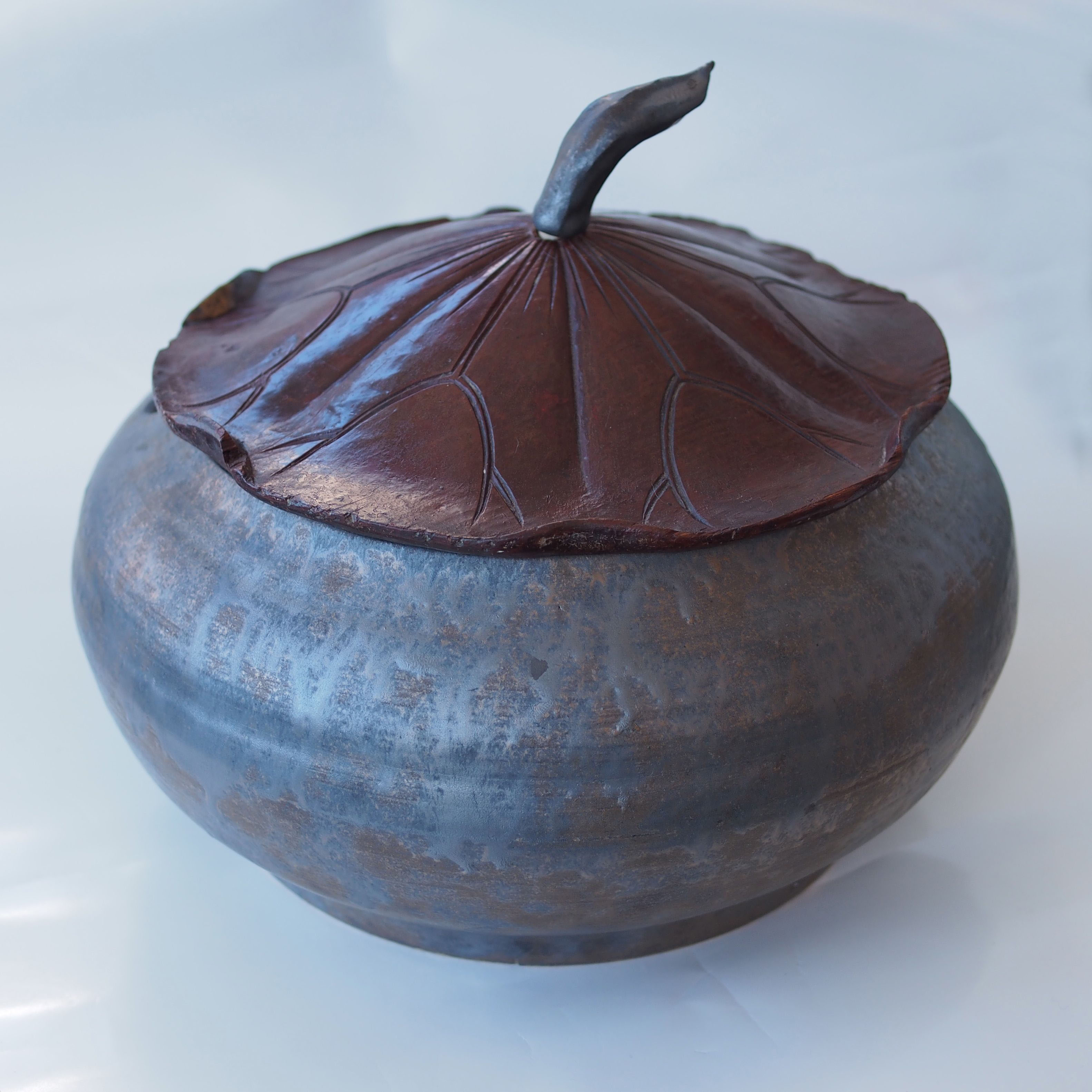
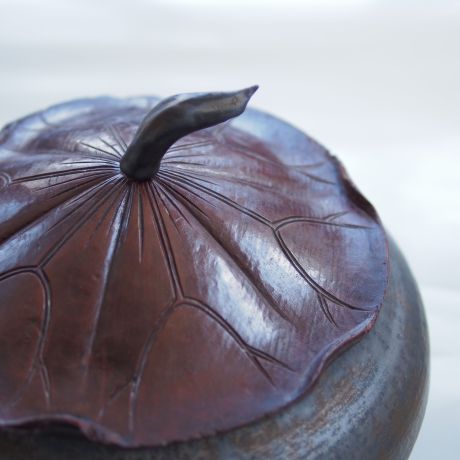
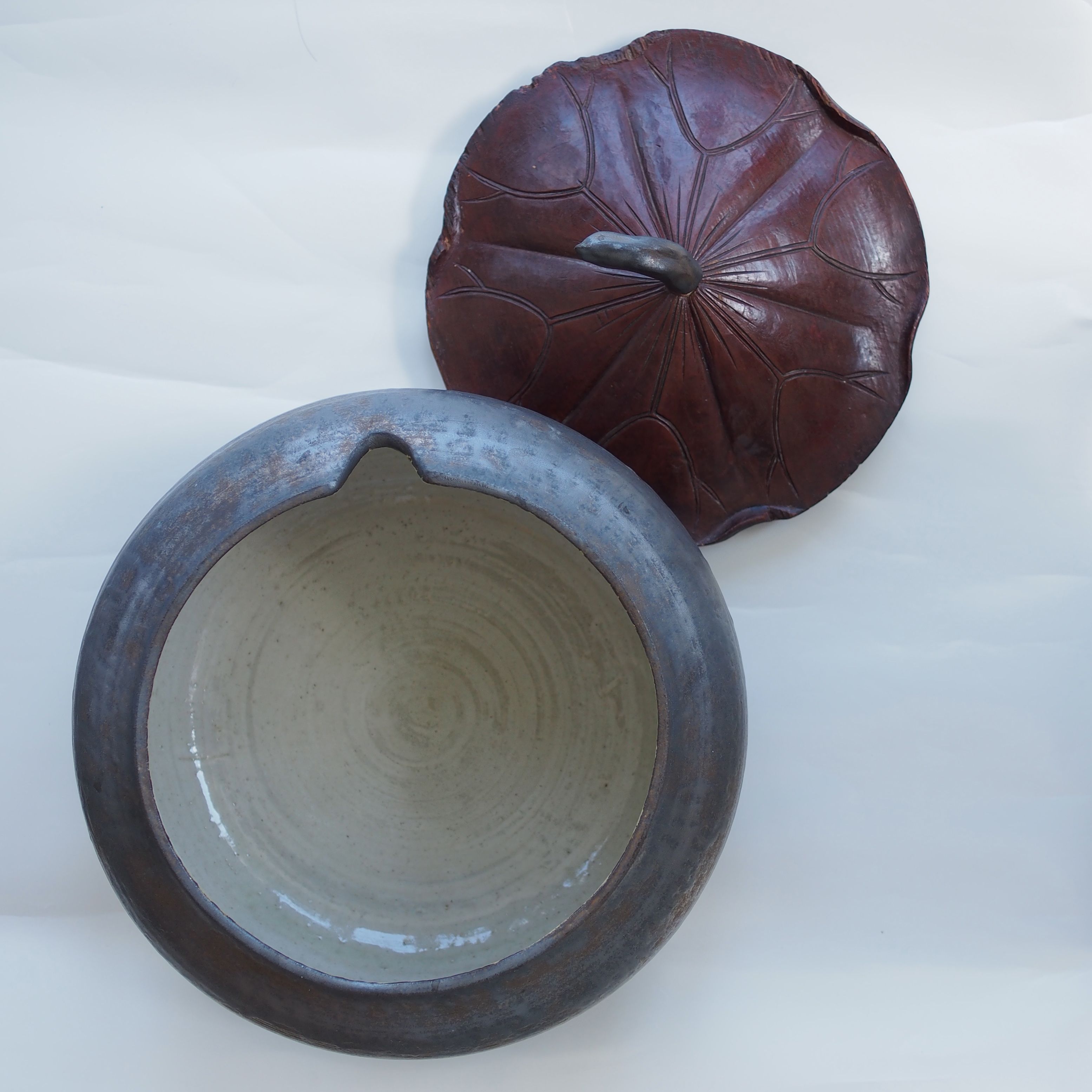
Remember the antique lotus leaf lid that was featured in last winter’s blog?  I started a pottery project of making a vessel to match the lid, after several versions this is the final version which I am most happy with.  It is ideal for serving soup and of course lotus leaf rice.

OLYMPUS DIGITAL CAMERAlotus lid

oil lampW90xD60xH200mm, China

 A figurine of a boy dressed in a du dou, a long life locklet and lifting a bowl on top of him.  The bowl is the oil container for the oil lamp while the boy being the stand.  The name of the lamp, “Boy Raising A Lamp” (童子舉燈) signified however, the lamp is referring only to the container itself.  This is a popular theme for Chinese oil lamp, of different material and for pottery different kilns.  This figurine is an example of the Ci Zhou kiln.  The name 童子舉燈 “Tong Zi Ju Deng” is taken as a blessing for the child of the family, the first three words 童子舉 is a name for a official tang dynasty exam for the gifted child of under 10 years of age, while the word 燈 “deng” is a homonym to the word 登”deng” meaning ascend, achieved.

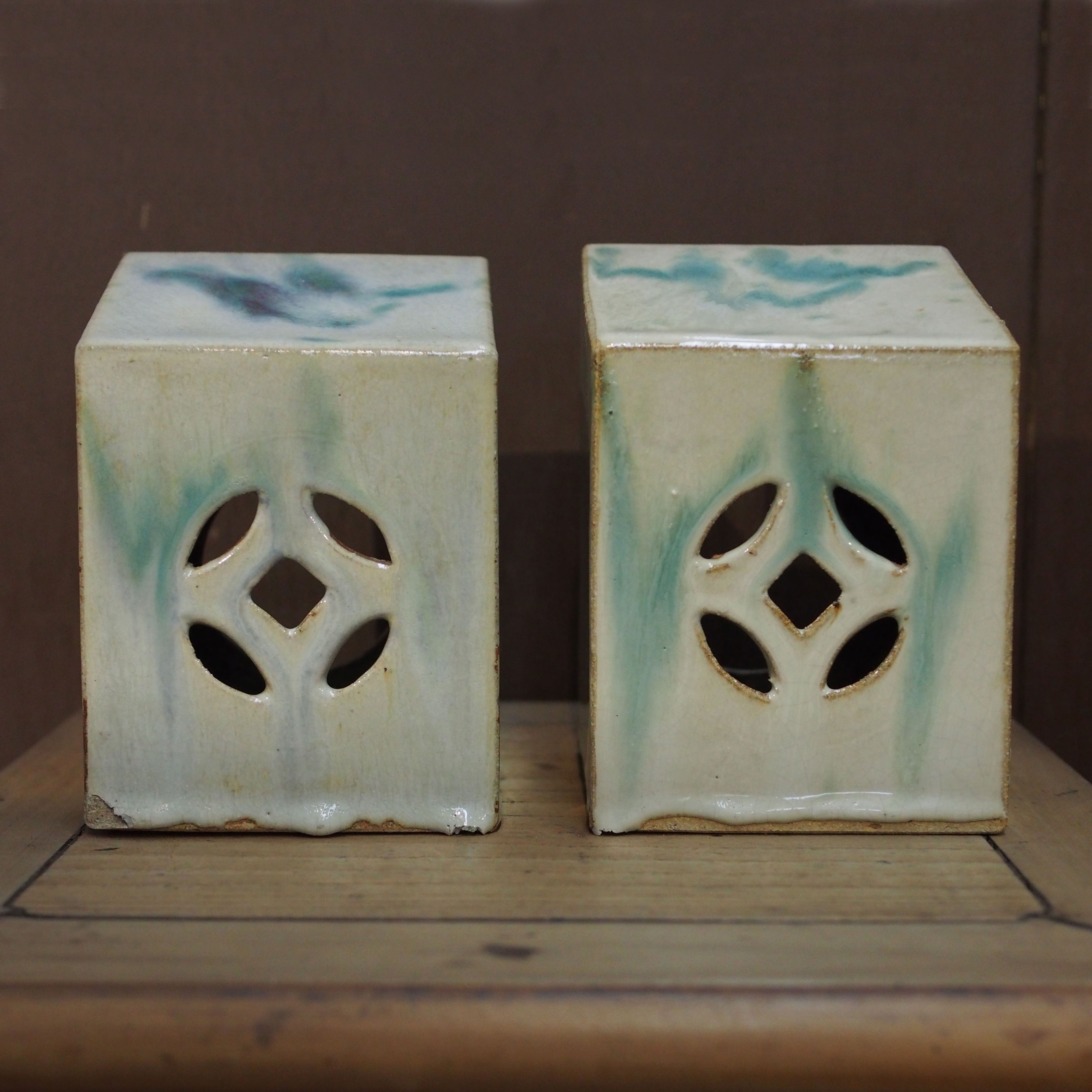
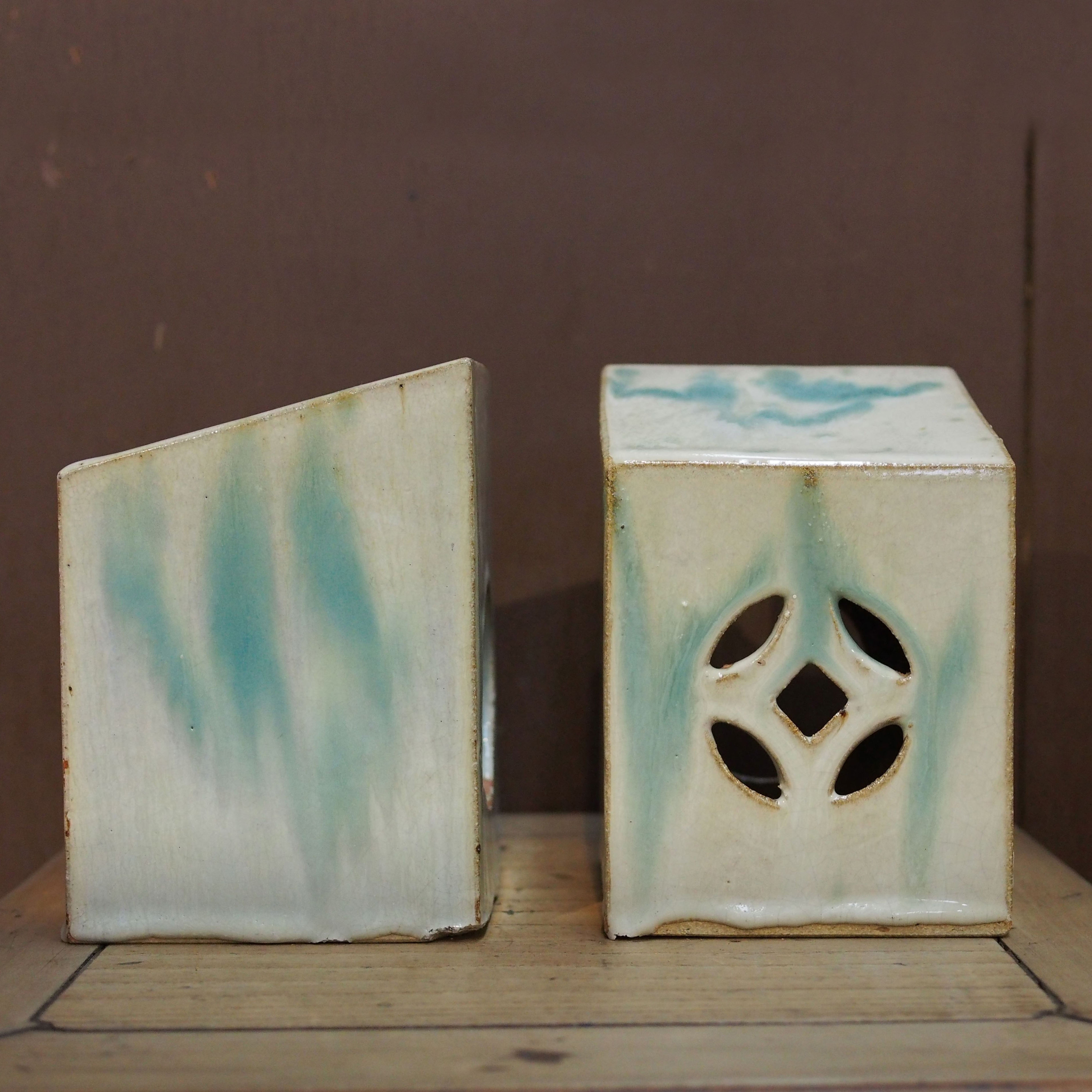
pillowpillowW120xD130xH180mm, China

This pair of very architectural objects are in fact a pair of ceramic pillows!  They have a running glaze which is typical of the Shi Wan kiln,  used for smoking opium, the airing holes which forms a pattern of an antique Chinese coin are used for ventilation, helping to keep the pillow cool.  I probably would not be able to be parted from the Tempurpedic but these would make lovely book ends.

bowlDIA125xH60mm, China

This bowl bring back a lot of childhood memory for me, I remember it containing this delicious red bean paste desert.

In the old days, these type of bowls are used by the hawker street stalls, “dai pai dong”, which has long been replaced by plastic bowls.  Tung Po, my favorite place, is probably the only dai pai dong that still using similar bowls.  The use of the bowls are not more sophisticated, they are chilled and beer is served for drinking challenges.

teapot

DIA100xH60mm, China

Tea drinking is a social activities but it can also be a personal indulgence.  This type of teapots were made to be drank directly from the sprout while holding the handle in the opposite direction with the sprout facing oneself.  They are much appreciated by the scholars, an object of desire to be fondle with by the eye, the touch and suckle of  fragrant tea.   It would perhaps be comparable to a beloved pipe which one would enjoy touching and mouthing.

teapot

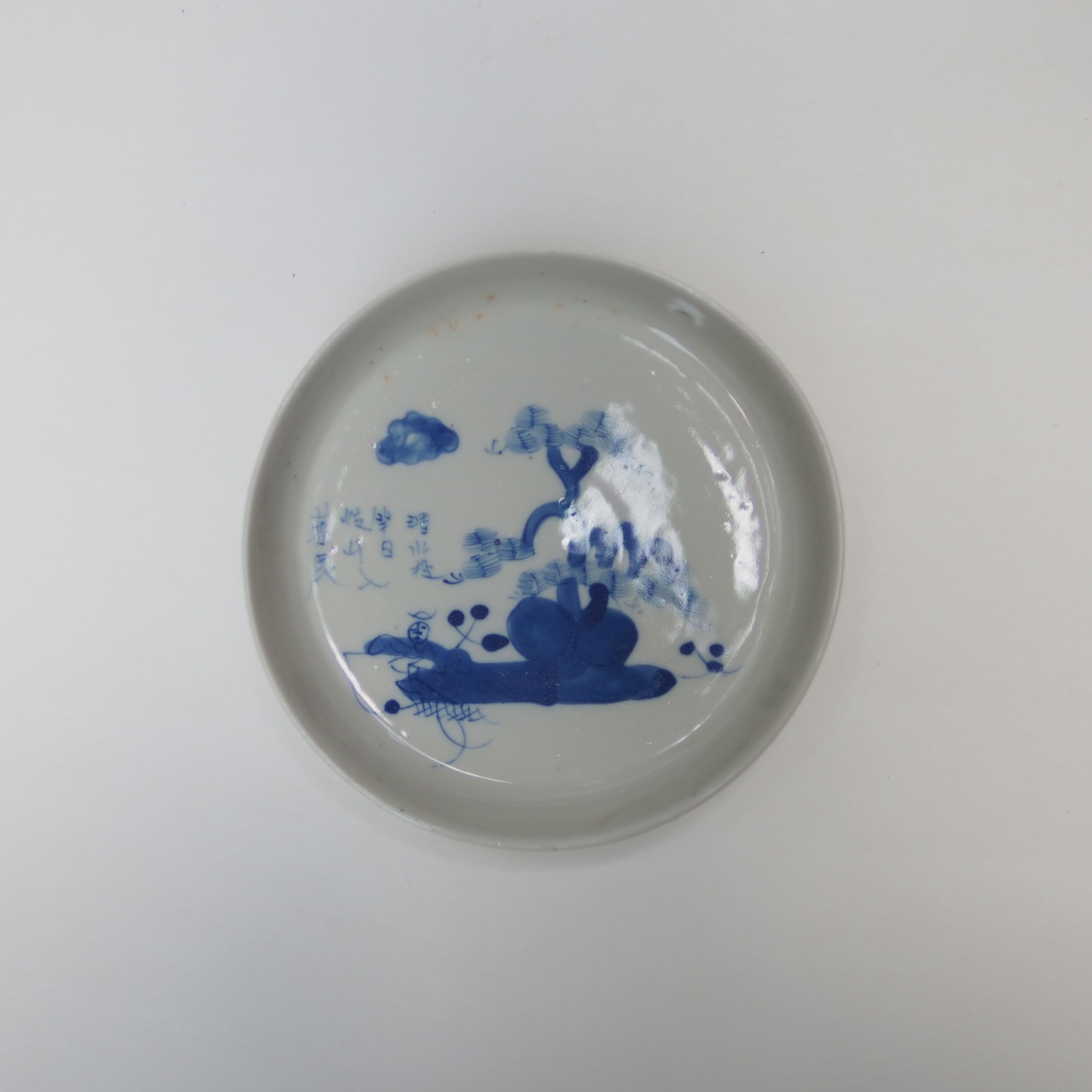
plateDIA135mm, China

On this blue and white porcelain plate is a pine tree and a man fishing.  This man is Jiang Zi Ya, a man who is famous for fishing with a straighten hook.  This practice is not a new fishing method or something to do with humane way of fishing but an ideology of this special man.  Fed up with the administration of the Emperor, Jiang retreated to a remote area where he began this special fishing practice.  Under the clear water, everyone can see that the hook is straighten and thought that he is either stupid or lazy, but Jiang believe that if the fish is willing, it will come to him.  And at this remote village, one day Wen came to him, from there Jiang assisted Wen become the new emperor of the Zhou Dynasty.  And as for most hero in China, Jiang became a saint.

This item is also available at the Pop-Up Gallery @Fringe Vault, a joint venture with SOIL (July 4 – 31)