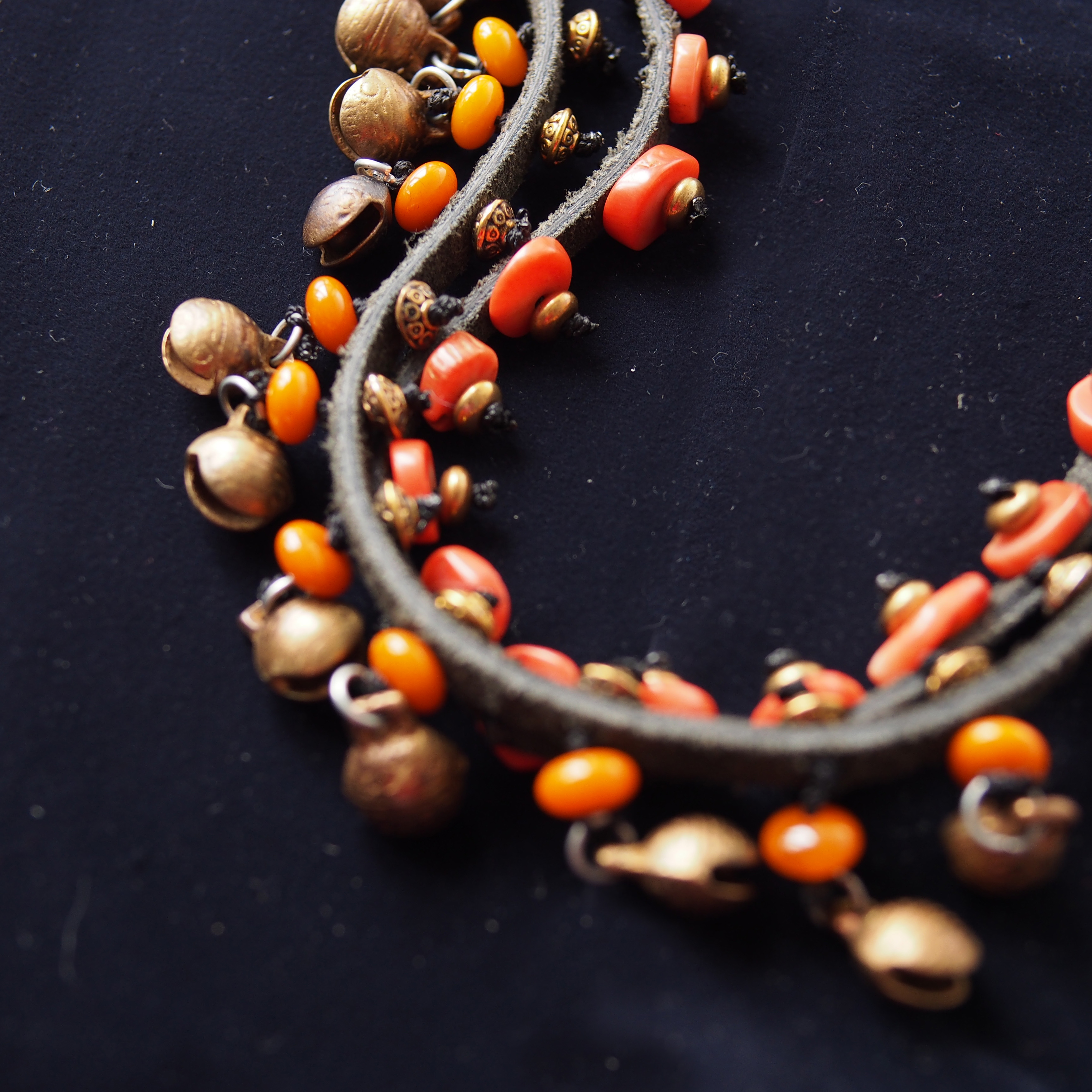
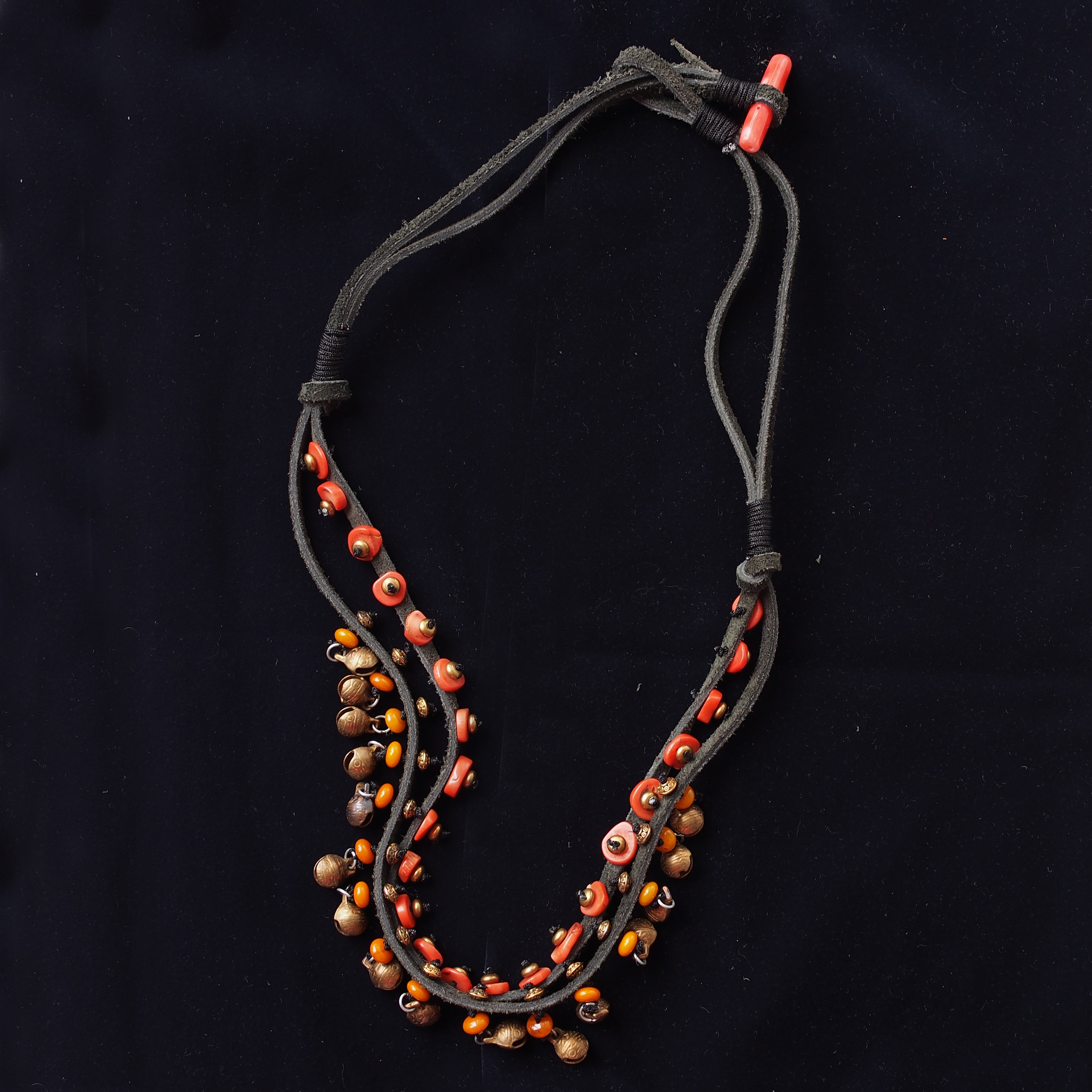
 DIA220mm, Hong Kong
A necklace of layering, of intertwining.
Like exotic fruits on a ivy.
Handmade and unique.
Something Old Something New
Collectible Jewellery Collection
DIA220mm, Hong Kong
A necklace of layering, of intertwining.
Like exotic fruits on a ivy.
Handmade and unique.
Something Old Something New
Collectible Jewellery Collection
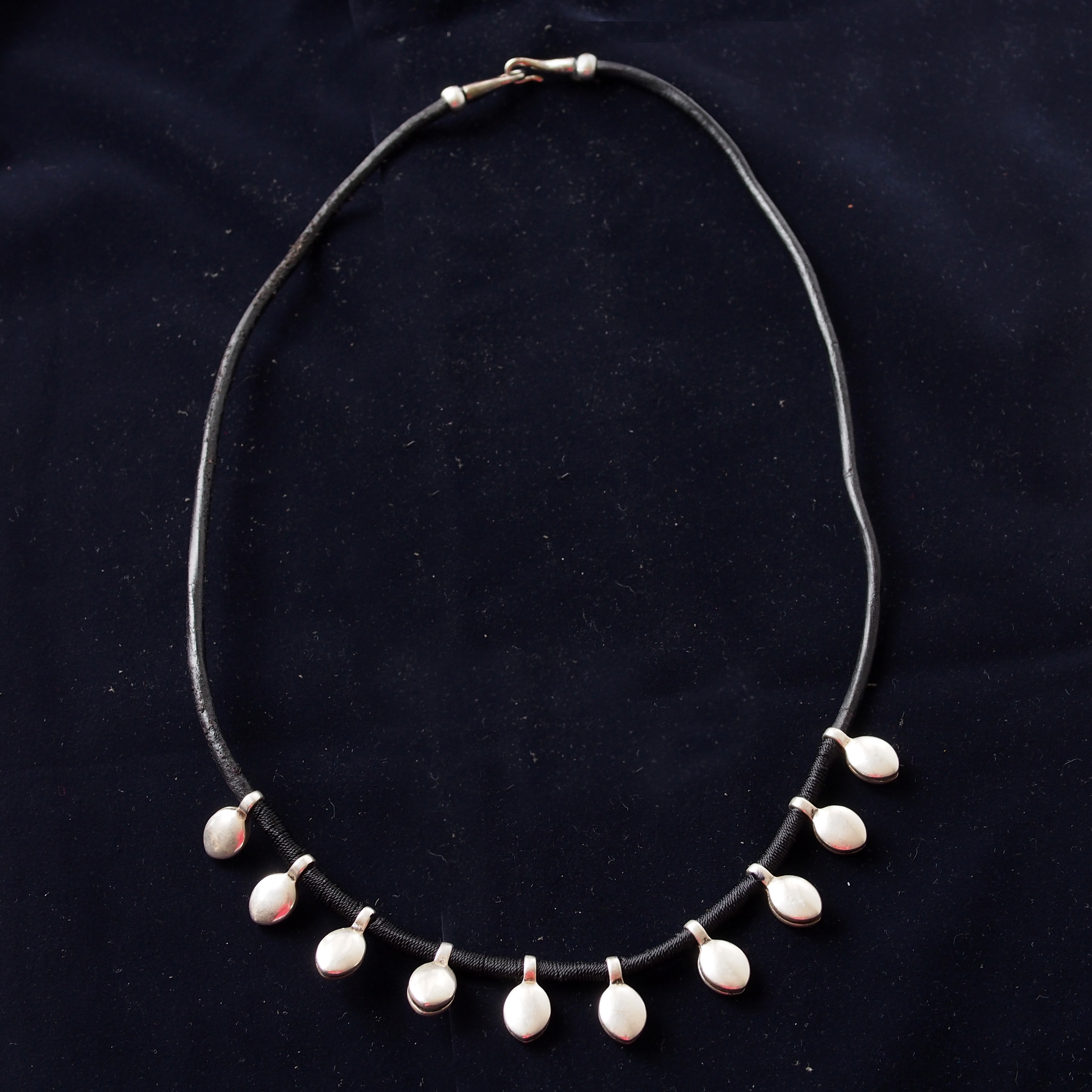
DIA210mm, Hong Kong
A minimum piece, ideal for jeans and leather.
Something Old Something New
Collectible Jewellery Collection
 DIA200mm, Hong Kong
New series of jewellery from the collectible jewellery collection.
Inspired by the traditional waist hanger which has various tools as both a fashionable and utilitarian accessories. In this piece, toothpicks, miniature incense shovels, small knives and a comb are part of the decoration. A decorative version of the Swiss army knife … ideal survival kit for the fashion conscious.
Something Old Something New
Collectible Jewellery Collection

W398xH380mm, Cambodia
This is a Nang Sbek Toch shadow puppet, the smaller of the 2 types of shadow puppet in Cambodia.
Nang Sbek Toch means “theatre of small hides”, these puppets are made out of cow hides which is cleaned, treated, tanned before it is ready for use. A paper template is designed, portion of the hides is then cut out for use; patterns of lines are chiseled out enhance the feature of the puppet. Outline of the puppet are then stained for appearance of the puppet itself, as unlike the Chinese shadow puppet that are thin and translucent, the colouring of the Cambodian puppet will not have an impact on the shadow itself.
(you might want to switch off the sound for this video)
Here is a beautiful photo documentation.
See our other shadow puppets.
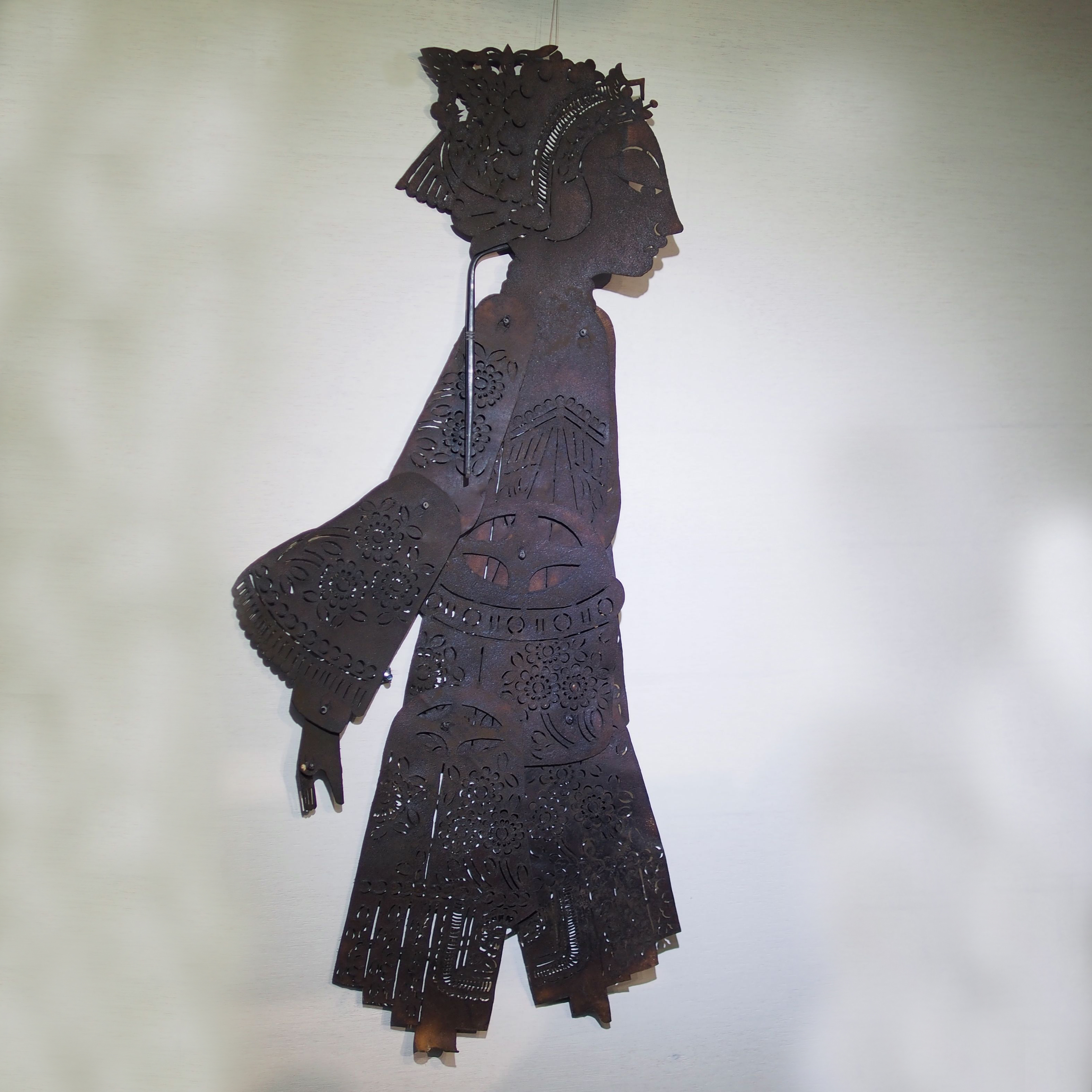 W200xH600mm, Indonesia

This shadow puppet came from a set we acquire from Indonesia, curiously the contained Indonesian characters as well as Chinese ones. Like this particular puppet, the head gear, the costume, the bounded feet, the facial features all points to a Chinese diva. I wonder if the set of shadow puppets were commissioned by a Chinese immigrant in Indonesia who is a bit home sick for Chinese shadow puppet. It became a fusion of the two, just as today’s wayang kilt some of which has departed from the traditional story of the Ramayana to include everyday events such as karaoke.

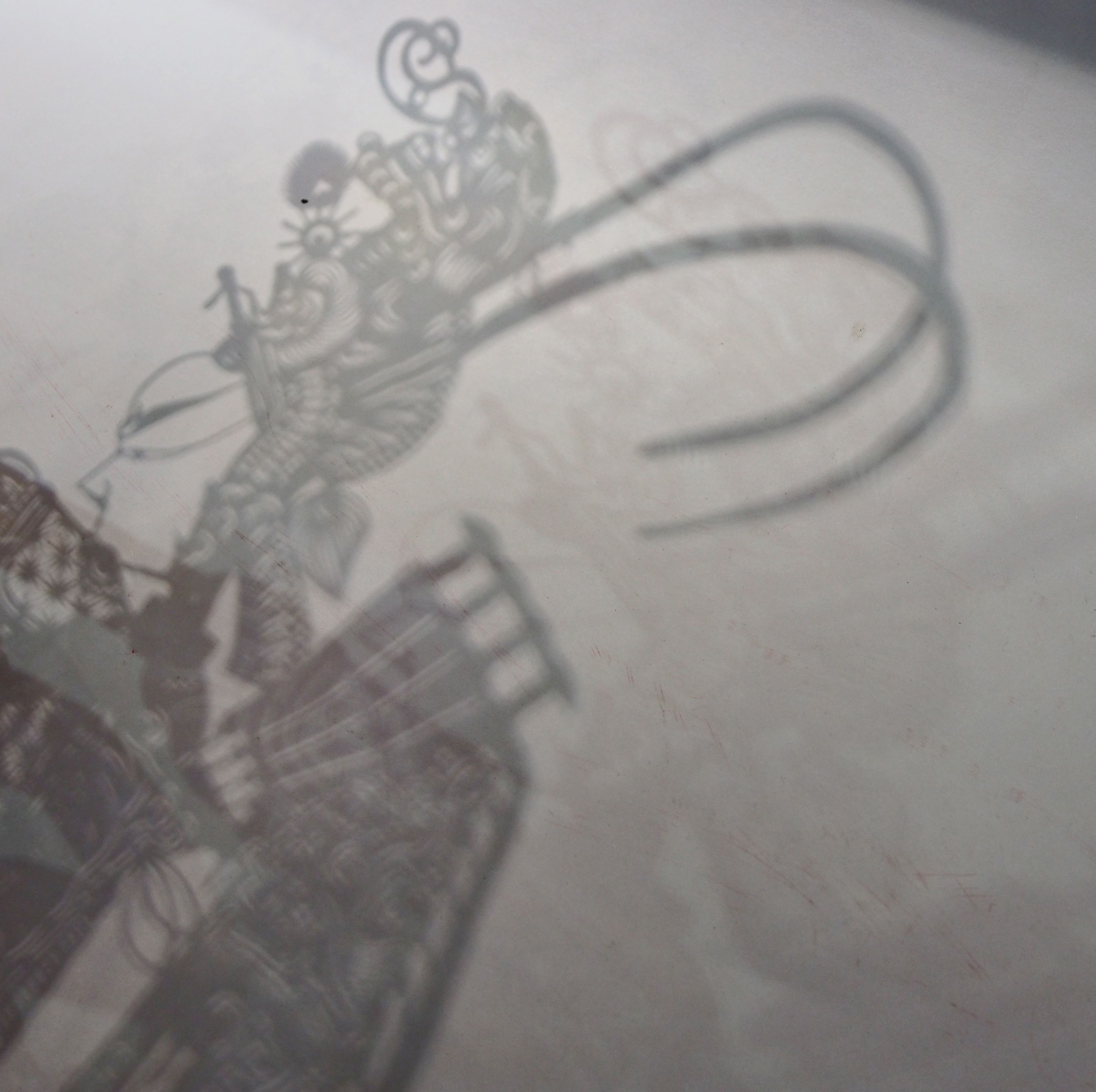
W150xH380mm, China
A warrior of the Hua county in the Shaan Xi province., it is said that Chinese shadow puppetry originated from this county. Shadow puppet theater started its form as a Taoist court ceremony where illusion, shadows, dreams and a bit of imagination formed the idea of after death for the ancient emperor. As time goes by, the religious ceremony took a form as entertainment for the emperor and thus shadow puppet theatre began. The fashion from the courts later was copied by the nobles and then the wealthy, and to the masses. The Hua school of shadow puppet are small and very finely made, it is believed that the tradition came from entertaining small party of the court.
 W210xH390mm, Indonesia
Buta Rambut Geni is character from the Javaness shadow puppet (Wayang Kulit), he is famous for his hair of fire which he able to burn anythign in its path. Symbolically, Rambut Geni is one of the 4 human desires, love and sensual engagement, which must be left behind and one departs from this world.
Behind the scene of the Wayang Kulit show.

DIA165mm, Hong Kong
A simple necklace with a handmade millefiori bead. The making of a millefiori bead is though not as simple …
COLLECTIBLE JEWELLERY
SOMETHING OLD SOMETHING NEW
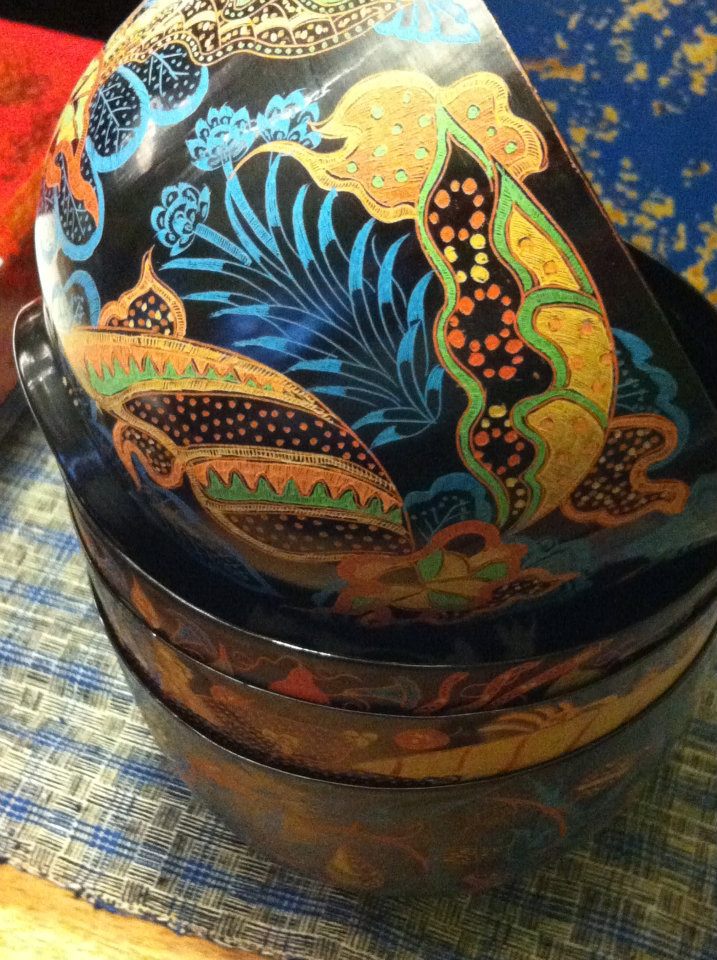 DIA130xH90mm, Myanmar
Veronica Gritsenko is a British-Ukrainian artist and scholar. In 2000 she set up the Black Elephant studio in Bagan, Burma and eventually developed her own unique technique and designs based on ancient methods and materials. Black Elephant Lacquer is collected by private connoisseurs and was acquired by the British Museum and The Royal Botanic Gardens Museum.
These bowls are made with horsehair woven in between very thin bamboo splints, with further application of lacquer mixed with rice husk ashes. Burma is famous for a special type of incised lacquerware called “yun” – It’s engraved with a sharp iron stylus and the incisions are filled with colouring matter to create a design.
Item from SOIL for the ASIAN FOLKCRAFT COLLECTION
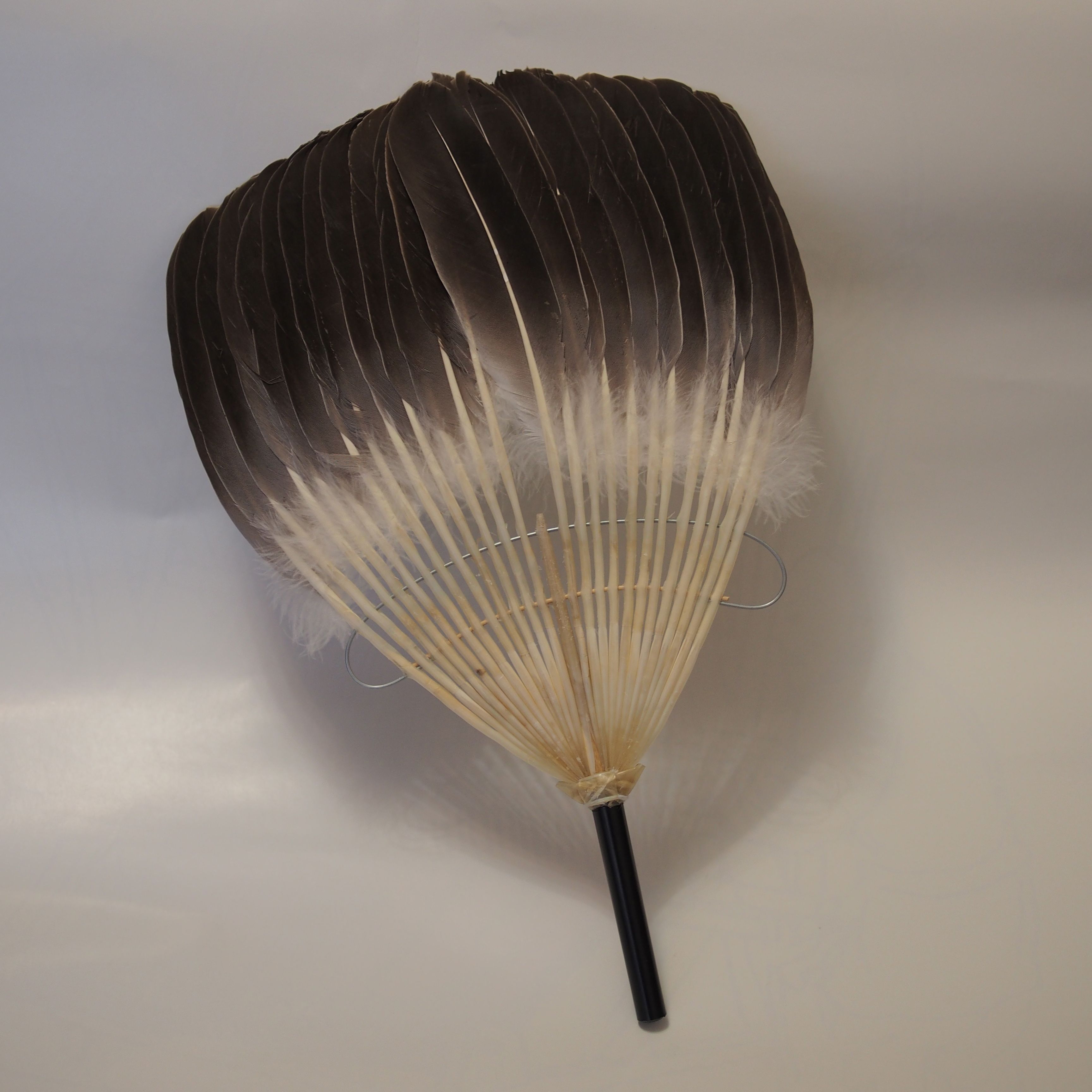 W250xH380mm, China
Before the introduction of the electrical fan, the hand held fan are essential household items. Poorer family would uses the palm leave fan, while the wealth ones with goose feather fans.
Goose feather fans has been associated with Zhu Ge Liang, the strategist of the San Guo period around 200AD. Since then, the goose feather fan took on also as a symbol of wisdom and power. There is the Chinese proverb “waving the goose feather fan” about the person who is the brain behind the show, the hand behind puppet.
 Mountain Folkcraft