Archives for category: container

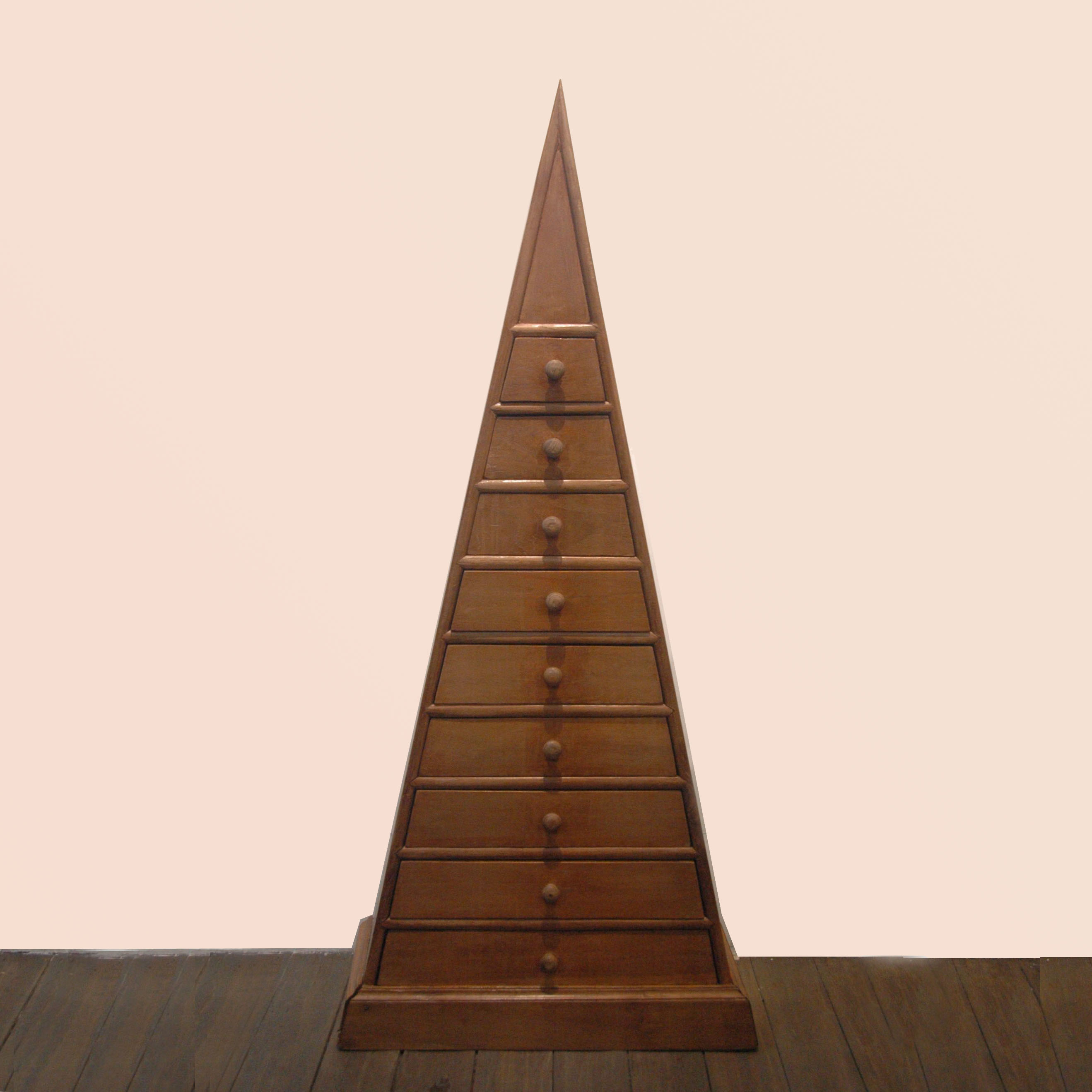
D170xW450xH1100mm

This item has been in the shop for as long as I can remember, being an architect I can see it as a concept for a skyscraper, a vertical city, etc.  But there is something more to it, it seems it really should belong to a fairy tale where these drawers open up to endless possibilities and magics.

Big Fish – L200xH120mm, China

A modern bag for childern, a small red fish for pocket money and a big fish for all the other goodies.  The small fish is like to the big fish, so however hard its tries it will always be swallowed by the big fish …

W50mmxD30mmxH70mm, China

In the old days, every morning the ink will be grind on the inkstone.  Water will be added so the ink stick will be dissolved, water is also added during the day to dilute the ink on the stone.  For the ease of controlling the flow water, the water drip was invented.

This water drip of child and carp figurine which would have been made for children; the composition is a traditional one of blessing, carp being resilient and full of vitality which is what every parents would wish for their child.    Also see our earlier entry for a different form of  water drip .

W40xD20xH50mm, China

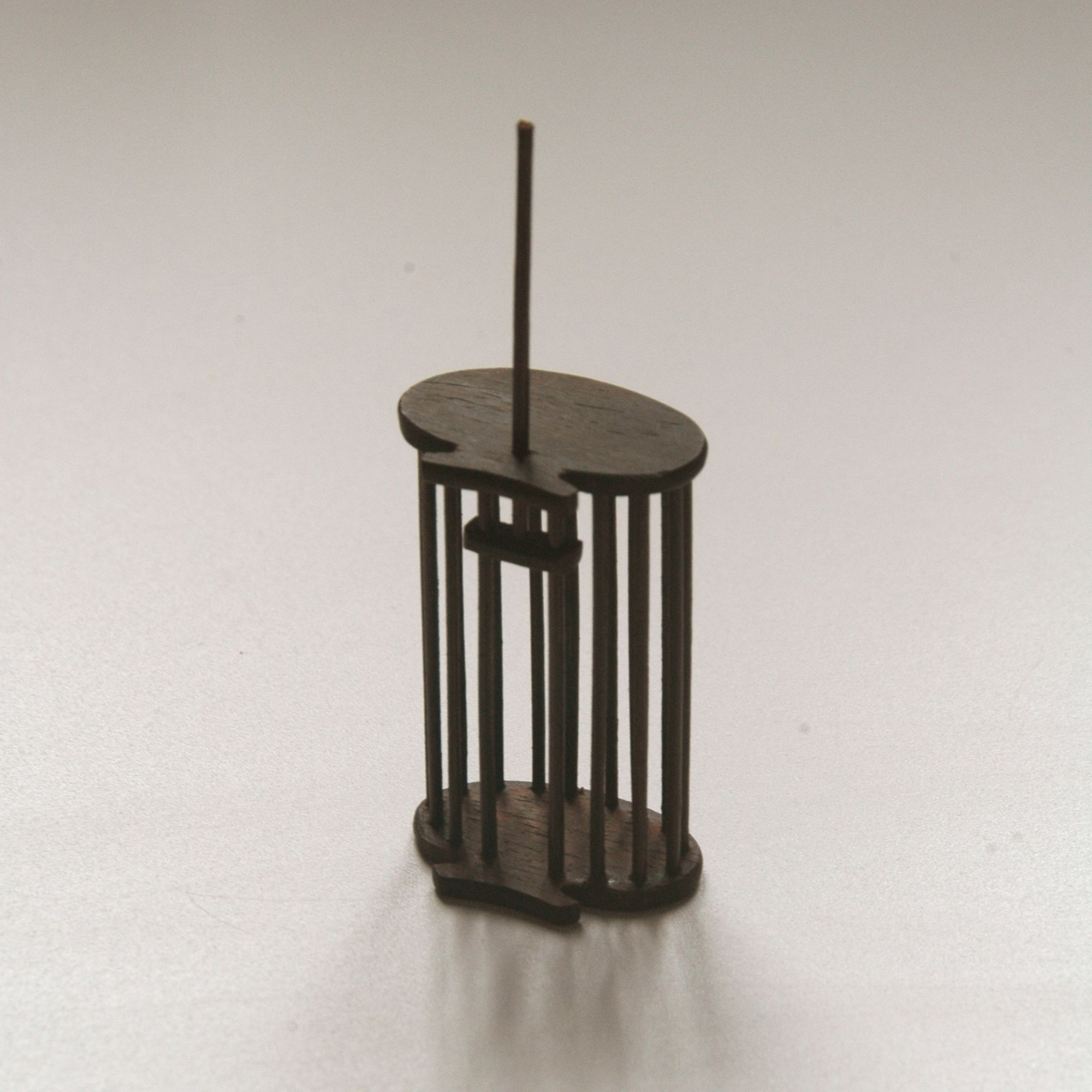
This is another type of bird feeder, a slight cruel one.  A live cricket or insect treat is put inside the cage which is then attached to the side of the bamboo bird cage, the gate is opened from the outside and here comes “dinner”!  The detail by the gate is for the attachment of the bamboo bar of the bird cage.

Click here for a more traditional bird feeder.

DIA40xH30mm, China

This tiny blue and white porcelain bowl is used for feeding the pet bird, the wooden detail on the side make it able to be attached to the bamboo bird cage (click to see).  The traditional bird feed includes; millet, crushed corn, peanut, sorghum, fruits, sunflower seed, perilla seed, mazi, foxtail millet.

W80xH180mm, Sumatra, Indonesia

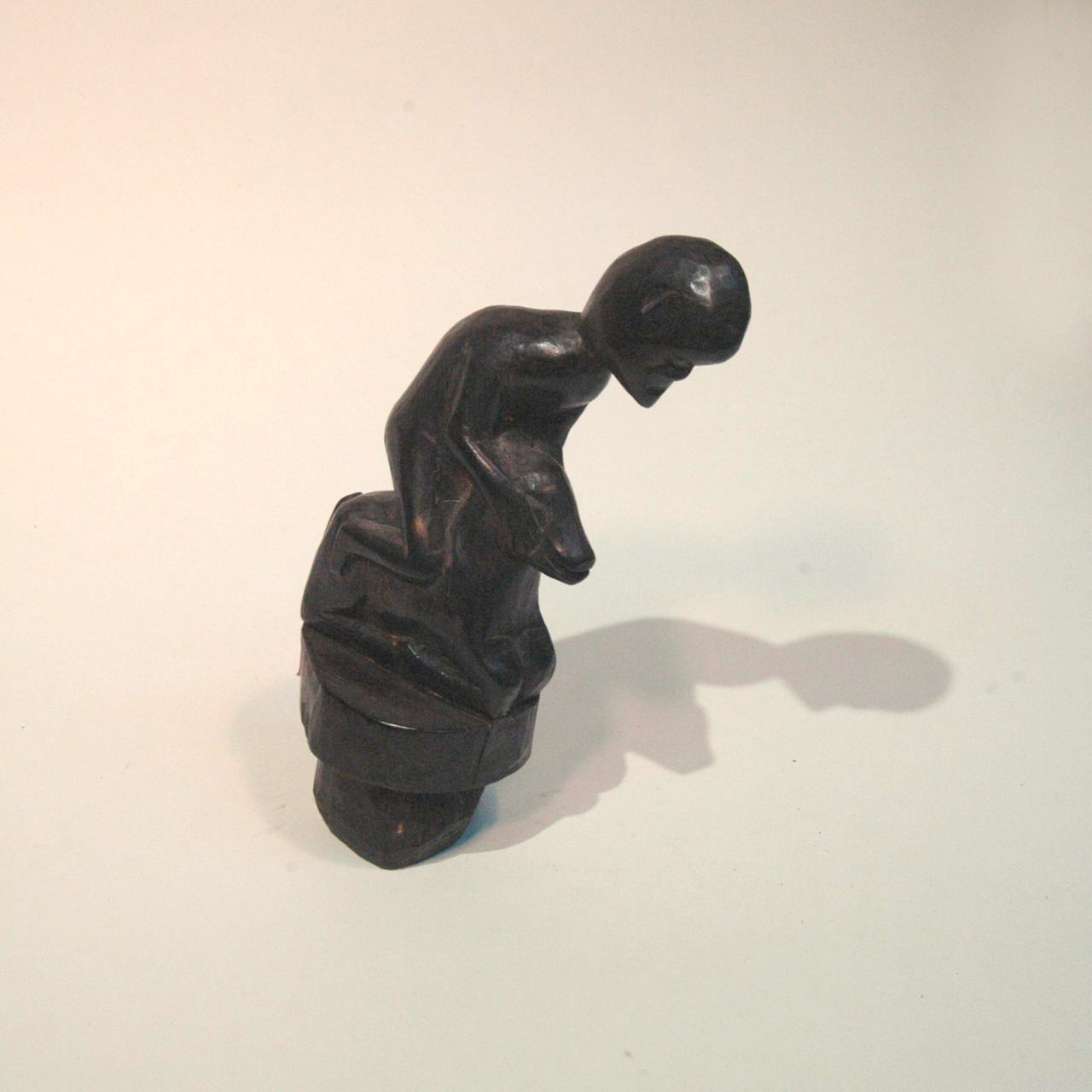
Apology for yesterday’s misinformation, this is actually the stopper of the guri guri potion container, a container of magic for the Batak tribe.

The magical potion is known as guri guri, used by the datu to perform good as well as magic with evil intention.  The guri guri is one of the most sacred object of the datu.  The figurine is a human riding on singa.   Singa is a mythological creature that is benevolent and powerful, it is described to be part human, part buffalo, part crocodile.

W150xD100xH200mm, China

The Chinese cabbage (Brassica Pekinensis) is a basic vegetable consumed by the whole of China, it is not surprising that it will be come a subject for folkart.  This pottery cabbage is a wall hanging vase.  Chinese cabbage has been documented in Chinese history since the San Guo period (220AD), it became a popular vegetable together with the turnip by 600AD.

DIA80xW120xH120, China

This is a container for the oil used for the oil lamp.  A very common item in the old days when oil lamp is the only form of lighting for the common people.  In China, the fuel used for the lamps would be tung oil – oil obtained from the seed of the tung tree (Vernicia Fordii).  During the second world war when food is scarce, dishonest merchants would sell cooking oil mixed with tung oil.  As the two oil have different density, the cooking oil would be floated on top, once the thin layer of oil is used, the customers will discover they have in fact paid a premium for the cheap tung oil.  Worse of all the food cooked would be spoiled and everyone would get an upset tummy.  :(

DIA160xH140, China

Pewter was a popular material for the tea lovers in southern China around late Qing dynasty, at that time there were no electrical kettle but charcoal stove.  To keep the distinct aroma of tea, the teapot is only put on to the stove until the charcoal is red hot. The material of the teapot is also very selective, while iron and bronze could affect the subtle taste of the tea leave, pewter was seen as a better material.

DIA130xH130mm, China

Since the Tang dynasty , eating utensils have been made from the shell of the coconut.  In the Sung dynasty, they even favored by the intellectuals of the time, the carving became refined and decorative so refined that by the Ming and Qing dynasty, coconut carvings have made it as a imperial offering to the Emperor!  There are broadly 2 types of coconut teapots; the first has a inner layer made of metal (pewter, silver, bronze etc) and small pieces of coconut shell set over, the second (like this one) is made from a whole coconut shell.