Archives for category: clay

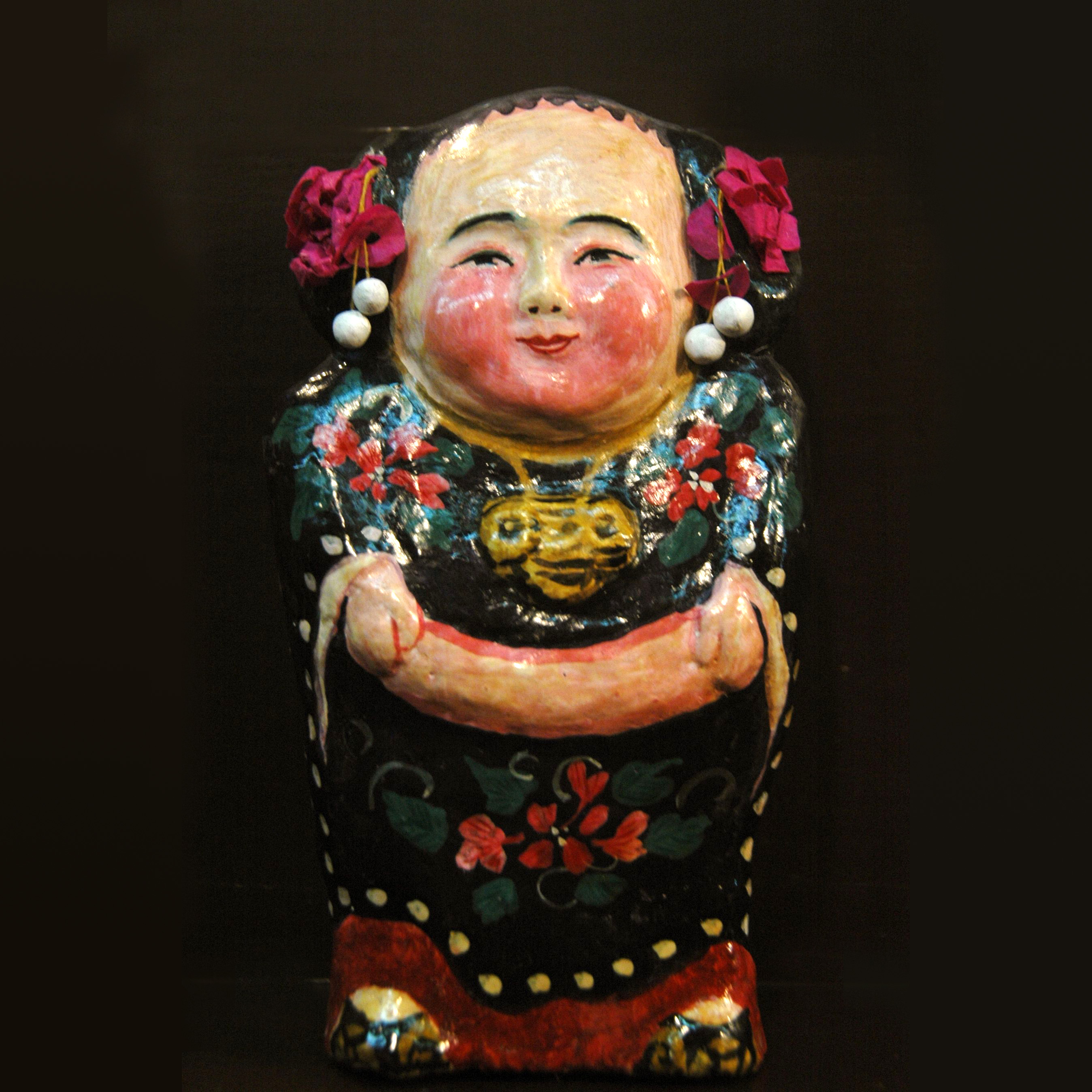
clay toyW100xD80xH150, China

 Today, the 14th Feburary and the 15th day of the Chinese New Year is the meeting of St. Valentine’s day of the Gregorian calendar and the Yuan Xiao (Chinese Valentine’s day) of the lunar calendar.  While there is gift, flower, kissing on St. Valentine’s day, Yuan Xiao is a more subtle affair.  In the past in China, girls are kept at home, out from the sight of the suitors.  On Yuan Xiao, for the final celebration of the Chinese New Year festivity, there will be lantern festival in town, ladies and gentlemen, boys and girls are free to attend.  Almost like a high school party, romantic encountering take place.
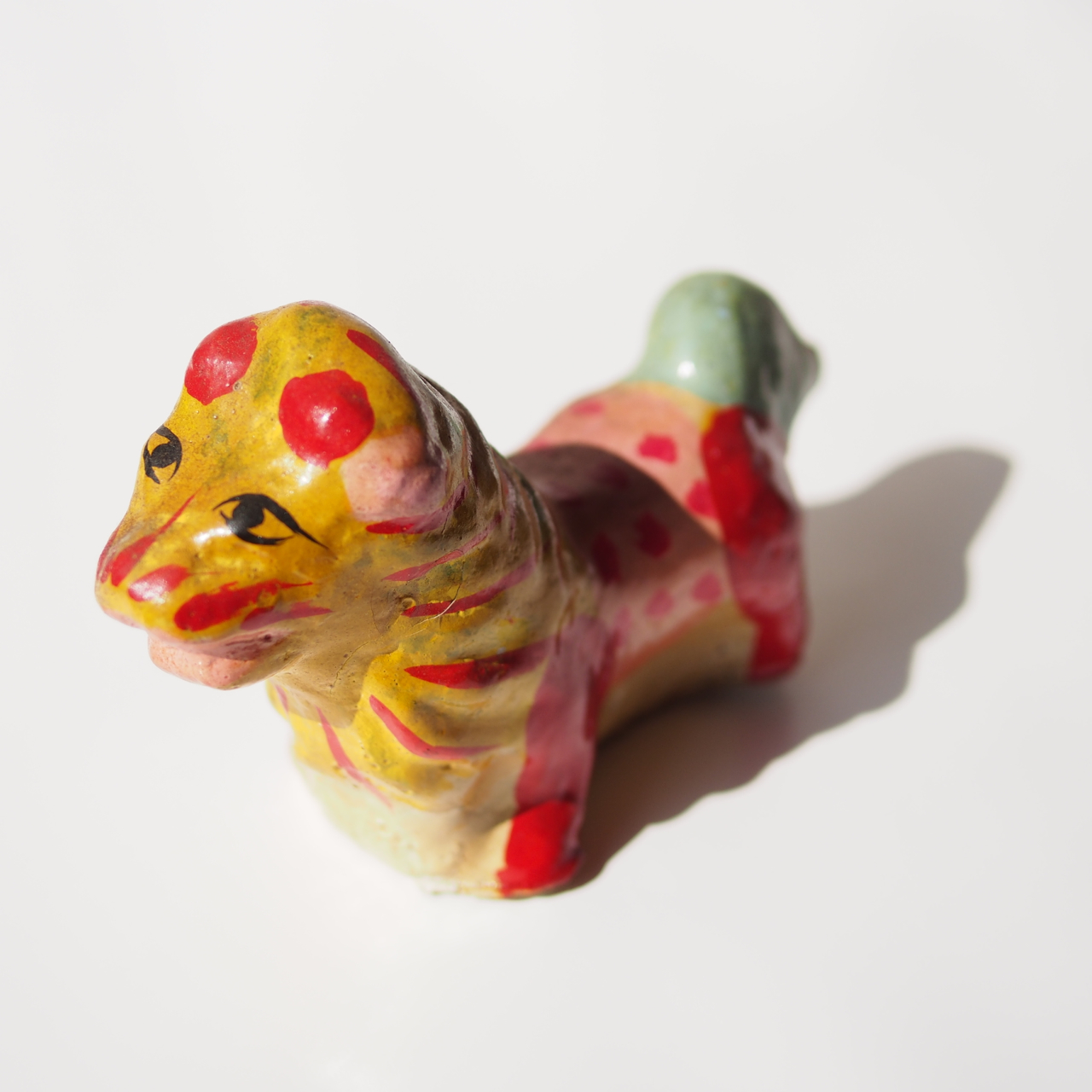
clay toyL190xW70xH120mm, China

 May we wish you a joyful X’mas!

Click here to see our other toys.

clay toy

W 130D50xH130mm, China

Clay figurines are a popular toy for adults and childern allover China and could be dated back to over 5000 years.  In the area of  Xu Zhou, clay figurines of dogs, pigs, rooster, duck and even houses were found in Neolithic sites.  The tradition continues and was the most established in the Ming and Qing dynasty more subject matter were covered.  The more natural non coloured version were favored by intellectuals while the mono white and black version are amulet figures.  This figurine being decorated with colour is toy tiger.

Click here to see our other tiger clay toy.

Clay Tiger ToyW100xL120xH140mm, China

As the clay toys of Nie Jia Zhuang was selected as the Chinese Intangible Cultural Heritage, it also signified that it is a dyeing art which is in need of protection.  The making of clay toys in the area dated back to the Ming  dynasty, folk song was sung about these colour clay toys.  Up to the 80s, they were ever so popular, every kid would own one.

This roaring tiger, has a leather waist which forms as a bellow to the squeak inside the front half of the body.

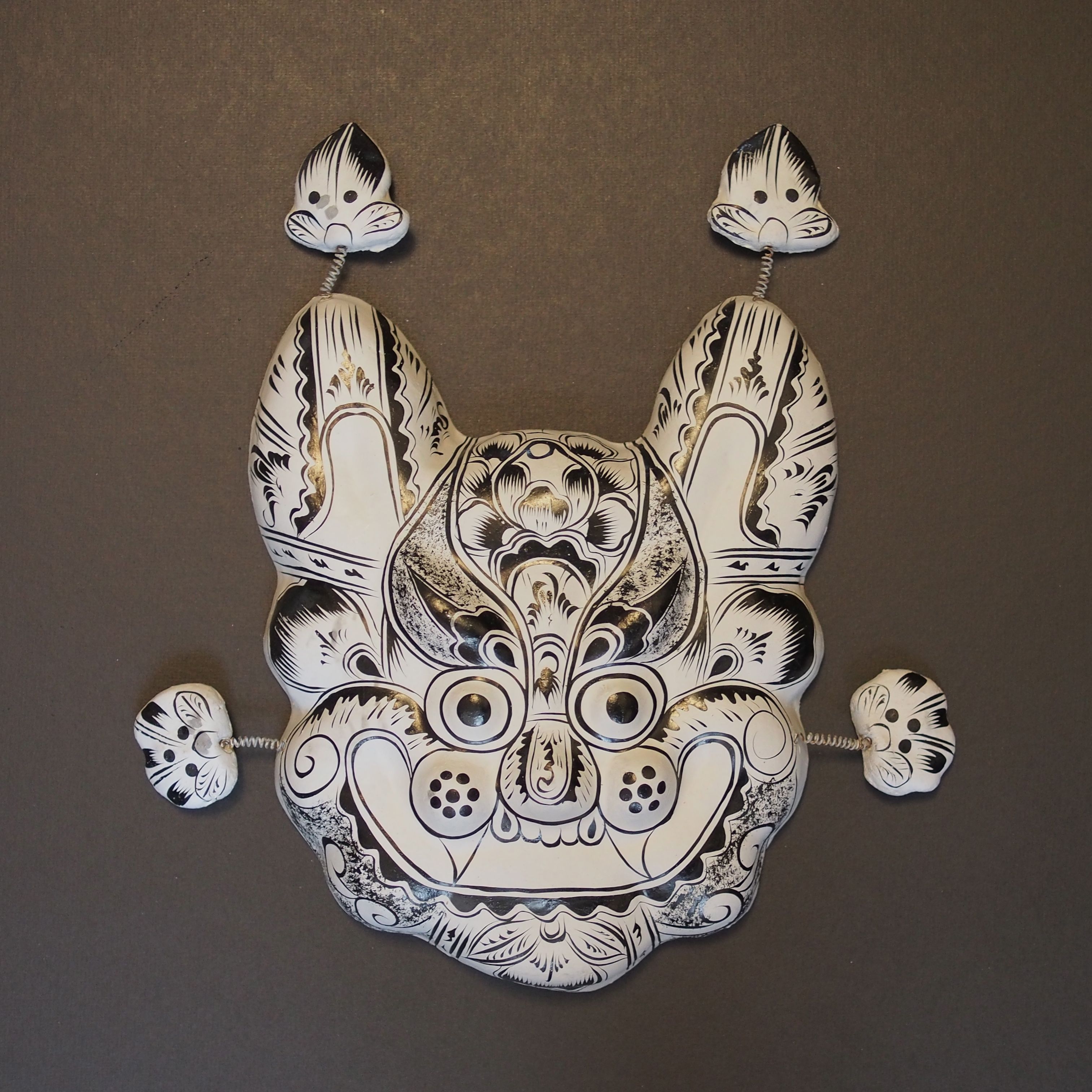
Clay wall hangerW200xH250xD50mm, China

This clay wall hanger is the form of a tiger, it offers protection from the evils.  In the rural area of Shaan Xi, before Chinese New Year every household would would be placed a new tiger hanger on the lintel of the door.  The origin of the wall hanger came from the Ground Theatre (Di Xi), find any similarity?

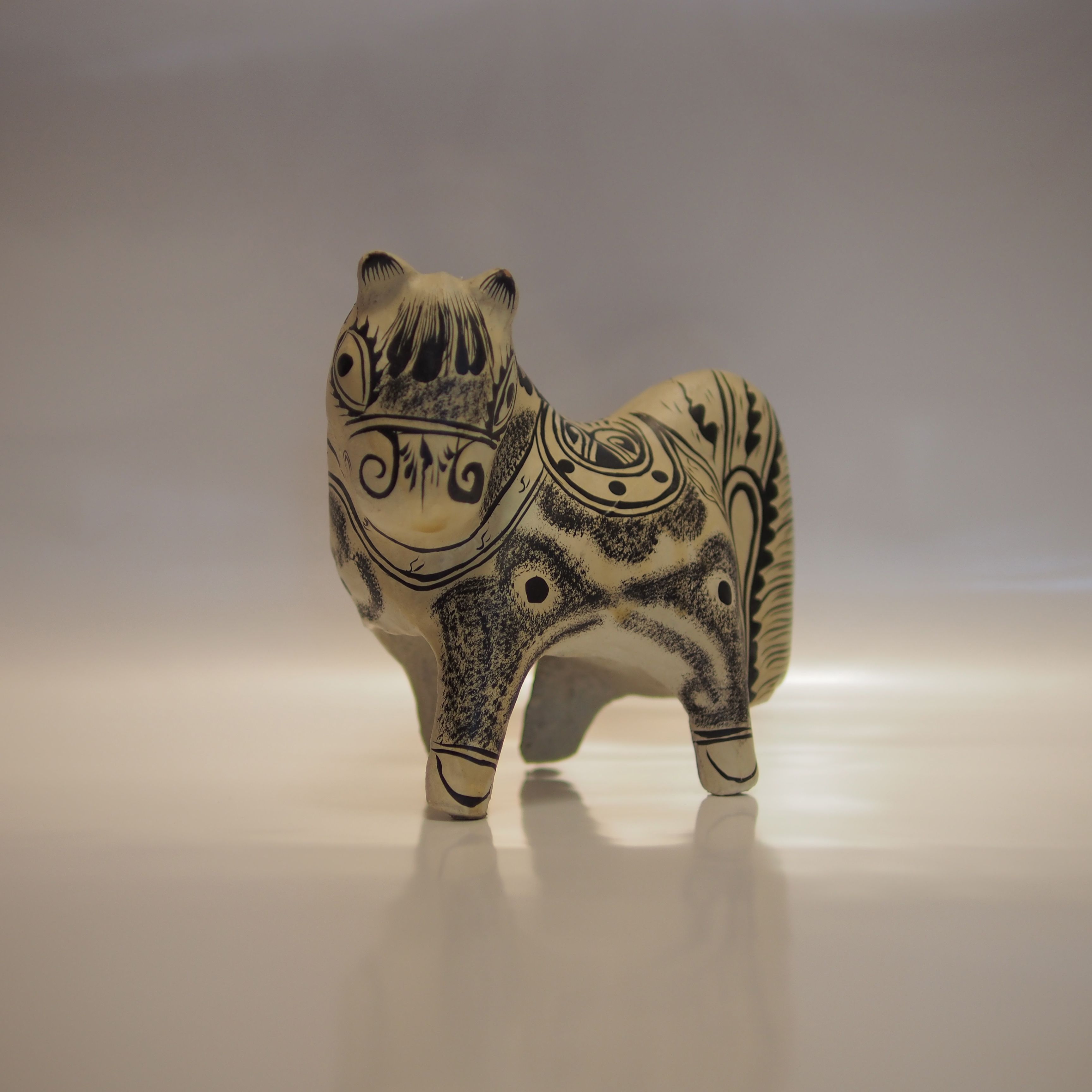
Clay Horse

H150xL150xW100, China

This sweet little clay horse is by the Hu Xin Min, an artisan who successfully injected new spirits into the traditional craft.

The  Feng Xiang province has a long and  famous for making clay figurines, they are dramatic and bold in patterns, a blessing present for the Chinese New Year, festivals.  The history of Feng Xiang goes back to the Tang dynasty, the first emperor  Zhu Yuan Zhang had the 6th division of his army based in the area.  During peaceful time, these soldiers from the south made clay figurines as a pass time.  Later on, the soldiers settled in the village and named it the 6th division village and the tradition of craft of clay toys started.

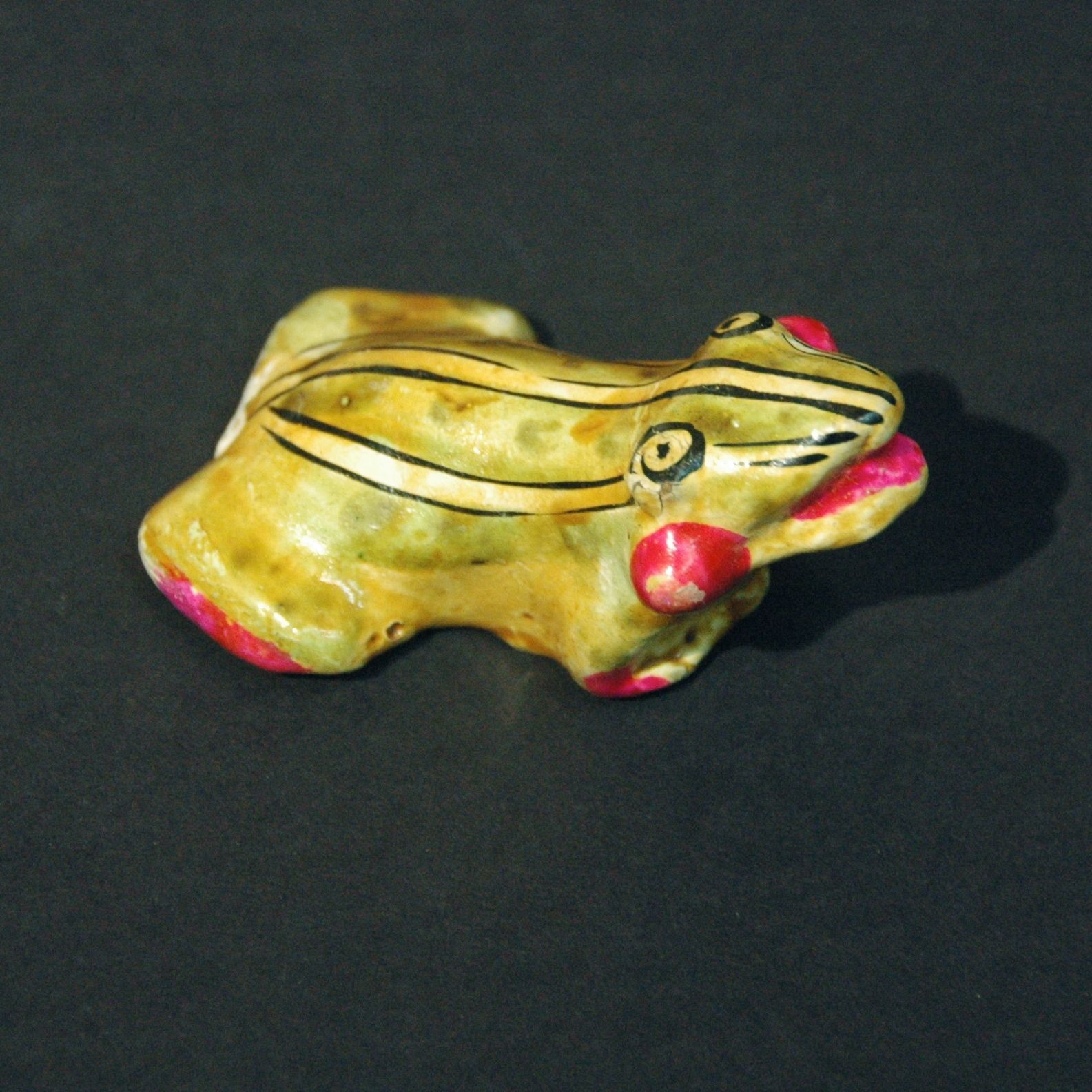
L80xW50xH40mm, China

When I was a kid, the boys would go for a toad toy for it being ugly and frightening, something to scare the girls with.  Today, with information from the internet, kids can tell that it is an amphibian of the order anura and probably the particular specie the toy resemble.  In the old days, toad is believed to be one of the 5 poisonous creatures (snake, centipede, scorpion, lizard and toad) that could offer protection to the child.  They can be found on embroidery, prints, toys, etc.

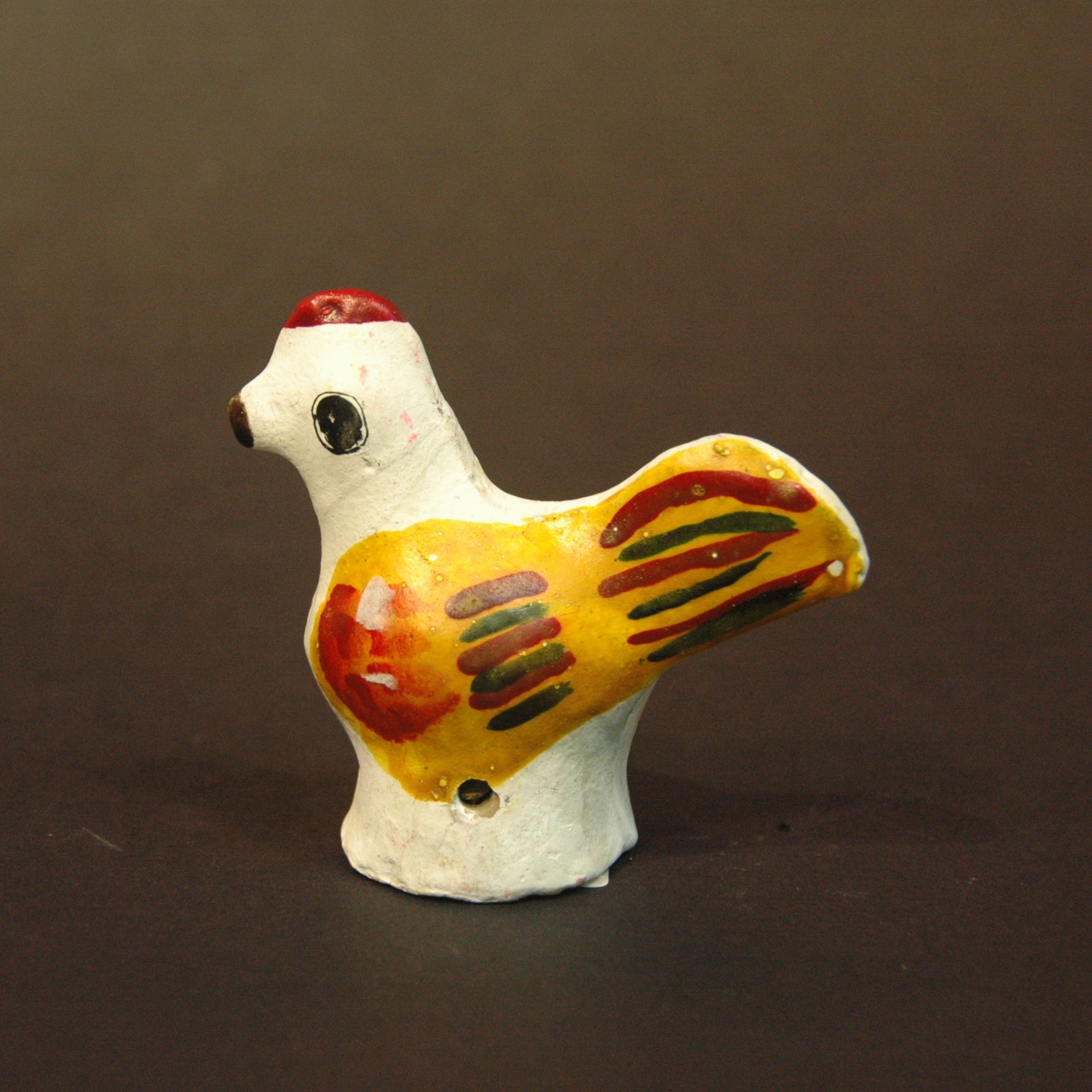
L50xW20xH50mm, China

The Chinese name for this cute little chicken is “the loud crowing rooster” which was originated from the “rooster crowing pillow”.  The rooster shaped pillow was believe to offer blessing to the child; better sleep and a wiser child.  The Chinese believed that the rooster is responsible for pulling the sun out of the darkness, a god that extinguish the ghosts (rooster being associated with the sun and light while the ghosts with darkness).  Nowadays, the symbolic meaning of the rooster is faded, this is seen as rooster toy more than a protector symbol.

W50xD40xH100mm, China

This is the clay toy of  Dah A Fu, we have previous talked about his story in an early post “Clay Toy A-Fu“.  Most of the A-Fu figurine have him seated, this is an unusual version, but from his accessories we can determined that he is A-Fu.  On his head, he is wearing peony (a symbol of wealth), the costume is the five fok jacket (a symbol of ease and comfort), around his neck is a locket (a symbol of longevity).  In the seated version, he is also hugging a lion with green fur (a symbol of protection from evil) and wearing a pair of court shoes (successful in the court examination).  All the wishes from the parents to the child are projected onto the figurine.

L160xW50xH160mm, China

This clay toy is of the god of  longevity who began his legend as Canopus, the brightest star  in the southern constellation of Carina and Argo Navis.  In the Qin dynasty, temples were erected for the worship of  the Canopus star, it is believed that when the star shines brightly the world would be peaceful and vice versa.  Canopus is also known as the “elderly star”, apart from peace, it also upheld the ethic of the respect for the elders.  In the East Han dynasty, the ceremony for Canopus worship consist of a stately banquet that included all the over 70, nobleman and commoners.

Besides the astronomy aspect, the god of longevity also has a human figure, Peng Zu.  Legend has it that Peng Zu has mastered the art of longevity and lived to an age of  767 years old!