Archives for the month of: May, 2012

W140xH170mm, Indonesia

This is a mask used for the Kecak trance dance in Bali, it is also know as the monkey chant.  The chant is performed by 150 men during which the Ramayana epic will be performed by masked dances.  In the Ramayana legend, the monkey king Vanara helped Rama to save his wife Sita from the demon Ravana.

For our other monkey mask, check out previous entry:
Monkey Topeng, Korean Monkey Mask, Monkey Mask.

W300xH450mm, China

This glove puppet character is called Di Lei, within the show (opera) he belongs to Jing (painted face) category.  Di Lei, is courageous fighter but lacking in tactics, he is one of the 4 hammer warriors of the famous Sung general Yue Fei.  With extraordinary strength, he is known as the iron hammer warrior.

The head of the puppet (as well as its eyes and mouth) is controlled with the index finger, while the thumb would control one arm and the rest of the 3 fingers control the other arm.  The thumb will also control the turn of the head while palm of the hand will control the waist and leg gestures.  As the puppet is manipulated with one hand, one puppet master can have 2 puppets on the show at the same time.

W220xL300mm, China

This is a wood block print of the Skanda, Wei Tuo, a guardian of Buddhism (leader of the 32 celestial guardians).  He has been worshiped in Chinese temples since the Sung dynasty, his statue is often placed behind the Maitreya statue.  It is believed that when the Buddha passed away and cremated, the demons came and robbed away his relics.  Wei Tuo chased and caught up with them and got back the relics, he was honored to be the guardian.  Though Indian in origin, Skanda was adapted into the Chinese culture as a courageous warrior and guardian and even has a Chinese name as Wei Tuo, but his task has never altered.

W90xL1900mm, China

This hand woven band is the belt for the costume of the Miao tribe.  Just after lunar New Year is the Cai Hua Shan festival of the Miao tribe.  Different clans will come together to the common area between the different villages, a large pine or cypress tree will be selected as the “flower stem”.  Before dawn the person in charge, “head of the flower stem”, will take on the task of erecting the tree post and tying ribbons and flower on the top.  This job is done by commonly agreed most kind hearted person (with such a task, I am not surprised).  The day begins with the “head” tossing wine to everyone and giving them blessing; fire crackers, drums are played to signify the start of the festival, followed by days of dance, music and laughter.  It is also the chance for dating, the men will give a woven band to the lady he desire and in return the lady will give him a embroided handkerchief or headwrap.

W40xL80xH80mm, China

This little clay peacock toy has come to join in the birdy collection.

H300x W190mm, China

To continue with our series of bird entries, here is a paper cutout of a phoenix (the mystified peacock).  For the Chinese, the phoenix is believed to be  the symbol of beauty and talent, an icon of blessing.  Its often paired together with the dragon, the dragon representing the male and phoenix the female (funny enough the more glamorous looking peacock is in fact a male).

W40xD20xH50mm, China

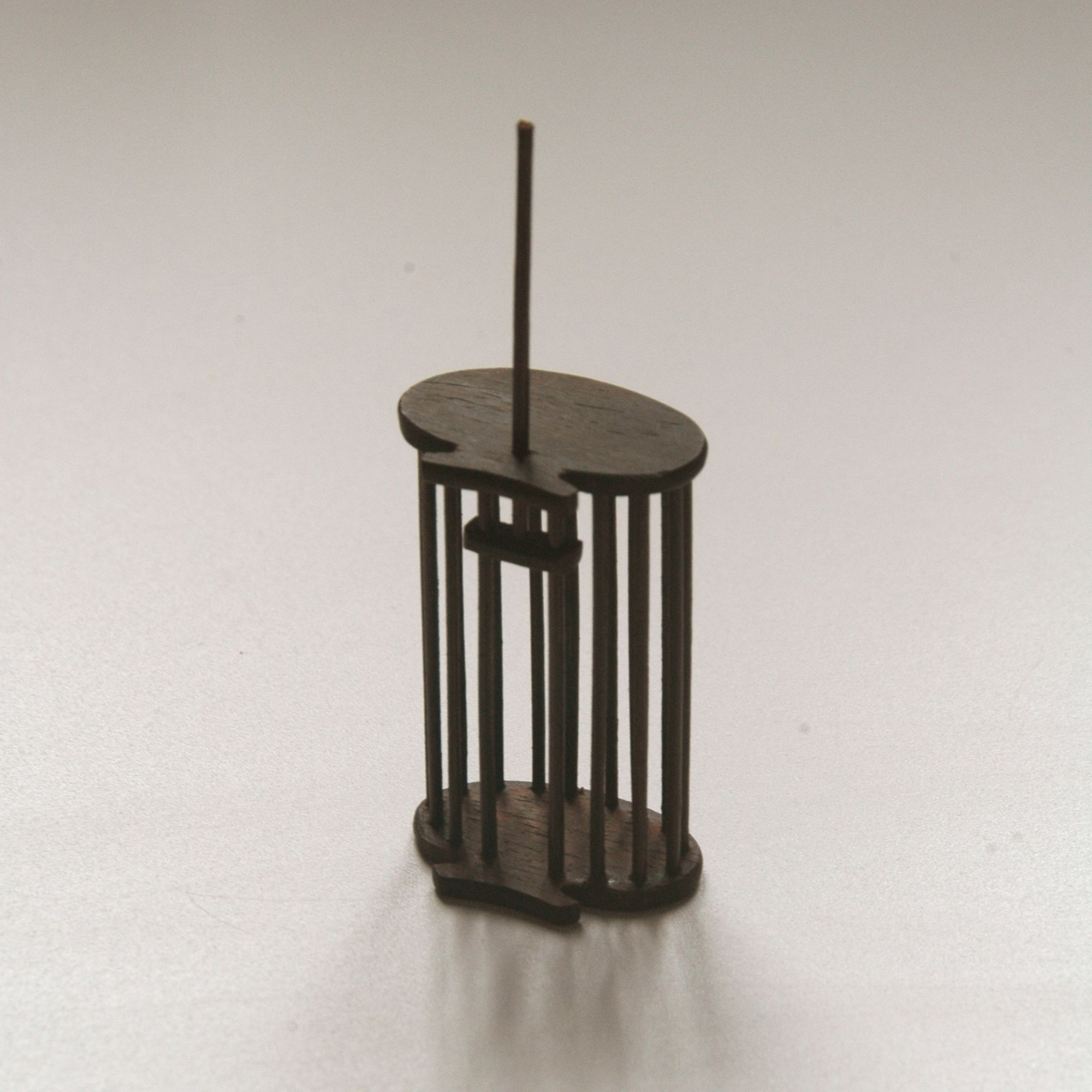
This is another type of bird feeder, a slight cruel one.  A live cricket or insect treat is put inside the cage which is then attached to the side of the bamboo bird cage, the gate is opened from the outside and here comes “dinner”!  The detail by the gate is for the attachment of the bamboo bar of the bird cage.

Click here for a more traditional bird feeder.

W40xD60xH60mm, China

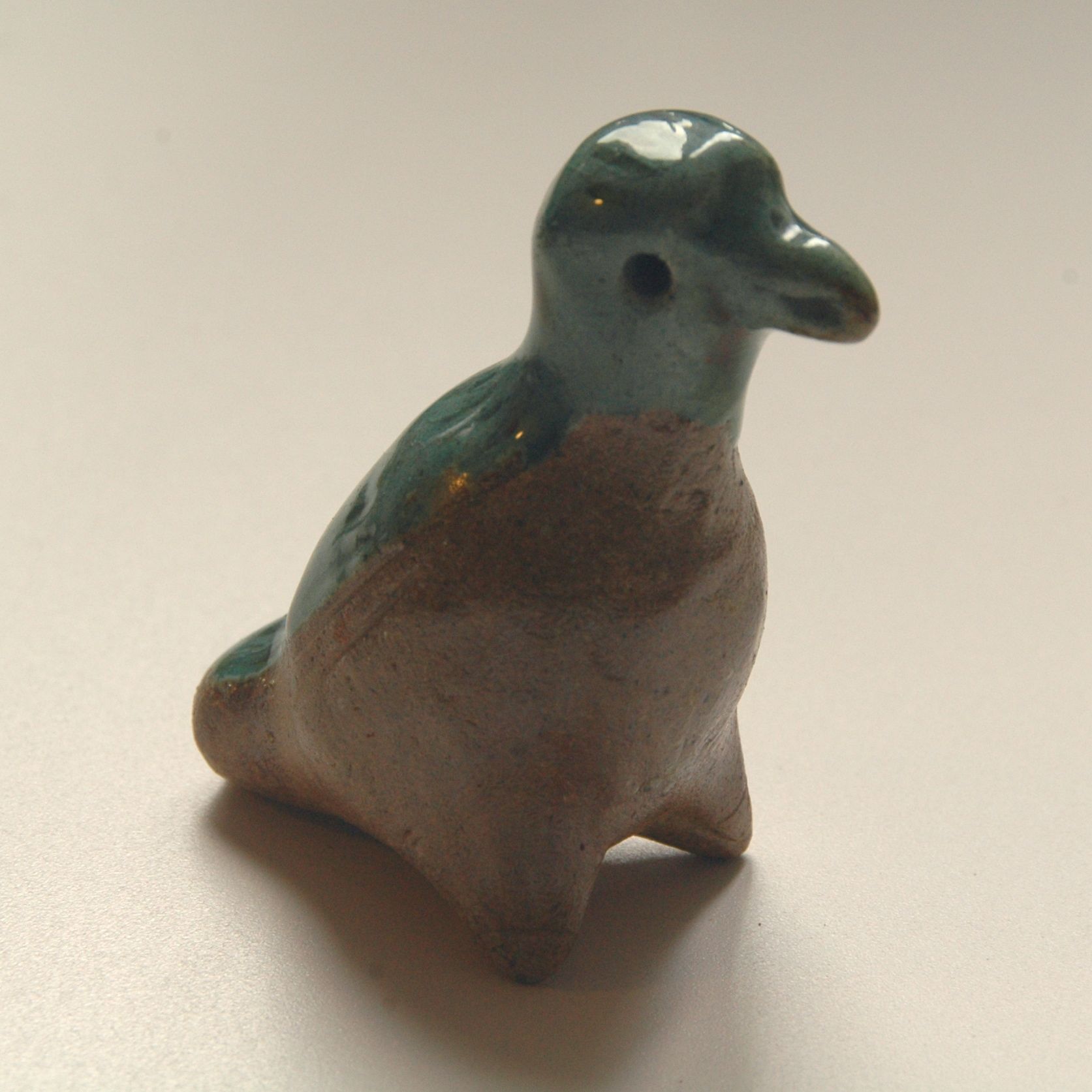
How can we have a bird feeder without a bird?  This is a pottery bird whistle toy with a beautiful green glaze.

DIA40xH30mm, China

This tiny blue and white porcelain bowl is used for feeding the pet bird, the wooden detail on the side make it able to be attached to the bamboo bird cage (click to see).  The traditional bird feed includes; millet, crushed corn, peanut, sorghum, fruits, sunflower seed, perilla seed, mazi, foxtail millet.

W220xH440mm, China

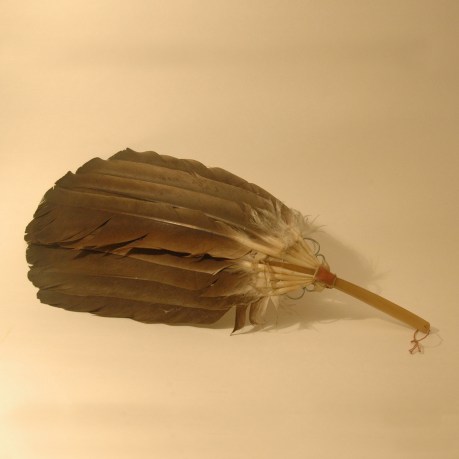
The fan the matchmaker was holding is made from the leave of a palm tree, this instead is a goose feather fan and its most famous owner is no other than Zhu Ge Liang, the strategist of the San Guo period around 200AD.  Zhu Ge Liang is also known as Kong Ming, not only is he good at military strategy, he is also an inventor and literati, a symbol of intellect (apparently he is real handsome too).  Zhu Ge Liang, despite of the seasonal change, is never without his fan, they are almost inseparable from this gift from his wife.  Once upon a time there is a literati called Huang Cheng Yan, he has a beautiful daughter, to keep her safe from the men around, he named her ugly and she her to learn all sorts of martial arts.  When she completed the martial art apprenticeship her master gave her a goose feather fan.  On the fan is the word Ming and Liang and strategic military plans, her master told her the future husband will have the word Ming and Liang (shiny) in his name.  She married Zhu Ge Liang and gave him the fan as a present, he then had it everywhere he goes, even going with it to war.  It seems the fan is not only representing the love between the couple but a bible for military strategy.