Archives for the month of: April, 2012

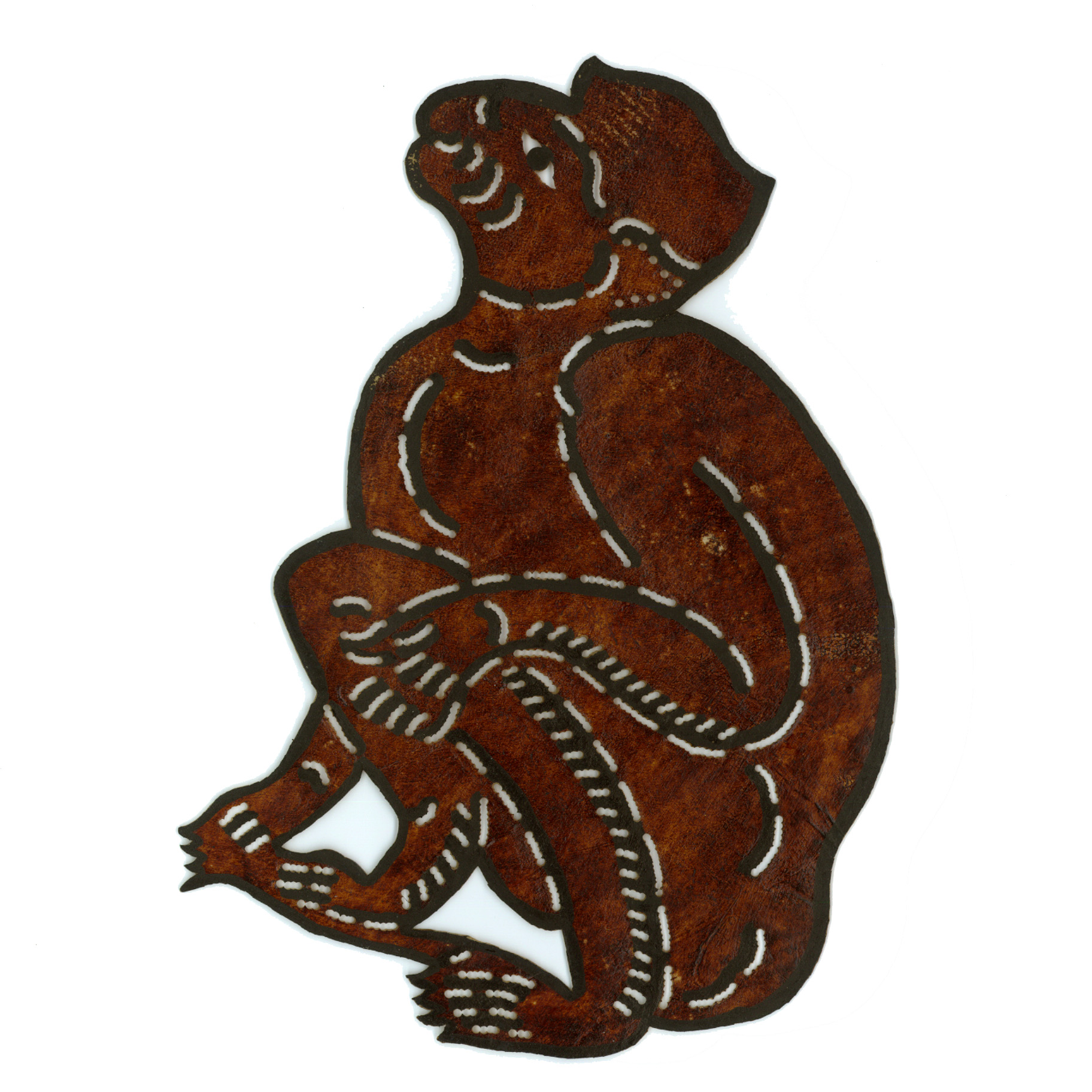
H230xW200mm, China

To start the black friday weekend here is a wood block print of the wine god.  Du Kang is believed to be the person who have discovered brewing wine in China and is known as the wine god.  Another person Liu Ling is said to be the wine saint, he is one of the 7 bamboo forest intellectuals who is so obsessed with drinking that he will always has a wine cup with him.  There is story of the wine god and the wine saint, it goes something like this … Once upon a time, Du Kang has opened a wine bar in the small town of Bai Shiu Kang Jia,  one day Liu Ling happened to walk pass, outside of the bar was the words “one cup will make a fierce tiger drunk for a year in the mountain, two jars will make a dragon sleep in the deep sea, if you are not drunk you can drink for three years for free”.  The mighty drinker Liu Ling laughed at the sign and decided to give it a try, what kind of wine has he not tasted before he thought.  Du Kang served the wine and drank with Liu Ling, after 3 cups Liu Ling could only felt the world spin around him.  He stumbled back home and stayed drunk for 3 years.  After 3 years, Du Kang went to collect the money for the wine and was told that Liu Ling has passed away 3 years ago!  The wife of Liu Ling was upset with Du Kang and wanted to take him to court, Du Kang explained that her husband is only drunk and the wine did not kill him.  They open up his grave to find him sobering up, the first thing he said was “what good wine it was!”.  The story is beautiful but in fact made up, as Du Kang was from the Shan dynasty (1000 BC) and Liu Ling was from Jin dynasty (300AD) … probably a story formulated after a glass or two …

W150xH150mm, Thailand

This is a gold hairpin to be worn by the bride in a Thai wedding.  During Thong Mun, the engagement ceremony (which sometimes is on the same day as the wedding), the groom will present gold sindod (dowry) to the bride.  The ceremony will be attended also by friends and relatives.

DIA40xH200mm, China

Ever wonder how to clean the cast iron wok?  Here is a Chiu Shu, Chiu anything related to cooking while Shu is the plant sorghum.  The hair of the brush is indeed made with the tip of the sorghum stalk.  In China the gain of the  plant is most famously use to made into a strong wine.

W100xD50xH130mm, China

This is no Easter bunny but the famous Lord Rabbit.  It is a toy for the Mid Autumn (full moon) festival in the Beijing area.  The Lord Rabbit figurine first appeared in the late Ming dynasty, it was mainly used for worshipping by the younger generations.  It is believed that Chang E, the moon goddess, has a pet rabbit who is whiter than white jade as he was named as the Jade Rabbit.  The Jade Rabbit was specialised in preparing the medicine (you might have seen images of him stirring the medicinal pot on the moon).  Jade Rabbit worshipping has then been taken into moon worship and since rabbit has been kept as a household pet, out of respect for the Jade Rabbit god he was worshipped as the Lord Rabbit.  By Qing dynasty Lord Rabbit has turned into a toy for the Mid Autumn festival.  The folk story goes; once Beijing was infected by plague, almost all the household got sick, the moon goddess was sadden by the news and sent the Jade Rabbit to help cure the capital.  At each household he healed he would turned down any gifts but instead borrow a new set of clothing.  With the new clothing he would assume a different image for the next household, sometimes a female, sometimes a general etc.  He would also take on different animals for transportation; a deer, a tiger, a horse etc., hence there are many different versions of his figurines.

W100xH240mm, The Philippines

The holy week (Mahál na Araw) is an important religious festival in the Philippines. The week starts from Palm Sunday (Linggo ng Palaspás), commemorating Jesus arriving Jerusalem where he begin his journey to the cross.  On Maundy Thursday (Huwebes Santo), the start of the Triduum, shops and business will be closed until Black Saturday, local radio and tv station will either be off air out of respect or broadcast only religious programs.  On  Maundy Thursday the Mass of the Lord’s Supper will be attended; however for the faithfuls who observed the Visita Iglesia, beginning in the morning 7 churches will be visited.  On Good Friday (Biyernes Santo) there will be street processions; the Way of the Cross commemorating Jesus’ last words and the passion play Senákulo, where the faithful men will portray the passion of Jesus Christ, his trial, suffering and his death.  As an expression of penance some devotees will self flagellate and some will even be nailed to the cross.  This is followed by chantings of pabasa (the life, passion, death and resurrection of Christ).  Near the evening dead images of Jesus will be parade in the funeral procession (Prusisyon ng Sto. Entierro).  On Holy Saturday (Sabado de Gloria), a day of silence and solem, at the end of the day the mass of Easter Vigil will make the first celebration of the Resurrection of Jesus.  Easter Sunday(Linggo ng Pagkabuhay) is a joyful day of celebrations, life size status of the resurrected Christ and Virgin Mary will be paraded and brought to the first of the churches, it is followed by the Easter Mass.

L130xH30mm, China

Tobacco was imported to China in the 17th century through Spanish trading.  The smoking pipe soon developed into different Chinese variations (see entry Pipe, Water Pipe).  This dragon shaped ceramic pipe is probably made for export to the West, it is made by slip case.

TOBACCO SERIOUSLY DAMAGES HEALTH

L160xW160mm, Indonesia

This is the topeng mask for the character Tembem, a friend of  Penthul.  Tembem and Penthul are characters used in the traditional Javanese dancing depicting warriors practising their fighting skills.  Their are a pair of comics, Penthul with a white face supports the warriors for them to keep a strong spirit.  Tembem, on the other hand, is the sad figure.  On his black face with the white painted tears on his eyes and nose, the crying Tembem represents the supporters who lost the fight.

DIA160xH140, China

Pewter was a popular material for the tea lovers in southern China around late Qing dynasty, at that time there were no electrical kettle but charcoal stove.  To keep the distinct aroma of tea, the teapot is only put on to the stove until the charcoal is red hot. The material of the teapot is also very selective, while iron and bronze could affect the subtle taste of the tea leave, pewter was seen as a better material.

W130xH220mm, Cambodia

This is a shadow puppet used for the show Reamker which was based on the Sanskrit’s Ramayana epic.  The Reamker is a popular legend for the Khmer people, loved by the common people and the kings a like.  The story is carved into the walls in Angkor Wat and in Banteay Srei  and over the Khmer New Year (13-16 April) and the King’s birthday (13-15 May) when the shadow puppet show will be performed.

 The story of Reamker is about the balance of good and evil in the world; Prince Rama was sent into exile by one of the queen mother who has her eye on the throne for her son, Rama was joined by his wife Sita and his brother Lakshmana.  In the forest the female rakshasa Surphanakha tried to seduce the 2 brothers, Lakshmana being annoyed by Surphanakha cut off her ear and nose, this angered the demon who went to ask her brother Ravana to help her revenge.  Ravana (the Lord of island Lanka) was attracted by the beauty of Sita kidnapped her.  Rama and Lakshmana striked a deal with the monkey king Sugriva, they helped Sugriva to regain his kingdom from his brother Vali while Sugriva send the monkey warriors lead by Hanuman to help with their search of Sita.  Hanuman start building a stone bridge to cross to Lanka but found out that mermaids were secretly taking away the stones, he decide to capture the mermaid princess Neang Machha but instead they fell madly in love with each other. The bridge was completed, Rama and Ravana started a battle, wiht Hanuman’s help Rama won, rescued Sita and got the throne.

@ the western gopura of Banteay Srei

@ outer gallery of Angkor Wat