Archives for the month of: February, 2012

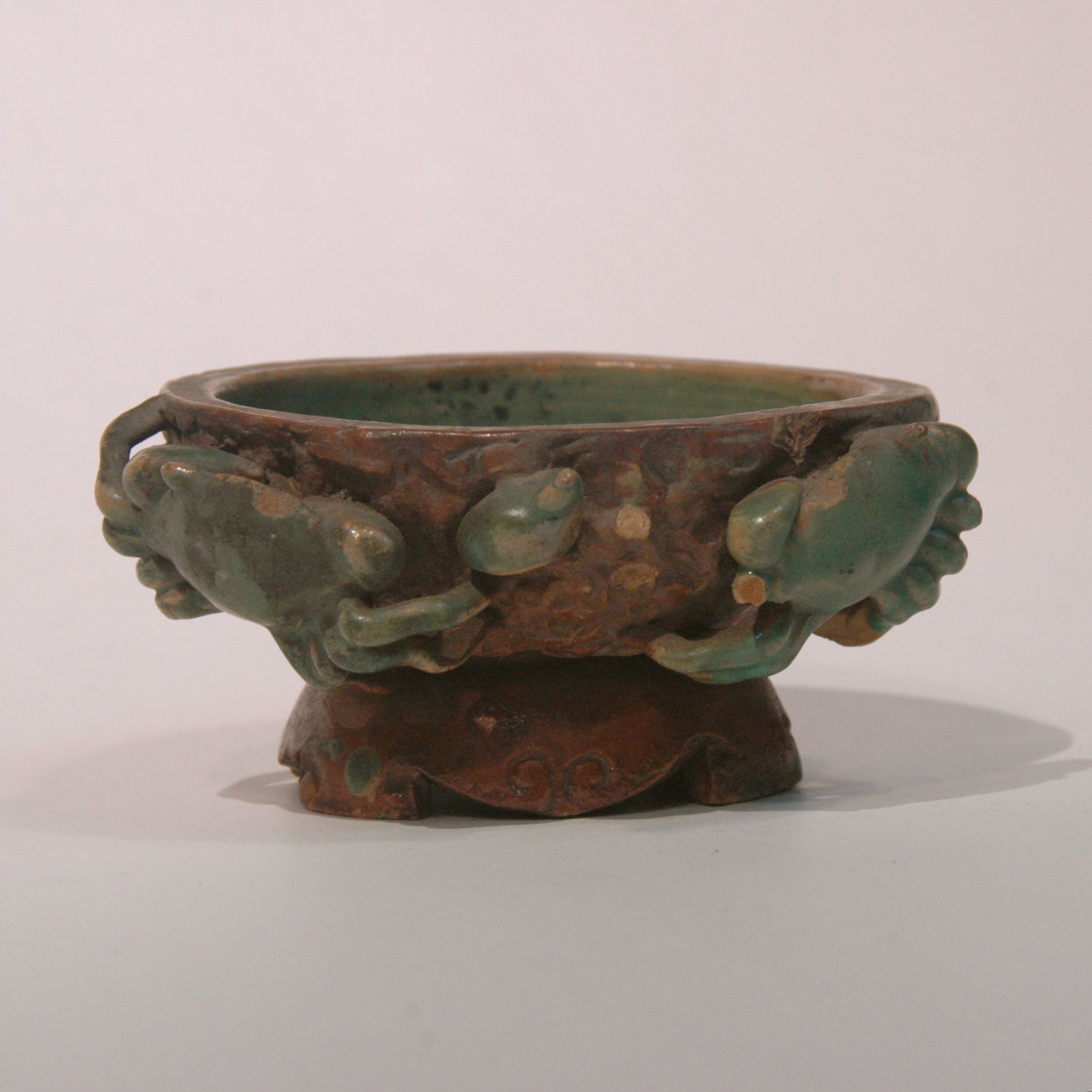
DIA150XH50mm, China

This is bowl for rinsing calligraphy brushes, these type of bowls has this specialised function but at the same time is give an artist design freedom.  Though it can be made of varies material (jade, ivory, horns, enamel, agate), the ceramic version is the most popular.  This is a green glaze Bi Xi most probably from the Shi Wan kiln.

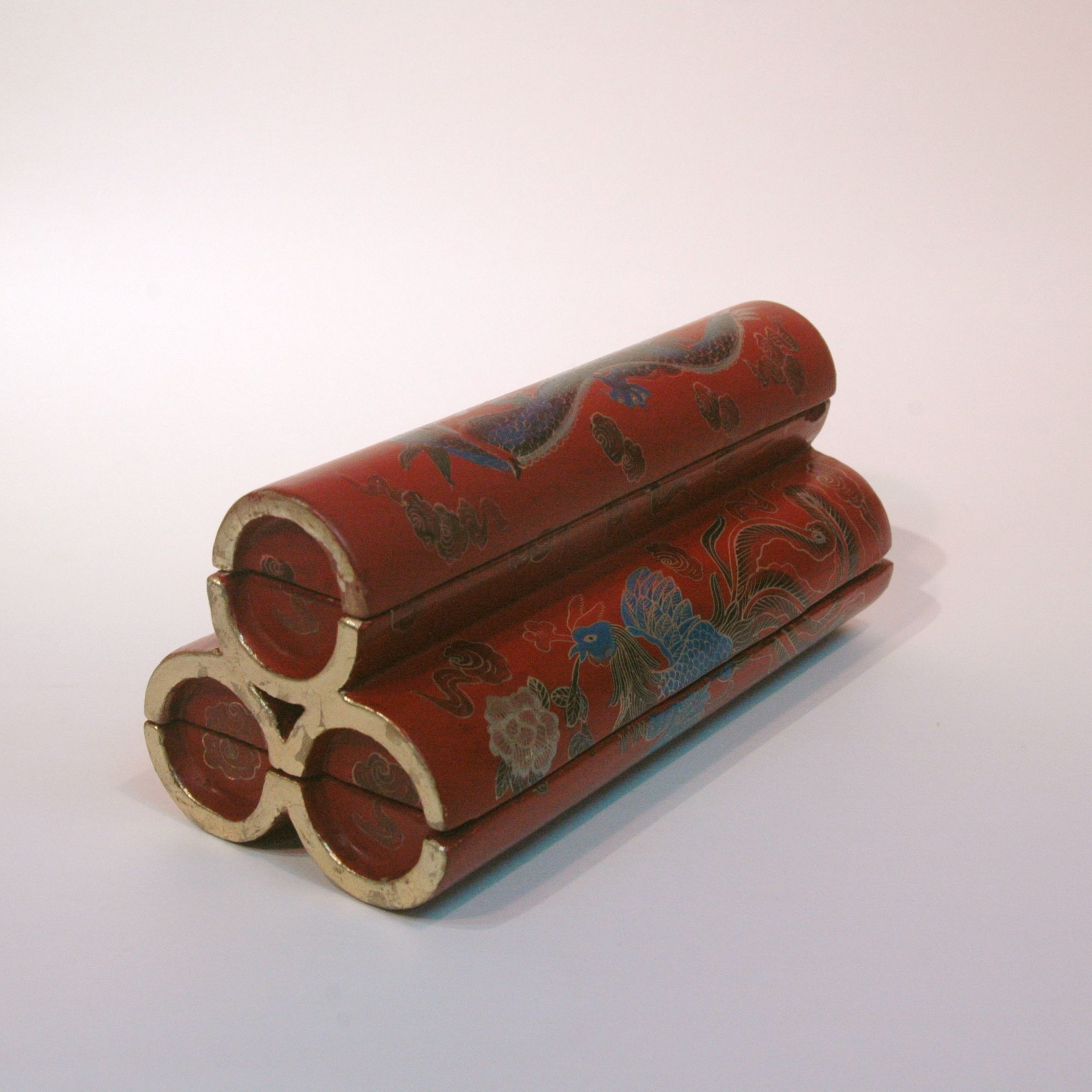
W100xL230xH100mm, China

A lacquer box with painted dragon and phoenix which comes with 2 levels and 3 circular compartments. This is probably a box for storing small incense but our customers found it to be a good idea to use it for storing stationary.

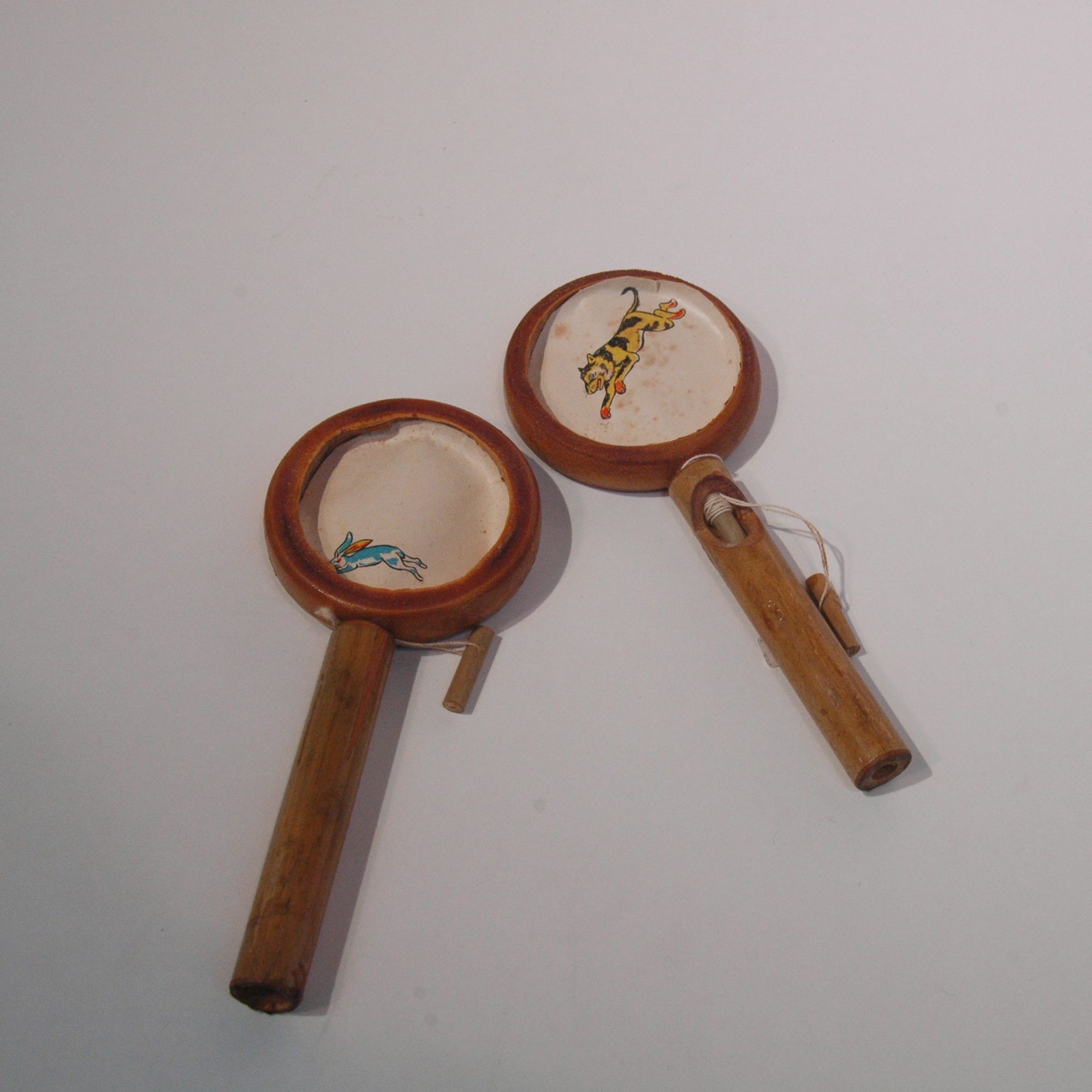
DIA70xL160mm, China

This is a Chinese version of the thaumatrope; by pulling the string that is attached to the axial of the circular frame, the image inside the frame will turn over and over again.  The 2 images from both side of the frame will appear as 1 due to the persistence of vision.  The momentum of the spin will cause the axial to spin at the reverse direction result in a prolong animation.

click on me!

DIA550xH600mm, China

This small umbrella has a silver handle, a structure is made of bamboo and yawn, the shade is non-waterproof, to top it off, it has 2 pom pom on the top of the cap.  This is in fact a Chinese dance umbrella.  Around the Sung dynasty, merchants from the northern province acquired the umbrella from the south and brought them home as a novelty, in order to show it off a dance show is invented.  The moral of the story is – product promotion started early in China.

D120xW120xH240mm, Hong Kong

This is a small marine masthead navigation light which uses an oil lamp.  It is made by an old Hong Kong marine light company called Tung Woo which unfortunate is no long in business.

W70xL140xH50mm, China

Dont be mislead by the tabloid title, this is in fact a piece of stationary, a copper box for keeping seals and seal paste.  In China seal was the form of  identification, a bit like the rubber stamp which is officially recognized.  The seal of the Emperor would represent the Emperor himself.  In the old days, most people will at least own a set of personal seal, but for artist and intellectuals they will own also a leisure set and a studio set, for each set there will be a collection of a seals.  There are a long culture for seals; the stone, the text, the design and the craftsmanship are all  refined and specialized.

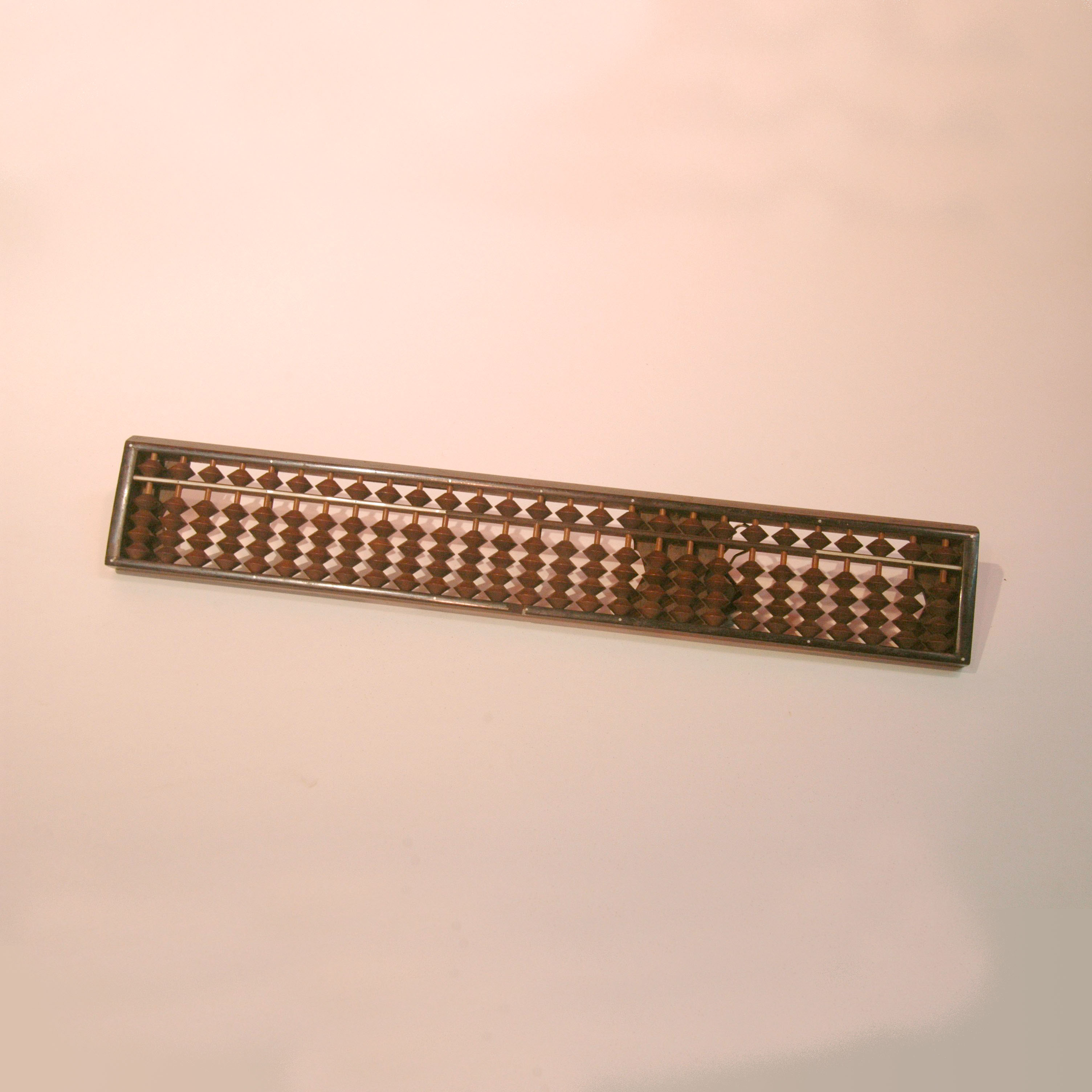
W390xL70xH20mm, Japan

This is a Soroban.  A calculation device.  The Japanese version of the abacus.  The number of rods are always of odd number, starting from 13, then 21, 23, 27 (this one) and going up all the way to 31.  The more rods will allow for more digits in the calculation.  The beads on the rods are separated in 2 rows by the reckoning bar; on each rod below the bar are 4 earth beads, above it there is 1 heaven bead.  Each rod represent the same digit, with 1 heaven bead = 5 earth beads, so each rod can go up to 9 before moving to the next digit.  The Soroban is still currently in use in Japan, it is reinforced by being taught at school and as part of the entrance requirement to public cooperation.

W150xH150xL250mm, Thailand

A Korean legend about the tiger lily; once upon a time … there was a hermit who save a tiger by removing a arrow from his wound.  The tiger requested the hermit to use his magic to extend their friendship after his death.  After the death of the tiger, where his body lay sprouted a tiger lily.  The hermit got drown by the river and his body was washed away, tiger lily spreaded along the river bank as though the tiger was looking for his missing friend.

These are the first fake flower that I can appreciate, each petal are carved out from wood.

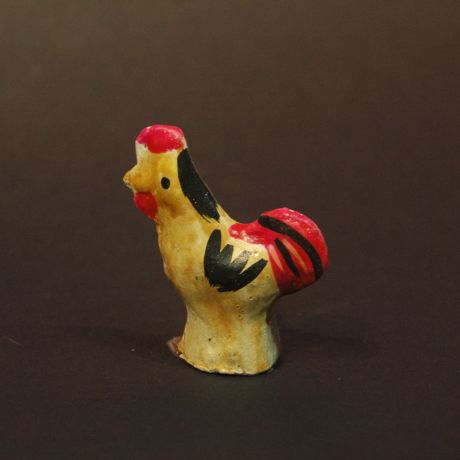
W40xL80xH80mm, China

Clay toys are a popular folk toy, they are affordable and has a certain naive and child like expression.  Wonder how these clay toy are made?  The clay from 2m under ground are usually used (they are easily available,  higher in plasticity and with less impurity).  The  dug up clay is sun dried then crushed down with a mallet.  The fine clay sieved out into a dish and soaked with water for a several days.  The semi wet clay is lay on a stone slab; after a sprinkle of water, it is pounced with a mallet, this process is repeated several time until the clay is not sticking to the slab, then form a cube with the clay.  Slabs are cut out with a wire and then into coil.  The coils are pressed onto a 2 pieces mould (the mould are dusted with dried clay powder for ease of case removal), the 2 parts of the mould are then joined together and joined together with additional coil from the inside, then the bottom is sealed off.  The mould is released and the clay toy is left to dried before colouring.  The base colour of the Chinese clay toy are normally white, with a few line to pick up the details.
W280xL360mm, Japan

This is an Ukiyo-e Print published in 1862 of the topic of the Kanda Festival.  Kanda Festival is one of the 3 Shinto Festivals in Japan; it is a festival to celebrate the victory of the battle of  Sekigahara.  The festival is biennial, in years of odd number in the western calendar.  Originally the festival is held on 15th Lunar September, nowadays is held on the closest weekend to 15th May.  On Saturday, there are a parade of floats with 300 people, on Sunday, provinces will bring over 100 small and large portable shrines to the Kanda Myojin.  The Kanda area where the festival takes place is at the heart of tokyo, the uptown area.