Archives for the month of: December, 2011

DIA200(up to 400)xH70mm, China

This is a lacquered dish for offering fruits (fresh and dried) for ceremony.  The dish is made in segments and hold together by a piece of wire, with the curvatures on all directions, this is a difficult task to do.  This particular dish is decorated with a gold painted floral painting, some of the dishes are decorated with figures of well known stories.  Unfortunately, these stories are often emperor based, these are forbidden during the cultural revolution, in order to save the lacquered ware, the head of these painted figures would be scrapped out hence the content of the stories removed.

H250xW90xD30mm, China

Tobacco has been introduced to China in the Ming dynasty; imported from the Philippines, Japan and locally from Fu Jian.  Water pipe has been a  popular pass time in the Qing dynasty.  Empress Dowager Ci Xi is a lover of the water pipe and a has a large collection.  This is a peasant’s water pipe, made with bamboo as a material; the bamboo are natural in its smooth finish and in the shape, true to nature without any alteration.  The fancy type will be made of copper-nickel, copper, bronze, pewter with the mouth piece with jade or agate.  The Chinese believed that water is a good filter for the impurity and toxin of the tobacco.  However, the water is not changed often, after a while the water are filled with tar and becomes gluey (and possibly toxic), peasants will apply a few drop to ticks which would let go of their bite, the ticks will drop off instantly.

TOBACCO SERIOUSLY DAMAGES HEALTH

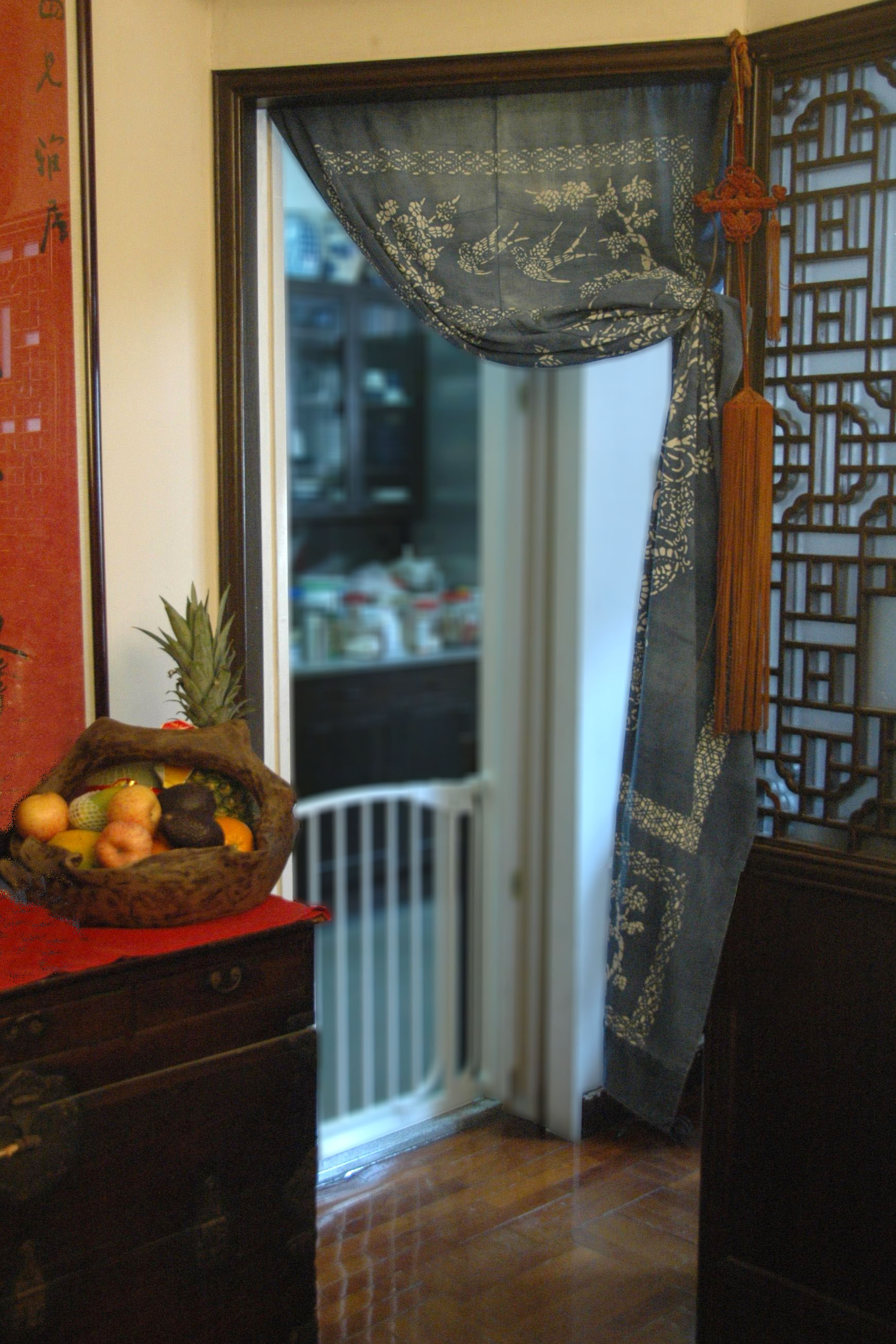
W800xH2000mm, China

This is an indigo dyed door curtain with a curtain holder (featured previously).  The fabric door curtain are a common item when air conditioner and heating were not as popular.  In the summer time, breeze can pass through even when the curtain are lowered, the curtain can also be easily drawn.  In the winter time, quilted curtain are hanged, sometimes even over a door, this prevent the cold are entering the room when the door is opened.  Spatially, the layer of fabric defined a space and its privacy. For people outside of the space, the softness of the fabric is a gentler barrier, muttering sounds can still be heard, one can easily lift up the curtain if one wants to.  For people inside of the space, the room is complete.  (You are probably wondering why we have a harsh gate behind the curtain, this is for our dog spike, unfortunately he failed to observe the idea of the soft barrier).  This reminds me of a Chinese saying “dog lifting the door curtain” = “with mouth and no hands (all talks and no action)”

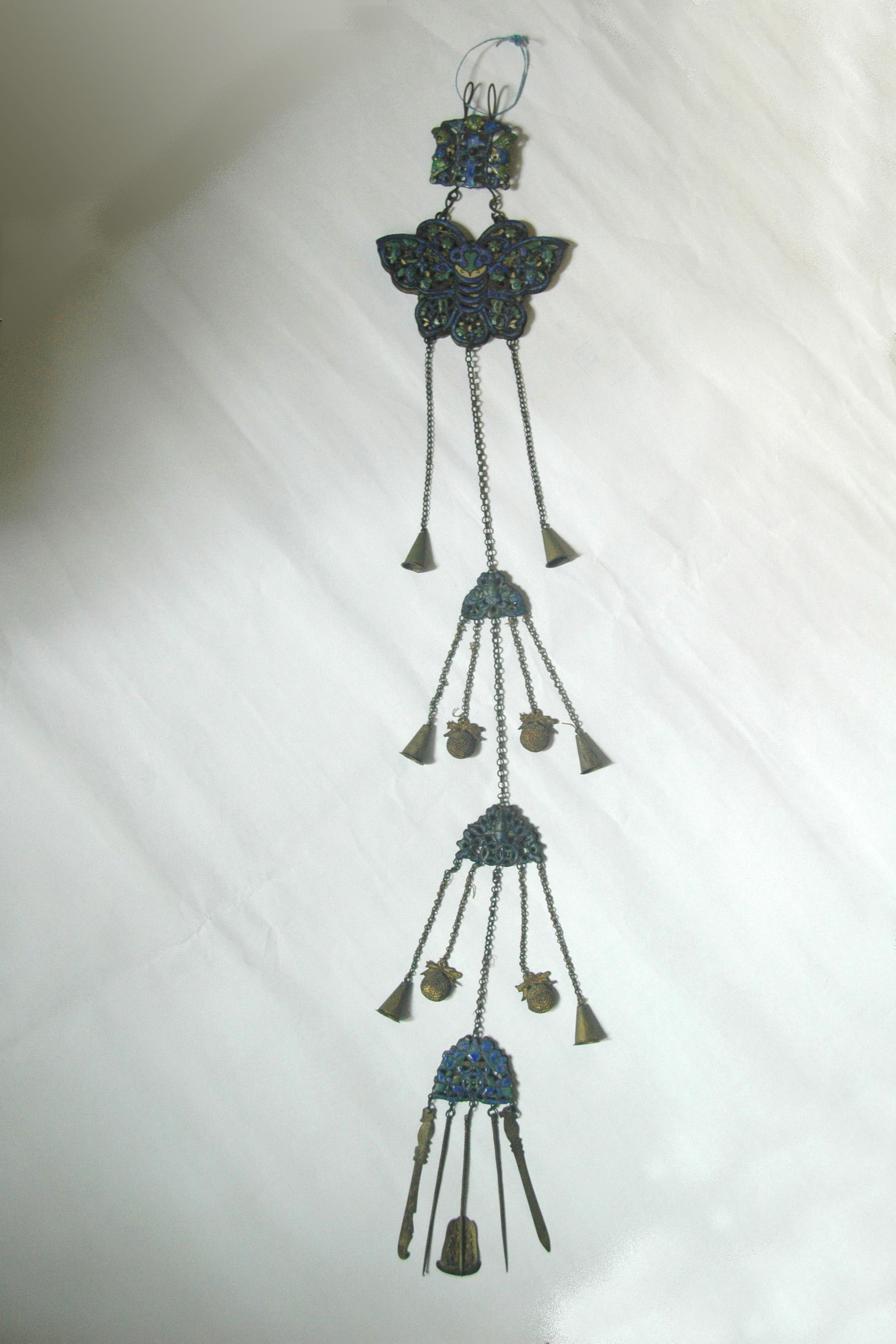
L650xW100mm, China

This is a ladies’ silver waist hanging ornament, highlighted with enamel pendant pieces.  On the top three layers, small bells are hang making a delightful charm as one move around.  At the bottom hung 5 accessories; 2 type of knive, a shove, toothpick and earpick (a traditional Chinese style Swiss army knife).

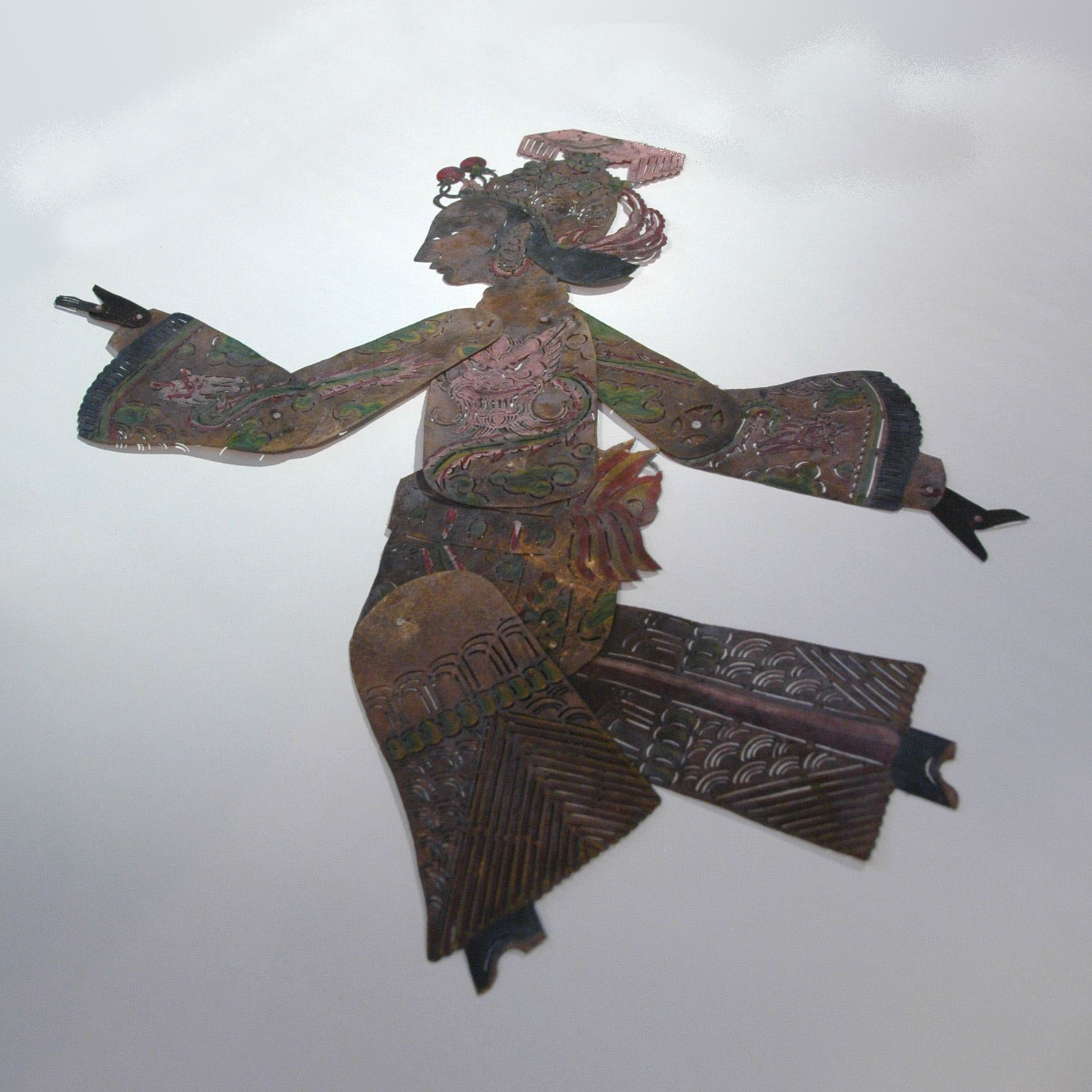
W600xH600, China

This is a shadow puppet from the province of Luo Shan.  The written history of shadow puppet in China dated back over 1000 years and spread all over the country, slowly each region has their own characteristic, in terms of the puppet, its control and of course the singing (as each area has a different dialect).  450 year ago in Ming dynasty shadow puppet theatre arrived Luo Shan from Luan Zhou.  Unlike the other region that uses donkey skin, Luo Shan’s puppets are with buffalo skin.  Each puppet are controlled by 3 bamboo rods and cast over a white cloth screen of 1.8x1m. The puppet theatre group would consist of 8 people (3 puppeteers), the puppet “cast” are huge (300 odd heads to match with 80 odd bodies), apart from characters there are also sets of  mountain, forest, vehicles, animals, furniture, etc!

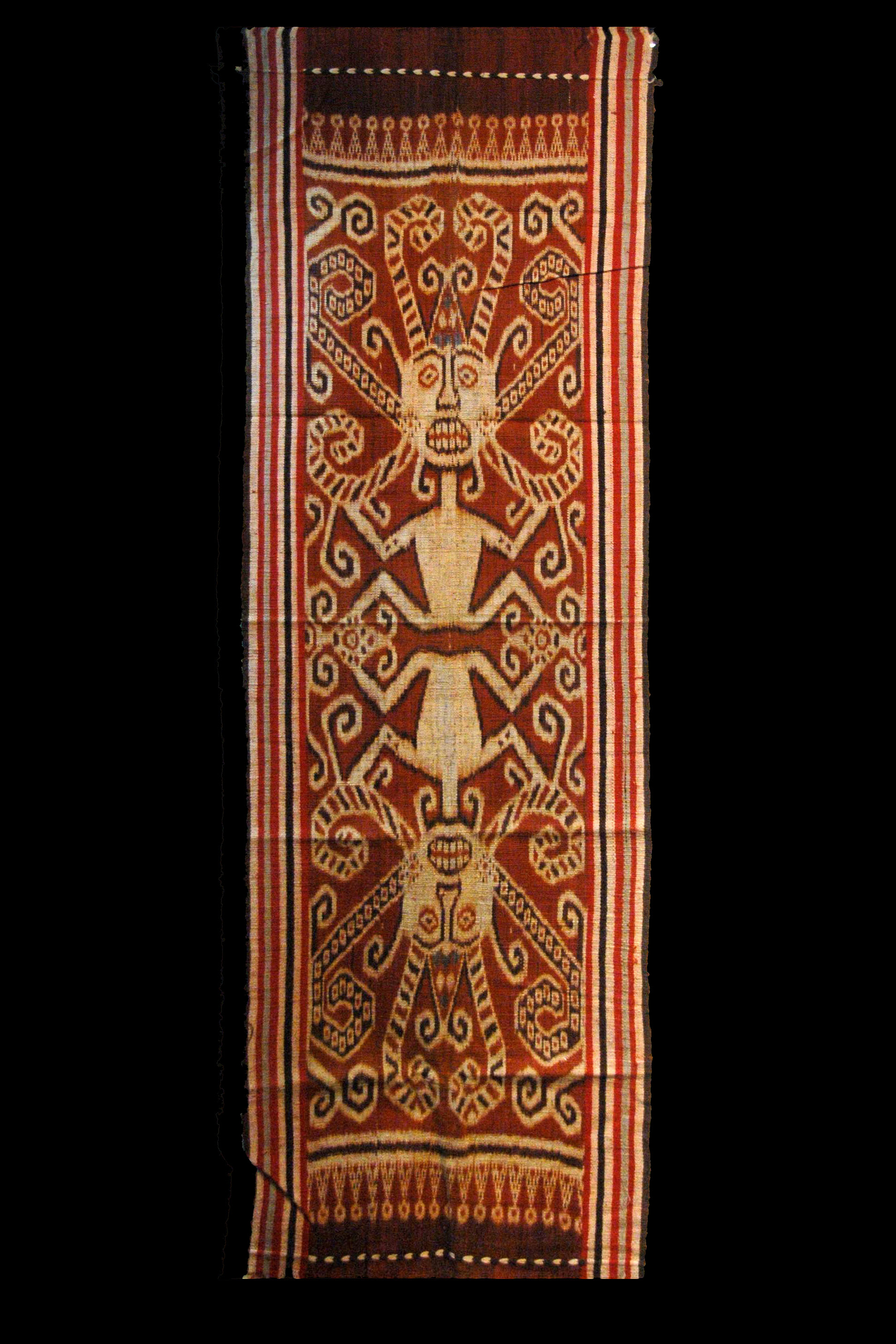
W400xL1450mm, Borneo Malaysia

Ikat involves a dyeing process which define the pattern in the yarn before the cloth is weaved.  Warp yarn are stretched on a tieing frame, bindings (dye resist) are tied onto the threads to create the desired pattern.  To achieve multiple colours, certain bindings will be remove before submerging into a different colour dye.  The tied yarn are then removed from the frame to be dyed.  The treated yarn are then carefully weaved.  This ikat is from the Iban tribe in Sarawak, Borneo, East Malaysia.  The Iban tribe are known to the world as the head hunters, the skill of which Iban men are judged by.  For the women, it is the skill of making ikat pua.  The pua are used in ceremonies; hung to mark out the ritual area, a birth of a child, marriage, funeral, healing, as well as to carry the head back after a hunting trip …


L1500xH500mm, Japan

This is a carp wind sock for the celebration of the Tango no Sekku festival (the Boy’s festival, now known as the Children’s Day).  The wind sock will be hung on a pole from April to early May.  Typically they will be hung up the roof on a pole from top down; the fukinagashi steamer, the biggest black koinobori (the father), the big red one (the mother), the small blue one (the son), the green, the purple and the orange koinobori (in sequence for the other children in the household).  As carps will swim upstream against all difficulties to achieve their goal, parents hopes their child will do the same to become a great person.

H540xW410xD200mm, China

This is screen is actually classified in history as a stationary, in the Song dynasty it is designed to be used as a screen to shield the inkwell from evaporation.  As time goes on, it became more of a desktop decorative item.  This cha ping has stone painting framed by mahogany.  The painting cleverly made use of the grain of the marble in the composition, at the back is a poem about a snow scene which reflect the marble grain.  The frame is removable, the painting can be taken out easily to show the reverse side.

W200xH300m, China

This is a mask of the Di Xi (Ground Opera); this form of opera is practice by the farmer villages in Gui Zhou area.  The folks will perform the opera passed on by the previous generation on Chinese New Year for around 20 days.  Unlike the other mask dances in China, apart from deterring away the evil spirit, the Di Xi only consist of fighting or war themes.  This specific themes can be explained by the its history; in early Ming dynasty,  tribal attacks along the border and by Mongols from the previous dynasty  has not be settled.  Military base were formed in the Gui Zhou area, these soldiers were known as the fort men (Tunpu), Di Xi was their opera, a way of introducing military and culture into the rural area.  Ceremony will be performed for the blessing of the mask, before the masks are blessed they are appreciated merely as wood carving objects, however once the blessed with prayers and scattered with the blood of a rooster they became sacred. The Di Xi masks are also worn differently from other Nuo masks; performers would covered their head with black muslin and wear the masks on their forehead.  The mask in the photo is General character, the colourful ornament on his head is in fact a helmet.