Archives for posts with tag: wood

W100xD40mm, China

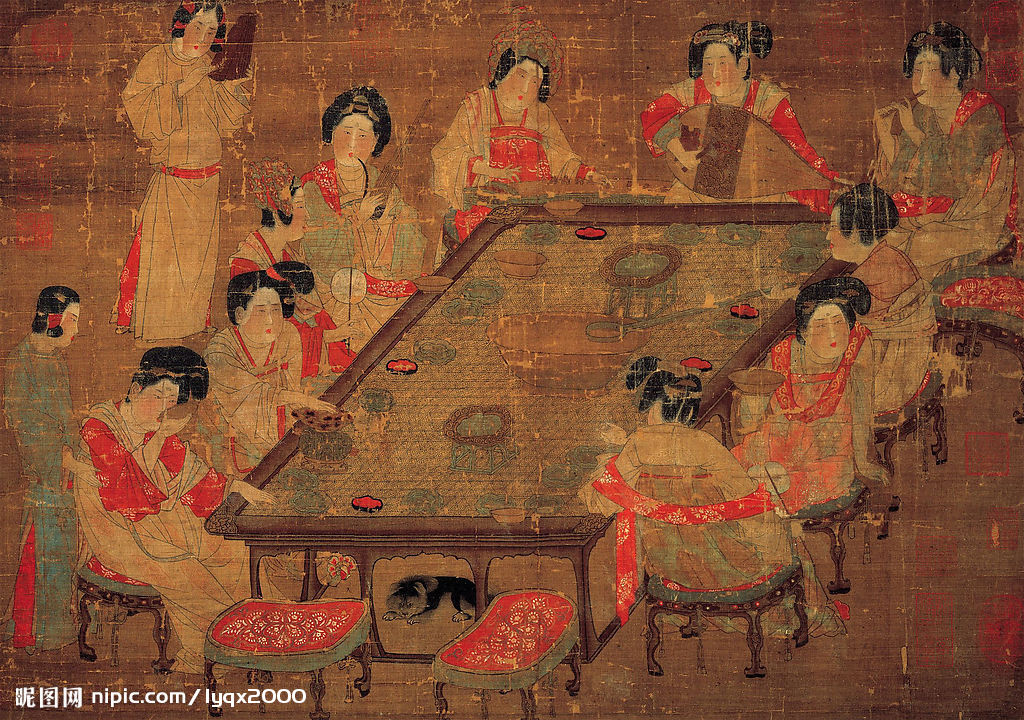
Comb in China became a special artisan trade around 700BC, the design, shape and material changes through out the different dynasty.  Apart from being a function object, it also became an accessory for hair styling in the Tong dynasty.  This can be seen in the Tang dynasty scroll “A Palace Concert” where ladies from the Emperor’s inner court were shown to be enjoying their drinks, the comb accessory can be seen as decoration in their hairdo.  This is still practiced by the minority tribes; the Shui, the Miao, the Dong tribe etc.  There is a folk tale explaining why the Shui tribe ladies have a comb in their hair, the story goes: a group of women were working hard in the fields, they have left their baby in a basket at the edge of the rice paddle.  Suddenly they heard the baby crying, they went running to see what is wrong only to found a large centipede making its way to the baby.  By the baby’s side is few wooden combs, the centipede had a look at the combs and compared the number of teeth with his own number of legs.  “Damn, i have been out numbered” thought the centipede and quickly made retreated.  Since then, the Shui tribe ladies have combs in their hair.

DIA200(up to 400)xH70mm, China

This is a lacquered dish for offering fruits (fresh and dried) for ceremony.  The dish is made in segments and hold together by a piece of wire, with the curvatures on all directions, this is a difficult task to do.  This particular dish is decorated with a gold painted floral painting, some of the dishes are decorated with figures of well known stories.  Unfortunately, these stories are often emperor based, these are forbidden during the cultural revolution, in order to save the lacquered ware, the head of these painted figures would be scrapped out hence the content of the stories removed.

H540xW410xD200mm, China

This is screen is actually classified in history as a stationary, in the Song dynasty it is designed to be used as a screen to shield the inkwell from evaporation.  As time goes on, it became more of a desktop decorative item.  This cha ping has stone painting framed by mahogany.  The painting cleverly made use of the grain of the marble in the composition, at the back is a poem about a snow scene which reflect the marble grain.  The frame is removable, the painting can be taken out easily to show the reverse side.

W200xH300m, China

This is a mask of the Di Xi (Ground Opera); this form of opera is practice by the farmer villages in Gui Zhou area.  The folks will perform the opera passed on by the previous generation on Chinese New Year for around 20 days.  Unlike the other mask dances in China, apart from deterring away the evil spirit, the Di Xi only consist of fighting or war themes.  This specific themes can be explained by the its history; in early Ming dynasty,  tribal attacks along the border and by Mongols from the previous dynasty  has not be settled.  Military base were formed in the Gui Zhou area, these soldiers were known as the fort men (Tunpu), Di Xi was their opera, a way of introducing military and culture into the rural area.  Ceremony will be performed for the blessing of the mask, before the masks are blessed they are appreciated merely as wood carving objects, however once the blessed with prayers and scattered with the blood of a rooster they became sacred. The Di Xi masks are also worn differently from other Nuo masks; performers would covered their head with black muslin and wear the masks on their forehead.  The mask in the photo is General character, the colourful ornament on his head is in fact a helmet.

Come check them out!

W180xL130xH80mm, India

These are stamps (Bunta) for making woodblock print textile.  Over a piece of draft pattern, the craftsman laboriously chisel out the design from a single block of wood.  Over at the printing sweatshop, plain colour fabric is stretched over the printing table.  The vegetable dye paste is placed in a tray and even out over a sheet of wire.  No draft or guiding sheet is used for the printing, the master printer would set out the outline colour, judging only by his eye, hands, points on the stamp and experience.  The stamp is placed and hit a few times by the fist ensuring a good impression.  The printing would go from left to right.  After the outline colour is finished, the second printer would follow, then the third etc.  The fabric is then put into an acid wash to fix the colour.

W150xL200mm, Malaysia

This is a Mah Meri mask used for the Mayin Jo-oh mask dance ceremony.  The Mah Meri is a tribe of 2000 people living along the southwest coast of West Malaysia.  Mayin Jo-oh is a traditional dance where the Muyang (plant and animal shadowless spirits) would join in the celebration.  The dance is performed by 5 women and 2 masked men in a counter clockwise fashion.

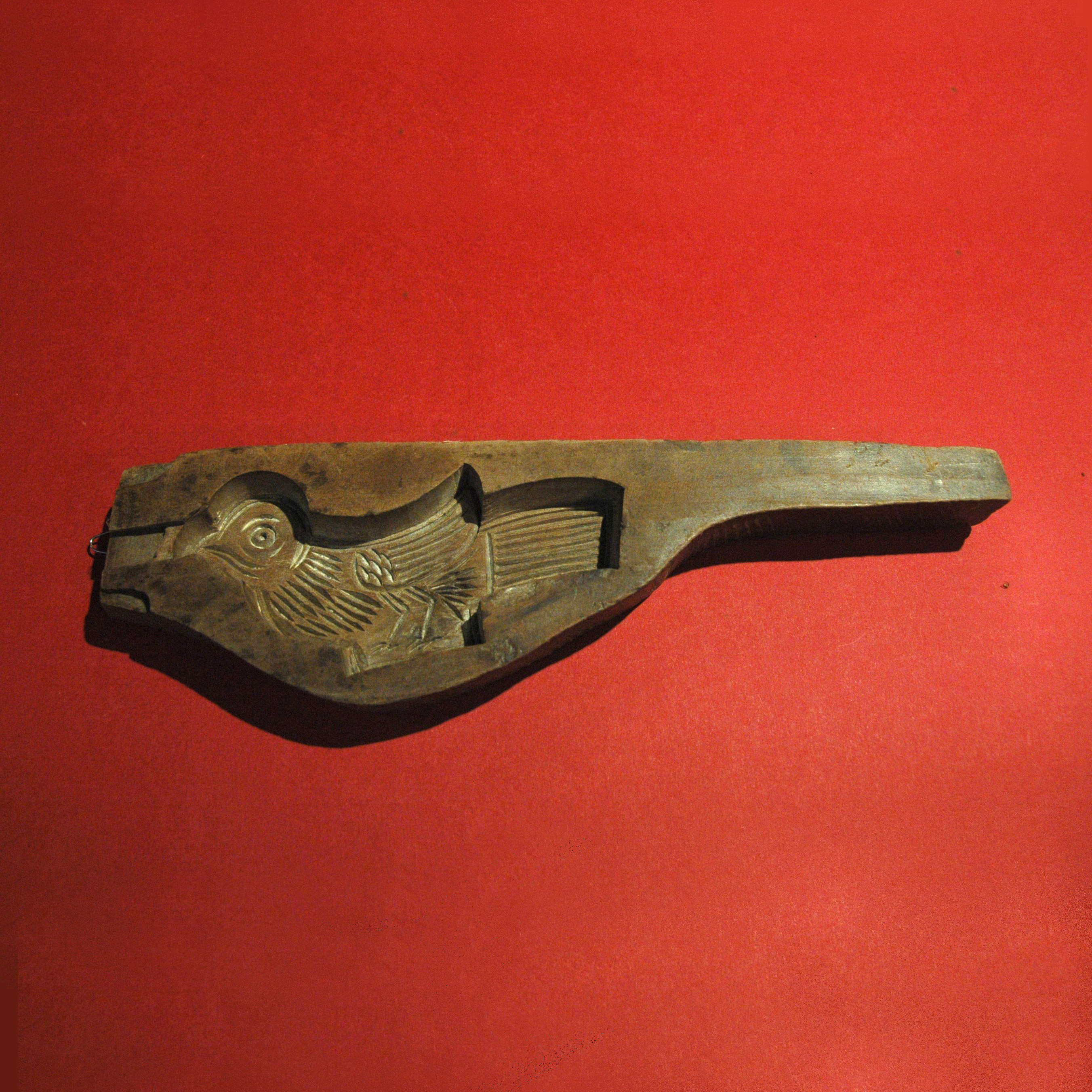
W80xL250mm, China

Traditionally a household would have a collection of different pattern cookie moulds; fish, cat, monkey, bird, bat, plants, etc.  These mould will be used for the several festivities each year with different recipes.  At the beak of the bird in this particular mould, one can see a carving adjoining to the edge of the mould, this air channel will make it easier when releasing the cookie from the mould.

L150xW130mm, Indonesia

This is a Topeng use for masked dances in Indonesia.  This mask would have been worn by the Bondres character , a joker to bring in the humorous elements in the performance.  Despite the ugly facial expression, the Bondres are popular character because of the bawdy jokes and satires that poke fun at the current events.  The jawless mask was made so for the actor to be able to speak clearly.  Each dancer would have his own collection and there are many different of these clown character.  The eye brow and moustache are made with goat hair.

H100xW50xD60mm, China

Puppets originally are used as burial item made to replace human sacrificial burial.  In the Han dynasty theatrical art developed, puppet show was not only the first performance art of China, it was the leader of all theatrical art.  By Sung Dynasty, Quan Zhou was the cosmopolitan of its time; arts, trade, religion were at their peak, religious ceremony was held every 3-5 days, the witch craft associated puppet show flourished. There was a demand of high quality puppets, the carving works of the head that were in the beginning carried out by the Buddha statue craftman were later developed as specialised art.  This is a glove puppet of a monk, the eye and the mouth can be controlled separately and there is even a small tongue!