Archives for posts with tag: soil

DIA130xH50mm, China

Comparing to the wooden box shown in the previous box, though both of the boxes are round, this is a more economical and sustainable way of achieving around wooden container.  Unlike the previous post where the box is lathes out from a solid piece of wood, this box smartly uses the idea of wooden bending and of course a circular cylinder is always the strongest form (apart from a sphere).

This item selected by Furze for the Something Old Something New exhibition and is available at both Mountain Folkcraft and Soil.

DIA75xH165mm, China

This item selected by Furze for the Something Old Something New exhibition and is available at both Mountain Folkcraft and Soil.

This is a traditional Chinese white glaze candle stand, this can be seen by the small hole on center of the top dish.  The traditional candle has a bamboo stick attached to the bottom, the candle would be secured by inserting it into the small hole.  Candle stands have been around since the 3 Kingdoms period (210AD) until the Tang dynasty they have been more descriptive and elaborated capturing the shape an animal or a plant, etc.  From the Sung dynasty, the form became more utilitarian and the 2 level form are the most common.

Talking about candles, I would like to share with you the candles hand made and designed by my friend Maha Alusi in Berlin.  And of course her view on “Passing Moments”.

http://mahaalusi.com/

DIA 140xH65mm, Hong Kong

This bowl is an example of the traditional mass production of craft which is still 100% handmade.  Notice the ring at the bottom of the bowl?  That it is unglazed?  It is not part of the pattern of the bowl but a feature of the production of the bowl itself – stack firing.

If you turn a bowl over, you will notice that the bottom of the plinth is a bit rougher, that it hasn’t got any glazing.  This is because if the glaze is there, under the heat of the kiln it would melt and cause the work to stick to the kiln board, that’s why the potter would carefully clean off any glaze.  Normally when firing each item would be placed on a kiln board and at some distance apart from other works.  In the Qin dynasty (220BC), demand for pottery is high, stack firing becomes popular in the common kiln.  The bowls would be stacked on top of each other (like how the bowls are arranged  in your kitchen cabinets), about 10 pieces tall.  To prevent the glazing on the bowl sticking together the glazing on the inside of the bowl (where the plinth of the upper bowl is touching) is removed,  hence the unglazed ring.  This would yield a lot more work in a single firing – tradition mass production.

This item selected by Furze for the Something Old Something New exhibition and is available at both Mountain Folkcraft and Soil.

DIA50 x H45mm, China

This item selected by Furze for the Something Old Something New exhibition and is available at both Mountain Folkcraft and Soil.

This Chinese porcelain tea ware is decorated with plum blossom, however, the white on the brown glaze just reminded me of Bambi.  Its not surprising that Chinese name for the Sika deer is plum blossom deer.

W300xL300mm, Korea

For the Something Old Something New Exhibition with Soil, we have the Korean artist Seung Yun Yoo and her fabric creation, hand printed dyed with natural ingredient.

Seung lives in Seoul, Korea. She makes home textile goods inspired by her plain but beautiful surroundings.  After studying fashion design at Esmod Seoul and Illinois of Art in Chicago, She worked for several clothing companies in New York and Seoul.  Recently she quited her day job and started to make her own fabric creations.  All products of Seung were printed and made individually by hand with care.  She hopes to make something simple, different and sincere which can fit into every home.

To learn more about Seung visit her blog @ http://knifeinthewaterblog.blogspot.com

Hong Kong

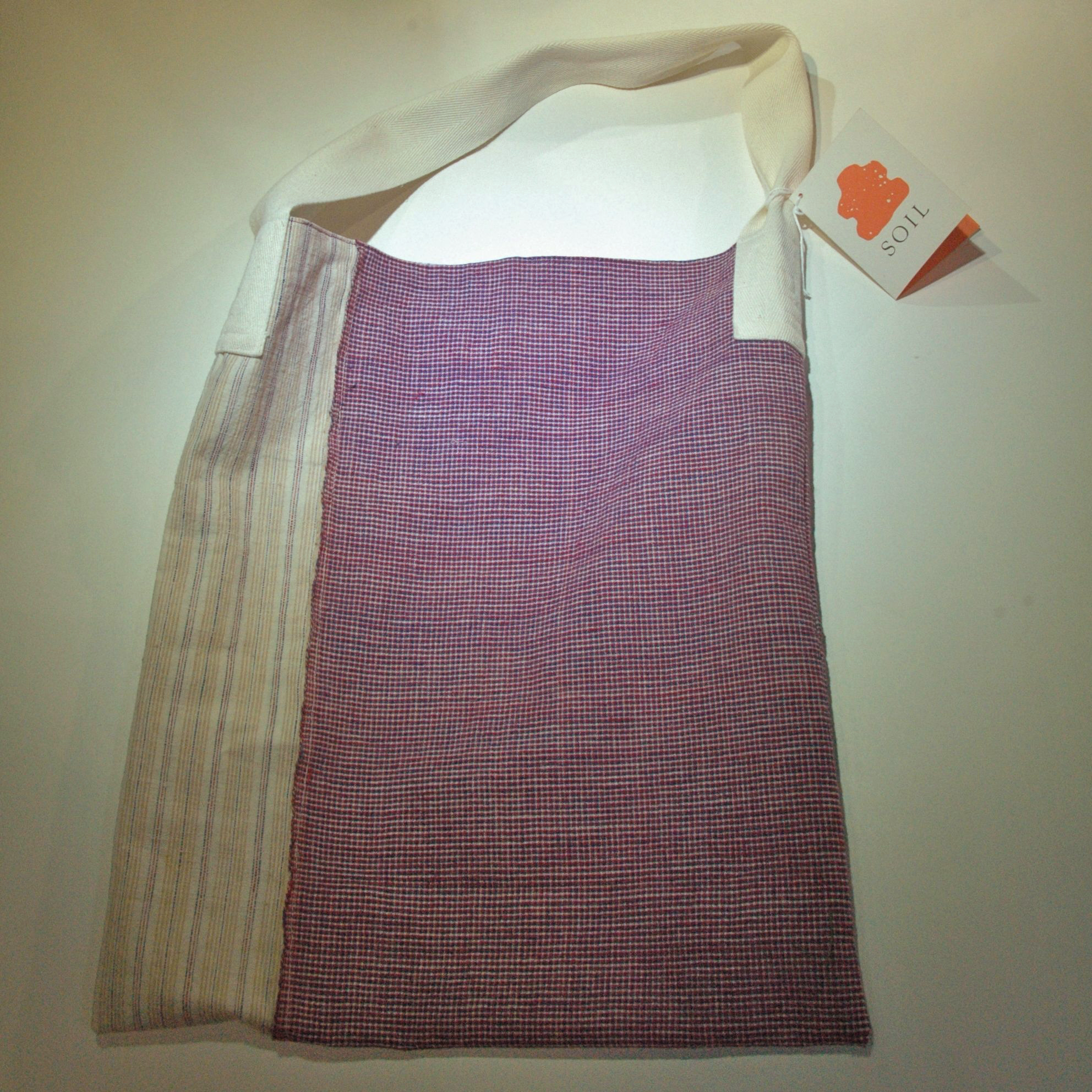
Denise is from Paiwan 台湾排灣族, an aboriginal tribe of Taiwan. Her interest on handwoven fabrics starts from her collection on minority costume.   She is not only a collector by has also become a craft designer.

These bags are made from her private collection of handwoven fabric, the construction of the bag is inspired by the traditional tailoring of the minority tribe.

Something Old Something New, a joint venture with Soil.

DIA130xH30mm, China

This was at the one time the most common bowl in the Guang Dong and Min Nan area, a bowl that is used in homes, street hawkers and local eateries, now a days they have been replaced by the durable plastic ware   Each bowl is hand printed with rooster, plantain and a flower.  There are a reasons of how the rooster made it to be the decoration for this popular bowl.

For the Chinese, the rooster is a protector of evil (see post Clay Rooster Whistle), it has also contained the 5 Chinese virtues (Knowledge = comb, Strength = footing distance, Bravery = fighting its enemy, Benevolence = calling others to feed, Credit = crowing every morning).  And finally, in the old days meat is a scarcity for common people, dishes are often decorated with chicken or fish to spice up the meal.

This item selected by Furze for the Something Old Something New exhibition and is available at both Mountain Folkcraft and Soil.

Hong Kong

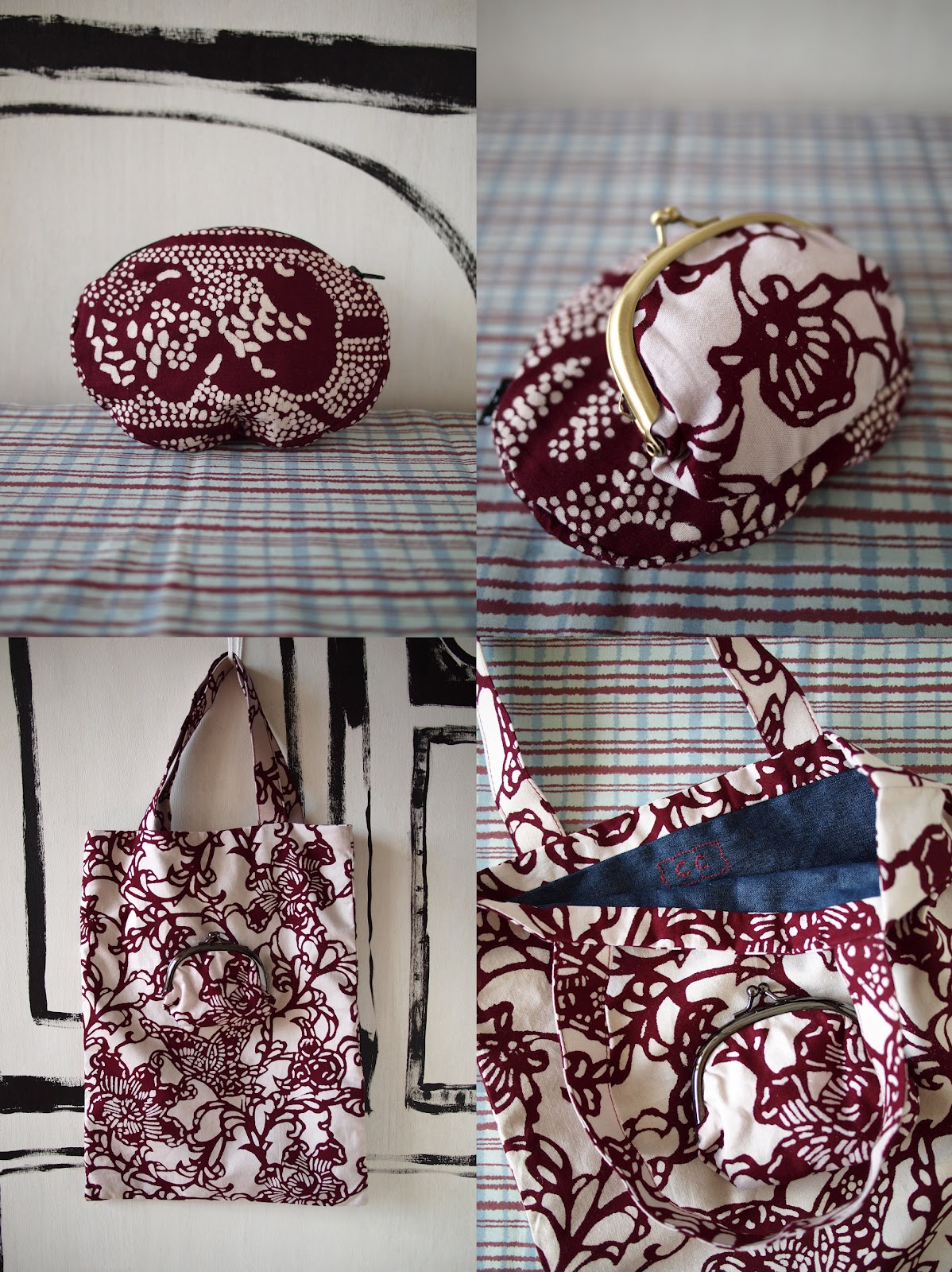
Using the fabric from Mountain Folkcraft, artist Cotton Car has created lovely purse and tote bags for the Something Old Something New exhibition with Soil.

A Pleasure in Metal Frame Purse

“besides stripes and round shapes
I enjoy working with metal frames as well
so tempting to attach it to other purses
like extra compartment, yet decorative at the same time”

Cotton Car primary source of inspiration comes from daily life, or everything around her.
To find out more about Cotton Car visit her blog @ http://cottoncar.blogspot.hk/

DIA 150xH50mm, China

This item selected by Furze for the Something Old Something New exhibition and is available at both Mountain Folkcraft and Soil.

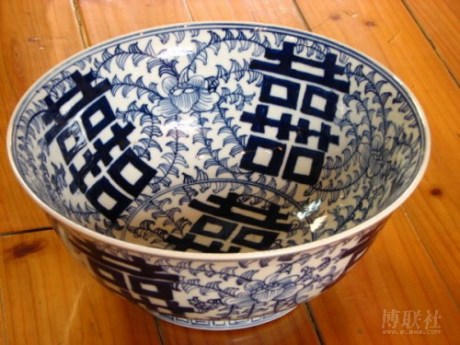
This is a folk version of the double happiness bowl; on the refined version the bowl is decorated with the word 囍 (double happiness) and a winding stem pattern that is popular in the Qing dynasty.  While the design is passed down from an official kiln to a commoner’s kiln, the design is abstracted over generation of craftsman.  This is likely to be due to that the craftsman are mostly illiterate and the design was taught to the young apprentice almost as a symbol from their master who has learnt it the same way.  Nevertheless, this abstracted bowl is known to them also as the double happiness bowl, equivalent to the original item.  The painter Wu Kuan Chung made this observation about the under glaze decoration of commoner’s kiln; some ideas which was inspired by daily life, they can being transformed into another type of art form by subtraction, multiplication or other means as long as it is still tied to the origin of living.

Can you spot the work 囍 and the scrolling foliage pattern?

Here are some hints;
the first 2 are folk version of a less simplified bowl and the last being a more refined version.  (I somehow preferred the abstracted version)

Answer: the pattern that looks like # is the word 囍 and the three circle is part of the scrolling foliage  pattern.
春 023

varies sizes, Hong Kong

For the Something Old Something New Exhibition with Soil, our curator and participating artist, Furze Chan, has created for us these Happy Dolls.  They are handmade by Furze with tie dye indigo fabric.

Furze Chan is a design freelancer in Hong Kong. Her works include publication design, web design and illustration. She owns 2 brands – “With Her Animal Poetry” and “Ferse Verse”. She was graduated in visual communications(Hong Kong Polytechnic University, the School of design)(BA) in 2006.

To learn more about Furze, visit her blog @ http://furzechan.com