Archives for posts with tag: fabric

Textile Width 870mm, China

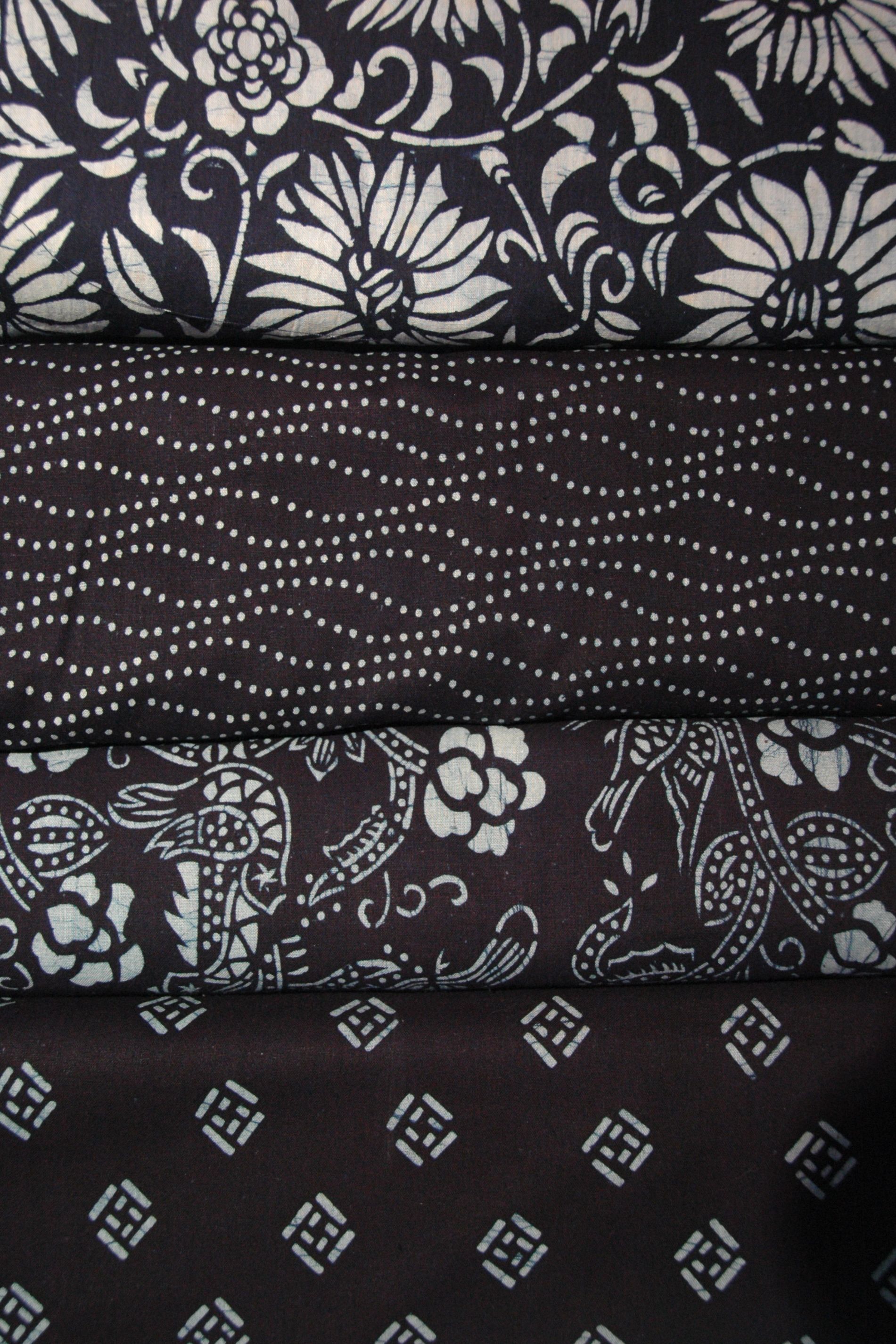
This indigo dye fabric came from Gui Zhou, a place which produces the Blue Grass (Indigofera Tinctoria L) which the indigo dye was extracted from.  Around September to October, the grass will be harvested and soaked in water for 6 days, stirring every 2 days, after which the soaking liquid is poured into a tank with lime.  The mixture is stirred for a couple of hours then left over night to precipitate, by the next day the lime would have extracted the dye, the water covering the lime is carefully taken out.  In Gui Zhou, the Blue Grass is also used for disinfectant.

For the dyeing technique of  please refer to previous post of Indigo Dye Fabric.

Come check out our hand woven fabric collection!

W800xH2000mm, China

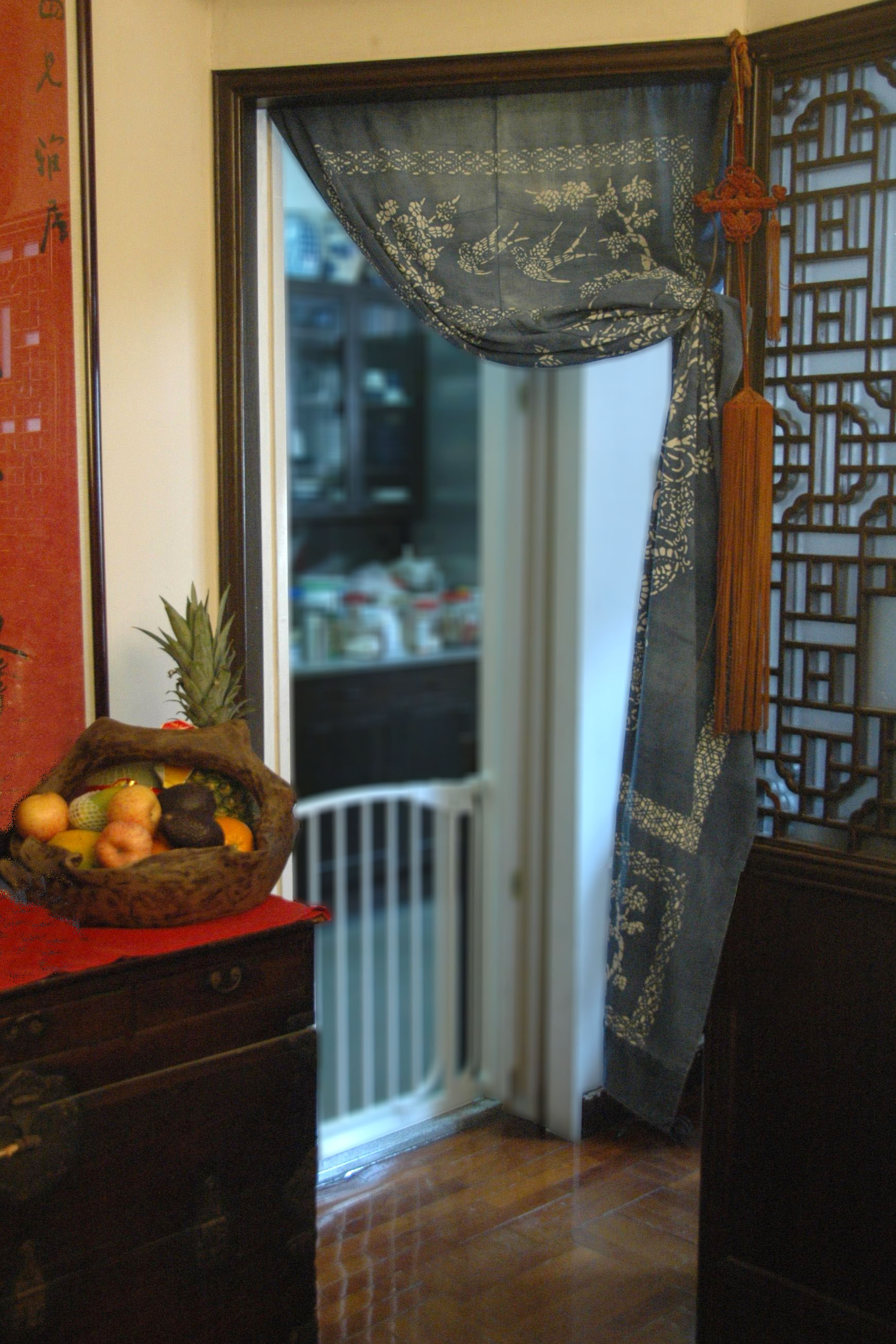
This is an indigo dyed door curtain with a curtain holder (featured previously).  The fabric door curtain are a common item when air conditioner and heating were not as popular.  In the summer time, breeze can pass through even when the curtain are lowered, the curtain can also be easily drawn.  In the winter time, quilted curtain are hanged, sometimes even over a door, this prevent the cold are entering the room when the door is opened.  Spatially, the layer of fabric defined a space and its privacy. For people outside of the space, the softness of the fabric is a gentler barrier, muttering sounds can still be heard, one can easily lift up the curtain if one wants to.  For people inside of the space, the room is complete.  (You are probably wondering why we have a harsh gate behind the curtain, this is for our dog spike, unfortunately he failed to observe the idea of the soft barrier).  This reminds me of a Chinese saying “dog lifting the door curtain” = “with mouth and no hands (all talks and no action)”

W180xL130xH80mm, India

These are stamps (Bunta) for making woodblock print textile.  Over a piece of draft pattern, the craftsman laboriously chisel out the design from a single block of wood.  Over at the printing sweatshop, plain colour fabric is stretched over the printing table.  The vegetable dye paste is placed in a tray and even out over a sheet of wire.  No draft or guiding sheet is used for the printing, the master printer would set out the outline colour, judging only by his eye, hands, points on the stamp and experience.  The stamp is placed and hit a few times by the fist ensuring a good impression.  The printing would go from left to right.  After the outline colour is finished, the second printer would follow, then the third etc.  The fabric is then put into an acid wash to fix the colour.

Textile Width 400mm, China

A paper stencil is overlay on a piece of white cotton fabric, then a paste made up of lime and soya bean flour is applied with a blade over the stencil.  The cloth is then put into the indigo dye trough for 20 mins then hang for oxidation for 30 mins (this process is to be repeated for 6-8 times).  After drying the starch paste will be scraped off, under the paste will reveal the original white colour.  For dyeing with a white background, 2 stencils would be used, one for the small pattern and second one for the background itself.  This Chinese indigo fabric uses a handwoven cotton fabric with natural indigo dye.

Curtain with the same dyeing technique.

Textile Width 880mm, China

These tie dye are from the Bei minority tribe.  It is started with a white piece of cotton cloth, the pattern are marked, area for the pattern are then tied tightly together with threads.  When the tying is done, the cloth is first dipped into clear water and then in the dye, it is then hang to let dry and dye again, the dyeing process will take several days to complete.  After dyeing, the cloth is soaked in clear water to remove any excess dye, the threads are removed and the cloth washed and the cloth stretch out.  The white pattern are the are kept out from the dye from the tightly tied knots.  The dark  blue is the colour traditionally used for Bei tribe tie dye, we have requested for the additional colour to be made (all colours are traditional vegetable dye used by the Bei minority)

 Textile Width 750mm, China

Discharge dyeing works with the removal of the dye originally applied to the fabric.  In this case, it was originally a red piece of fabric using a dye remover was applied through a stencil resulting in a pattern of the red colour.  This technique was introduced into China in the 50s which became very popular in the rural area.  Traditional fabric dyeing technique in China are based on vegetable dye where the intensity of the colour will run through time and wash.  Discharge dyeing was most welcomed as the colour stays and the patterns are fine.  This fabric has a butterfly and flower print.