Archives for posts with tag: chinese

W200xH100, China

Jan Zi is a game that has been popular in China and some other asian countries since the Han dynasty, since 1933 it has also been included in the National Games of the PRC competition.  The aim of the game is for the player to keep the weighted Jan Zi in the air using only their feet, a bit like volleyball or badminton.  The game can be divided broadly into three categories; causal, style and competition.  Causal; surround in a circle, passing the Jan Zi from player to player.  Style; free style and fixed style competition.  Competition; players to compete across a net, the game is similar to badminton where a larger jan zi is used.  The upper part of the Jan Zi is made up of goose feather while the weight at the base of cloth finished up with a piece of leather.
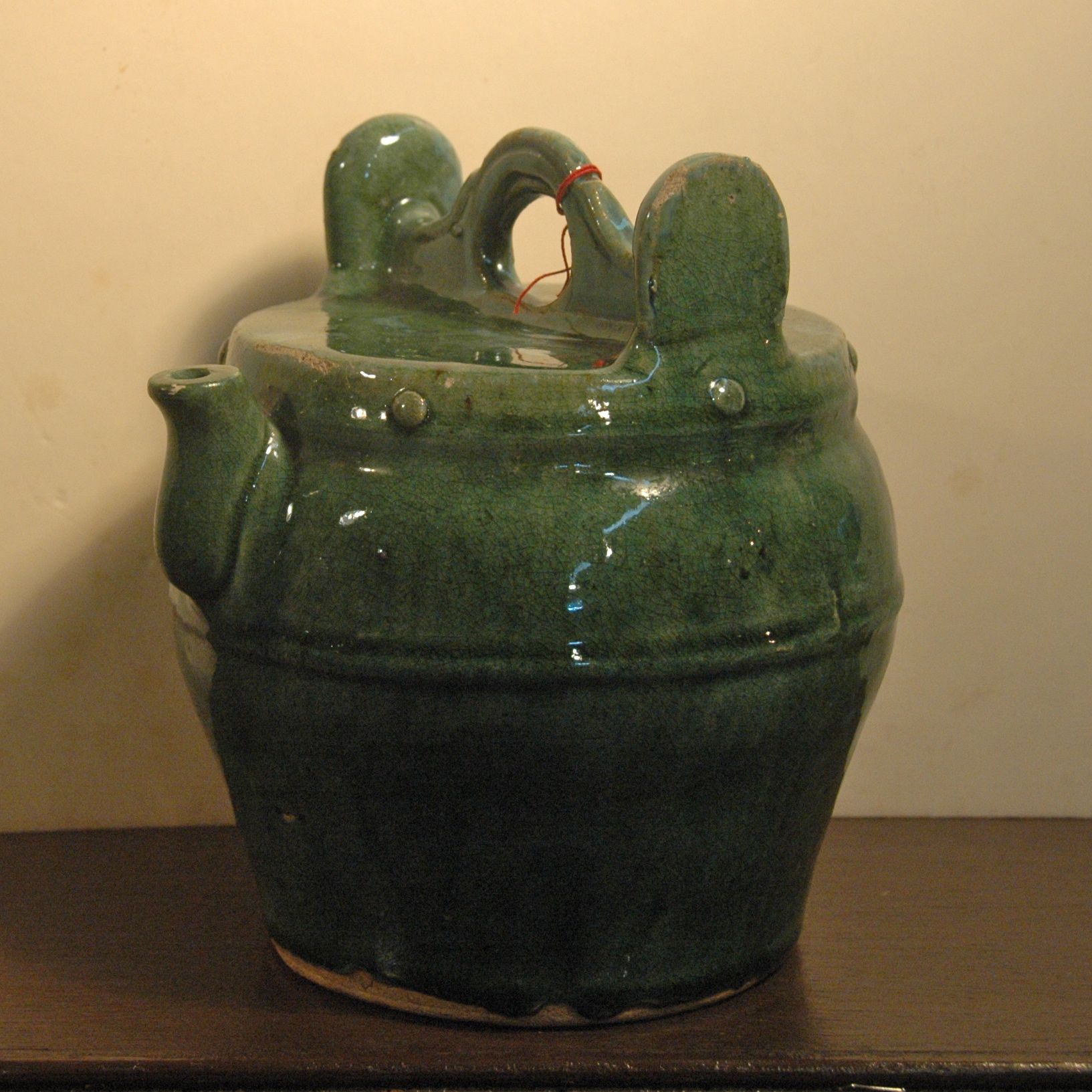
H180xW180mm, China

In the south western part of China days are long and hot, people especially labourer require large quantity of liquid to replenish.  In the Qing dynasty, small “two cents”  tea houses are quite popular in Guangzhou.  These tea houses, furnished only with a few tables and benches, are frequented by coolie taking their breaks and sharing their stories.  Hearty food, sweets and tea would be served which is in fact the origin of the morning dim sum.  This kind of  Shi Wan green glazed teapot would be found in such tea houses.

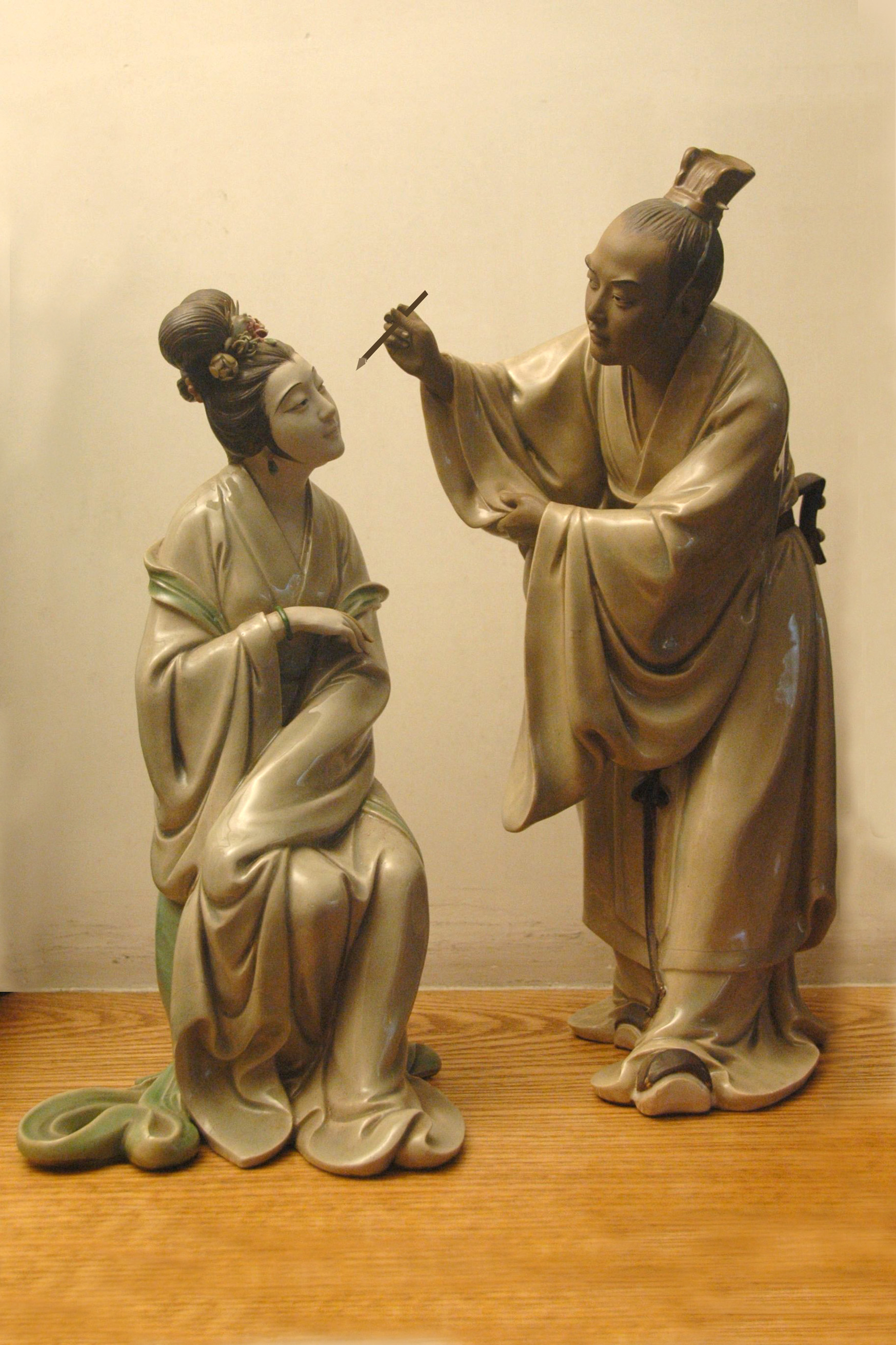
Man H400xW150mm, China

This is a story about Zhang Chang, a noble official in the Han Dynasty who kept the country at peace for many years.  Being faithful and out spoken, others officials were jealous and would find faults in him to report to the Emperor.  Zhang’s wife was beautiful, everyday Zhang would touch up her eyebrow before going to work.  His rivals reported this to the Emperor and when he was questioned, he answered “there are more ridiculous thing a married couple would do in the bedroom, please ask me only about my duty, what I do with my wife is only my business.”  Because of the nature of the story, it is a very popular subject for work of art.  The Shi Wan area is famous for its pottery; its beautiful colour glaze, the fine detail and the capture of the gestures.

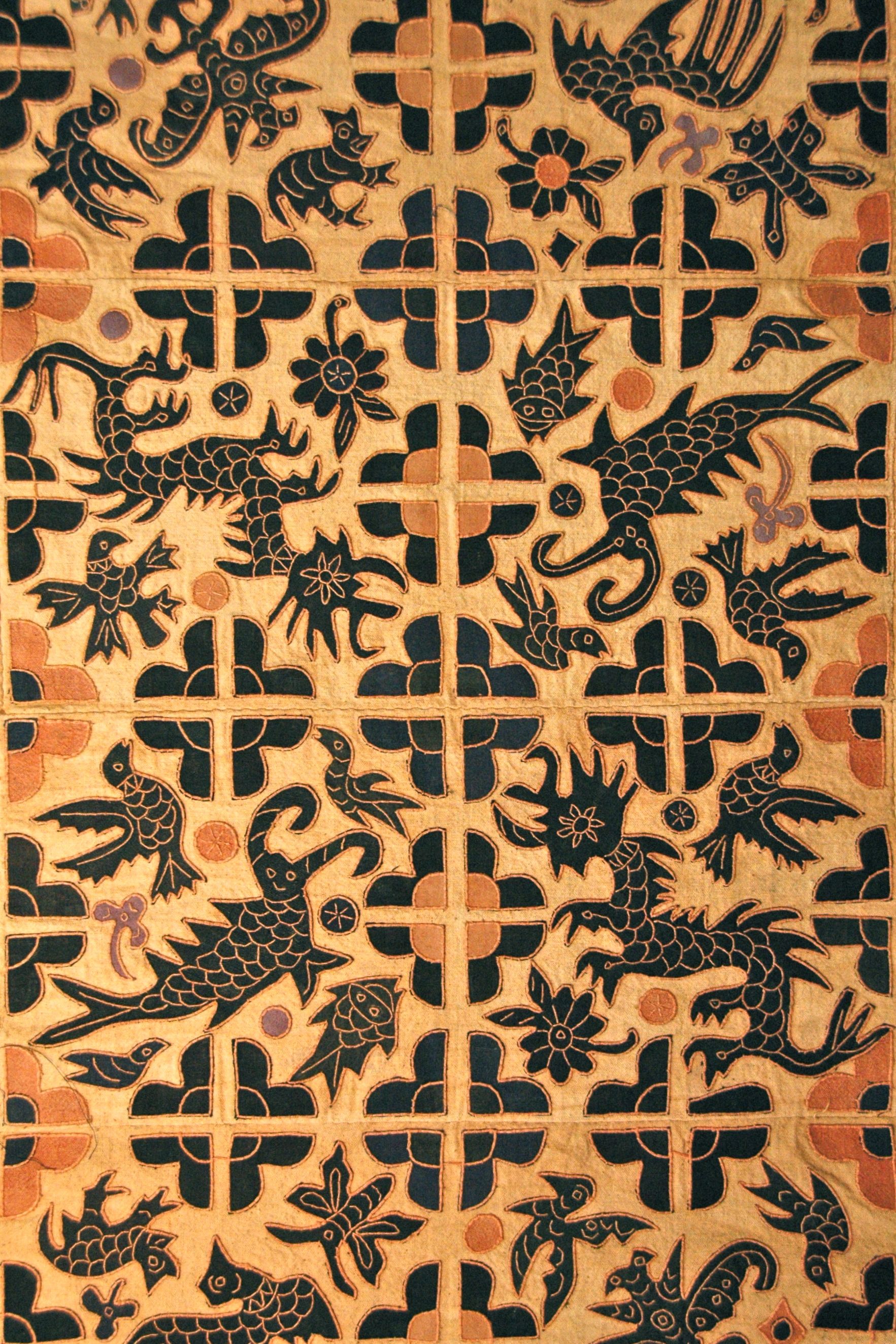
L1400xW1000mm, China

This is a patchwork embroidery duvet cover of the Miao Zu minority tribe.  As the name patchwork embroidery suggests, its a combination of both type of needlework; colours are created by the patchwork and the detail added in by the embroidery.  The Miao has their own individual language but not an individual text; their history is passed down the generations by word of mouth in form of songs or as a design on their embroidery.  The story is symbolised by the pattern of the embroidery, for example in this work, bird = happiness and freedom, flower = young girl, butterfly = mother, dragon = power, etc.

Dog H20xL20mm, China

Children like creating sounds and Chinese children are no different,  in fact sound making toy is a category by itself!  What can more desirable than a portable cute looking figurine that can make beautiful sounds!  Both of these whistles have a tail at the end as a mouth piece, the second hole for generating the sound is located at the bottom.  These ceramic whistles are in the shape of a dog and a bird.

DIA 150mm, China

The buddhist rosary, Mala, is used for counting the number of times the Mantra is recited.  This is a 21 bead waist mala, if you count the numbers there are actually 22 beads, the additional larger coral bead in the center is known as the Guru bead, it symbolizes the Guru from whom one has received the mantra being recited.  Within the 21 beads there are 3 marker beads.  The main beads are made of blue sand gemstone,  while the Guru and separator beads in coral.

China

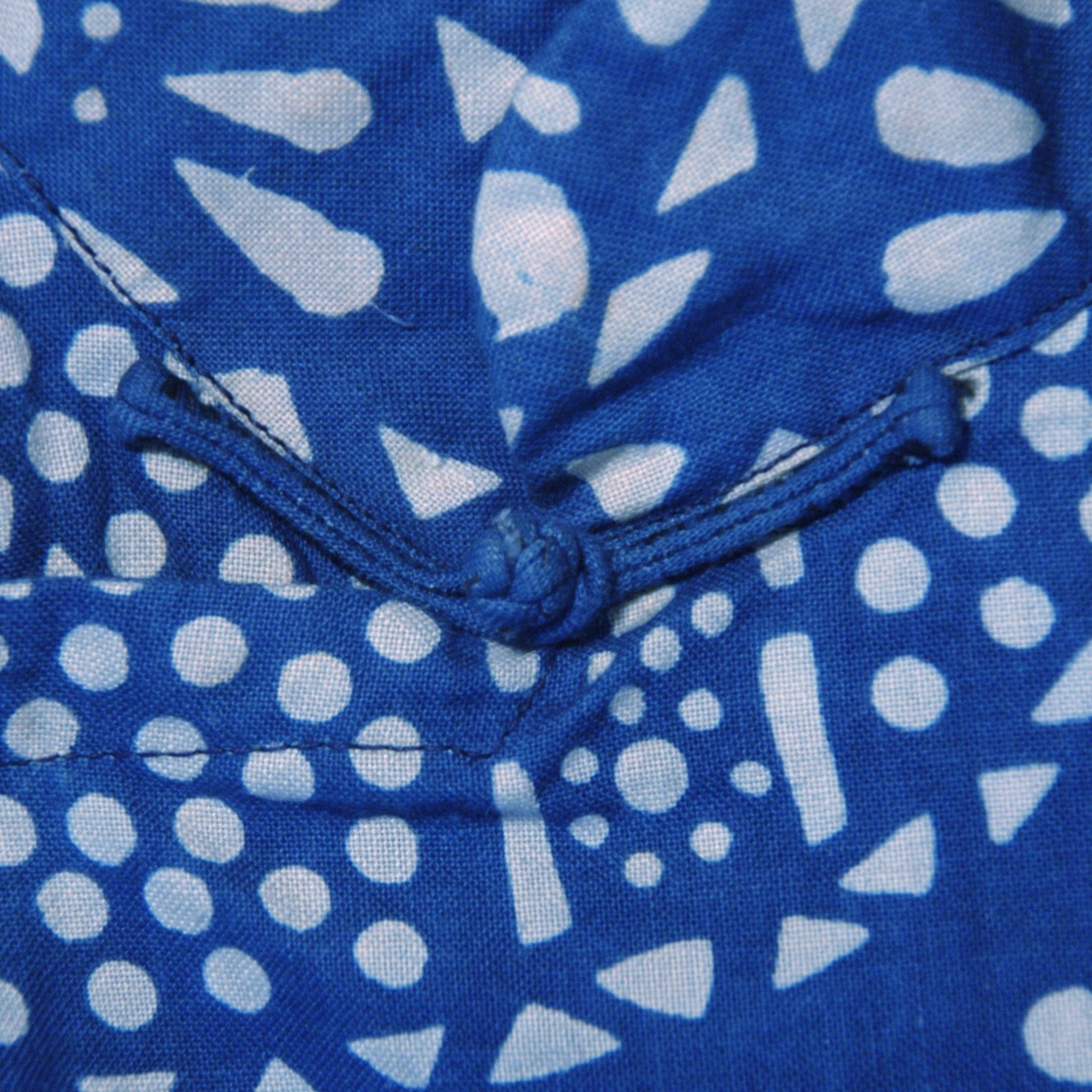
The Chinese developed a elaborated art of knotting which became popular in the Tang and Song Dynasty, however the concept of knotting as “button” did not appear until the Ming Dynasty, before that clothing were held together simply by tying up two strapes.  Apart from knot buttons other type of buttons appears e.g. copper, silver, pearl, agate, etc., apart from being functional, they also became a status accessory.   Knotting for buttons developed into several forms,some more elaborated than others, the knotting diagram shown above is for a basic design.

H150xW50xD70mm, Macau

Along the coasts and waterway of the southern China there is a tribe called the Tanka who reside on the junk boats.  Each family would have two small boats,one anchored for living and the other for fishing.  Wooden figurines of Gods and ancestors are made for worshiping and to offer blessing when they are out at sea.  With the decreasing number of fish and the better job opportunities on land, there are now only 1/5 of the Tanka still living at sea.

W400xL400mm, China

This is believed to be a piece of  Han Xiu embroidery from the area around Wu Han.  Han Xiu differ from the famous four Chinese embroidery styles where the colour scheme are flat and without shades.  Flourished in the early Qing Dynasty,  this style has now become a dying trade as the artisans have disappeared during the war.  This art has recently been listed as Intangible Cultural Heritage by the Chinese Government.  This particular piece of embroidery is a remnant of the decorative piece of a duvet cover.

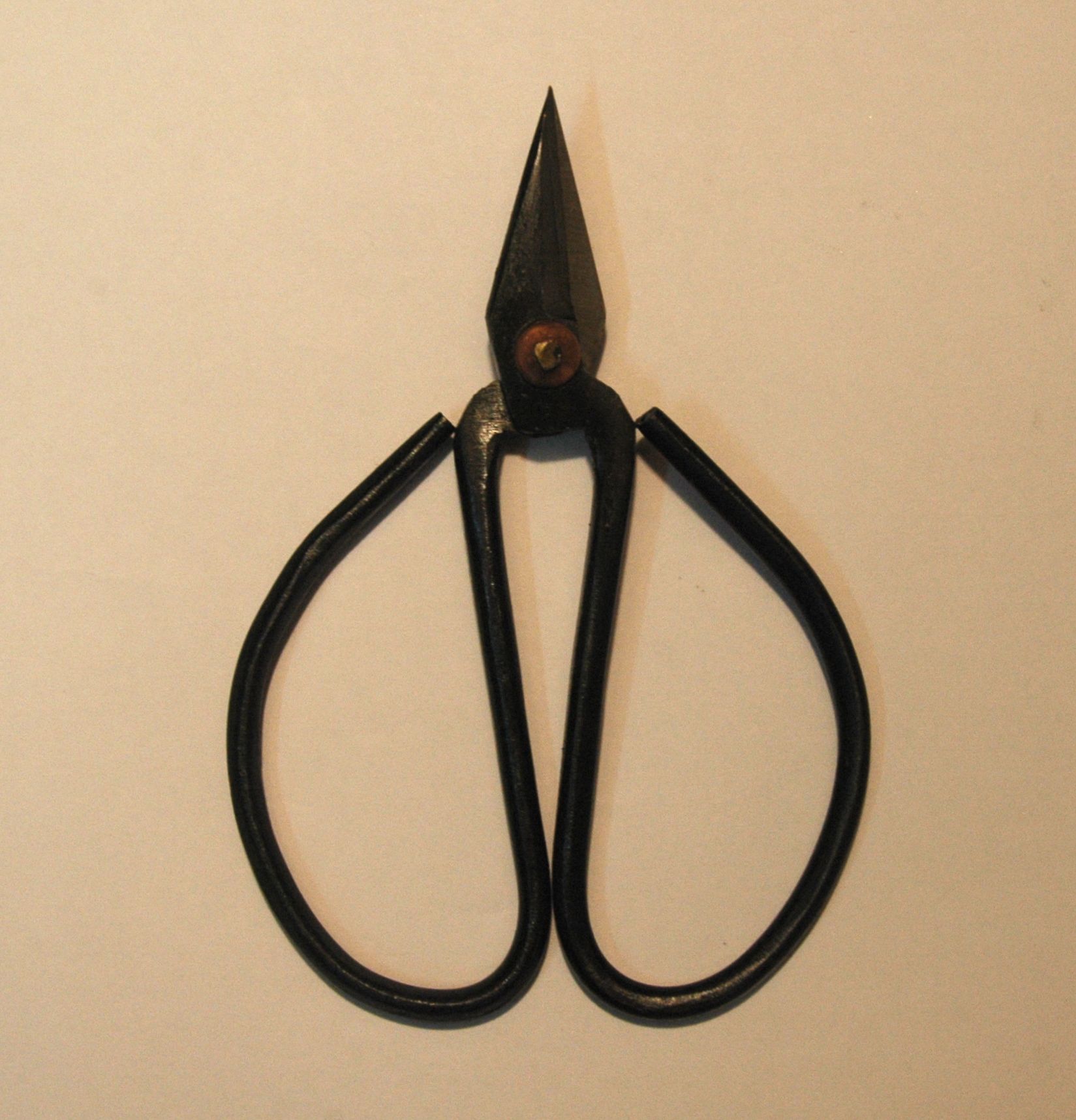
L120xW120mm, China

The early form of scissors in China is made with a single piece of flat metal stripe ribboned  to form a kind of spring shear.  As times goes by the pivot point moved further away from the blades developing better control for the tool.  The two parts scissors only started to appear in the Zong Dynasty, the two blades were held by a nail with the rest of the metal bar forming the handle.  To reduce the friction caused by the two blades, the blades are made slightly curved, touching only at the pivot and the tips.  During cutting only one point will meet to enable the shearing action, this is controlled by the hand movement of the user (so unlike the western scissors, the pivot are tuned loose).