Archives for posts with tag: chinese

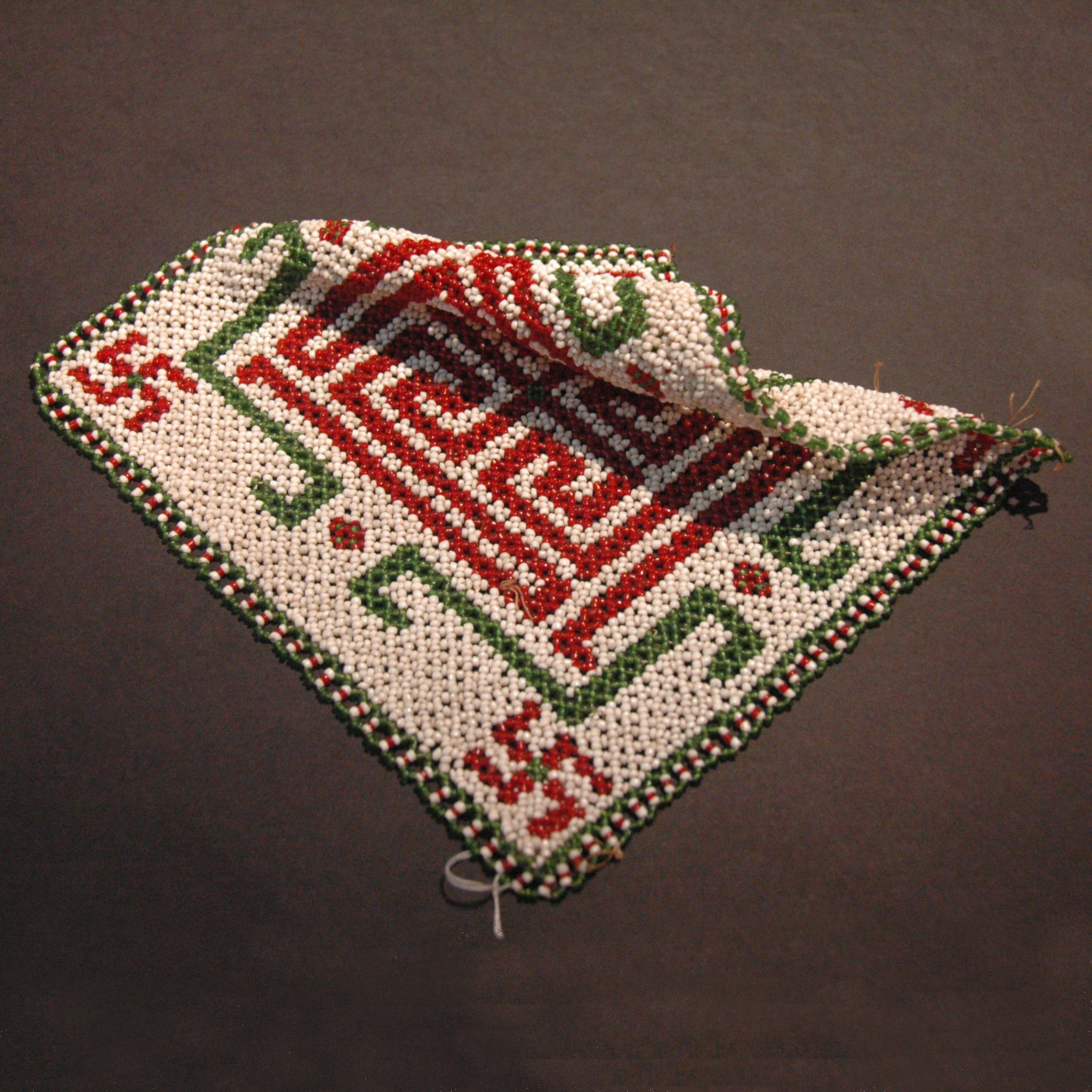
W200xL200mm, China

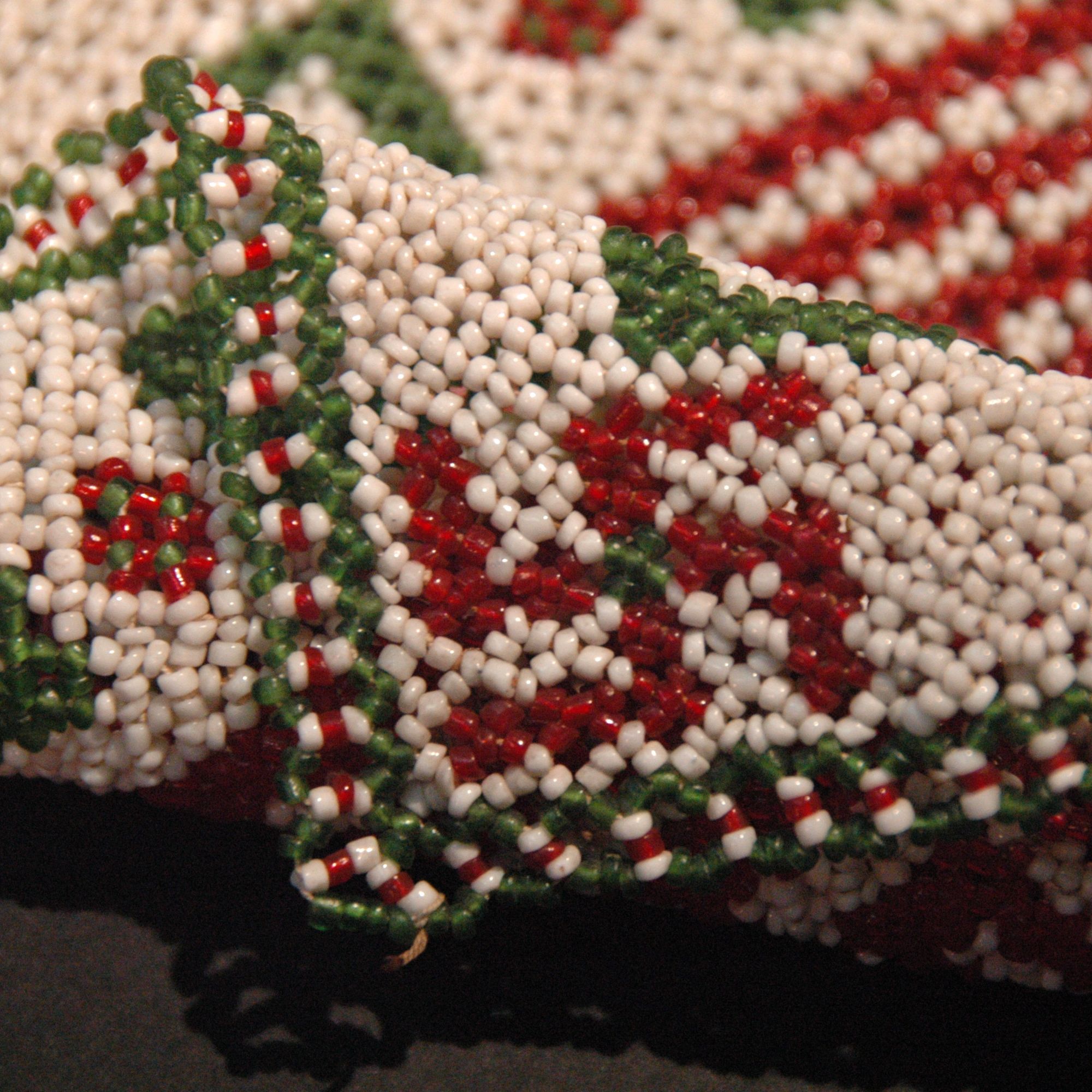
There are 2 lucky symbols on this glass bead mate; the Swastika signs at the corner and the longevity sign in the middle.  The 卐 (Swastika) sign has been passed on to China along with ancient Indian Buddhism religion.  In the 7th century, the Tang Empress Wu Ze Tian, ordered for its inclusion as a Chinese character, selected the right spinning version, to be pronounced as Wan with the meaning “the focal point of blessing from all direction”.  Since then apart from its original Buddhism uses, 卐 was also used as a household blessing symbol from embroidery to pottery and architectural decorations, the symbol also become more graphic and elaborated.  Longevity, has long been a symbol the Chinese adores for decoration.  This symbol on the beaded mate is one generated from the typography of the word Shou (longevity).

W250xH300mm, China

Before the arrival of cinema, television and the internet, shadow puppet was the “it” entertainment in China.  The puppet is placed next to the screen (a 1 sq m treated muslin)  with lighting from behind.  Like the theater, the puppet casts include the hero, heroine, masculine, villain and of course the clown.  Each puppet is controlled with 5 bamboo stick; the puppeteer is responsible for the control 4 puppets, singing, narration, dialogue and drums.  The shadow puppet is usually made of  donkey skin which give a more transparent effect.

W500xL600mm, China

Though paper is one of the 4 great invention of China, handmade paper is a dying art.  To earn a living from making paper is hard work; there are all together 72 steps!  This is only a rough idea what is has been done to make the paper.

First, in late spring young bamboo are collected from the forest, these 2 m long bamboo are then cut into 2 cm wide stripes.  These stripes are soaked in lime water for 2 to 3 months.  At the point, the bamboo would have turned yellowish, they are then rinsed and cleaned with water and the knots and the outer skin will be removed.  These stripes are then put in a 5 m long x 1 m wide wooden trough for stomping (just as grape stomping for wine).  Now we finally have the paste for paper making; the paste is put into a 2 m long by 1 m tall wooden trough and mixed with a glue solution.  A deckle with fine silk sieve mounted on a wooden frame is lowered into the paste and then taken out, after the water is drained away a thin layer of paste is left.  The paste sheet is flipped out on wooden board, silk sieve removed and we have a wet piece of paper.  These wet paper is piled up and water squeeze out under the wooden press.  Lastly, the paper are separated and posted on the drying room one by one.  These workshops are usually run by 10 people;  2 for the stripping of bamboo, 2 for stomping, 3 for sieving, 2 for drying and one for all the other bits and pieces.

W150xL200xH150mm, China

This is a hand built pottery; a woven basket in the form of a traditional Chinese bamboo creel.

Dia200mm, China

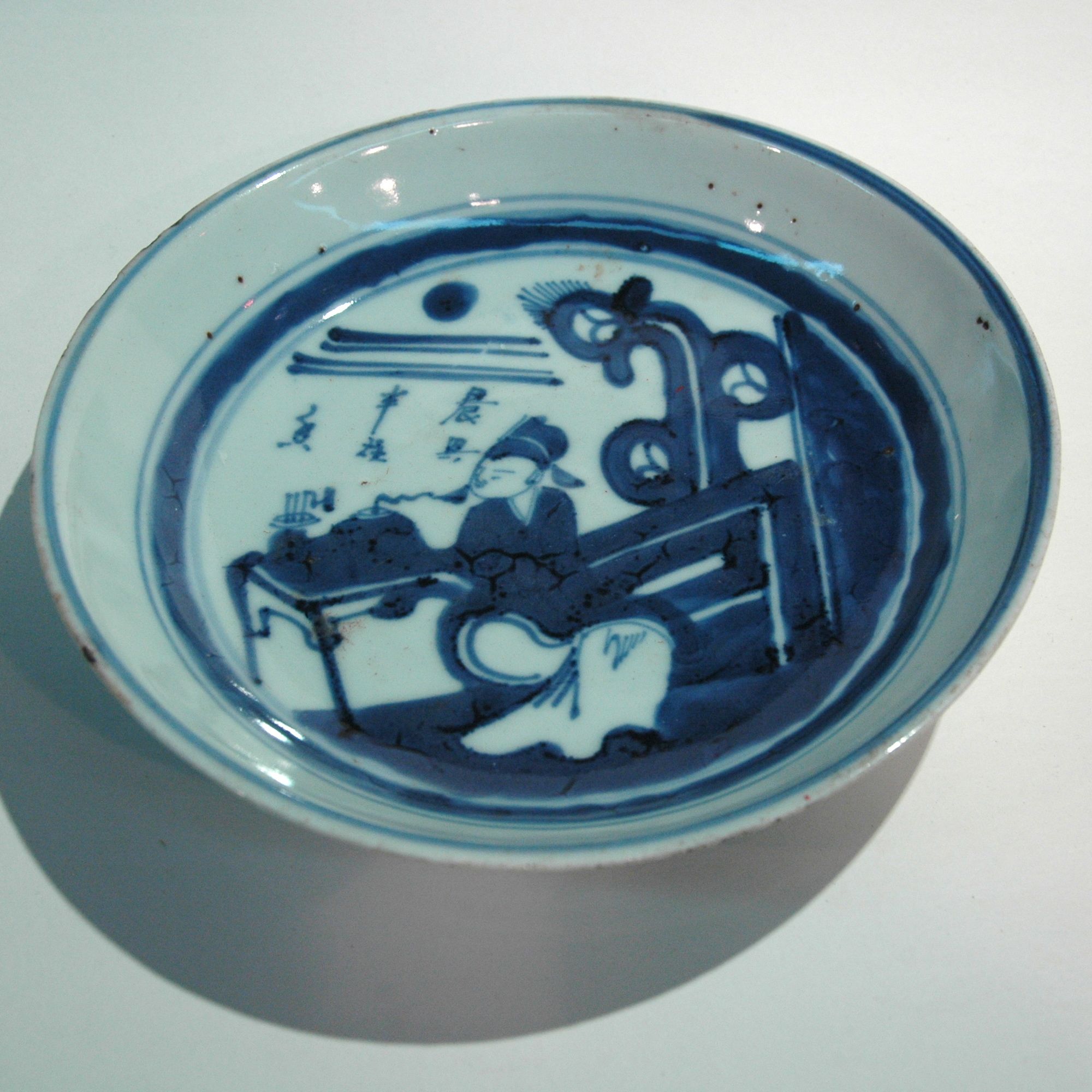
This is design of the scholar and the incense is a popular design of the De Hua pottery town, a town that has been making pottery since the Ming dynasty.  Probably because it is situated close to the coast, by Qing dynasty their work are made mainly for export.  The same design has also been recovered from the treasure of the Tek Sing shipwreck.

W150xH300mm, China

The traditional Chinese beds are almost like rooms on their own; there is an entrance through a gate at the front, the sides and the back are filled with wood carving panels or balustrade, even the roof are paneled.  Unlike the western bed where the user can get on from 2 sides and the end if they so want to, the chinese bed can only be entranced from one side.  If a couple were on the bed, the one sleeping inside will have to squeeze pass from the foot of the other person to get out of bed by the gate.  The gate is covered by a curtain which is drawn open in the day time and close at night.  This is the metal hook for holding apart the curtain over the bed, they come in a pair.

W140xD110xH70mm, China

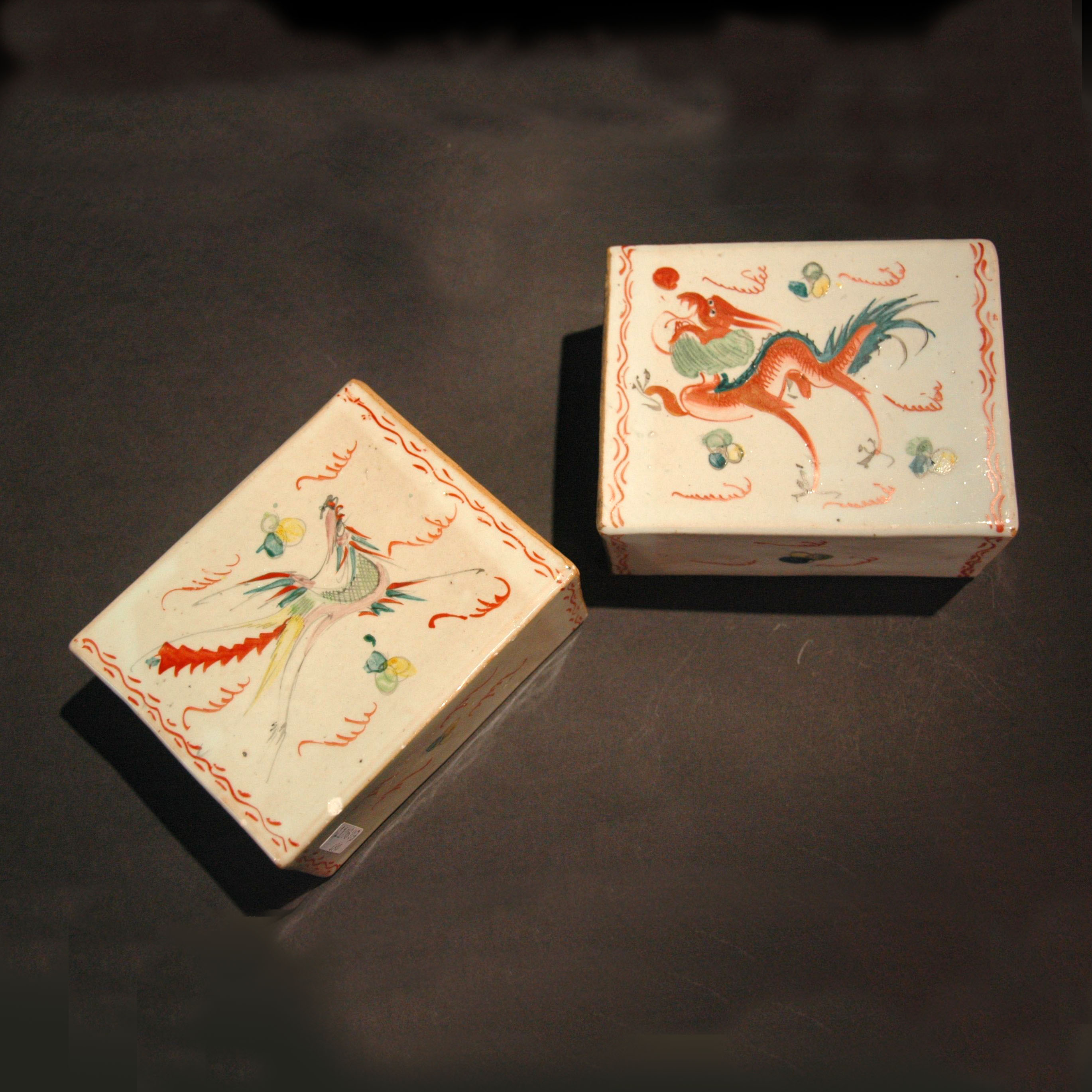
This pair of rectangular ceramic brick like objects are actually pillows!  Its most natural to seek for something to support one’s head while sleep, by Siu dynasty (600 AD), after trying different material, the Chinese came up with pottery.  The earthenware pillows are heavy and hard, these are used for burial.  Glazed porcelain are smooth, light and cool; by the Song dynasty they became a household item, there are a vast number of shapes and design.  For the reason of firing and the reduction of weight and material, the porcelain pillows are made hollow with airing holes on either side, another reason is for the cooling of the user.  At the time when there are no air con, electrical fans, these helped to pass many long hot summer nights.  This is a pair of  simple rectangular pillow with design of the dragon and phoenix painted on, perfect for wedding.

Congratulation GY and Miranda!

L80xH50mm, China

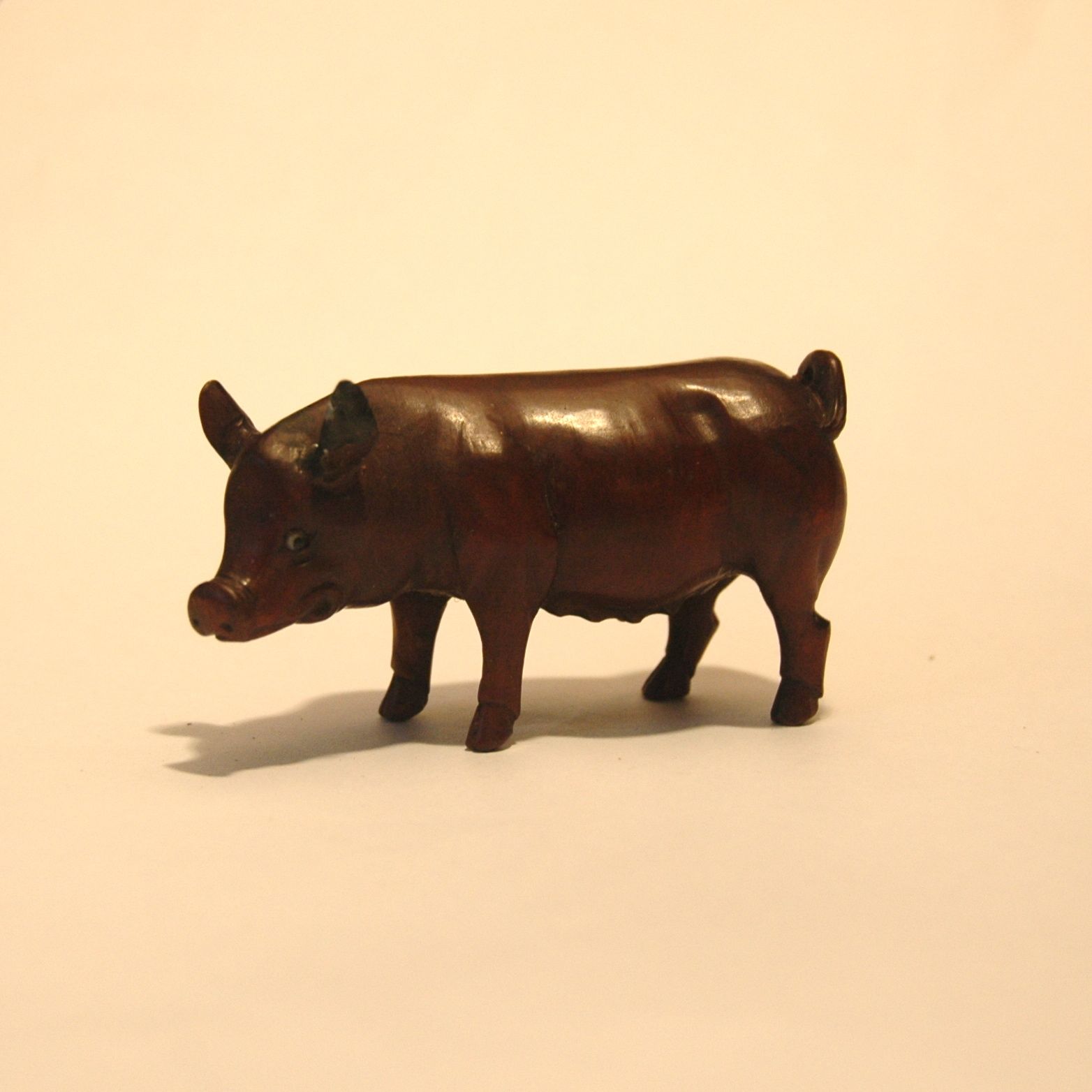
Sorry piggy, I writing a good roast pork (Char Shui) recipe today;

INGREDIENTS

  • 1 kg boneless pork shoulder
    (the rolled one in supermarket is fine)
  • 2 tbs honey

MARINADE

  • 2 tbs hoisin sauce
  • 2 tbs ground yellow bean sauce
  • 4 tbs thin soya sauce
  • 5 tbs sugar
  • 1 tbs medium dry sherry
  • 2 tbs chinese rose wine
  • 1 tsp salt
  1. Divide the pork into 50mm wide long stripes, leave the fat on
  2. Mix the marinade and marinade for at least 4 hrs
    (turning every 30 mins)
  3. Preheat the oven to 180c, place the strips of pork on a wire rack in the middle of the oven (put a tray of water a the bottom to ease cleaning)
  4. Roast for 30 mins, redip in marinade and roast again for 30 mins
  5. Take out, test that it is cooked, rest on rack, applied honey, sliced up to 10mm thick and enjoyed!

W80xL100mm, China
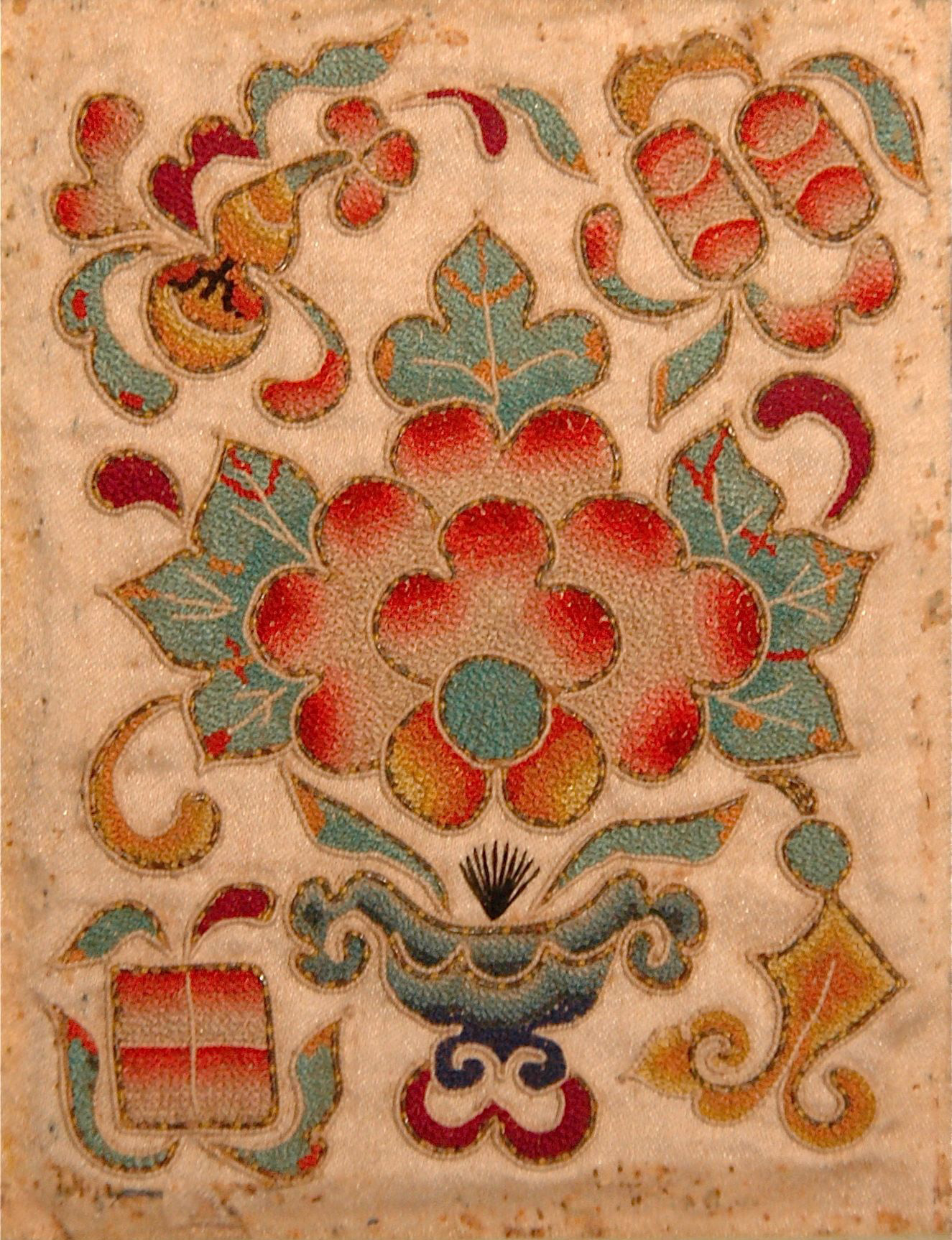
(If you see this image on an iphone, that will be close to the actual size.  This embroidery is very small)

This is a piece of typical Beijing style embroidery with the use of the Da Zi stitch which is a specific to the Beijing embroidery.  With the Da Zi stitch each stitch is required to be of the same size, spacing and height, this demand a embroider to be able to use the same pressure for each stitch and to know where each stitch should be located.  The Beijing style embroidery uses Da Zi stitch as a colour shade filler, each stitch is looped individually.  The Beijing style embroidery work is labourious; in 1 sq cm, there would be 150 Da Zi stitches!

W230xD110xH180mm, China

This is a bamboo case with all the parts; hinges, bolds, handles are made out of bamboo.  This brings back a lot of memories for me, as a child of a folkcraft shop owners this is the version of the Bond’s gadget briefcase I had.  Inside stored all my little treasures.