Archives for posts with tag: chinese

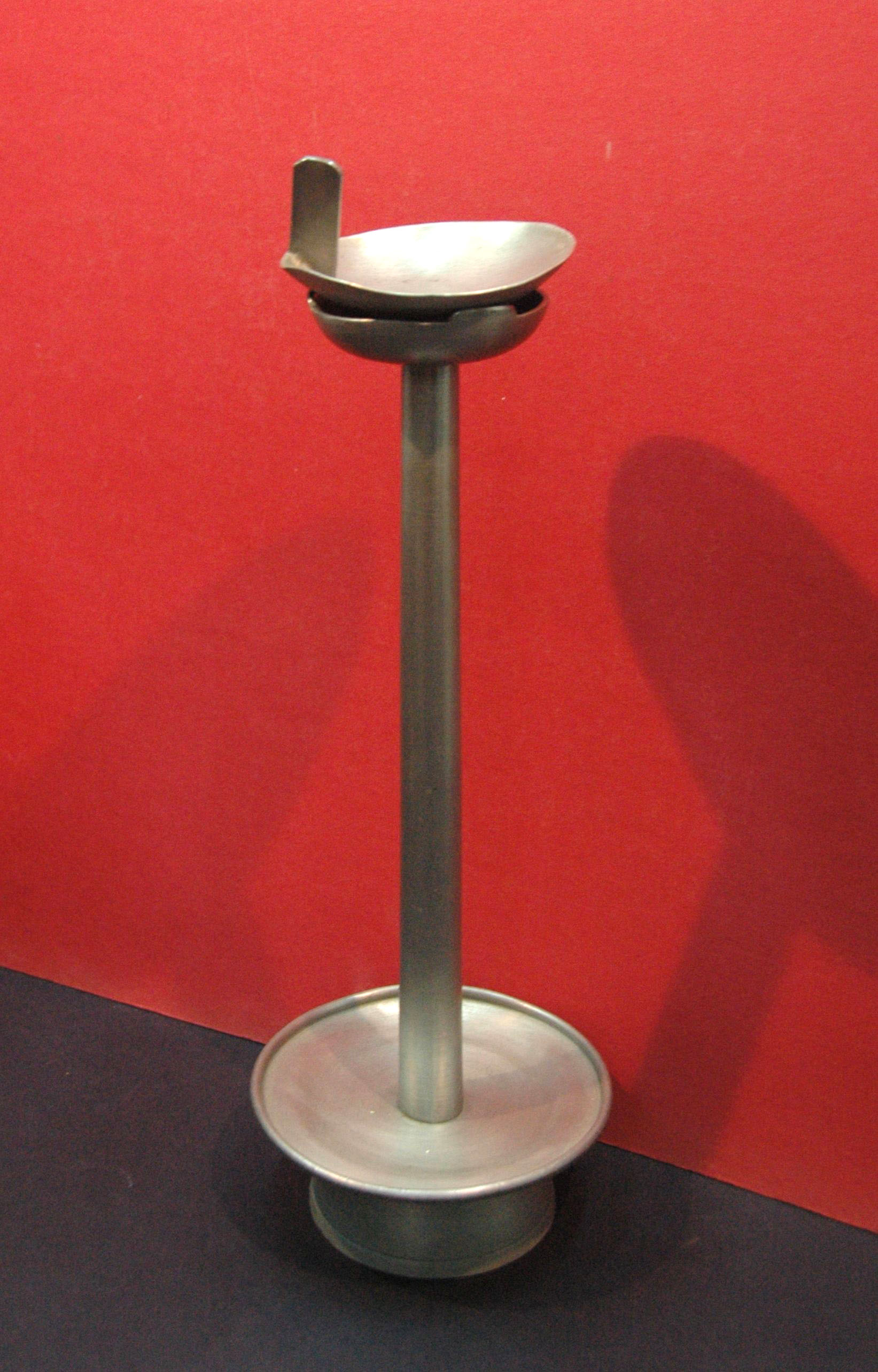
DIA100xH350mm, China

Oil lamp was the source of lighting in old China, as the technology advance metal lamps became more common by the Qing dynasty.  It quickly became popular because of its durability over the ceramic oil lamps.  This is one of a pair of the standard pewter lamp used in the old days in the Chinese wedding ceremony.

L220mm, China

Chopstick has been around in China for more than 3000 years; there has been many material used for making them, wood, bamboo, ivory, bone, lacquered, silver, gold, jade and of course the recent plastic and stainless steel version.  It is commonly believed that silver is used as a material for its ability to detect poison.  Perhaps it is the tarnishing of the silver from the sulphur in arsenic that made the name of the silver chopstick.  Please dont be alarmed by the tarnished silver on this pair of chopstick, it is due to natural oxidation from its age and not from any poison.  The legend of the silver chopstick goes like this; the famous politician of the Zhou dynasty Jiang Zi Ya was once only interest in fishing (with a straight hook) and nothing else.  His wife got fed up with his idleness and decided to kill him and to marry someone else.  One day as usual, he came home empty handed after fishing, his wife had prepared a spiked up meat dish for his supper, just as he tried to grab the meat a bird flew in and packed on his hand.  The bird did it again and again as he tried to go for the meat, sensing something is out of the ordinary, he pretend to chase the bird and left the house.  Up a hill, the bird told him only to eat with the two sticks on the ground where it stood.  Jiang return home and pick up the meat with the sticks as he was told, smoke appears and his wife fainted.  His eating sticks got famous and everyone started eating with chopsticks.  The moral of the story …. men, dont go fishing too often + remember to bring at least a fish home (even if you have to buy it from the supermarket).
DIA260xH480mm, China

This lacquered water bucket is part of the bridal dowry of a Chinese wedding.  The basic dowry list for bucket section would include a foot a water bucket, a foot washing basin and a chamber pot.  The list for a well off family would go up to more than 20 items.  All these items have in common is that they are all lacquered in red and structurally formed like a barrel, segments of circular planks tightened together by a piece of metal.  The bucket artisan used to be a very popular trade, making every day use items, repairs and of course the dowry items, but as China became industrialized now there is only a handful of old artisan left.

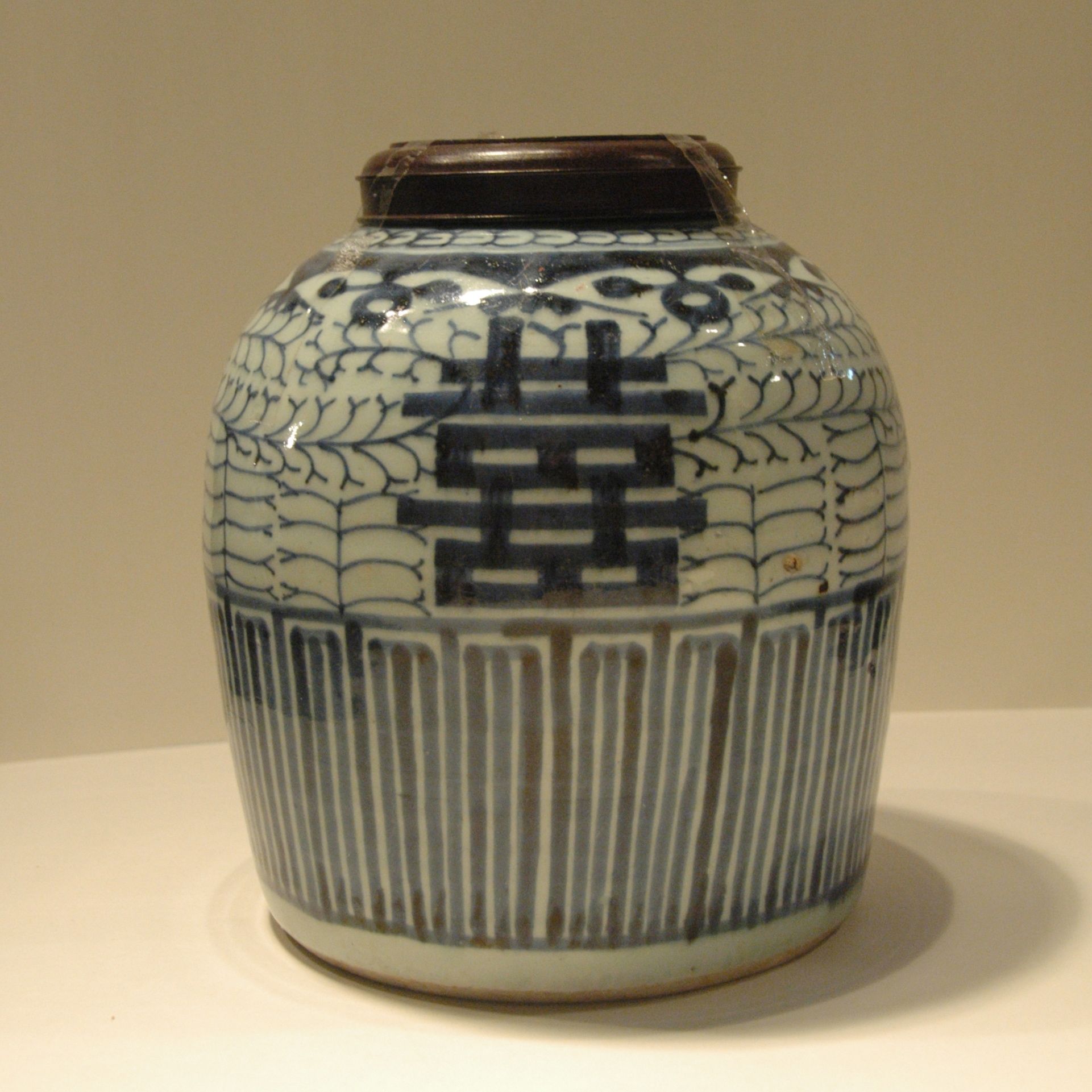
DIA180xH250mm, China

In the old days, for a common Chinese family the ceramic items on the dowry list would include: one vase, a pair of blue and white double happiness jars, a pair of hat rest.  Inside of the jars would be placed dates and lotus seeds as a symbol of  adding a son for the family.

D180xH180mm, China

It used to be as popular as the electrical kettle, every big family would have one in the house.  The teapot with tea already brewed would be kept warm in this rattan weaved basket.  Inside the basket is padded with cloth with only a custom made void for the teapot.  The tea cozy was invented in the Qing dynasty, some are weaved with rattan, some of reed and some straw.  The ratten is first cleaned and the knots untied, the skin is removed and the core polished.  The cozy is decorated with bronze accessory which unfortunately most are no longer on this piece.

W400xH250mm, China

The folding fan was introduced to China from Japan in the Song dynasty; they were a gift from monk Chonen to the Emperor.  Emperor Zhu Di lead on the fan fashion, he ordered the court to produce a large number of hand fans, decorated with poems or verses and award the to the high officials.  This became to the trend of the intellectuals, exchanging poems and calligraphy through the fans as a gesture of friendship.  Even the Qing dynasty, the fashion of hand fan was well in its height.  This is a fan from the 50s, a Bai Ju Yi poem about parenthood was added by my father recently.

W100xD40mm, China

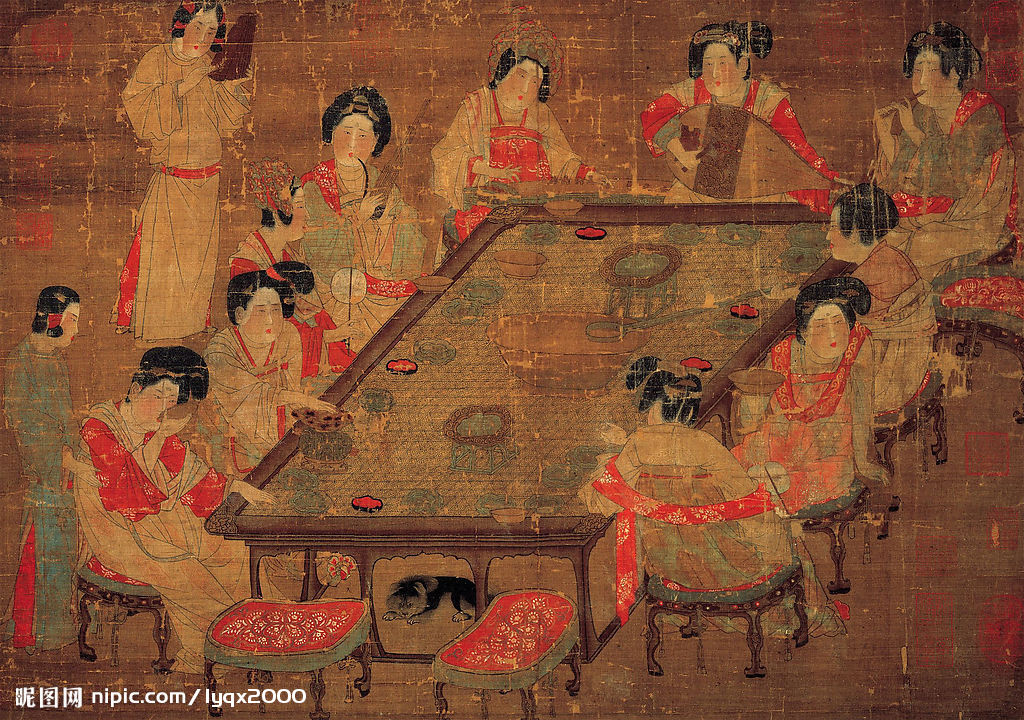
Comb in China became a special artisan trade around 700BC, the design, shape and material changes through out the different dynasty.  Apart from being a function object, it also became an accessory for hair styling in the Tong dynasty.  This can be seen in the Tang dynasty scroll “A Palace Concert” where ladies from the Emperor’s inner court were shown to be enjoying their drinks, the comb accessory can be seen as decoration in their hairdo.  This is still practiced by the minority tribes; the Shui, the Miao, the Dong tribe etc.  There is a folk tale explaining why the Shui tribe ladies have a comb in their hair, the story goes: a group of women were working hard in the fields, they have left their baby in a basket at the edge of the rice paddle.  Suddenly they heard the baby crying, they went running to see what is wrong only to found a large centipede making its way to the baby.  By the baby’s side is few wooden combs, the centipede had a look at the combs and compared the number of teeth with his own number of legs.  “Damn, i have been out numbered” thought the centipede and quickly made retreated.  Since then, the Shui tribe ladies have combs in their hair.

DIA120mm, China

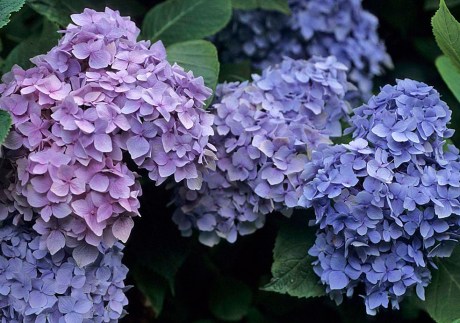
Yesterday we talked about a representation of  the Xiu Qiu on wood carving (see Golden Wood Carving-01/08/2012), here is the real thing.  The legend behind the Xiu Qiu is a love story; some 800 years ago in the old town of Jing Xi, Ah Di was in love the with girl Ah Xiu of the neighboring village.  One spring, when Ah Xiu was shopping in the market, a rich arrogant brat had his eyes on her and want her as his wife.  Ah Xiu turned down the proposal because of her love for Ah Di.  When the wealthy guy was furious and bribed the court to give Ah Di a death sentence.  Ah Xiu was blinded by her tears but she decided to make a xiu qiu for Ah Di as a keepsake.  Before the execution Ah Xiu visited Ah Di at the prison and gave him the xiu qiu as a gesture of her love for him, at that moment the siu qiu lighted up and transported both of them to a place far away from their villages.  And of course, they lived happily ever after …  Since then it became a popular keepsake.

For its resemblance, the Chinese has also named the Hydrangea as the Xiu Qiu flower.

DIA150xH300mm, China

Gourd is kind of squash, its latin name is Lagenaria Siceraria, traditionally the Chinese view it as an icon of blessing.  It has been with the Chinese culture for a long long time, its seeds were found at a Zhe Jiang 5000BC archaeological site, the hollowed out dried skin is probably the first liquid container used before pottery and bronze.  It is also commonly used in the old days to store medicine, there is an old say, “wonder what kind of potion is stored in this gourd” meaning a suspicion of someone up to something.

The gourd used for the basket is not of the common “8” shape (see entry Small Gourd) form but a more rounded shape, which is a species from Japan.

China

This is part of the armrest detail for the Chinese wooden furniture.

Come check them out!