Archives for posts with tag: chinese

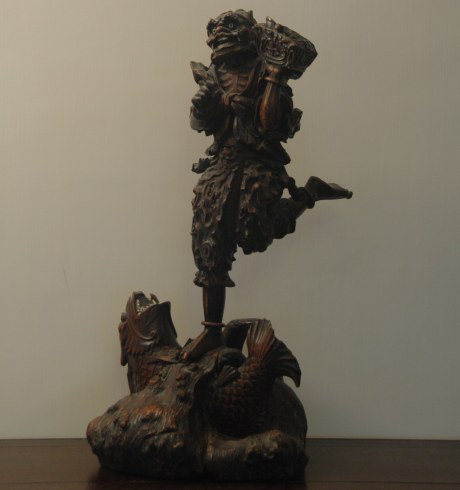
Kui XingW250xD250xH500mm, China

This is a figurine of the Kui Xing, unlike the one posted earlier, this figurine has a more popular composition; its left leg is kicking backward in the air.  This composition is inspired by the word 魁 (the Chinese word for “Kui”).  Can you see the resemblance?

魁, on the left is the word 鬼 (ghost) and the left 斗 (dou – traditional Chinese unit for volume, where 1 dan = 10 dou).  The word 鬼 (ghost) reflect the appearance of Kui Xing, a talented scholar who was born with a face so slightly that he looked like a ghost .  The word  斗 (dou),  goes back to phrase 才高八斗 which is a praise for someone’s intellect, if the intellect in the world is measured to be 1 dan, someone who has 8 dou of the world intellect who be a genius.  Dou therefore became a measurement of intellect as well as for wine.

W330xH430mm, China

Verre eglomise is a technique which dated back to Roman time as early as 400AD and revived in Europe in varies different centuries.  The French term was attributed by the french decorator Jean-Baptise Glomy who made it popular again in the 18th Century.  Verre eglomise was introduced to China from the west in the Qing dynasty, it quickly took on as a home decorative object for the wealthy and riches.  By the end of the Qing dynasty  it has been adapted as a popular craft form in China, so much that they were also for exports back to Europe.

W230xD230xH270mm, China

This is an octagon tea cosy, it was used as an insulator for the ceramic and metal teapot which gets cold easily.  The small opening is for the spout of the teapot while the top two is for the lock of the lid which unfortunately is missing.

Here is another tea cozy made with bamboo.

L250xW70mm, China

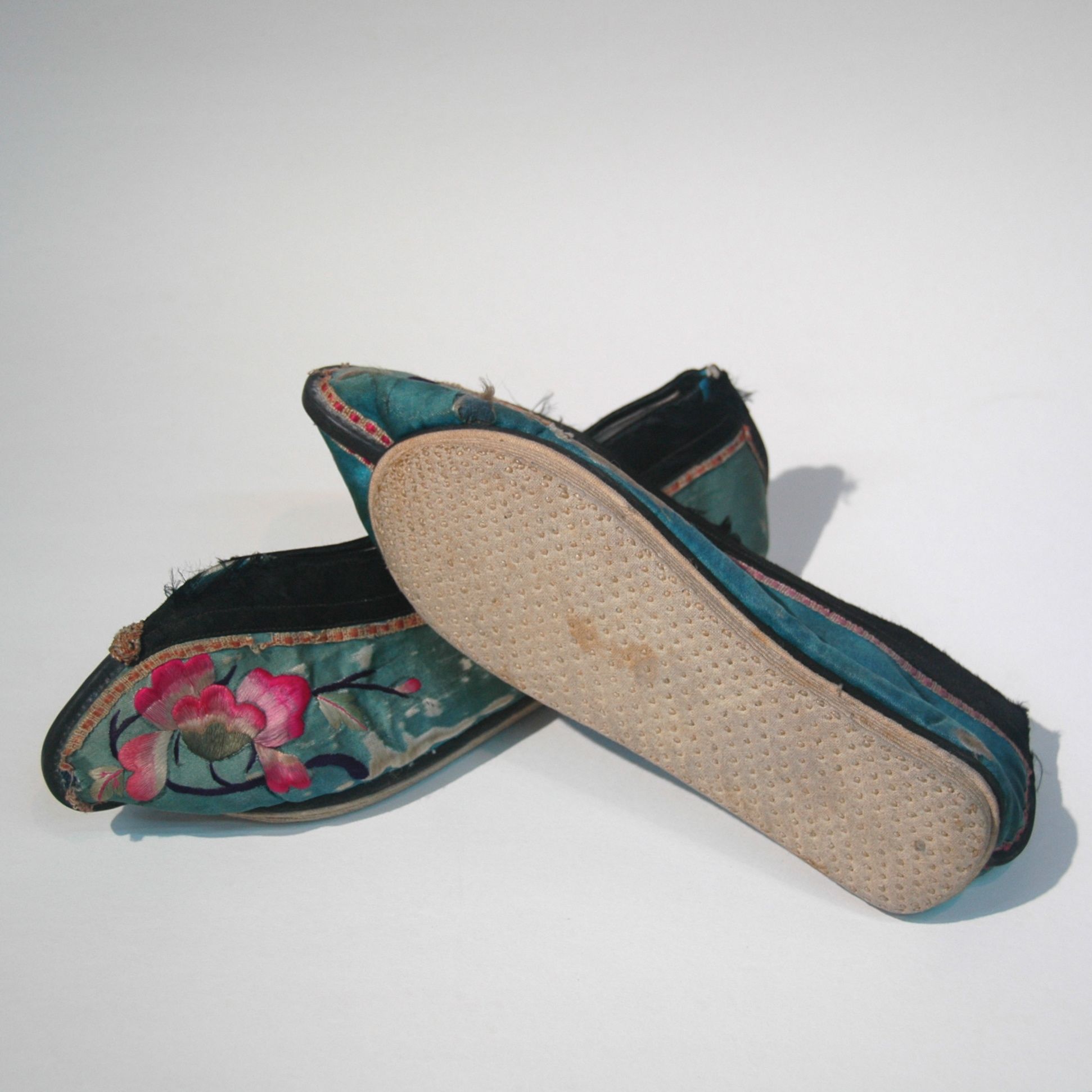
This is a pair of embroidery shoes of the Miao tribe (for more about Miao tribe shoes, see our earlier post, Embroidery Shoes).  Today I would like to concentrate on the cloth sole of the shoes which is entirely handmade.  Before rubber and leather sole became popular in China, most of the soles are made with cloth, it is a common household practice, even mother remembers making shoes for herself in her childhood.  Here is mom’s instruction:

  1. Save up old clothes and off cuts for a year, so materials are ready for making new shoes for Chinese new year
  2. Cook up some glue with water and rice flour (the Chinese version of wall paper paste)
  3. On a flat board, applied glue to the edge of the board, then stretch the a large piece of cotton cloth, apply a layer of glue over it.  On the second layer place smaller pieces of cloth, avoid any overlapping or gaps, apply a layer.  On the top place a large piece of cotton, avoid creases, applied glue over it.  Let dry for a night
  4. Use a newspaper to trace out the sole of the old pair of shoe, enlarge to suit.  Prepare an addition one for a size larger.
  5. Cut out from the dried cloth pile 6 pieces from the larger template (large filler – LF), 7 from the smaller (small filler – SF) one and 2 smaller pieces for the heel (H).  Put the pieces of the same size together, clamp them and give it a good trim so that they are the same size and shape.  Reverse the template and cut out the soles for the other shoe.
  6. Take a piece from the large filler and mount a piece of cotton, wrapped the edges over to the top.  This will become the bottom layer of the sole (BS), the piece that touches on the ground.  Take the other 6 larger fillers and stick on a cotton piping around it.
  7. Then places the fillers in the order; BS-LF-SF-LF-H-SF-LF-SF-LF-SF-LF-H-SF-LF-SF-SF-SF.  Stitch temporarily to hold them together, clamp it well and sew the edge with hemp string (you will need an awl for this).  Then make uniform and small stitiches (as seen in the photo) throughout the whole of the sole.
  8. The completed sole is then brushed with warm water and covered with a blanket overnight.
  9. The next morning, the sole is compressed with a mallet and air dried.
  10. Now the sole is complete, all you need to do is the upper shoes and of course the embroidery …

W40xD50xH100mm, China

This glove puppet head is of the character Gong Guang, belonging to the Jing (painted face) category, a supporting actor in today’s term but always representing a figure who is upright, loyal, strong and fearless of high power, it is denoted by the word Guang and the red face (gong).   He would play the character of a courageous warrior  such as JianWei of the 3 Kingdom.

The puppet is carved out from a single piece of wood and with hand painted features.

W720xH450mm, China

Something old,
something new,
something borrowed,
something blue,
and a sixpence in her shoe

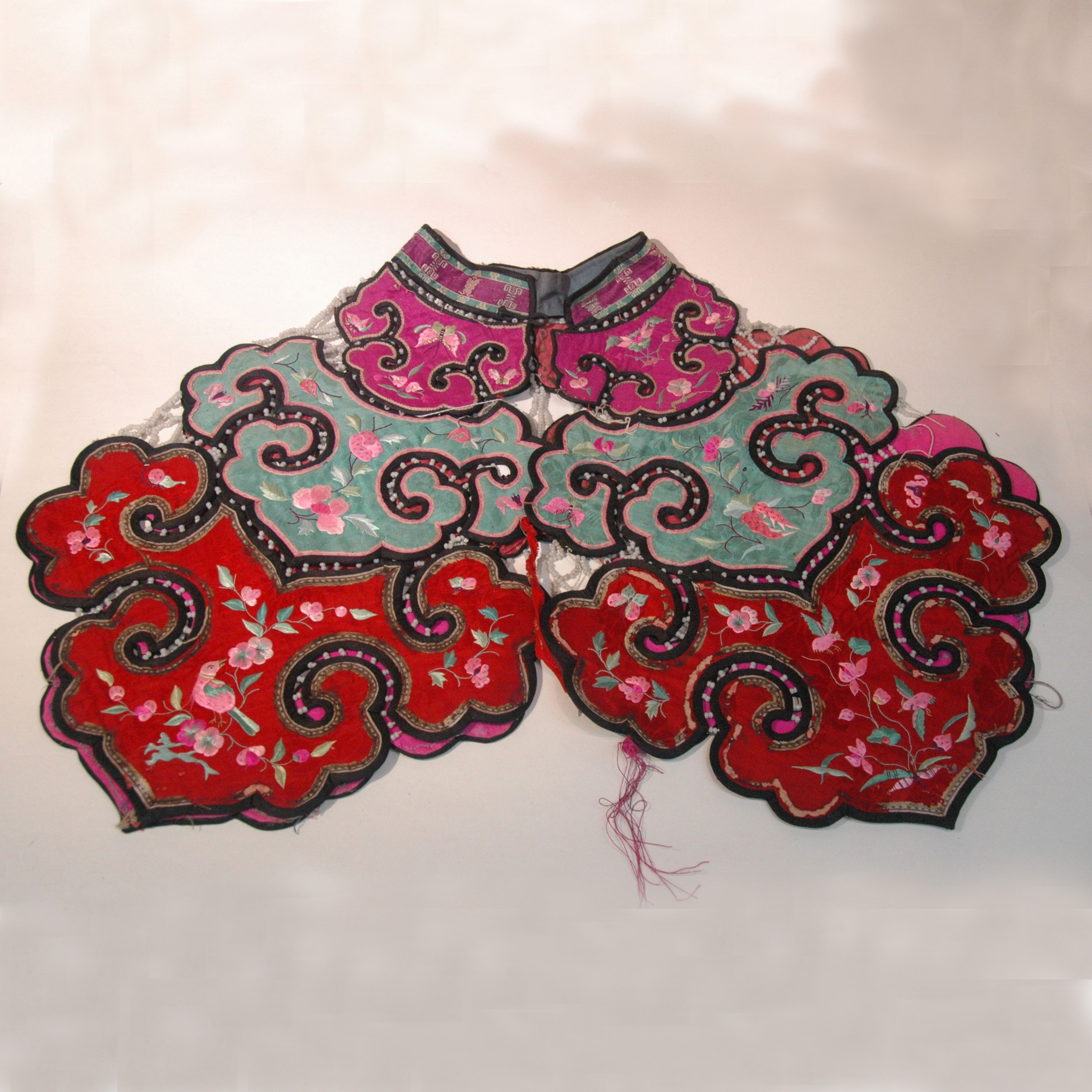
Now how can we have Something Old Something New and not an item about wedding.  This is part of a wedding gown for rural China, this would be the shawl for the bride.  For the common folks, the bride would have wear her hair in a bun and covered with a red cloth, the clothing would be in red with similar pattern as the shawl, on the bottom she would wear a pair of simple red pants.  The shawl is embroidered with patterns of blessing, quite different from the blessing of the west but a blessing nonetheless.

DIA150mm, China

This item selected by Furze for the Something Old Something New exhibition and is available at both Mountain Folkcraft and Soil.

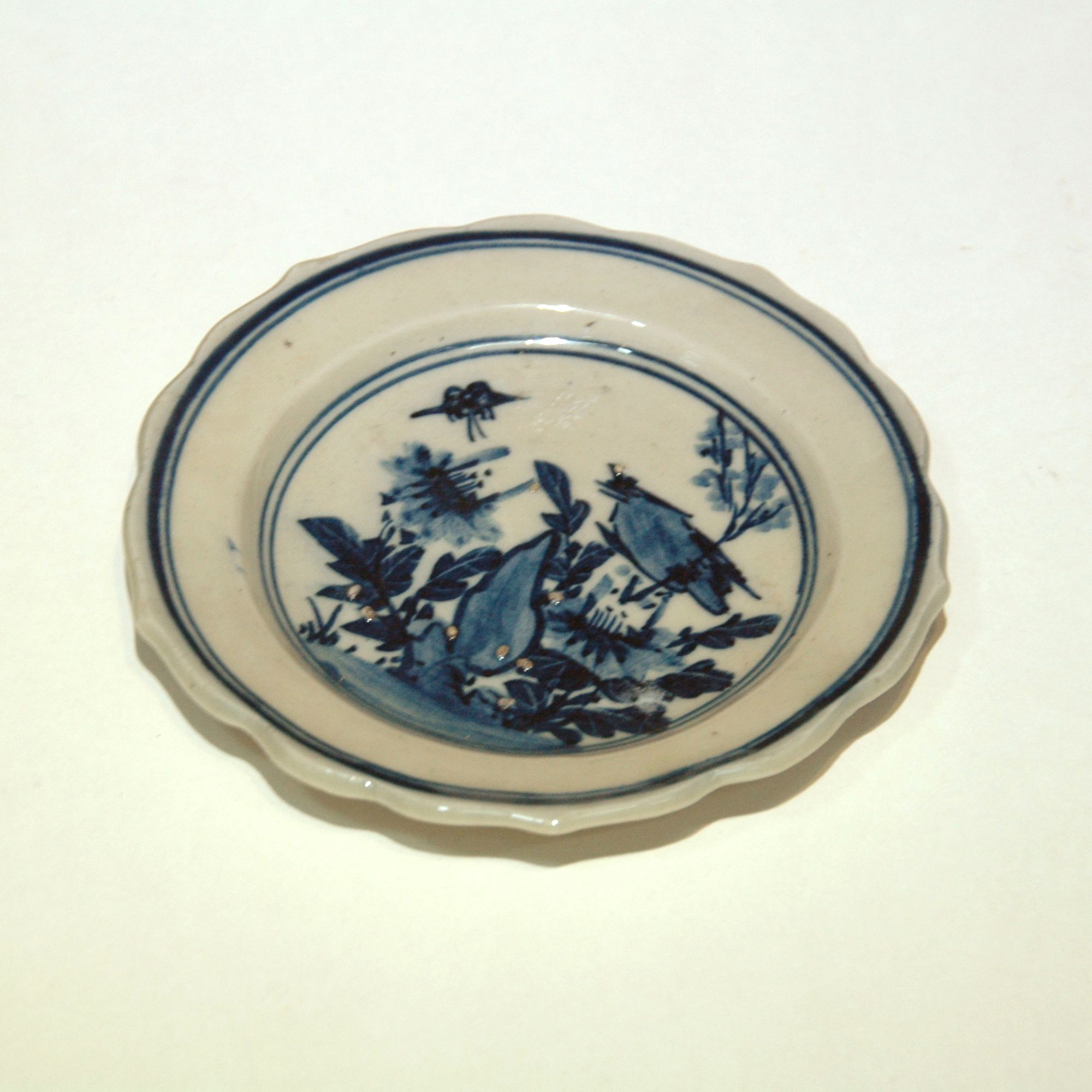
There is something non-Chinese about this plate, I thought.  Looking up exports chinaware, it is no where to be found.  Perhaps its the shape of the plate, I thought.  Then I was surprised to find out, thought not a common form, the shape has been around since the Sung dynasty.  Chinaware, blue and white, a common Chinese theme of flower and bird, a form that goes back 1000 years it seems that there should be nothing none Chinese about it.  On further research, it seems that the form of certain pottery and metal ware were heavily influenced by the import of Persian silverware in the Tang dynasty, the polylobed  shape is one of them.

Ming dynasty pottery polylobed dish

Tang dynasty polylobed silver court wine cup, Nanjing Museum

Persian silver polylobed cup of the 11th Century

DIA70mm, China

 This silver bracelet has a very simplistic design, a band of silver held at the end by a small opening and a bolt.

This item selected by Furze for the Something Old Something New exhibition and is available at both Mountain Folkcraft and Soil.

DIA75xH40mm, China

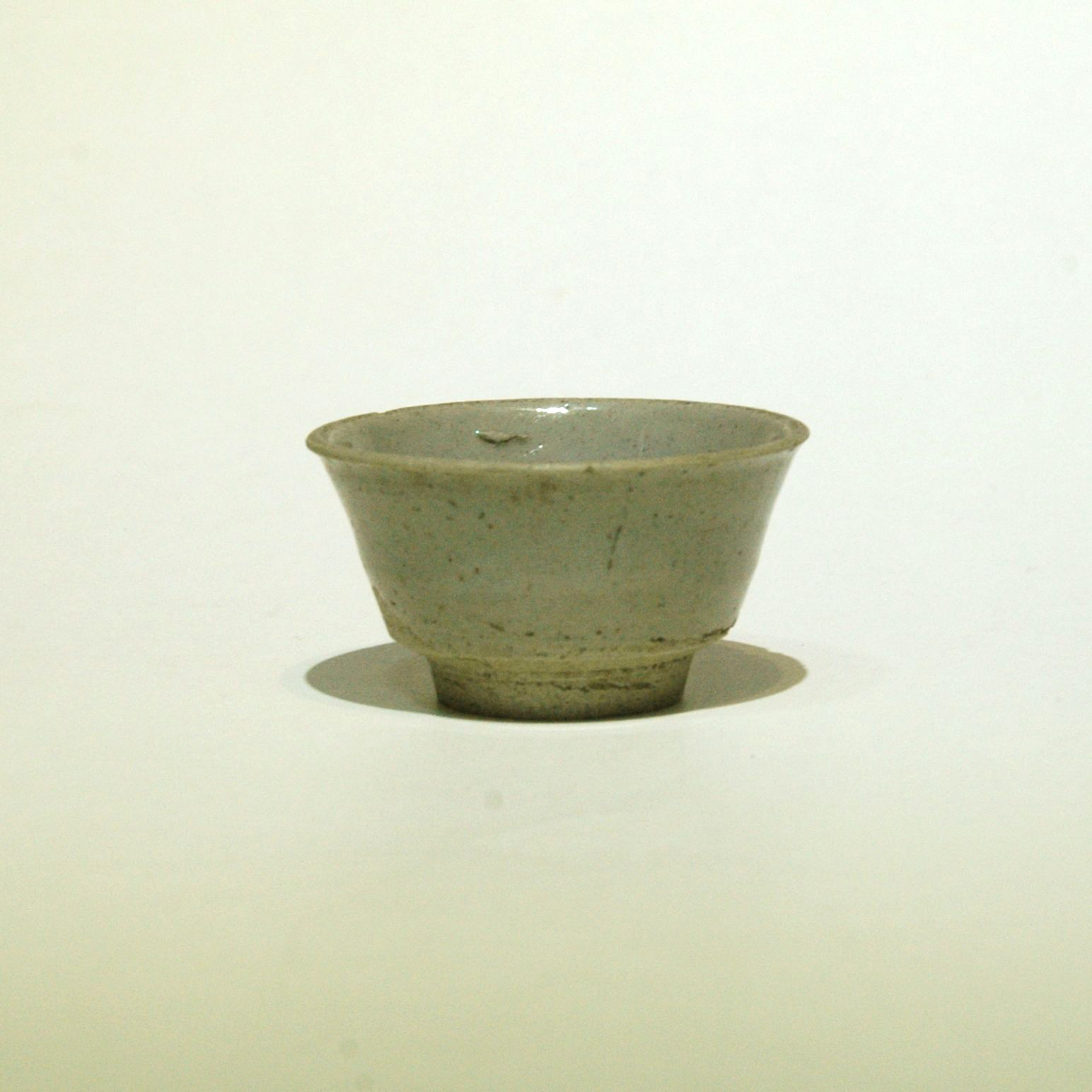
This is a small pottery wine cup, its small size is suitable for drinking games where one would bottoms up quite frequently.

Here is a traditional Chinese drinking game;
The Slap 7 Game
A group of drinkers in sitting in a circle, each counting a number from 1 to 99, the first person will say 1 and the second 2 and so on.  On the number that contain the number 7 or the multiple of 7 (e.g. 7, 14, 17, 21, etc), the person saying it till has to slap someone else’s head.  The person who got it wrong will have to drink up.  Sound simple, wait till you have a few cups of Chinese wine.

Here are a couple more items on drinks; Porcelain Wine Flask, Money God , The Wine God,

This item selected by Furze for the Something Old Something New exhibition and is available at both Mountain Folkcraft and Soil.

DIA100xH40mm, China

This miniature silver kettle was selected by Furze for the Something Old Something New exhibition and is available at both Mountain Folkcraft and Soil.

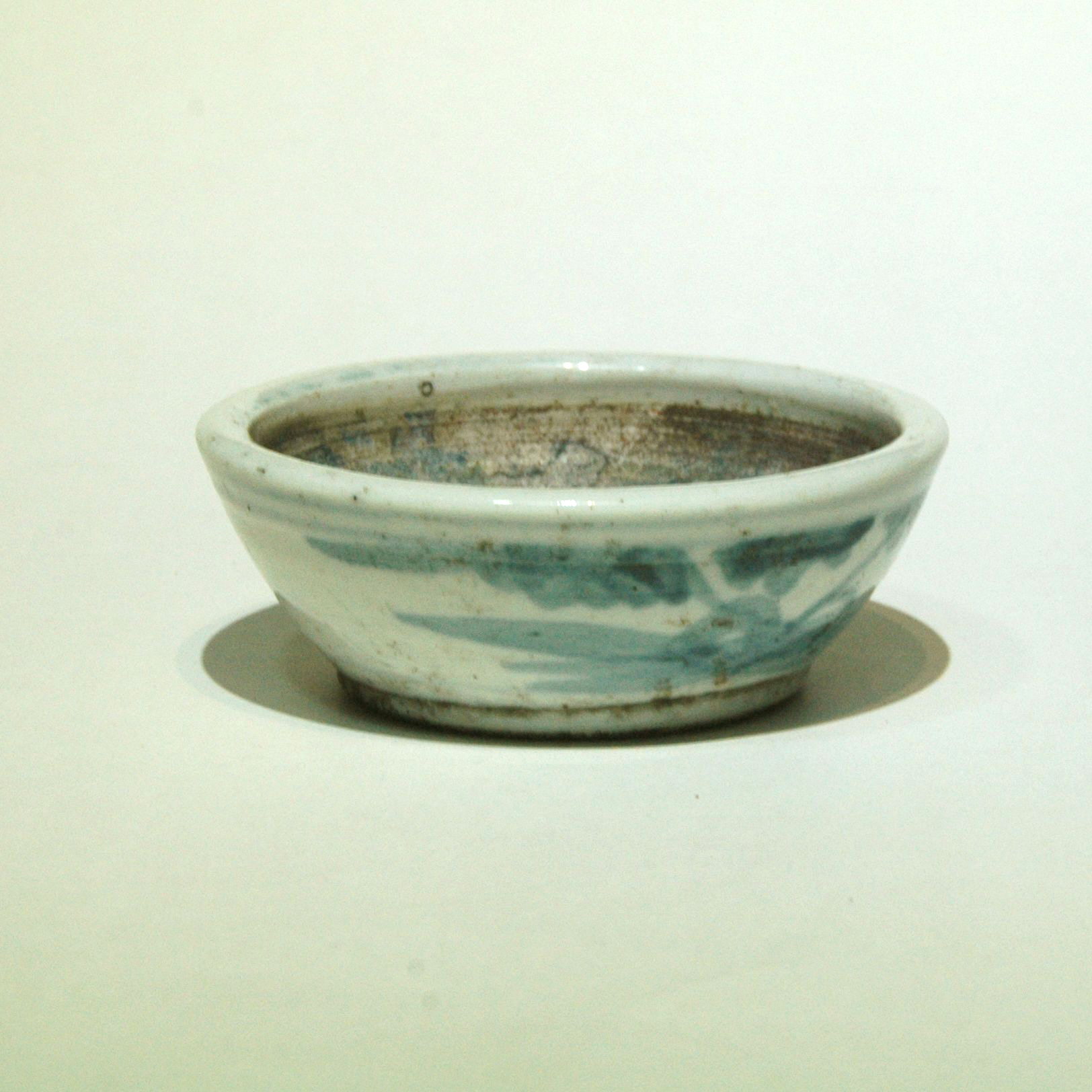
This is the base of a small pottery mortar which would have been used for grinding Chinese herbal medicine, now it can be used for grinding marination rubs, for making pesto, for grinding sesome.  Check out our other mortars; mortar, medicine grinder.