 DIA50xH20mm, China
A small onxy box.
Such dreamyness.
What precious would you place inside?
DIA50xH20mm, China
A small onxy box.
Such dreamyness.
What precious would you place inside?
 DIA220mm, Hong Kong
For the causal wear collection, a rough cut pendant on a leather strap.
Something Old Something New
Collectible Jewellery Collection
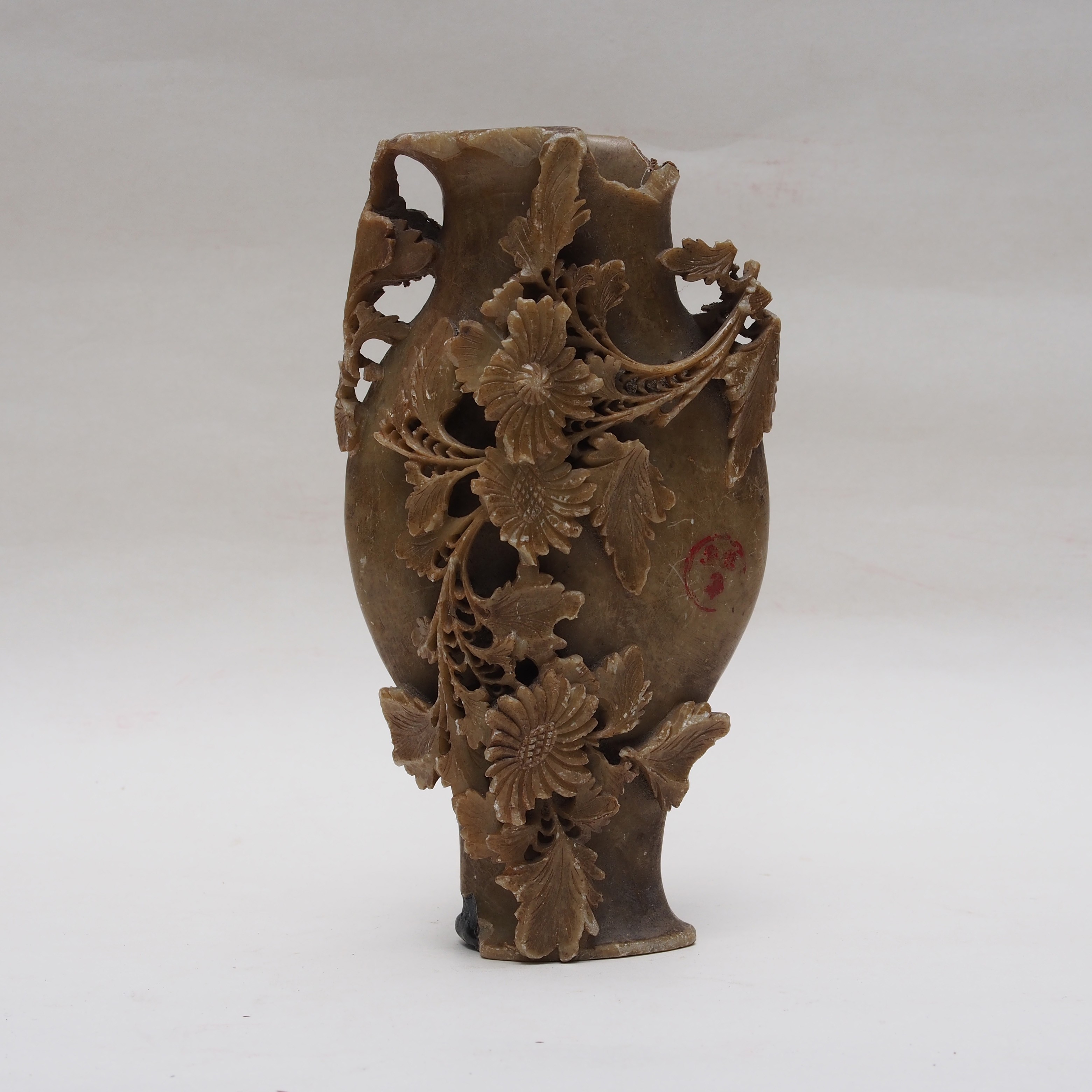
W80xD50xH155mm, China
This is a miniature Shou Shan stone vase which has intricate carving of a chrysanthemum flower. The Shou Shan stone is wonderful stone for carving, particularly for seals, its also a good material for other ornamental works. This antique piece of work with its chipping has a sense of rustic, of the untended nature.
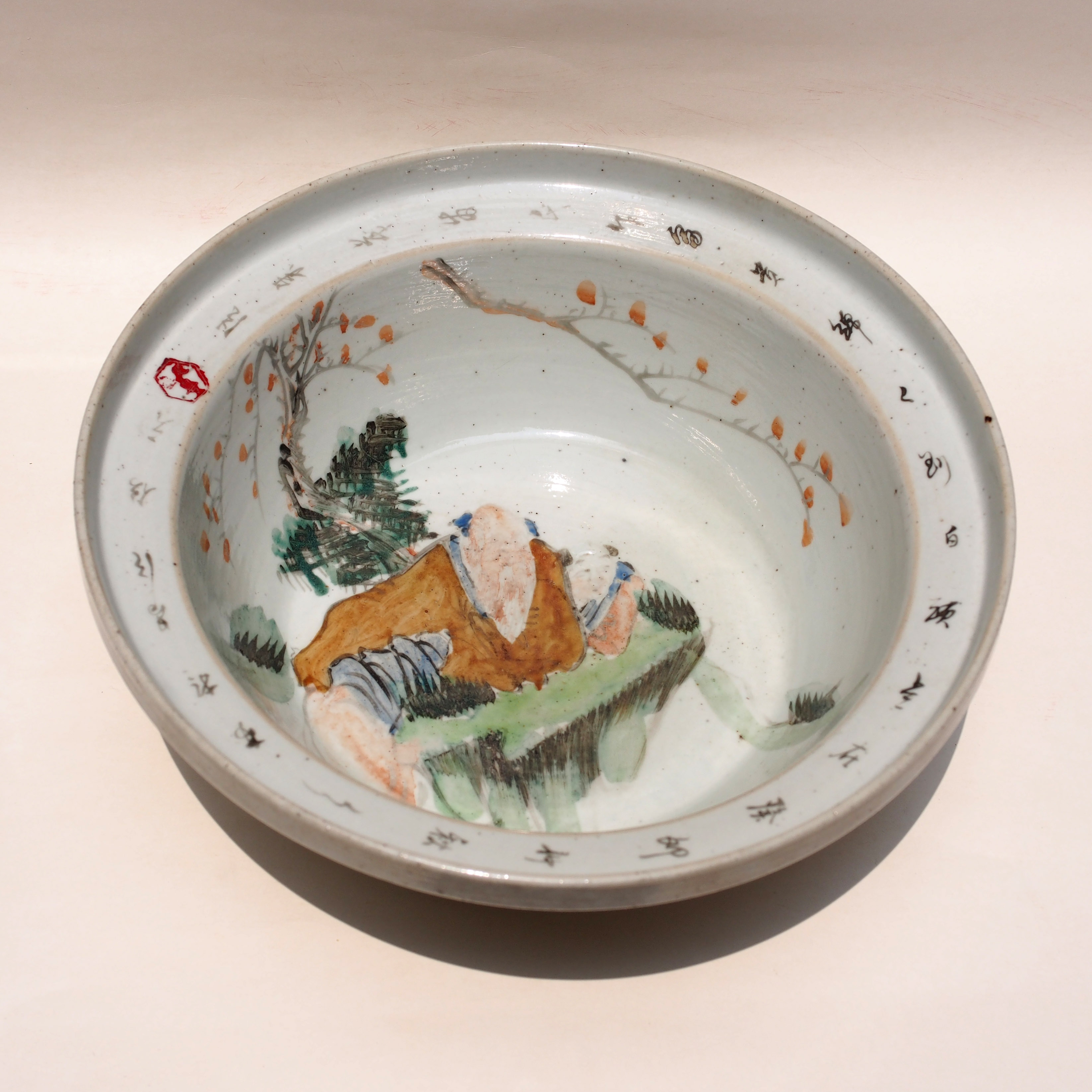 DIA200xH100mm, China
A wash bowl from the past.
The painting on the bowl of an old man and a child with a background of plum blossom and pine tree. The words around the bowl describe a time of meeting and the wishes for the other to be affluent and a long life, seems to be by the same hand. Could it be a gift from the pottery to his friend or was it a commission work. It would be quite funny if I were to present a wash basin at someone’s birthday party.
 DIA150mm, Hong Kong
A cheerful piece, like a bunch of fire crackers. The sound of fire crackers are symbols of festivity in China, particularly the Chinese New Year.
Once upon a time, the is a single horn creature named Eve, she is huge and bad tempered. Around the end of the year, she will go to the village and cause chaos; fearing for their lives, the villagers will hide in the mountain. One freezing winter, the villagers were on their way to the mountain hideout, they met a starving little boy. They fed him with what little they have and brought him along to the cave. The boy was curious why everyone, the young and the elders, is making an outing in such cold weather. They told him about the Eve the monster and this is the only way to escape their death. The boy told them he has a way of keeping Eve away, he asked them to chopped up some bamboo and to head back to the village. When they were home, the boy asked them to pile bamboo pieces in the plaze and to hang a piece of red cloth in front of their door. (Yes, I know you are wonder why they will trust a starving boy whom they found in the mountain, but this is how it goes …) The boy told them to stay in door while he lure Eve into the village and at that point they would throw torches into the bamboo pile. It is not long before the boy found the monster destroying the carts, the cloth seems to deter him from attacking the house. Just as the villagers were about to throw the fire torches into the bamboo pile, Eve thrown the boy over with her horn. The fire lightened up the bamboo and with its natural capsule causes a series of small explosion that frighten the Eve away. When the villagers attended to the boy, he told them his name is Year and passed away the next day on Chinese New Year. Though Eve has been scared away, the villagers feared her return, so on every New Year Eve, they would hang the red cloth over their doors and light up the fire crackers 爆竹.
Something Old Something New
Collectible Jewellery Collection
 DIA200xH230mm, China
When I think of a jar, my association would goes to food. Cookies. A glass jar filled with cookies. Though I have never really bothered putting cookies in a jar … they are usually finished and there is nothing else to store. Chinese jars are also made to store food stuff; dry goods such as tea, mushroom, charred rice, moist food like pickles, condiments etc. Jars are a necessary for any kitchen.
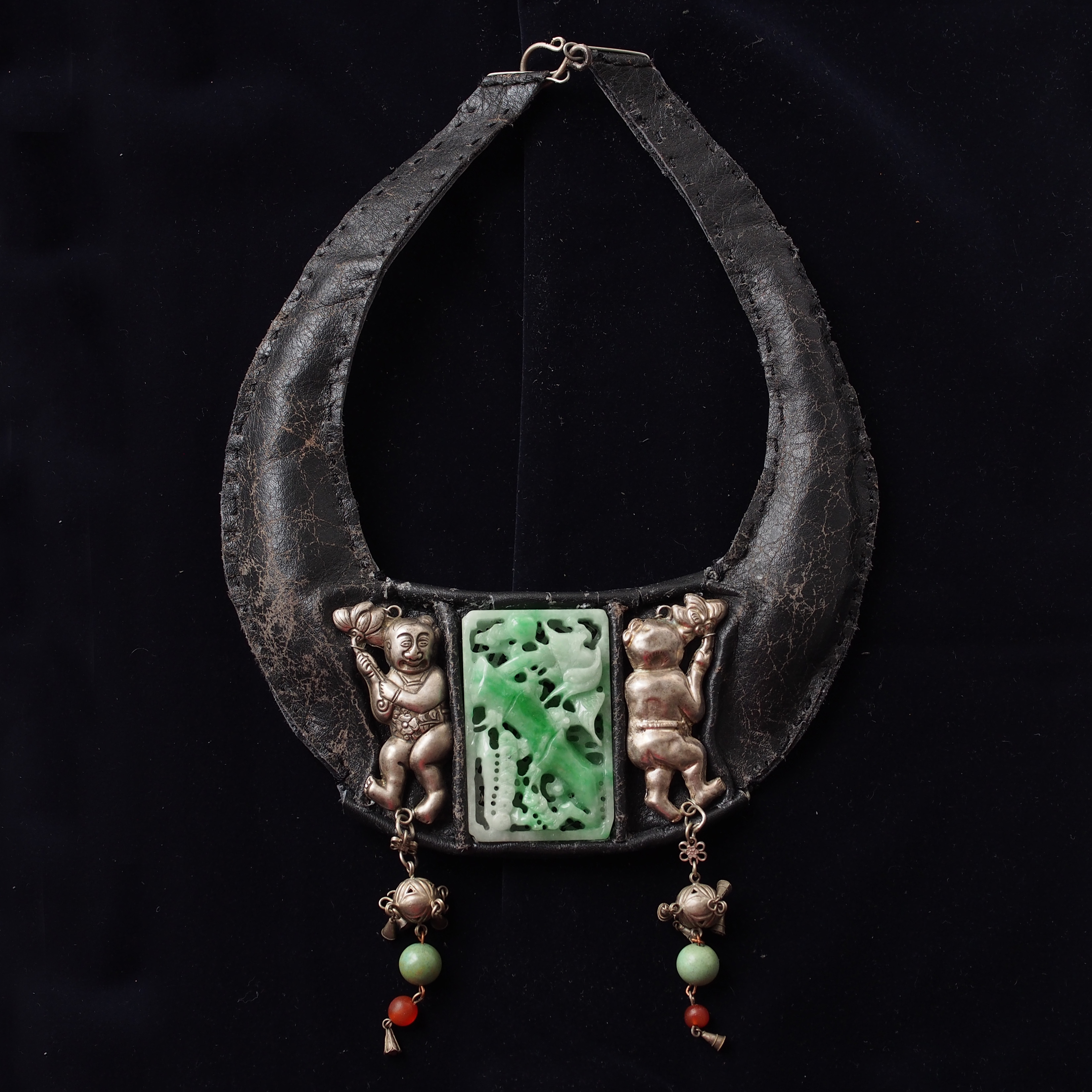
DIA200mm, Hong Kong
The pair of babies next to the jade plaque are known as Happy Encounter, a romantic blessing symbol. They are holding a lotus flower 蓮, has the same pronunciation (lian) as the word 年 yearly. In the old days, with a high motility rate and the idea of continuing the family tree, having as many children is wish by many. Below the figurines hang a xiu qiu which is a traditional romantic keepsake.

Something Old Something New
Collectible Jewellery Collection
 L160xD40xH160mm, China
A clay toy of a boy sitting on donkey.
This figurine reminded me of a childhood fable. A man and his son were on their way to the market with their donkey, a passerby saw them and said, “You have a donkey why not ride on it, such fools!” The man thought that’s true, so he put his son on the donkey. Its not long before someone else commented, “What a lazy boy, he lets his old folk walk while he rides.” The boy got off and asked his father to ride the donkey. Then another person said, “What a father, he rides the donkey and lets his young son walks.” So the man pick up his son and the two rides the donkey together, when they got to the market, someone scolded at them, “What a cruel family, two of them riding on a poor skinny donkey.” The man and the boy got off, feeling a bit bad, and thought the right thing for them to do is to carry the donkey, so they found a pole and tied the legs of the donkey to the pole and carried it upside down. The donkey hated it, just when they were crossing the bridge the kicking wiggled and cause the boy to drop his end of the pole, the donkey fell into the river and drowned. “This will teach you!”, said a man who saw what happened.
 LxHmm, China
This Yang Liu Qing wood block print depicts a scene of the Duan Wu Festival where the dragon boat race is taking place. From the costume, it would be a time of the Republic of China period, the cue hairstyle has gone, the appearance of western style hats.
The dragon boat race began as a rescue operation of the respected Qu Yuan who leaped into the river to kill himself. Fisherman gathered ringing gongs to scare the fish away, feeding them zong so they will not harm him. Hundreds of years later, it came a festival that attracted even the Emperors would participate viewing the race.
Today is 5th of lunar May, and you have probably feasted on the traditional dumpling (zong) over the past few days. The Hong Kong Dragon Boat Carnival will take place on this weekend and this year it have the setting of the Victoria Harbour. Click here for more details.
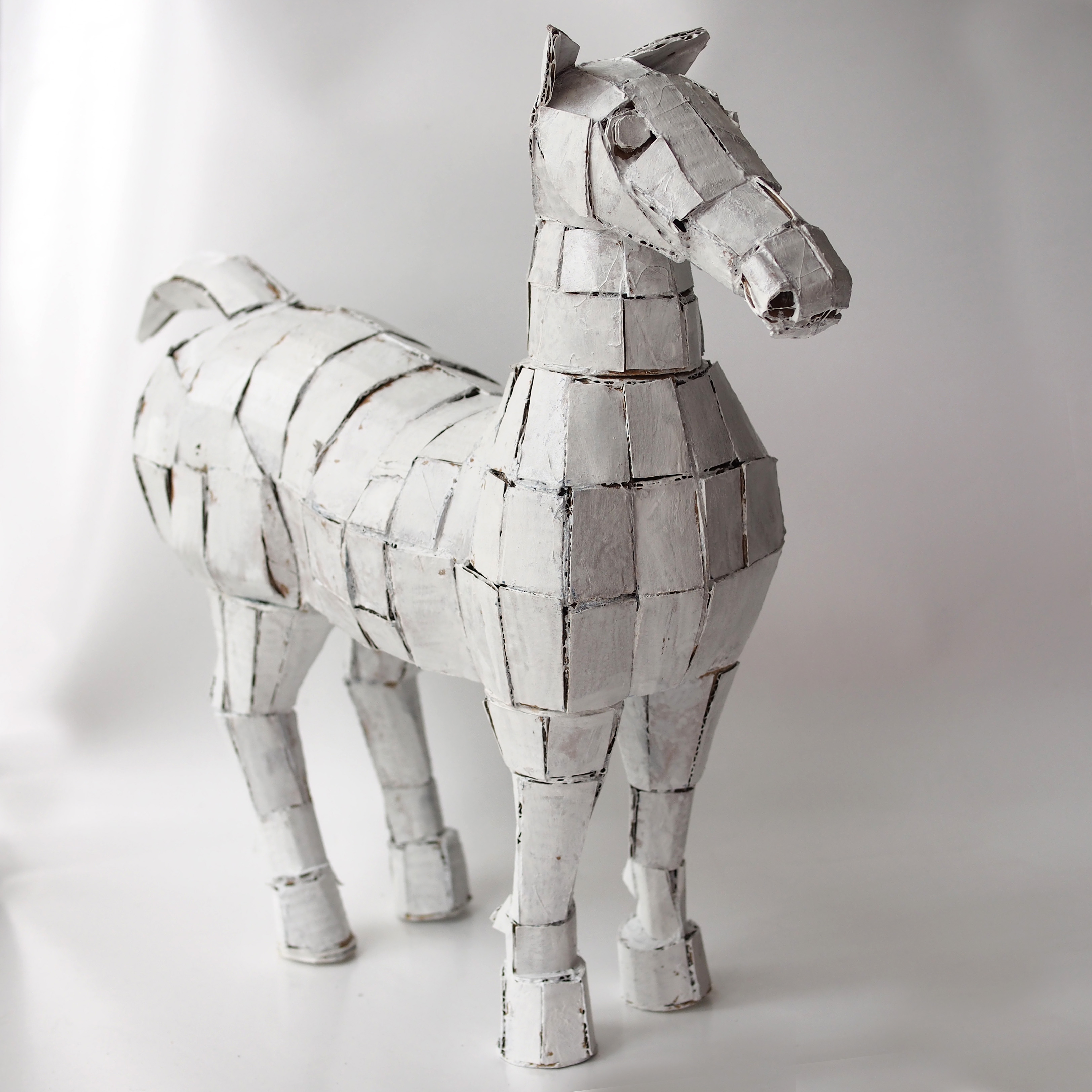
W100xL300xH300mm, Hong Kong
Inspired by the Han dynasty wooden horse, this white horse is constructed entirely with paper.
Horses were highly priced in the Han dynasty (200 B.C. – 220 A.D.). The use of war chariots started in the Warring State period (450 B.C.) and gradually replaced by cavalry in the Han dynasty. This change was brought about by the discovered of the heavenly horses, a superior breed that is found in the Feghana Basin (today’s Afghanistan). Failing to obtain these horse peacefully, lengthy wars took place; Chang An, the capital of Han, is far far away from Feghana Basin (some 2000km away, that is if we take the plane, and much more by foot). The long journey was exhausting and food soon ran out, by time the Han army reaches the Feghana Basin, the starving troops were defeated even by the smaller war lords. General Li Guang Li, led the remaining of his men back to Chang An. The emperor gave the general a larger army and a large supply of food and sent off again. This time they reach the Dayuan capital, Khujand, with no difficulties. The Han army was no match with the enemy, half the men was killed in the first battle. General Li changed his plan and instead of fighting with the Dayuan, he succeeded in cutting off the water supply to the city. Within the city the nobles revolted against the ruler and offered a tribute of 3000 heavenly horses.
 Mountain Folkcraft