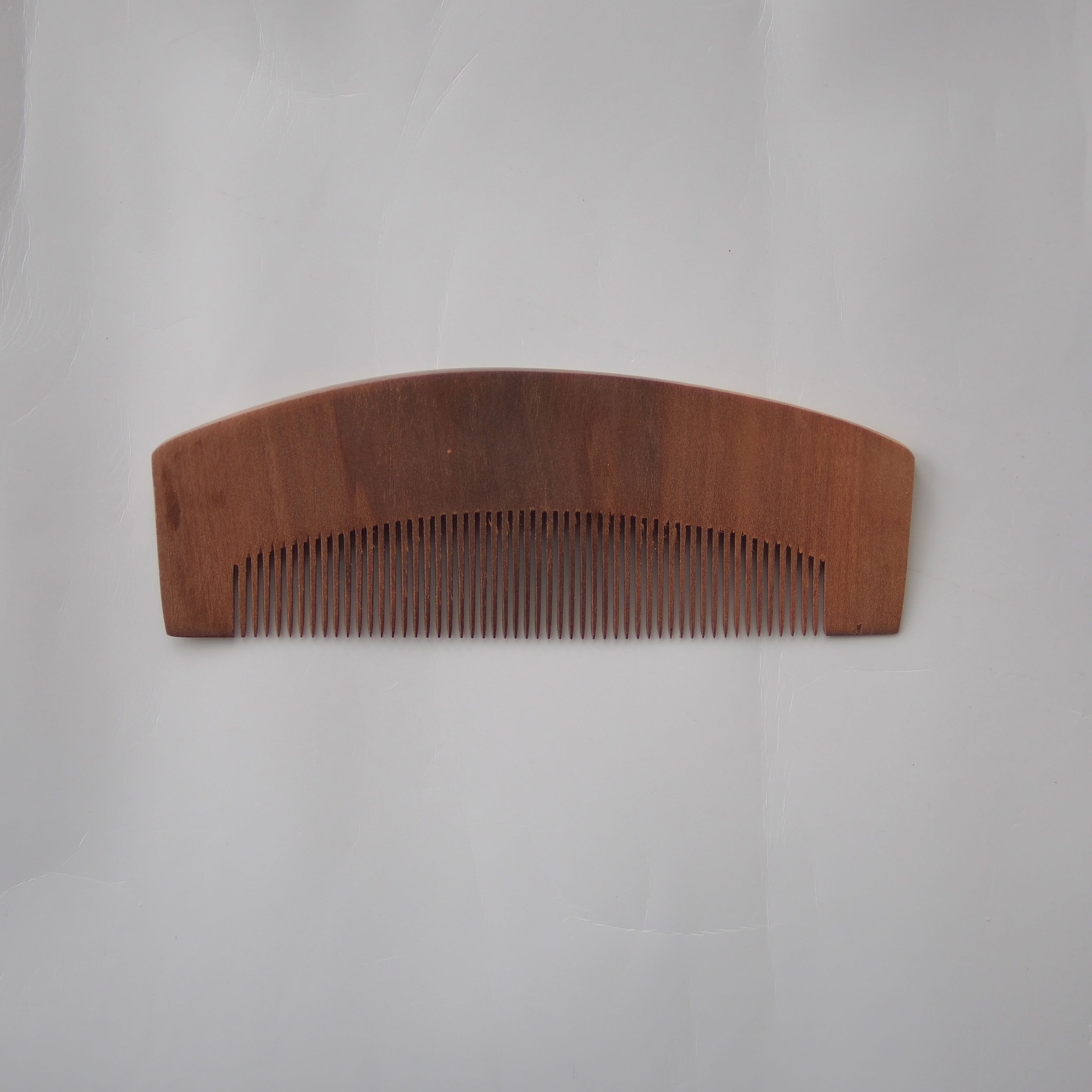
L130xW50mm, China
Ever wonder how a wooden comb is made?
In the days when hair washing is not a daily event, the combs acted as a tool for cleaning of the hair. Dust, dandruff, lices and any knots and tangles are all sorted.
L130xW50mm, China
Ever wonder how a wooden comb is made?
In the days when hair washing is not a daily event, the combs acted as a tool for cleaning of the hair. Dust, dandruff, lices and any knots and tangles are all sorted.
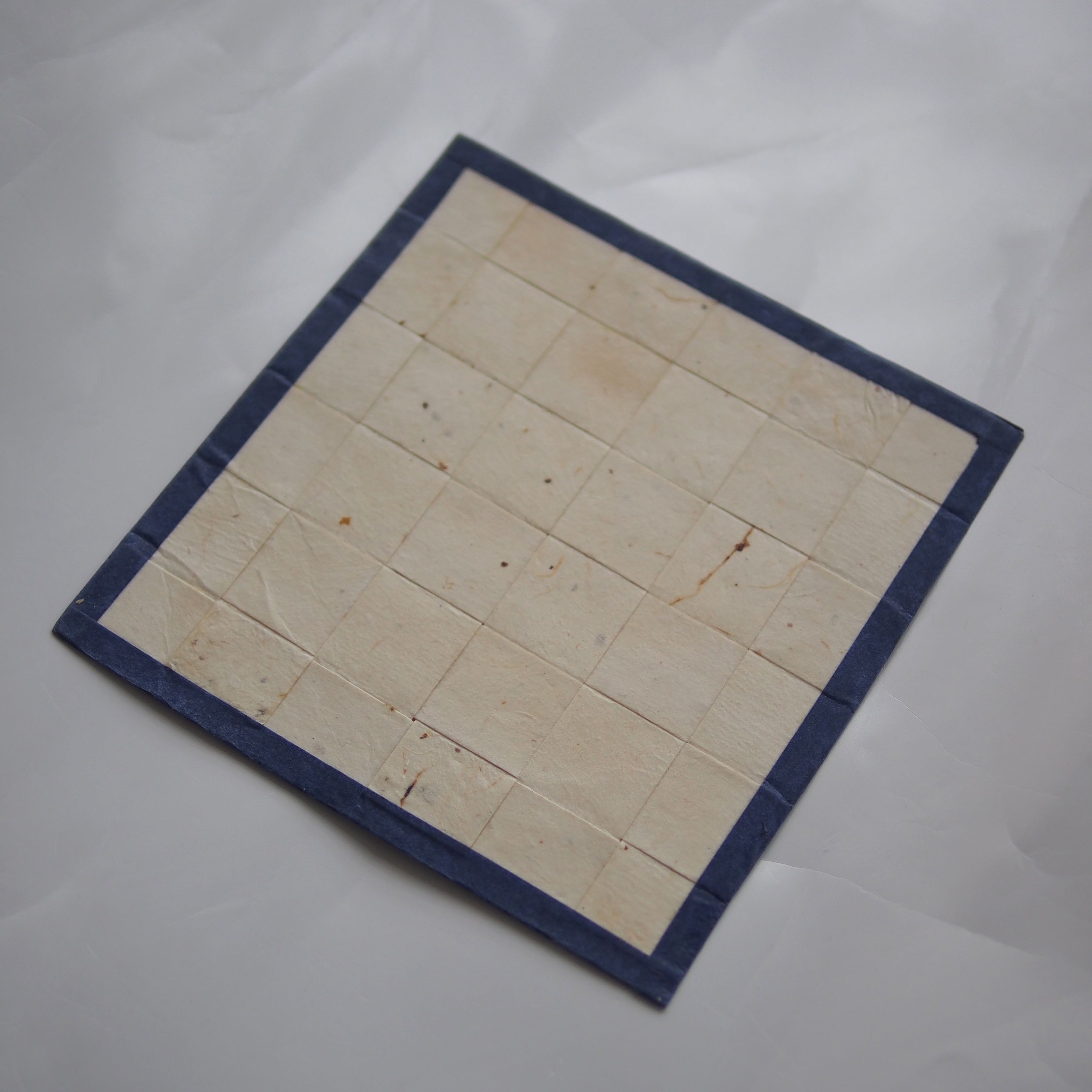
W150xL150mm, Japan
A simple coaster made of handmade Japanese paper, washi. The paper is treated with water resistant coating to make the coaster more durable. It is part of the collection from the Otake Japanese Paper Workshop in Hiroshima, the workshop is set up to promote and to continue the art of Japanese handmade paper.
 W120xL230xD20mm, China
This is a wooden mould for making the famous red peach guo. Guo is Chaozhou dumpling that is made for festivals as well as for everyday snacks. The peach shaped guo reserved for festive days like the Chinese New Year, Dragon Boat Festival, Mid Autumn Festival, Winter Solstice, they are also made for the new born baby by the grandma on its hundred days’ celebration.
The peach shape symbolizes longevity, it is again emphasized by the word “壽” in the middle of the mould.
Here is the master mould carver working on a turtle shape guo mould.
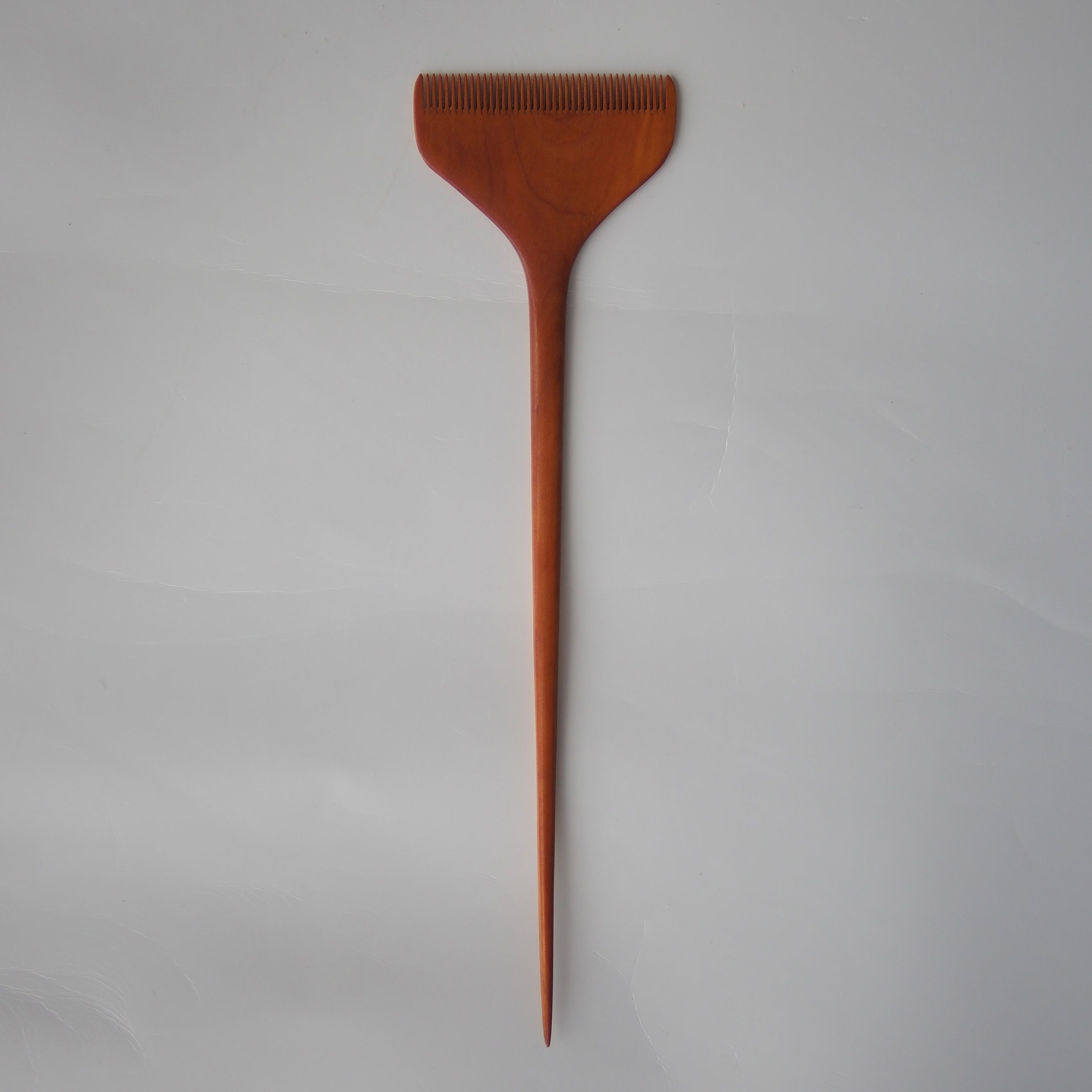 W45xL180mm, Japan
In today’s world, we often own only one comb and likely to be plastic, but for traditional Japanese coiffure there are many different types of comb (kushi) each having a different function. The sujitate comb is a special tool for straightening the side and the back hair used by the Kamiyui (geiko hairstylist).

And this is how the comb is actually used.
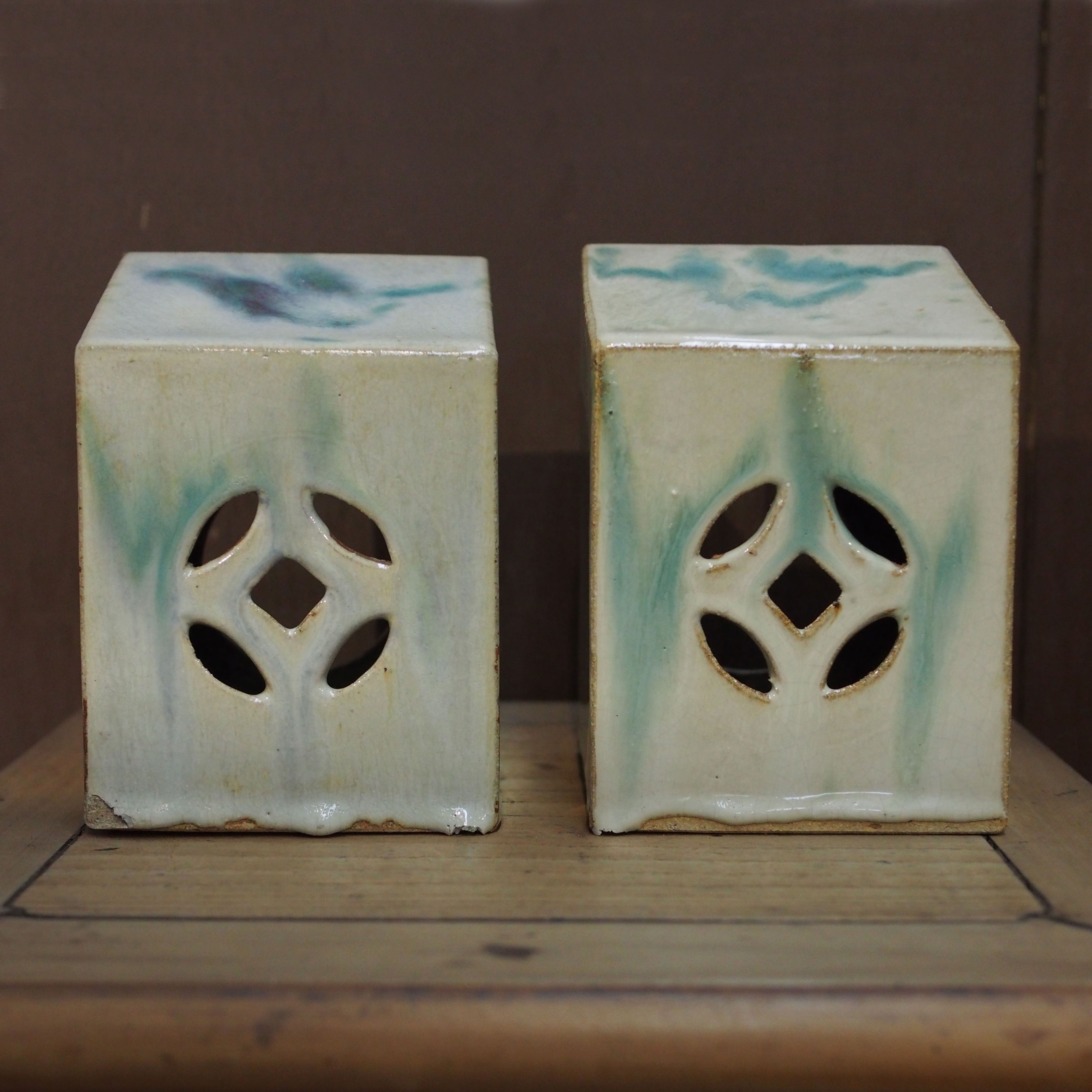
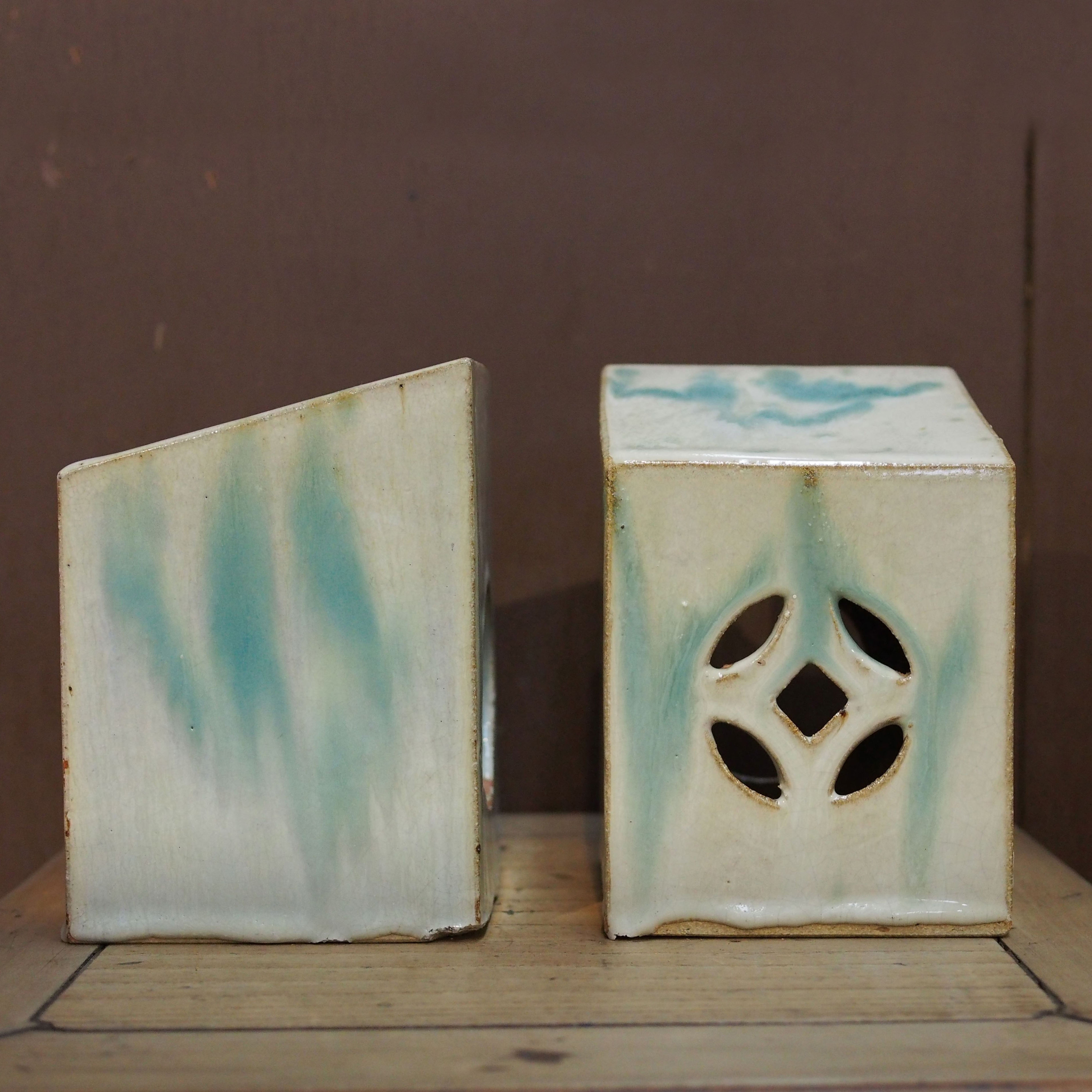 W120xD130xH180mm, China
This pair of very architectural objects are in fact a pair of ceramic pillows! They have a running glaze which is typical of the Shi Wan kiln, used for smoking opium, the airing holes which forms a pattern of an antique Chinese coin are used for ventilation, helping to keep the pillow cool. I probably would not be able to be parted from the Tempurpedic but these would make lovely book ends.
 DIA100xH110mm, China
This old incense burner has a very contemporary design, even the exterior has a glossy finished to it. It would have been used at home for the worship of gods or the ancestors. The interior of the burner would be filled with ashes of the rice bran, these would be used to secure the incense stick. As times goes by the container will be naturally filled with the ashes of the incense.
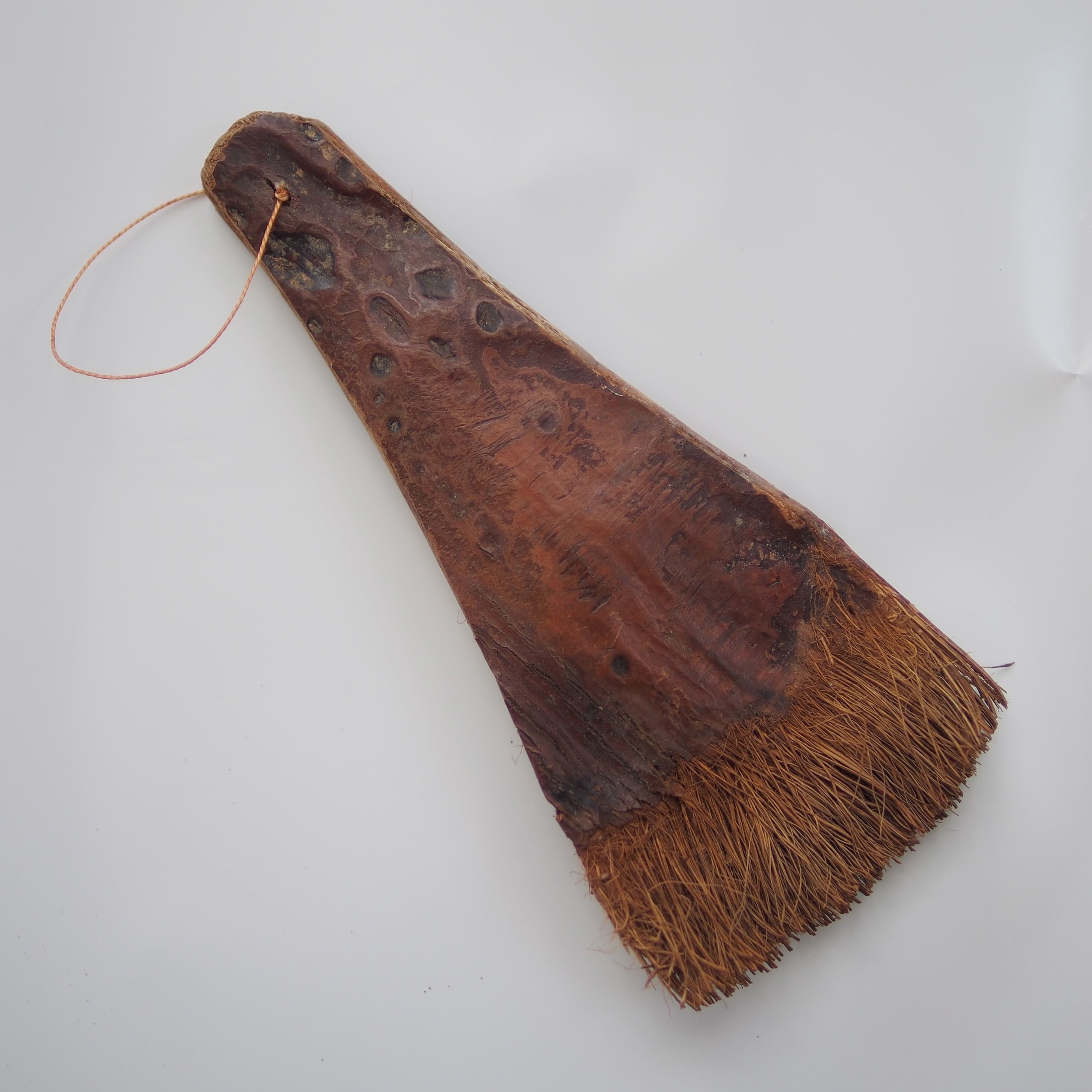
W80xL180mm, China
We all used to palm fiber brush for scrub pots and pans before scotch brite comes along. Palm fiber is a natural material that absorb grease making it more environmentally friendly. This particular brush has the petiole of the palm leaf as a natural handle which makes a perfect minimal design.

W90xL120mm, China
In the old days, needles are precious items that a girl would keep as part of her possession. In the days before the $10 budget store when one will just get a new set instead of looking for the one you already have. As needlework is part of any girls’ qualification, they would make their own pin holder, decorated with embroidery, patchwork, etc.
This is a pin holder in the shape of a dog.

L180xD90xH20mm, Thailand
For the Asian Folkcraft Collection, we have another tool – an opium scale. This old scale is neatly set inside a teakwood case with carving on both side.
The scale is to be completed with a set of opium weights.

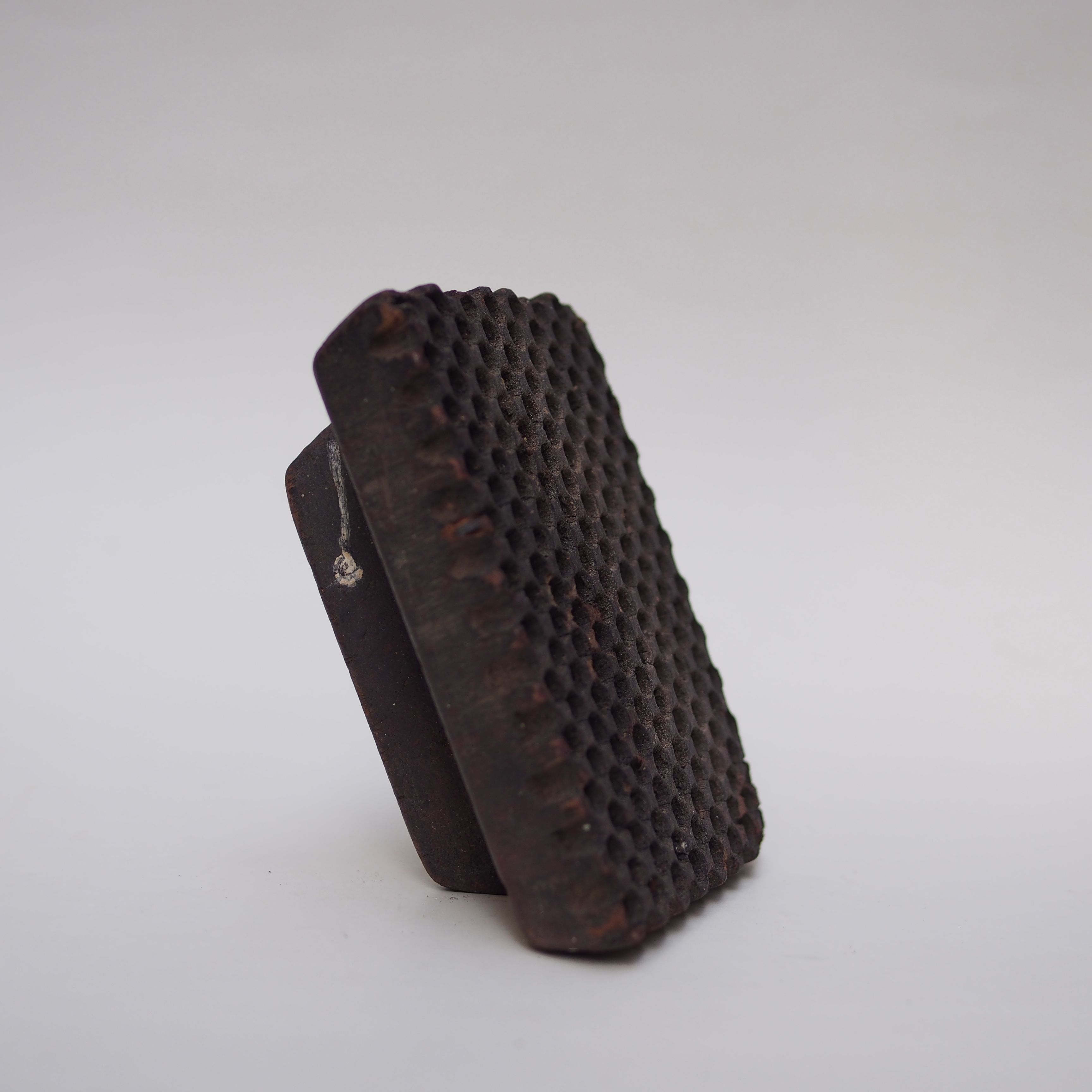
W150xL110xD70mm, India
Today for the ASIAN FOLKCRAFT we have a tool.
This is a well used piece of bunta, the wooden stamp used for fabric printng in India.
This beautiful video explains how the stamp is carved and how the printing is done.
 Mountain Folkcraft