This is paper cutout is from the procession of the mouse’ wedding. The Chinese believes that mouse are prey and should be kept out of the house. The cunning plan was to arrange a marriage for daughter mouse on Chinese New Year’s eve so that the house would be cleansed and blessed. Over New Year paper cutout of the full procession (including varies mouse musician, gift carrier and of course the bride) would be stuck on the walls or windows of the house. This cutout is a part of the 12 zodiac animals made into a greeting card.
This is a mask used in the Talchum mask dance in Korea; the dances were in the past an outlet for letting out the frustration felt by the commoners towards the Yangban ruling class who were following the Confucian doctrine. The stories of the dance often mock the ruling class by ridiculing monks, the upper class and shamens. The dance would be performed at festivals, these dynamic dances are received by an equally energetic audience who would join in the dance at the finale. This is a monkey (Wonsungi) mask made of paper and fur; in the dance the monkey usually plays the role of mimicking humans.
(L)L700xW550mm (S)L370xW260mm, Japan
This is a Japanese fan, uchiwa, it is constructed from a single piece of bamboo. The bottom part of the bamboo forms the handle while the top part is split into many equal splinters which are splayed out radially to create the frame of the fan, paper is then pasted on top and varnished for water protection. For the large uchiwa, thick cotton string is used to tie together the bamboo stems to reinforce the fan structure. The uchiwa are believed to be originated from China, during the Tong dynasty they were introduced to Japan and also became a popular accessories for the aristocracy and ladies. The pattern on the paper are refined and elaborated. Apart from daily use for cooling, the uchiwa is also used in ceremonies, dances and gifts.
Paper cutout are used as decoration, it is still very popular in rural china. It is mainly practice by the girls in the village where the technique is often used as a basis to determine the skill of the bride. The paper cutout artists, however, are mostly male dominated. It can be made with scissors (often with a symmetrical pattern with folded papers) or with small chisel knifes. This cat and kitten cutout is presented on a greeting card.
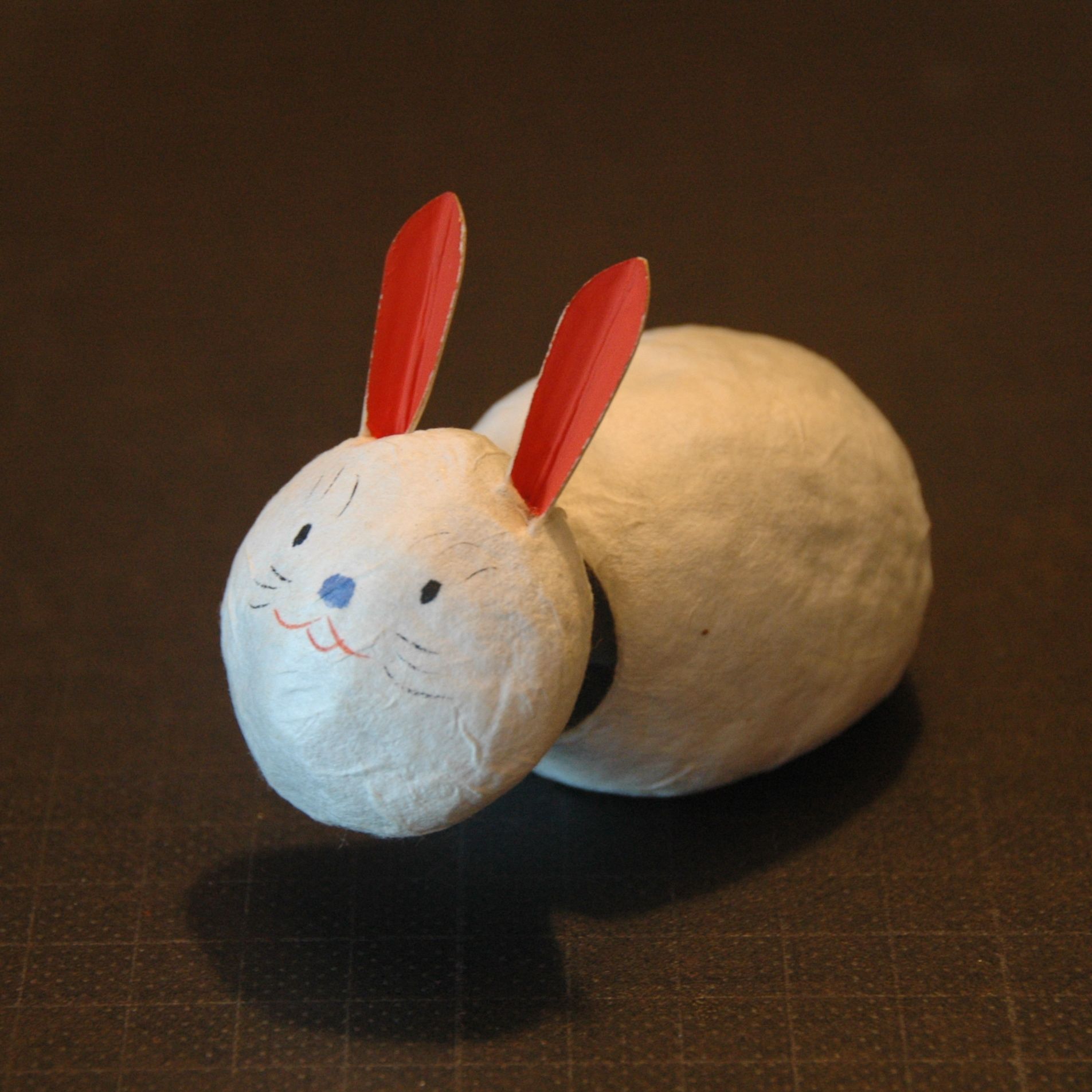
To continue with the moon theme on the day of “moon chasing”, a rabbit is chosen for today’s topic. In the Japanese folk tale: an old man was at the end of his life, a fox, a monkey and a rabbit came to his aid. The monkey collected nuts and fruits, the fox catch a fish. The rabbit could only come up with some grass, so he decided to jumped into the fire and offer his own body. The old man touched by the rabbit’s act and reveal himself as the Buddha and save the rabbit. It is believe that the pattern on the moon is casted by the smoke when the rabbit jumped into the fire. This papier mache is rabbit from the 12 zodiac figures from the Sendai region. The head of the rabbit is made to swing.
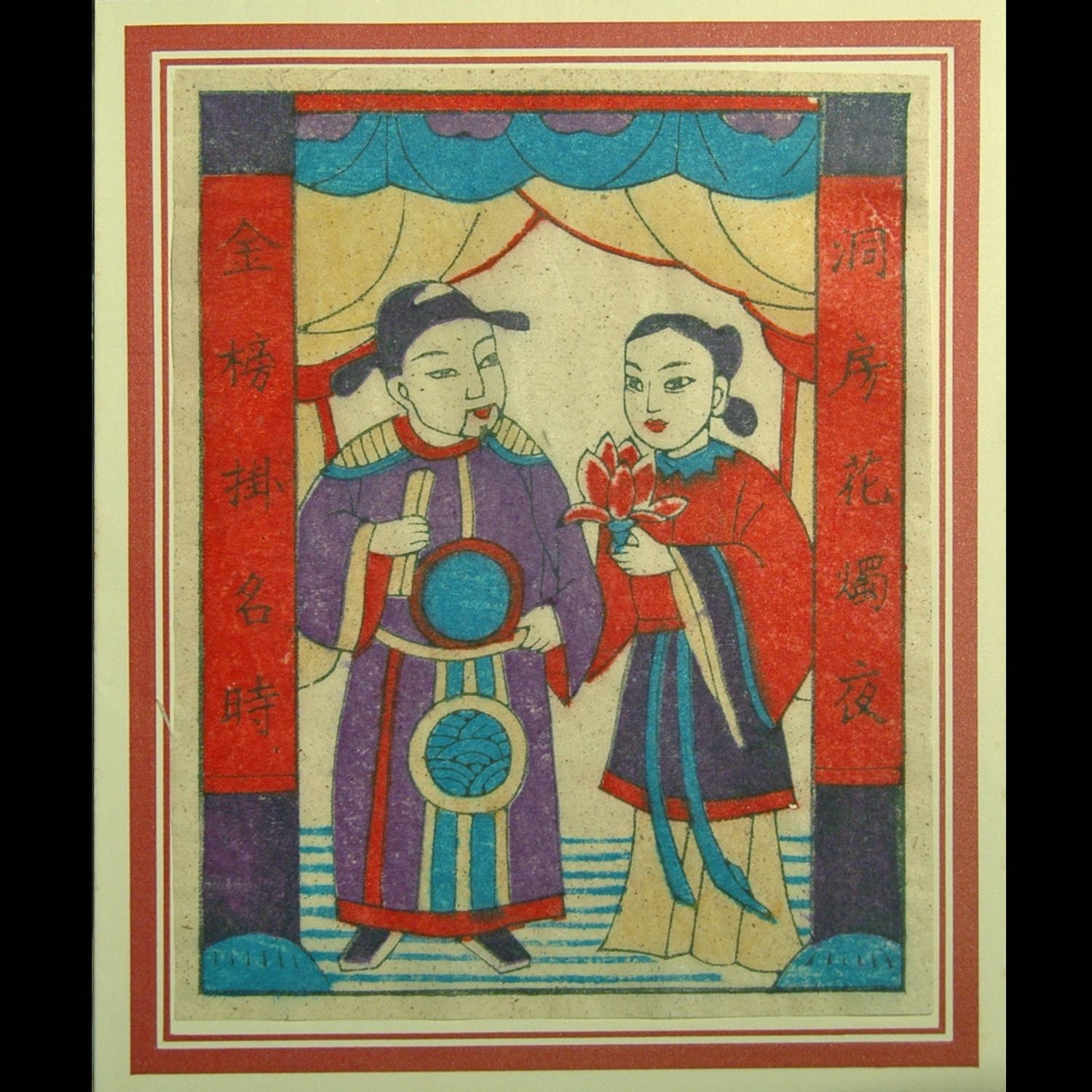
Woodblock prints are traditionally posted to celebrate Chinese New Year, both as a decoration and as a good blessing to the household. The subject matter of the prints surrounds the idea of good fortune, this projects for household to the year ahead. On this particular print, its is written ” On the night of the wedding; when one is selected as an high ranking offical.”. This would probably symbolises the best moment in a man’s life. Adapting to modern day use, this is mounted on a greeting card, perfect for giving well wishes. (US$4)