Archives for category: painting / prints

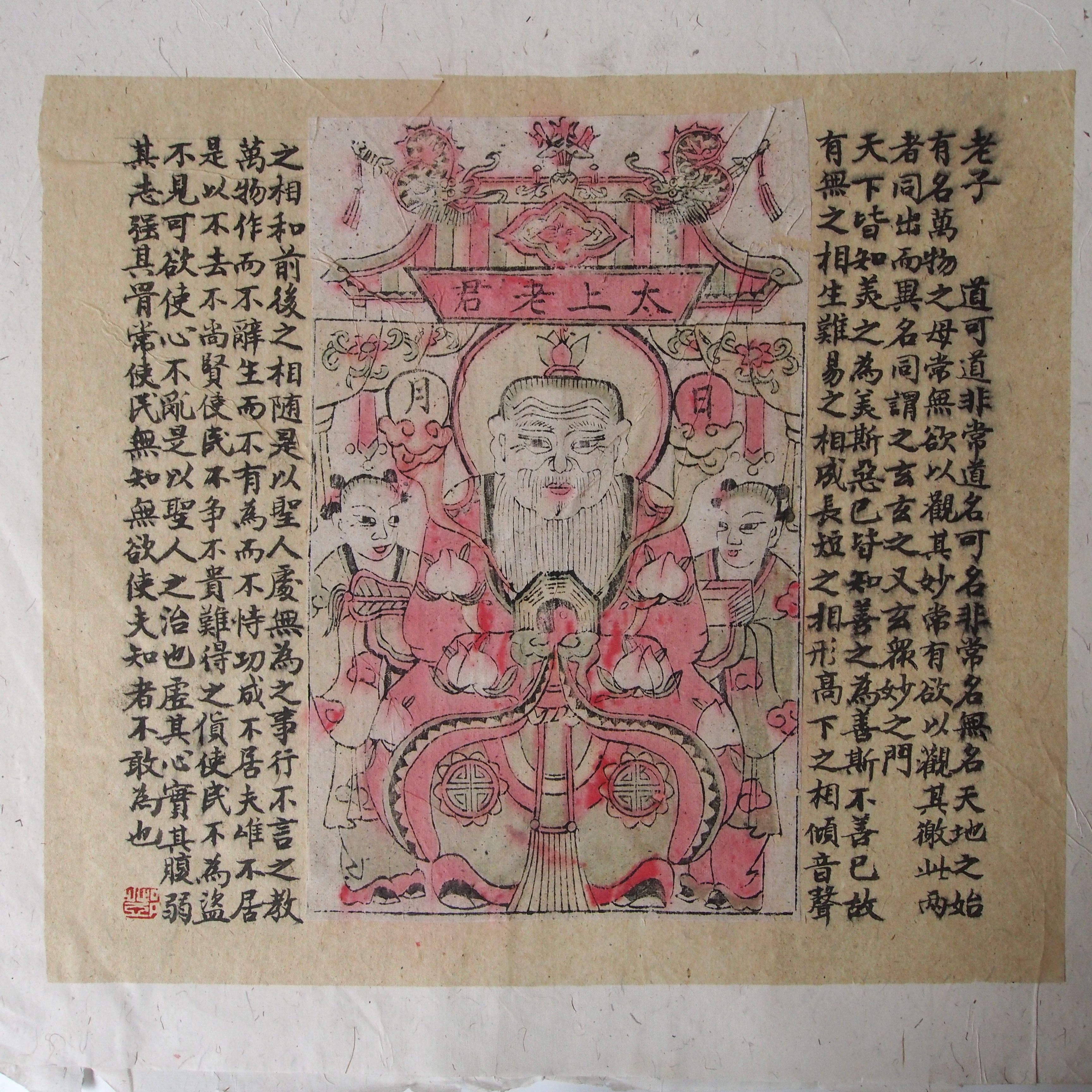
wood block print

W360xL330mm, China

It is believed that Tai Shang Lao Jun is the spiritualization of Lao Zi, the founder of Taoism.  He is one of the Three Pure Ones, together with Yuan Shi Tian Zun and Ling Boa Tian Zun, they formed the Taoist trinity forms the fundamental of Taoism.  Tai Shang Lao Jun is the body of Taoism, the origin of Chi (the heaven and the earth), the nature system and order.

japanese wood block print

W310xH220, Japan

A limited comtempory Japanese wood block print by the artist Masaya, entitled the New Green.

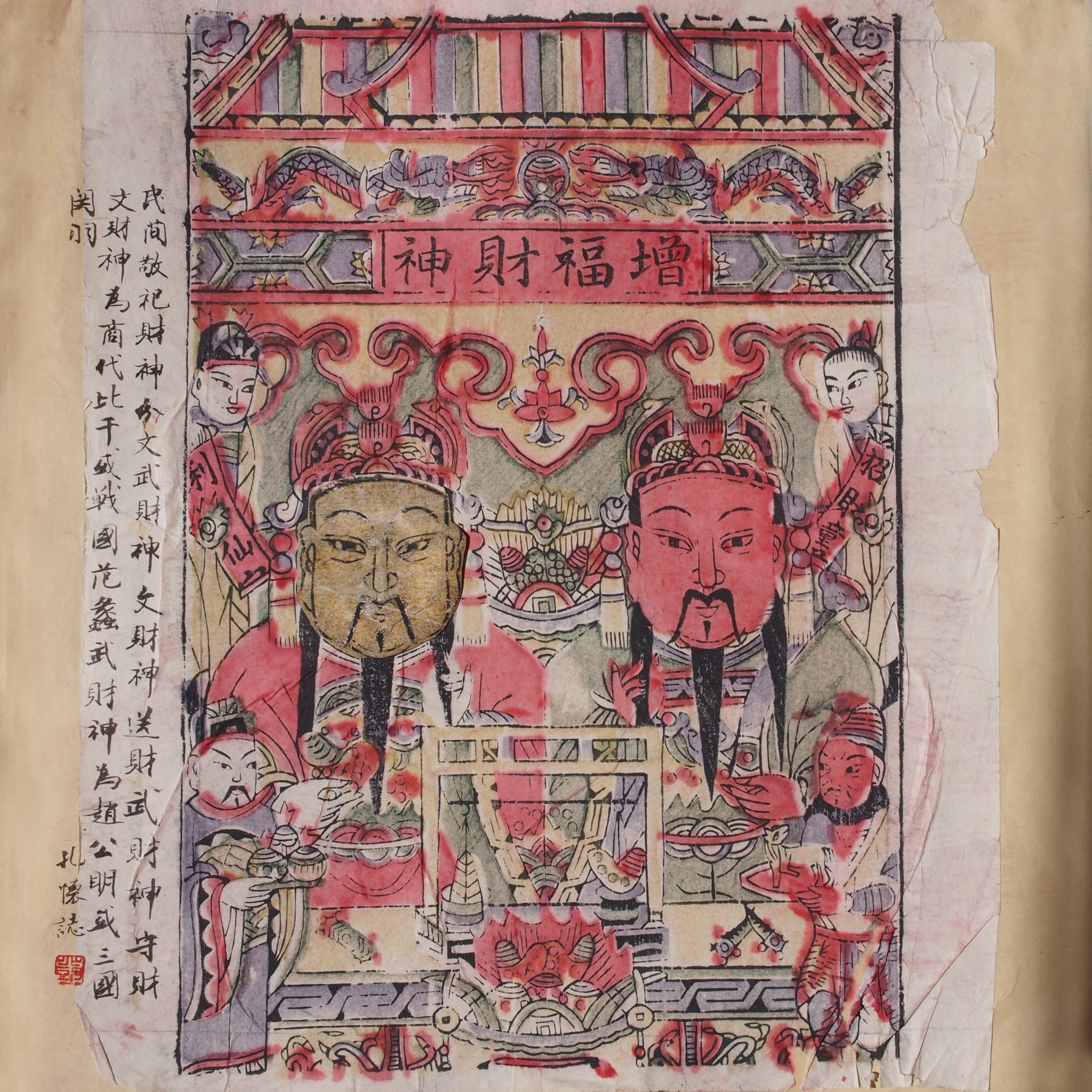
money god printW300xH380mm, China

Today, the fifth day of the Chinese New Year, is the day to welcome God of Wealth.  Traditionally, early in the day one will heard drums and gongs, fire crackers from the shops as well as a fest of food to invite the God of Wealth for visit, some might even go through the trouble of  welcoming him early in the night so to make sure he will not be going anywhere else.

On this new year print there are 2 Gods of Wealth, one academic and one martial.  The god of wealth is a title, it is not attributed to a single saint but a handful of saints.  The Academic God of Wealth has the task of delivering wealth and commonly refers to Fan Li and Bi Gan, both a loyal and wealth character who helps out with country and the poor.  The Martial God of Wealth is responsible for safe guarding the wealth, they are General Zhao Gong Ming and General Guan Yu, both legendary fighters.

See our other God of Wealth.

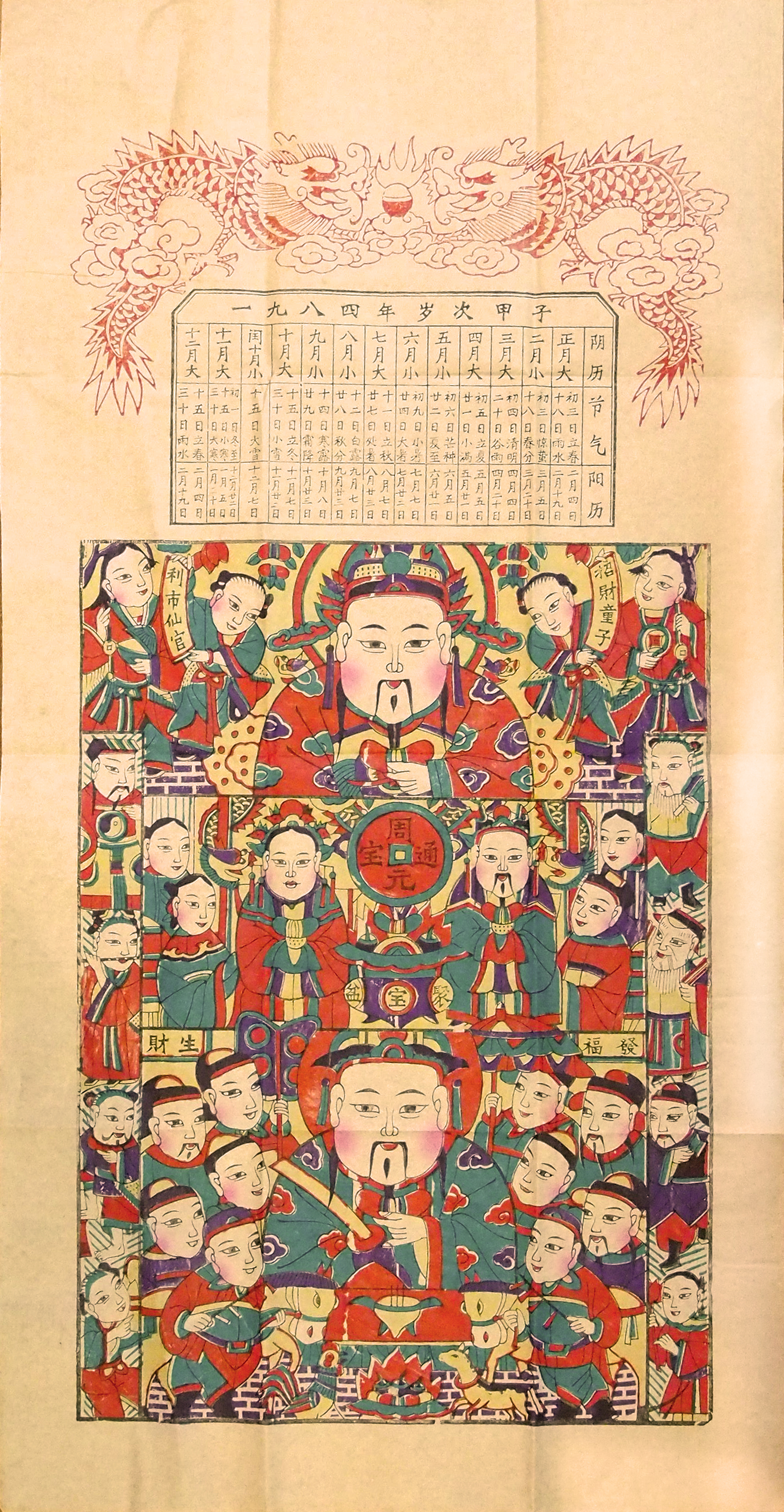
kitchen godW400xH760mm, China

Once again, its the time of the year to thank the Kitchen God.

It is believed that at the beginning of every Chinese New Year, on lunar January 4th, the Jade Emperor will sent the Kitchen God to monitor the activities of each household (a bit like the NSA, I guess) and at the end of the year, lunar December 24th, the Kitchen God will depart to make his annual report back to the Jade Emperor.  To thank his for a year’s hard work, before his departure a special meal will be prepared for him.

If you still havent prepare the farewell dinner, hurry up before he leaves!

See our other Kitchen God pints.

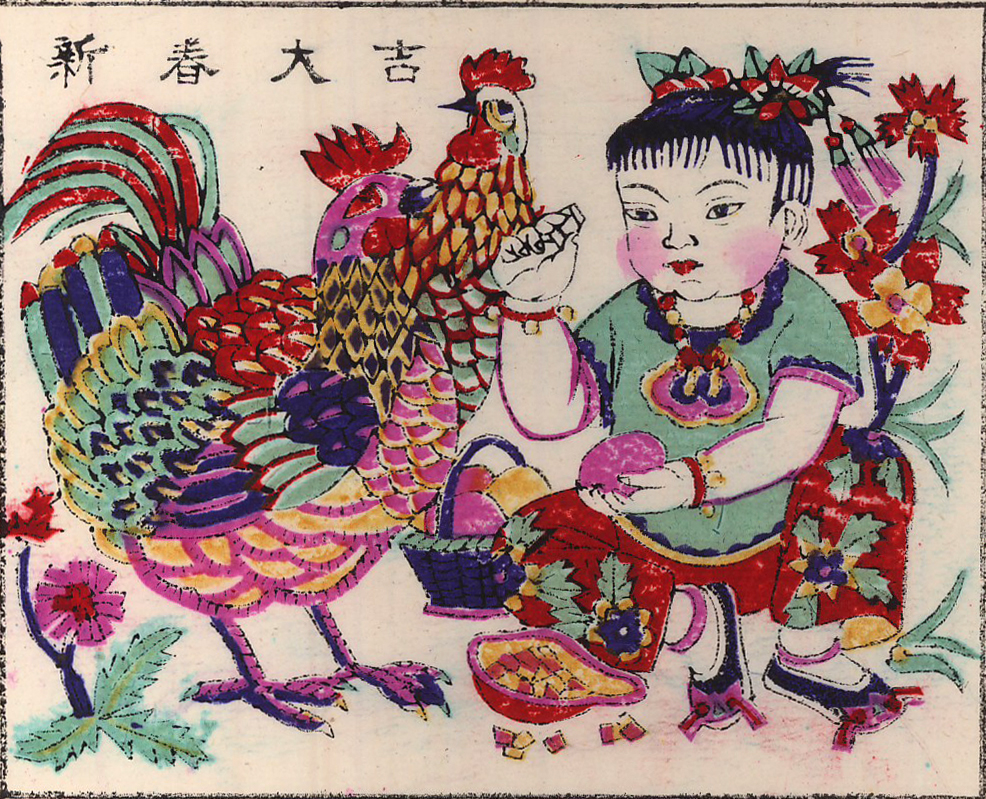
new yearW130xH100mm, China

Wishing you a happy 2014!

wood block printW410xL690mm, China

This is a Yang Liu Qing print on the subject of “Searching for Plum Blossoms in the Snow”.  The phrase is generally used to described scholars appreciation and effort with poety.  The old man on the donkey is Meng Hao Ran, a Tang dynasty poety; he is known to have gotten his inspiration from ploughing through the snow on the  Ba Qiao Bridge in Xian.

H370xW260mm, China

Still haven’t made plans for your X’mas holidays?

The Jin Ze Arts Centre is offering an intensive weaving workshop over the festive season.
A joyful course in the tranquil setting will be a nice change from X’mas turkey and hours in front of the telly.

To find out more about the event:
http://www.jinze.org/events-sub.php?serial=1

wood block printW220xL300mm, China

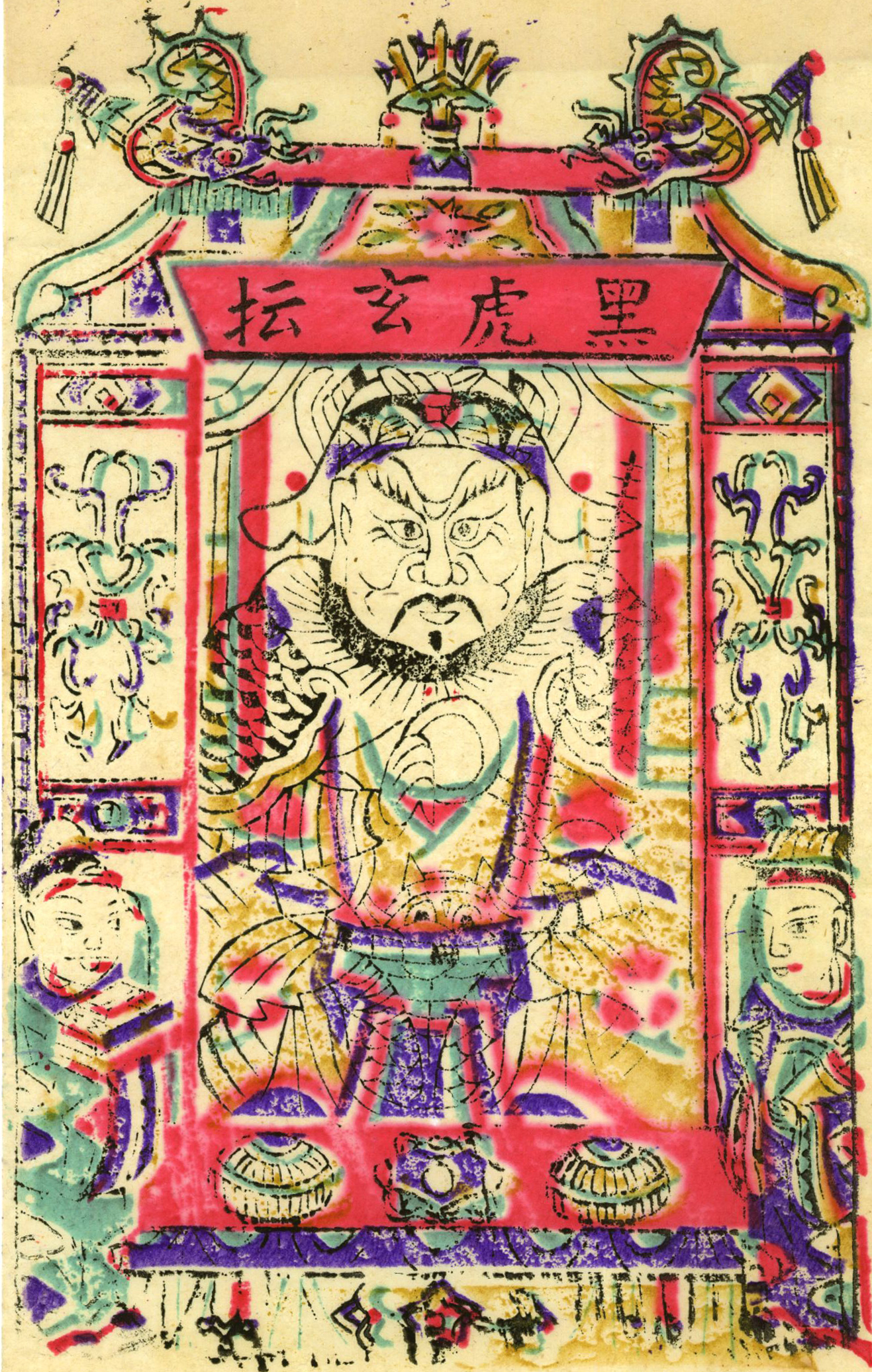
A new year wood block print of the God of Wealth, Zhou Gong Ming.  It is believed that Zhou was born in humble family in the Qing dynasty.  As a young he worked as a labourer for a wood merchant, being honest, generous and hard working he was popular.  Soon he was able to start his own wood business and accumulated a good deal of wealth.  Zhou would lend money to those who need them; one merchant borrowed some money and made a lost at a natural disaster, Zhou only asked him to return a pair of chopstick for the money owned.  At time of war, Zhou used his own money to fund an army in support of his country and headed the army himself.  He bravery was well known and even tamed a troubled tiger as a pet.  In most of the God of wealth icon, this black tiger is at his company, here you can see it half hidden inside his coat.  Because of his generosity and bravery he was worshipped after his death and named the God of Wealth.

Click here to see our other items of the God of Wealth and the mystical version of his life.

yang liu qingL1140xH660mm, China

This Yang Liu Qing print is about the story “Wenji Reurning to Han”.

Wenji, was the daughter of the scholar Cai Yong, equally well learnt she was tributed to have revived some important ancient literature that was lost during the war.  Wenji though has a rather tough life; her first husband Wei passed away and during the war she was kidnapped by the Huns tribe and made to be the queen of the Hun king.  The king treated her well, they had children and soon Wenji though missing home was well settled in Hun.

Meanwhile her father Cai Yong was jailed and died for his support of a declined politician.  The story would have ended here if  emperor Cao Cao has not suddenly missed his friend Cai Yong and thought of his daughter.  Emperor Cao requested for her return to Han, though unwilling the Hun king dared not disobey and reluctantly send the mother of his child home to Han.  Feeling the sorrow as she departed her Hun family, Wenji wrote the poem “Eighteen Stanzas for a Barbarian Reed Leaf Pipe”

Happy to see her, Emperor Cao Cao felt bad that she is all alone and without a family so he arranged for her to be wedded to an official named Dong.  Unfortunately, Dong committed some crime and received a death sentence.  Wenji fearing she will lose yet another husband went to see Cao Cao and begged for his pardon.  Moved by her action, Cao Cao ordered for Dong’s release and chatted with her about her father’s literature.  Wenji told him that all the 4000 odd books were destroyed during the war but she could still recite 400 out of the 4000. Cao Cao was excited to record the lost literature and Wenji wrote them down word for word.

Click here to see our other Yang Liu Qing prints.

print2

W220xL300mm, China

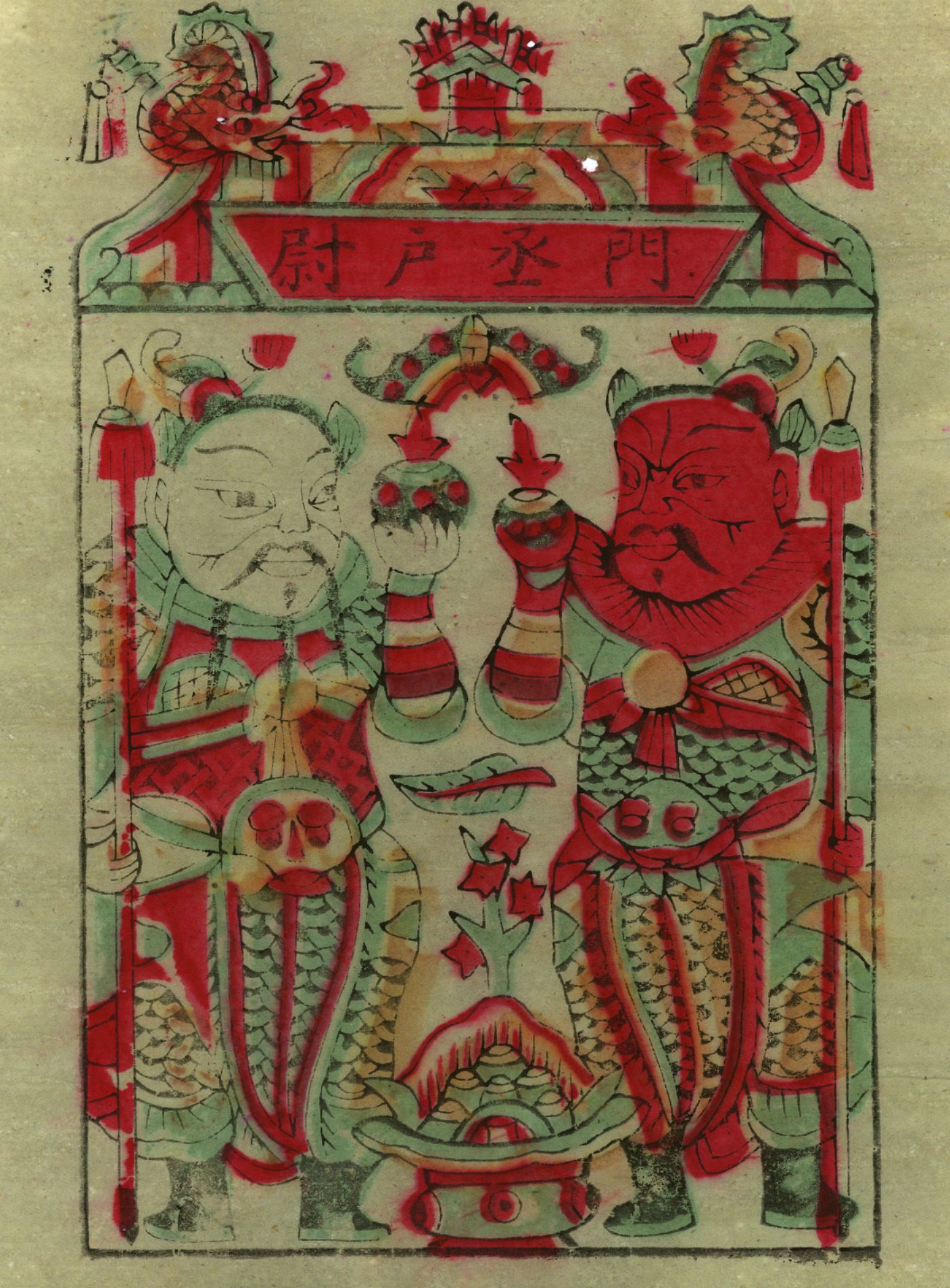
There are many door gods, the most famous and the original ones are Qin Qiong and Wei Chi Gong.  The two generals have been keeping the ghosts away from the imperial court. the Tang Emperor felt sorry for their long shifts and ordered portraits to be put up on the doors to give them a well deserved break.  Click here for the full story.  Traditional Chinese doors comes in pairs and a print of the individual door god would be posted on both doors.  This particular prints has two door gods, the one with the white face on the left is Qin Qiong (門丞) and Wei Chi Gong (戶尉) is on the right, this print is made for single door.

The four words on the print “門丞戶尉” refers to the two door gods, but funny enough with the four words mixed up as “門尉戶丞” it became a Taoist spell for healing the sick.  The procedure apparently goes like this (please don’t try this at home);

take a rooster with lush feathers,
hold a knife with your right hand and the rooster on the left,
go to the house of the sick,
inside of the house take 3 steps and on each step say the spell,
“門尉戶丞,某甲病蠱,當令速出,急急如律令”
(門尉戶丞, so and so’s sickness, expel at once, promptly take the order)
then put the head of the rooster in the mouth of the patient 3 times,
take the knife and draw blood from the rooster’s comb,
mixed the blood with 100ml of white spirit for the patient to drink.

… if the patient was not very sick before … he probably would be now …