Archives for category: lacquer

Green lacquerware

DIA200xH150mm, Myanmar

ASIAN FOLKCRAFT COLLECTION
SOIL X MOUNTAIN FOLKCRAFT

It is almost certain that Burma acquired the technique of lacquer production from China where it has a three-thousand year history. However, the use of lacquerware was not confined to royalty and the monkhood in Burma. Lacquer objects were used daily by commoners. Food, refreshments, clothing, cosmetics and flowers are all put in lacquer receptacles.

The importance of lacquer to the Burmese is probably equivalent to the modern uses of porcelain, glass and plastic combined. Indeed, lacquer has many of the characteristics of modern plastic. It is light, waterproof, easily moulded and dries to a hard state.  It can be applied to virtually any surface: plain or carved wood, bamboo, paper, fabric, even metal and stone.

This fruit bowl is made by coiled bamboo, covered by over 20 layers of lacquer and decorated with the Burmese astrological symbols. Process of producing green lacquer ware is rather time consuming: One part indigo was added to ten parts of orpiment to produce a traditional green color. With age, many such green lacquer wares have come to assume appeasing opaque turquoise hue.
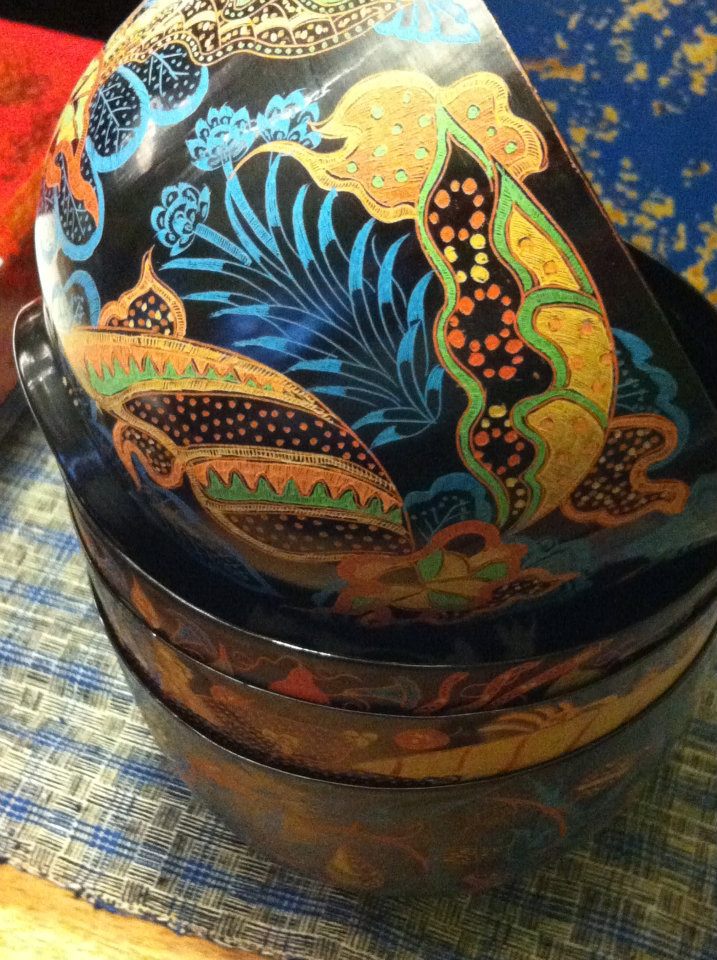
horse hair bowlDIA130xH90mm, Myanmar

Veronica Gritsenko is a British-Ukrainian artist and scholar. In 2000 she set up the Black Elephant studio in Bagan, Burma and eventually developed her own unique technique and designs based on ancient methods and materials.  Black Elephant Lacquer is collected by private connoisseurs and was acquired by the British Museum and The Royal Botanic Gardens Museum.

These bowls are made with horsehair woven in between very thin bamboo splints, with further application of lacquer mixed with rice husk ashes.  Burma is famous for a special type of incised lacquerware called “yun” – It’s engraved with a sharp iron stylus and the incisions are filled with colouring matter to create a design.

Item from SOIL for the ASIAN FOLKCRAFT COLLECTION

burmese betel boxDIA60xH50mm, Myanmar

For the first item of the Asian Folkcraft Collection, we have a miniature of Burmese’s traditional lacquer betel box from SOIL.

 Betel, tobacco and pickled tea is an expression in Burmese language that speaks of hospitality and welcomes a visitor to one’s home.

 The circular betel box at first glance, looks solid, but is in reality nicely fitted with a lid over a small container for holding betel nut. The top of the bowl is fitted with two shallow trays, one on top of the other. The upper tray has four little cups to hold ingredients for making betel nuts: cloves, cutch, and seeds, shredded wild Licorice or sweet creeper.

 In the second tray is a layer of dried tobacco leaves. Only when the tray is taken out of the main bowl are green fresh betel leaves revealed.

Golden Wood Carving

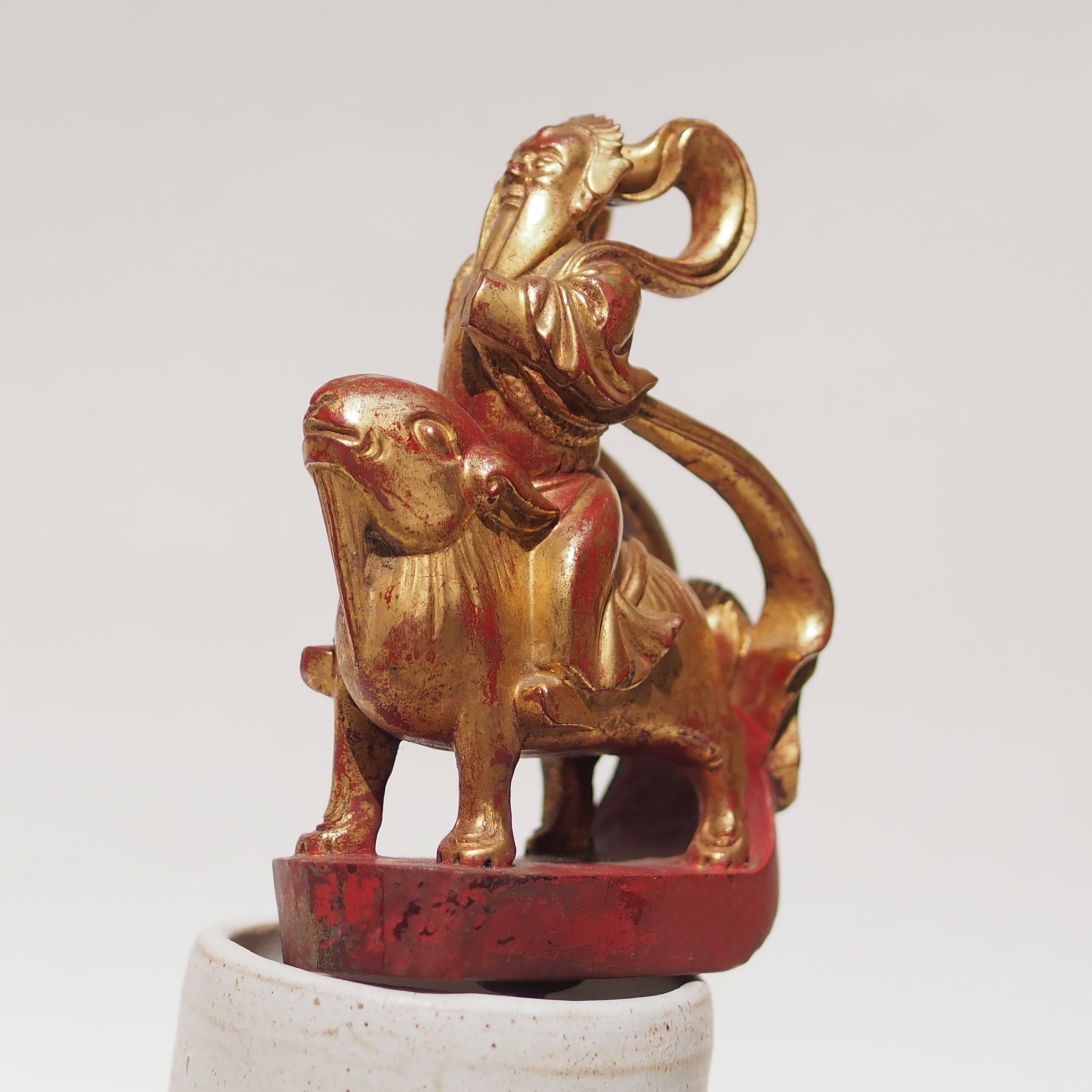
W50xL100xH140mm, China

This is the figurine of one of the five goat riding saints, the legend goes back to 880 B.C. when Guangzhou was constantly hit by famine and plague, there were 5 saints each with a different colour garment and each riding a different colour goat.  The 5 saints each offer 6 stalk of rice to the residence and bless the city to be free of famine.  The goat 羊 is  homophone to the word blessed 祥, which resulted in Guangzhou being also known as the 5 Goats City.  It was a wish for the ancient farmers, never to stave again.

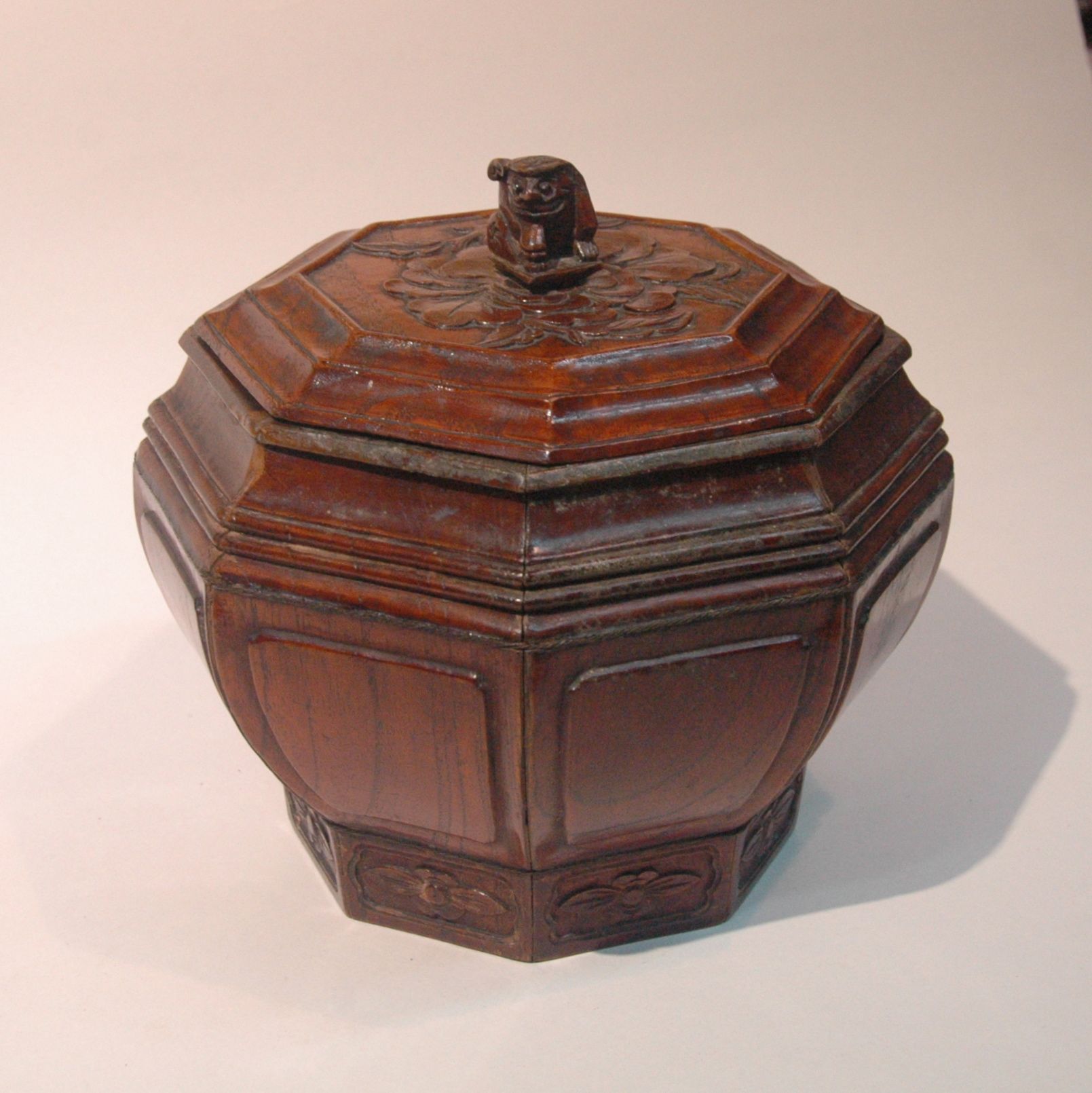
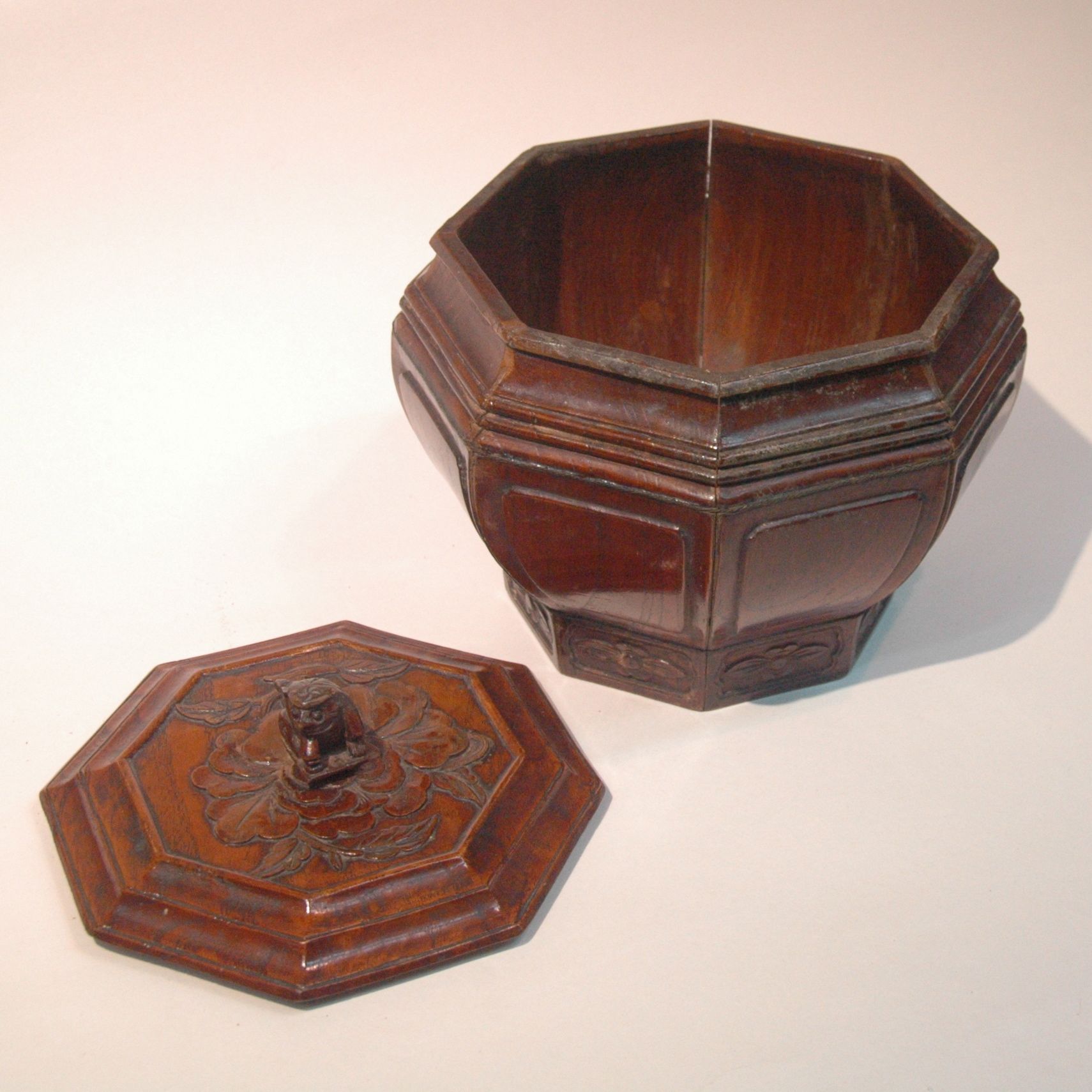
DIA230xH230mm, China

This is one of the container for dowry for the Chinese in the old days, a container to be filled with melon seeds.  Melon seeds is a popular snack for the Chinese especially for festive celebration like the Chinese New Year, apart from its nutrient and availability, more importantly its symbol for fertility.

Traditional melon seeds are kept in their shell and nibble open, unfortunately I cannot find a human demonstration, here is one by the squirrel.

See our other dowry containers; Wooden Pail, lacquer Box, Water Bucket, Double Happiness Jar, Embroidery Pouch.

DIA330mm, China

For those of us who grew up going to Japanese restaurants in Hong Kong, eating out of the black / red shiny bento boxes is a norm, so much that it becomes a symbol in our mind.  But anyone ever wonder why there are so many black plastic containers?  They are actually a replica of the lacquer ware that would have been traditionally used.  Those are probably the closest some of us get to know of lacquer ware.

The making of lacquer ware is a laborious task of collecting urushiol from the lacquer tree (Toxicodendron vernicifluum) and applying thin layers of lacquer over a form (in this case, wood), let dry, polish and apply again and again.  Here is a clip of Japanese lacquer tray making;

You will be surprised that the price of this handmade lacquer tray is not any more expensive than a good quality plastic one, and if you handle it with care (avoid soaking in water and the use of abrasive cleaner) it will last just as long.  Make this your first lacquer ware!

This item selected by Furze for the Something Old Something New exhibition and is available at both Mountain Folkcraft and Soil.

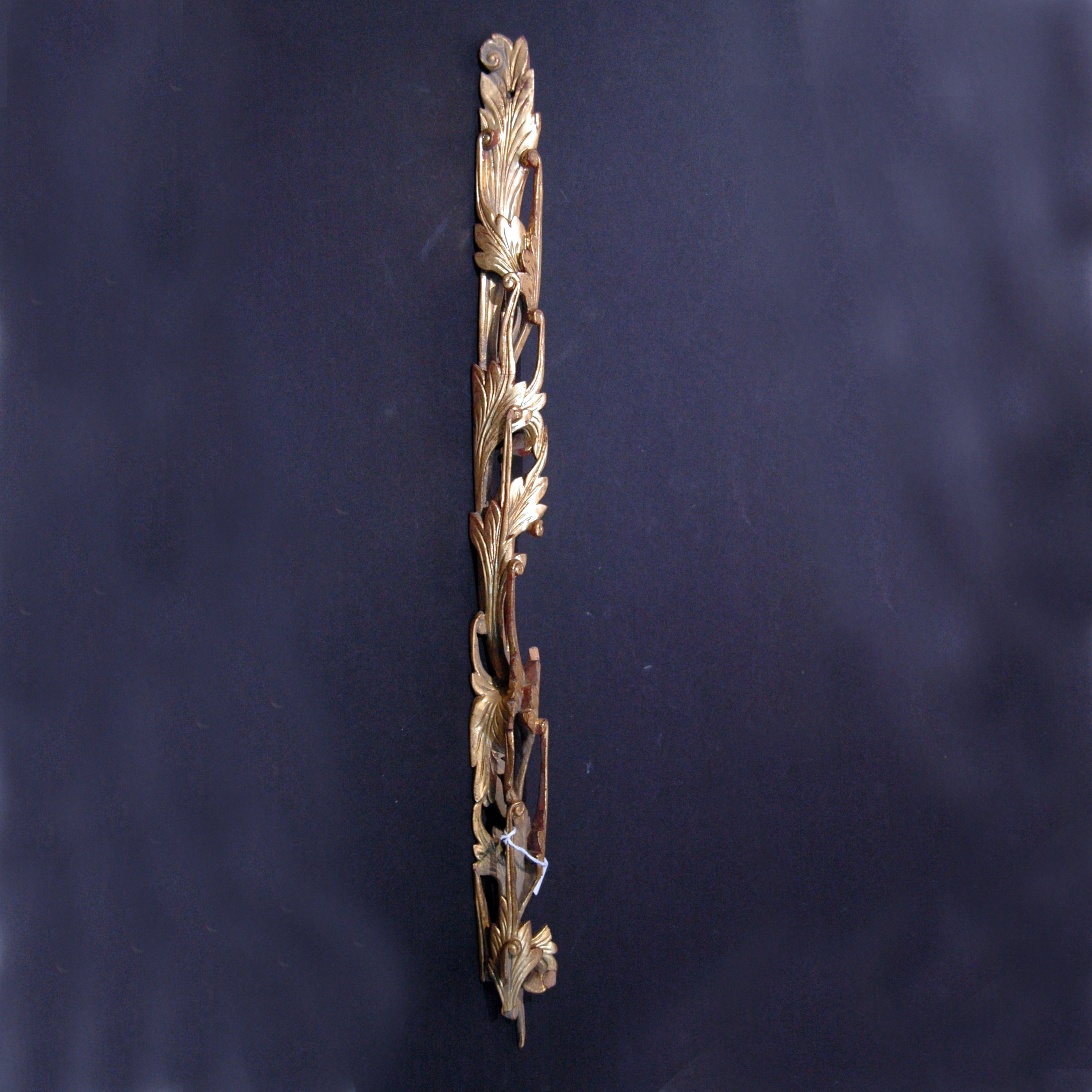
W40xD40xH500mm, China

This engraving of the plant reminded me the pattern of the arts and crafts movement.  Most probably also for the love of nature, the wall climber pattern was one of the first pattern to be used for the Chao Zhou golden wooden carving.  Apart from wood carving it is also a popular pattern for pottery and more abstractly on costume.


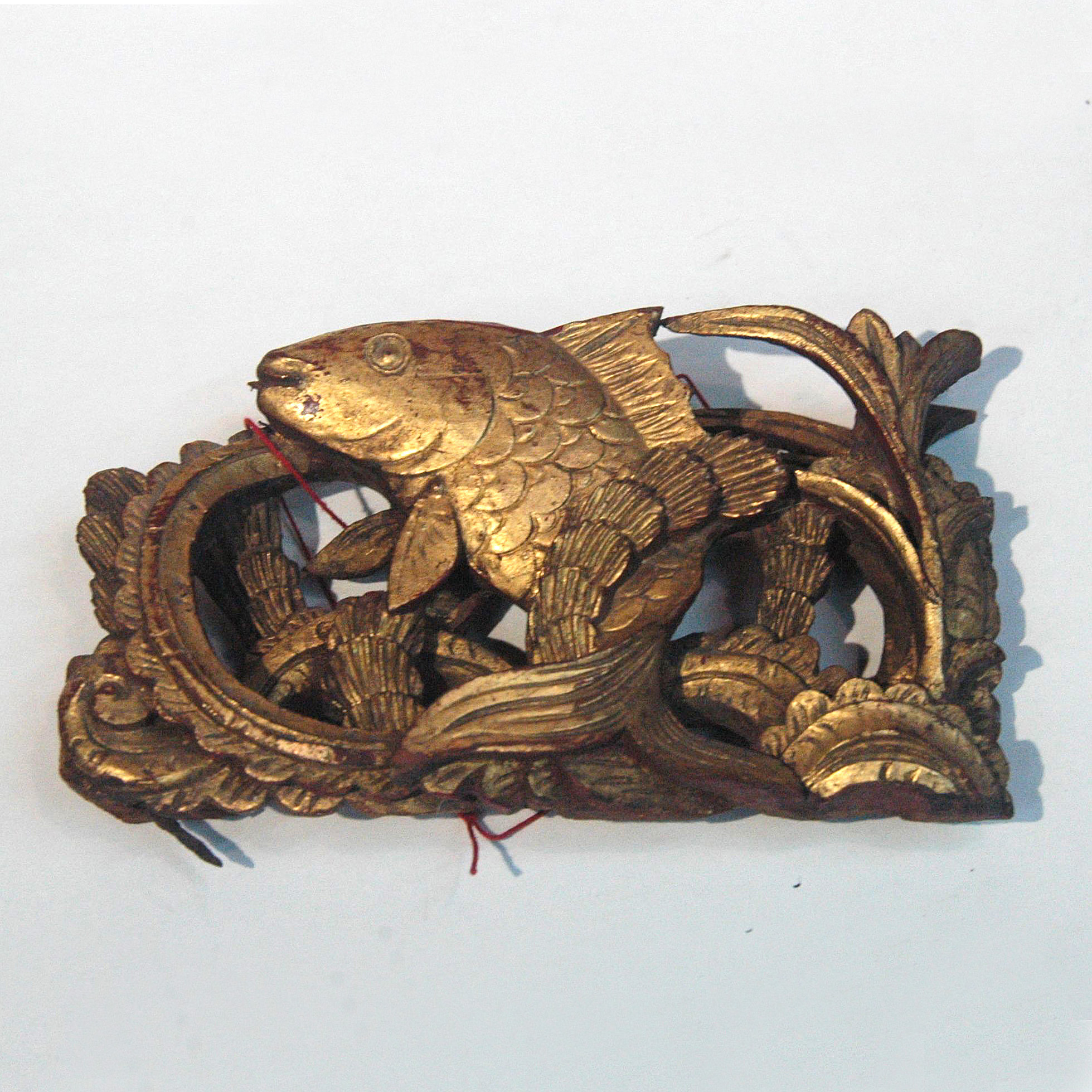
W130xH70xD30, China

The carp fish is a blessing symbol for the Chinese, there are many legends regarding the carp fish and here is one of them:
Once upon a time there is an orphan named Ji Qing, without a family he made his living as a boat tracker on the Chuan Jiang River.  Life was hard but he lived his days joyfully, being a good swimmer he is able to retrieve any objects his passenger accidentally dropped into the ocean.  Diving deep into the water he had a special bond with the carp fish, even if he is hungry he will not harm them, his friend made fun of him and called him silly Qing.  One day when he was tidying up the tow string, he saw a beautiful golden carp but at the same time a water snake was about to make it his dinner.  Ji Qing threw the string on the water snake and saved the golden carp, he took the injured carp to his hut and nursed it for days.  One evening exhausted from a day’s water he rushed home to see the carp but it was no where to be found.  Oddly on the table was 4 gold bars and there carved the words, “I have jumped to the sky and swam to the reef but failed to be a dragon (it is believe that if a carp can jump over the mountain it will turn into a dragon), here I am to give wealth to Ji Qing.

Would this be the golden carp?

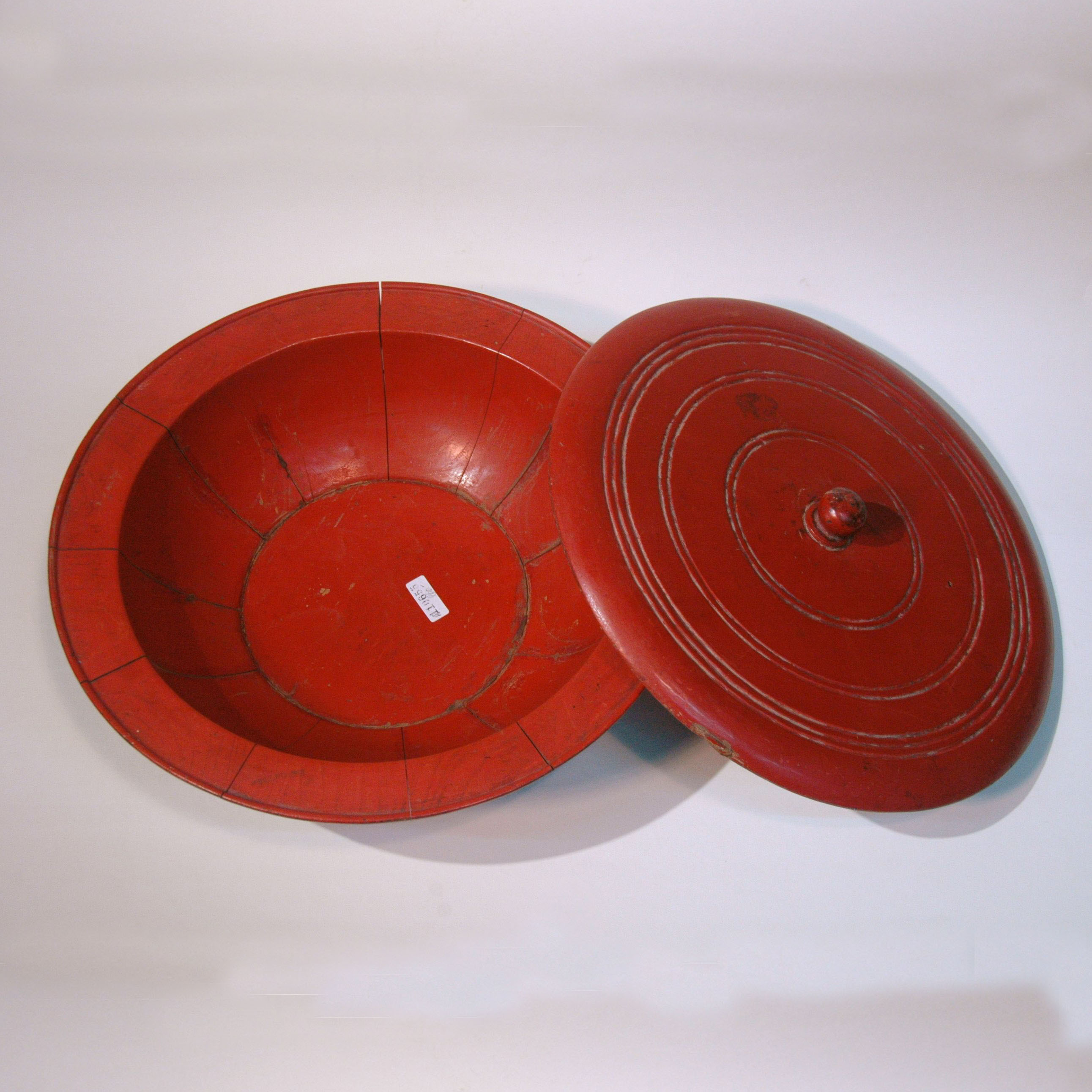
DIA340xH100mm, China

This red lacquer box is part would have been part of the dowry item in a traditional Chinese wedding.  In old China when the country is agricultural based, male is regarded as asset to the family with their labour and sadly , especially for the poor, female took on a minimal role in society.  It is said that a wealthy family their daughter is married off, a commoner’s daughter would be given away at the marriage and a poor man would have his daughter sold.  Wary of how the daughter’s life would be when she enters the groom’s family, the bride’s family would try their best to come up with an elaborate list of dowry so to ensure the status of their daughter in the new home and that she would not be seen as “sold”.  It so extensive that the production of the dowry would be categorized into wood work, carving work, lacquer work, box and bucket work and costume making.  In the morning of the wedding day, a team would set out from the groom to the brides house, after noon time, the team would return with the bride and the dowry procession.  For the riches, the dowry would be a full procession which goes on for miles.

This lacquer box is for storing confectionery.

W70xD70xH100mm, China

I am sure not by the craftsman’s intent but this item just put a smile on my face, a grinning pomegranate! It can even pass as an anime figure.

Pomegranate was imported into China in the Han dynasty from Persia, because of its beautiful flowers, it was immediately loved by the country.  It blossoms in lunar May, being such an event May is also known as the pomegranate month.  Apart from its flowers, pomegranate is seen as a symbol of blessing in China; a symbol of fertility, a single fruit it bears over 1000 seeds!