Archives for category: furniture / architecture

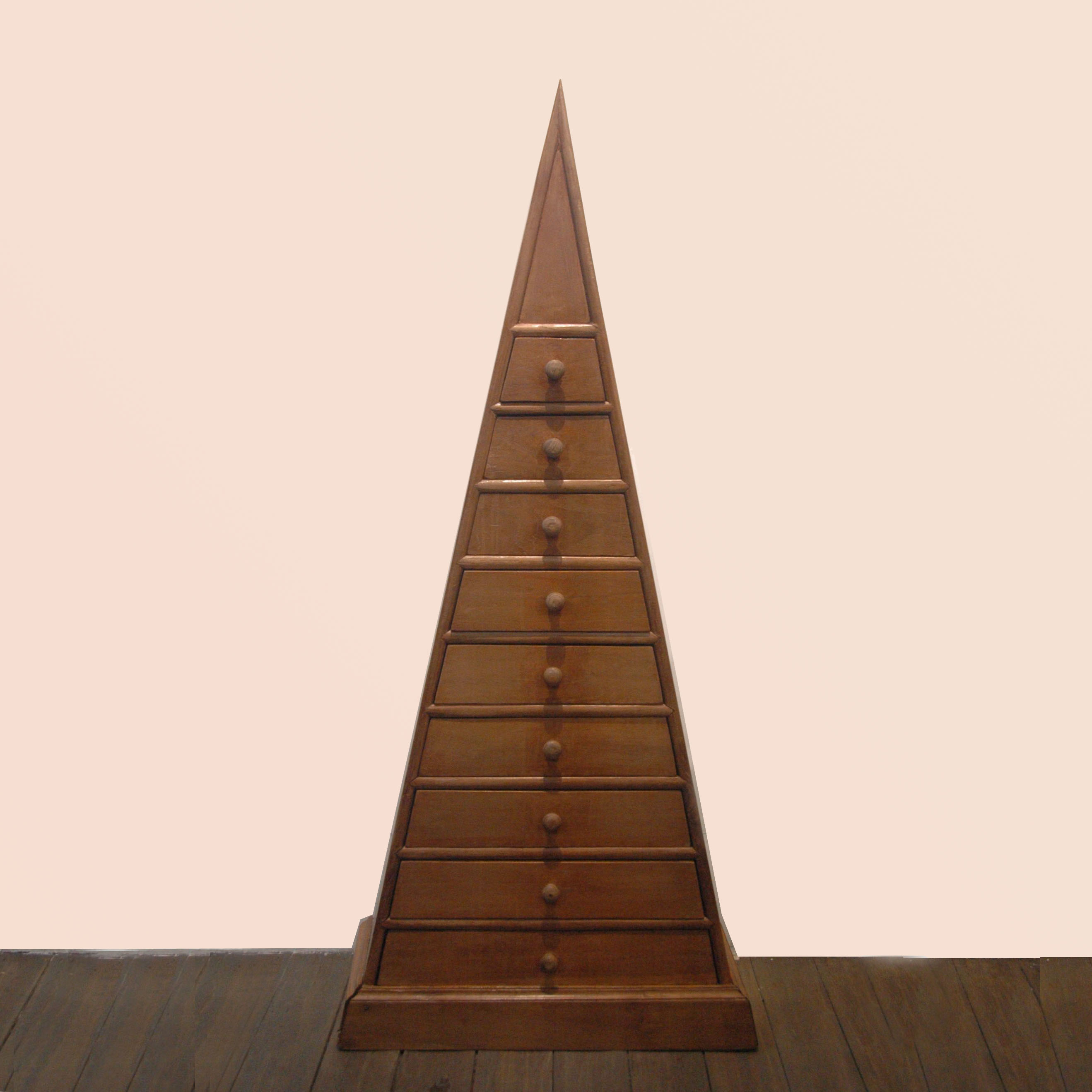
D170xW450xH1100mm

This item has been in the shop for as long as I can remember, being an architect I can see it as a concept for a skyscraper, a vertical city, etc.  But there is something more to it, it seems it really should belong to a fairy tale where these drawers open up to endless possibilities and magics.

Come and see our collection of Chinese lattice!
please see the entry Lattice

W530xH1020mm, China

This wooden lattice was part a building, these lattices featured in all traditional Chinese buildings, temples, courts, residential house, etc.  They are the upper part of the door which is responsible for letting light into the house.  Its a kind of a window, you could say.  Buildings are measured by the unit of Jian, and for each jian there will be 4 lattice door.  The whole door is of the proportion 1:3 or 1:4.  The door is divided into 3 parts, the top is the lattice Ge Shan, the middle is Yao Chuan, the lower part is Zhang Shui Ban.  The lattice is constructed by joinery and most often with a miter joint.  Danial Sheets Dye’s Chinese Lattice Design has a lot of information regarding the Chinese lattice, it was first published in 1937!

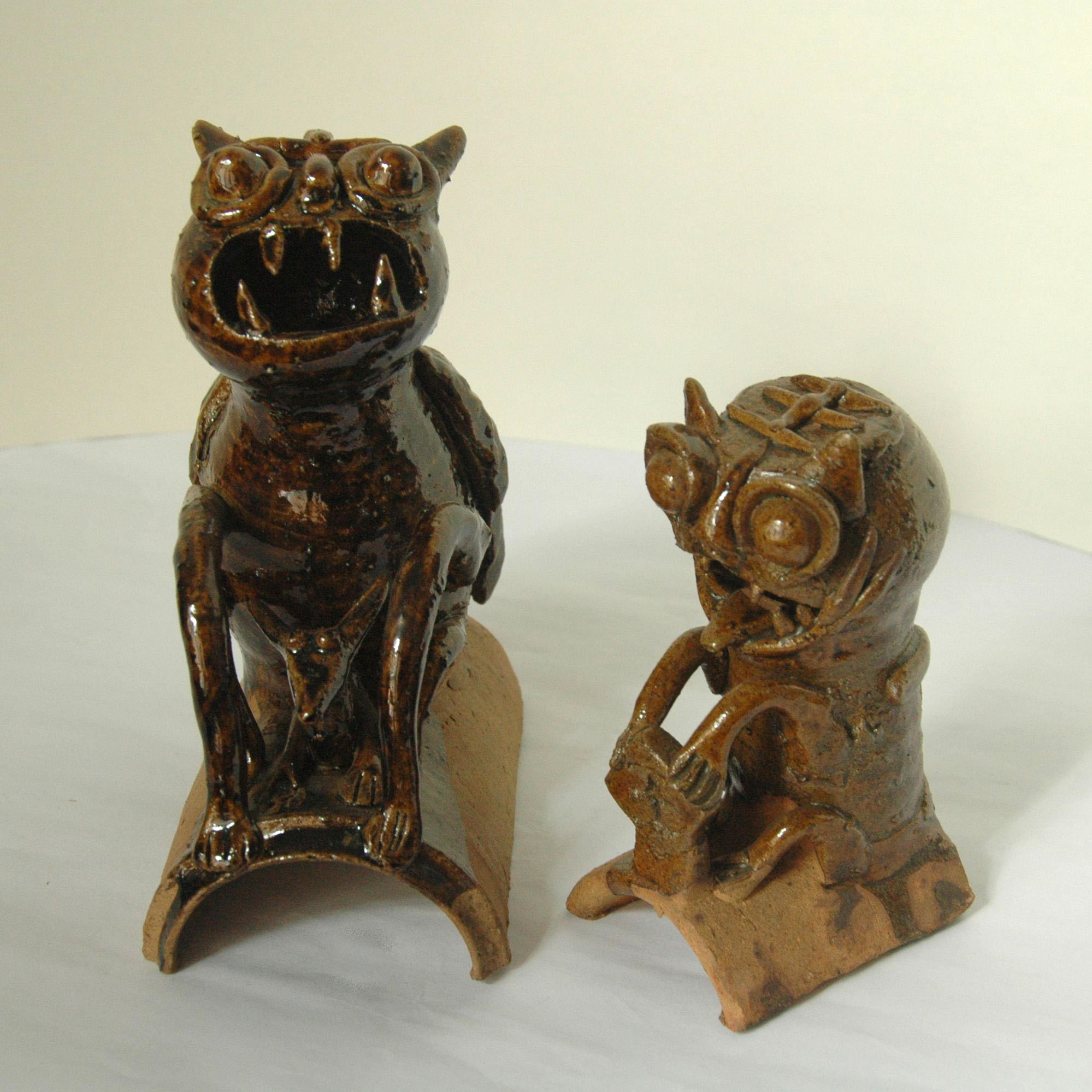
W80xD120xH150mm, China

These are roof ridge tiles called the cat shingles, in the Yun Nan area each house would have one placed on the center of the roof ridge with its back toward the courtyard and facing the outside.  Although they are called cats, they are actually resemble tiger (you can see this by the 王 sign on their forehead, this is a symbol for all the Chinese tiger figurines).  It is believed these tiger figurines are capable of  protecting the household by eating up all the demons and bad feng shiu.  On the day when the cat tile is set on the roof, a special ceremony will take place (on a even number day in lunar feb or aug) which involve feeding the tile cat dates and nuts, a sprinkle of  chicken blood, chants, incense, burning of paper, followed by member of the family petting the cat and finally the awakened cat will be placed on the ridge.  On the 1st and 15th of every lunar month, incense will be offered to the cat.
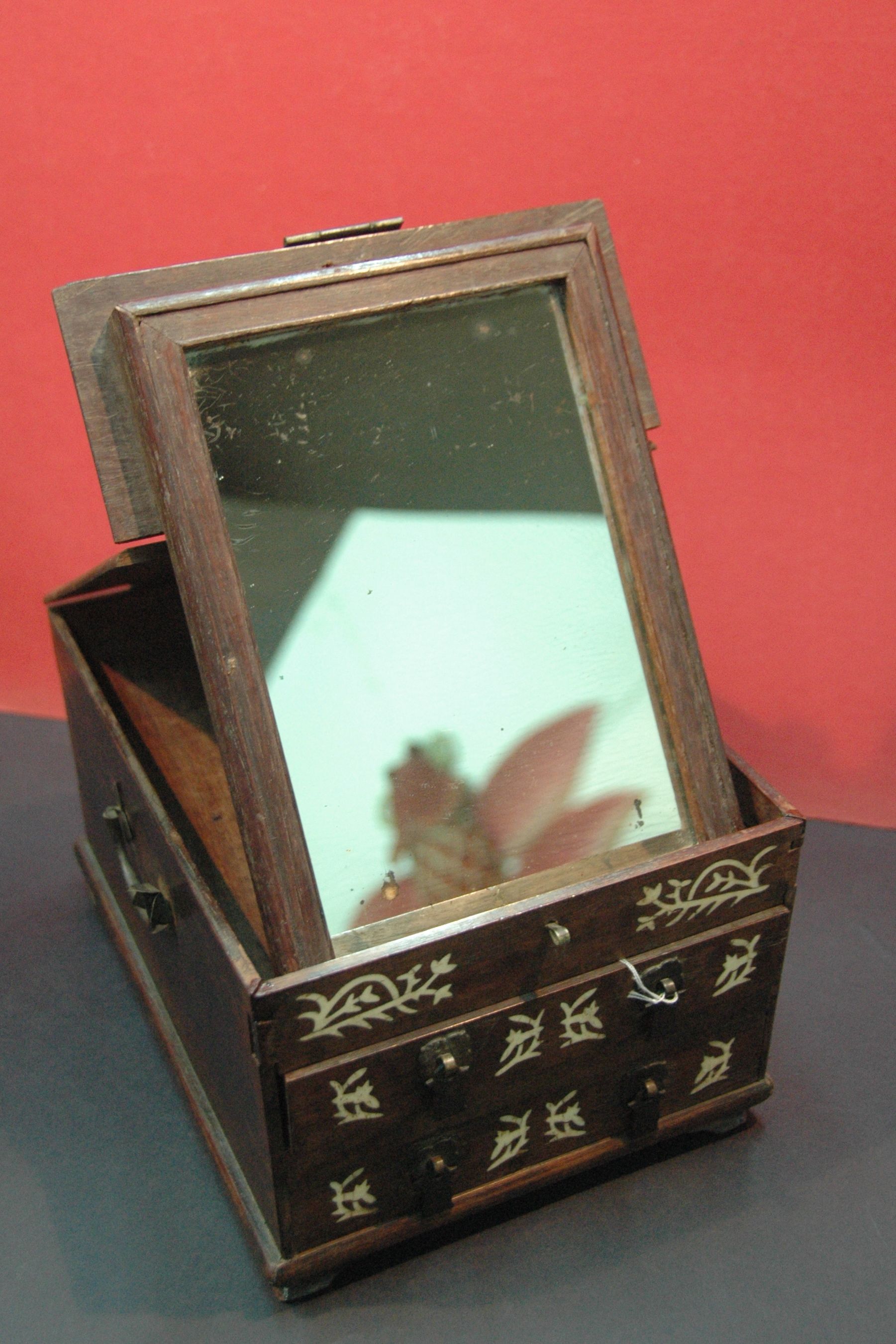
W180xD230xH140mm (300mm when opened), China

Ladies like to put makeup on and look pretty and the Chinese ladies are no difference.  The concept of the Chinese vanity box has been around since the Sung dynasty; the mirror being part of the lid, can be folded away inside the box.  The little drawers store all the essential rouge, eye liners etc.  This box is decorated with the mother of pearl inlay.

L180xD70xH70mm, China

There are many themes for the gold plated lacquered wood carving (so many verbs, but there there are so many layers layers to the work); floral and symbolic carving is one of them.  The two symmetrical flowers are peony, representing wealth and glamour.  The center piece is xiu qiu (embroidery ball) which is a blessing symbol for love.  Many year ago when public dating are forbidden, the girl would select the groom by throwing the xiu qiu.  On the 15th of lunar January / August, the suitors would gather under the ladies’ quarter, the girl would throw the xiu qiu and whoever catches it will be the groom.  This carving is likely to be part of the decoration from the bridal sedan.  (see more about xiu qiu)

China

This is part of the armrest detail for the Chinese wooden furniture.

Come check them out!

Come check them out!

W250xL250mm, China

Porcelain tiles are often used as a decoration piece in traditional wooden Chinese furniture.  These decorative tiles can be found as the panel for the seat or the back of the chair, panels for the door of a cabinet, panels for the back of the bed and as the panel of a screen.  The Chinese have viewed ceramic as utensils, it was not until late Ming dynasty when more colourful glazing was developed that ceramic as painting took a fashion.