Archives for category: figurine

paper mache tigerW60xL140xH90mm, Japan

ASIAN FOLKCRAFT COLLECTION

Though tiger is not native to Japan, its worship has started before the first tiger was imported from Korea some 400 years ago.  The figure was generated from painting, tales and imagination, it is believe that the tiger is a symbol of strength and health.  This is a paper mache tiger with a noddy head.

Here is a collection of the paper mache tiger wood block print by Shirayanagi Eiichi (http://www7b.biglobe.ne.jp/~kokakuro/essay/110619shiroyanagi/toratoratora.htm to see the complete description)


fish necklaceDIA165mm, China

Something Old Something New
Collectible Jewellery Collection

Fish jade pendants have been popular since the Neolithic period, Zhou, Sung, Ming, Qing dynasty and it continue till today.  Fish was the probably the first stable food source before the invention of primitive farming and was chosen as an early subject matter.  As linguist developed, it also attended as a symbol of  “surplus“.  In the Tang dynasty, it had even been prescribed to Concubine Yung Gui Fei for cooling the dry summer heat – by sucking on one jade fish a day.

The fish on this necklace are attached to the beautifully pleated collar.

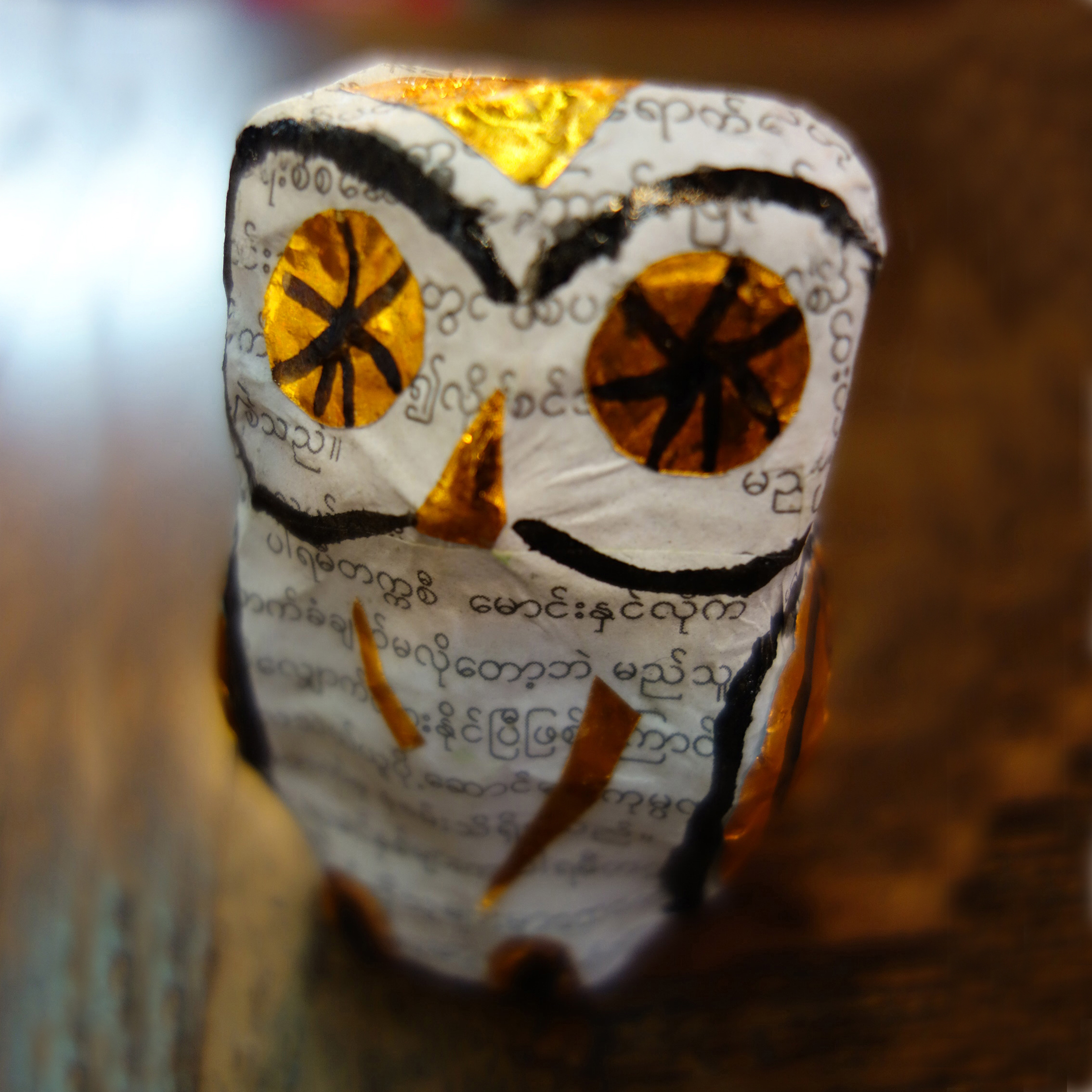
burmese owl

W45D30H60mm, Mynmar

The Zee Kwet (or) the Myanmar Owls are believed to bring luck and prosperity to a family.  The owls usually comes in pairs, a male owl and a female owl.  But there is something more. At the base of the female owl, a tiny owl is also painted on it, to make it looks like a family.

SOIL X MOUNTAIN FOLKCRAFT
ASIAN FOLKCRAFT COLLECTION

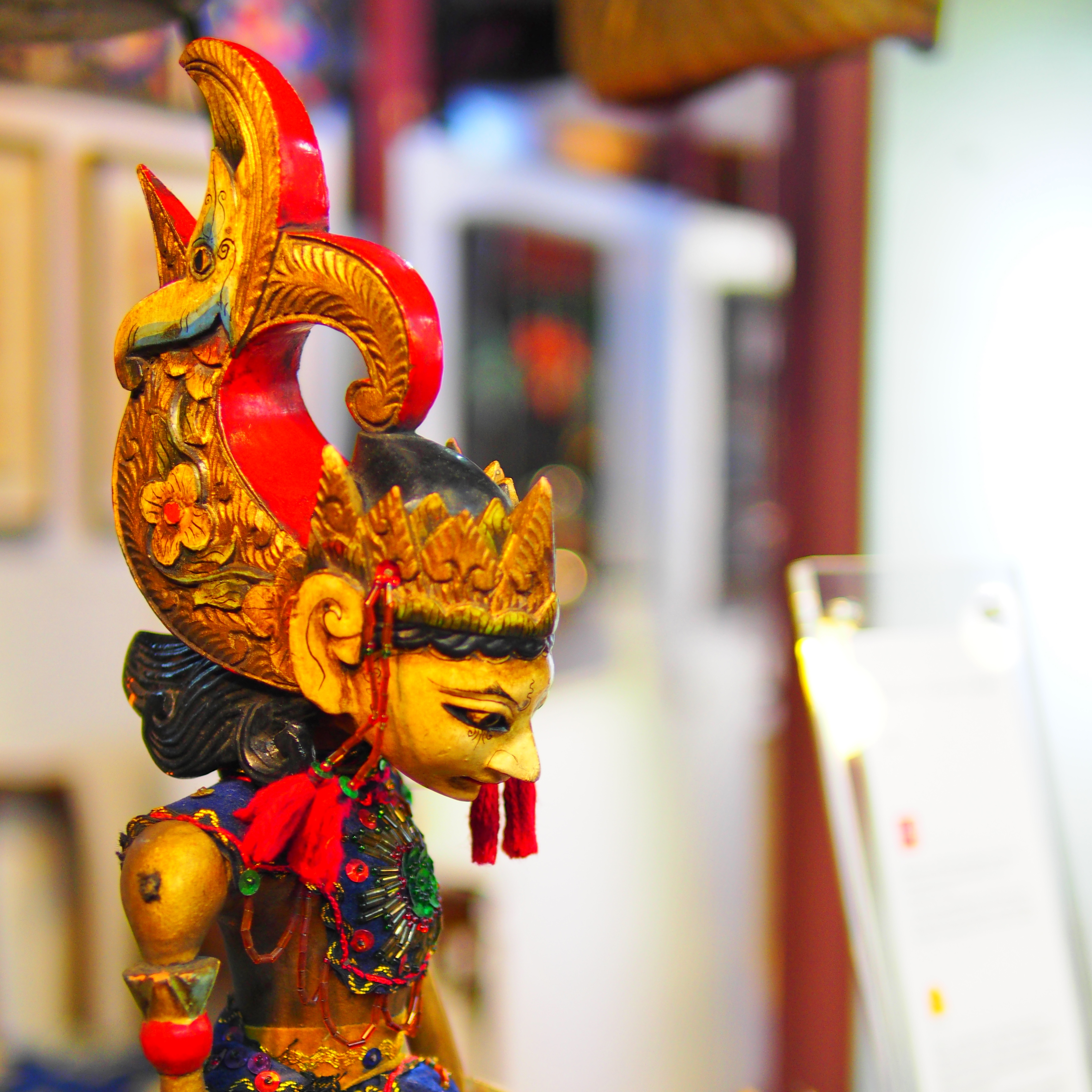
indonesian puppet

W150xD150xH550mm, Indonesia

Wayang golek is the traditional West Javanese performance of the wooden rod puppet.

Here is a wonderful documentary about the Wayang golek.

The character of this puppet is Abhimanyu, the tragic hero in the Hindu epic Mahabharata.  Son of Arjuna and Subhadra, like his father he was both courageous and a good fighter.  Abhimanyu’s education of becoming a warrior started when he was still in womb of  Subhadra, his father would go through in length different battle formation.  Unfortunately at Subhadra has fallen asleep when it came to the exiting of Chakravyuha and Abhimanyu failed to gain the knowledge and there on the 13th day of the battle he was killed.

Come to see the Asian Folkcraft Collection!

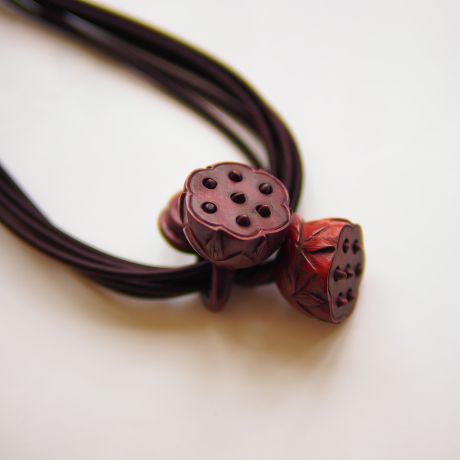
DIA165mm, China

This is a necklace with a wood carving of a lotus pod.  Like the real thing seeds are movable but cannot be taken out unless you break open the pod.  These fresh lotus seeds were one of my favorite childhood snacks, what can be better  than a soft package with refreshing sweet capsules.  Sadly, they are not as easily found markets of  Hong Kong anymore.

lotus necklace

paper mache cow

W90xL200xH230mm, Myanmar

Burmese paper mache is usually made by applying layers of thin, tough, paper and rice paste to a clay model of an elephant.  After drying for a day or two, the object is then given a coat of white paint. The body is painted with brightly coloured enamel paints.

These paper maches are not only toys.  A donor may commission objects in different shapes for presentation to a pagoda or monastery on special occasions.    They are usually made by craftsmen or their families in the vicinity of the pagodas.

This animal paper mache collection from SOIL is avaible at Mountain Folkcraft during the ASIAN FOLKCRAFT event.

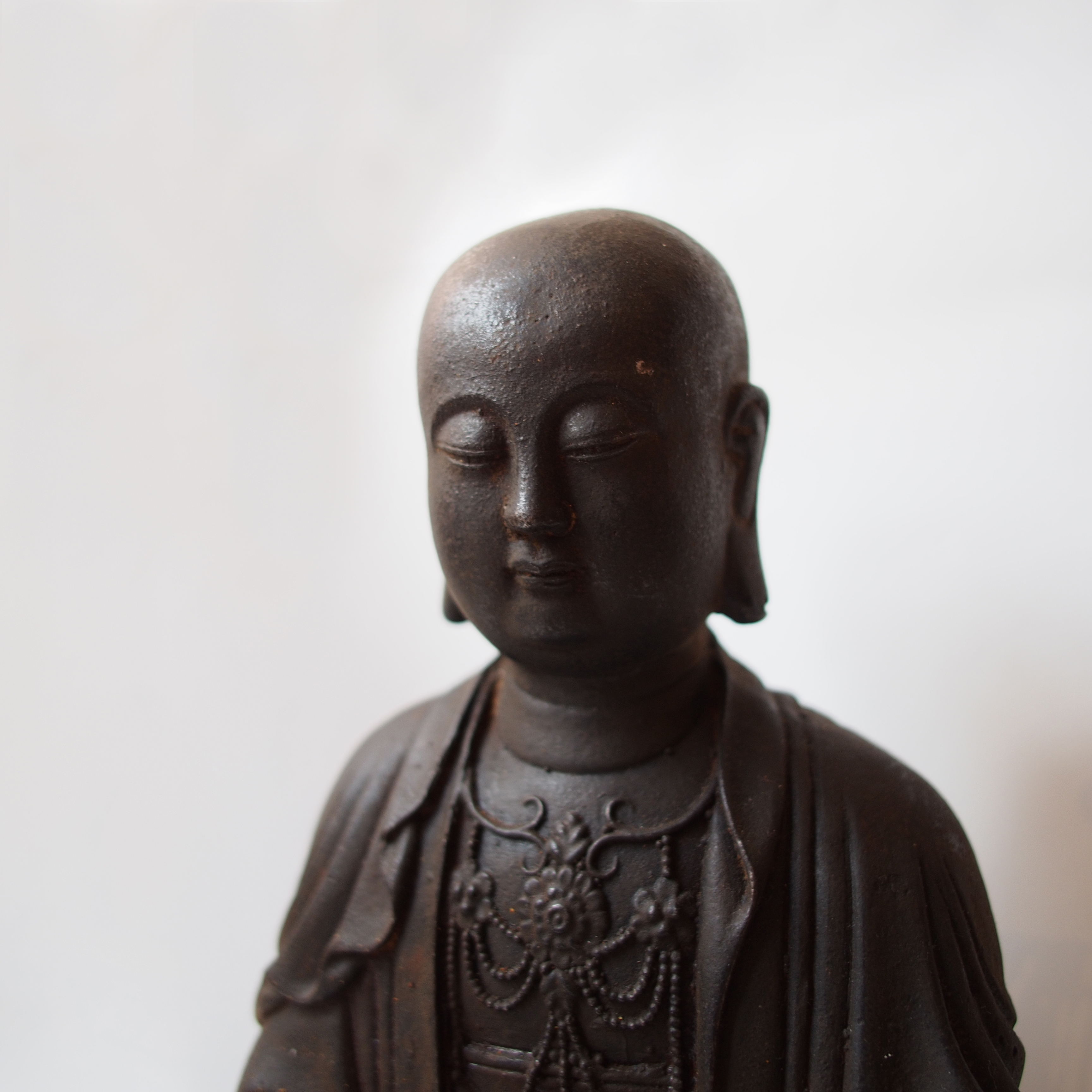
W180xD150xH250mm, China

This is an iron figurine of the Bodhisattva Ksitigarbha (Dayuan Dizang Pusa).  Bohisattva Ksitgarbha is one of the four bodhisattvas of Mahayana Buddhism along with Samantabhadra, Manjusri and Avalokitesvara.  Between the period of the death of Gautama Buddha and the rise of Maitreya Buddha, Ksitgarbha is responsible for the enlightenment of all the beings in the six worlds.  He vowed not attain buddhahood until the hell is empty of all beings.

In this figurine Bodhisattva Ksitigarbha is holding a cintamani, a wish filling jewel, which came from the palace of the sea dragon.  The cintamani has a capacity of relieve suffering and illness, a symbol of virtue of the Buddha.

W100xD100xH250mm, Thailand

This is a old Thai monk figurine with folded palms,  namaskara mudra.  His palms are placed together at the level of the heart where in India is a traditional gesture of salutation and adoration, one of the oldest Indian mudras, a greeting expressed in the form of a prayer coming from one’s heart.

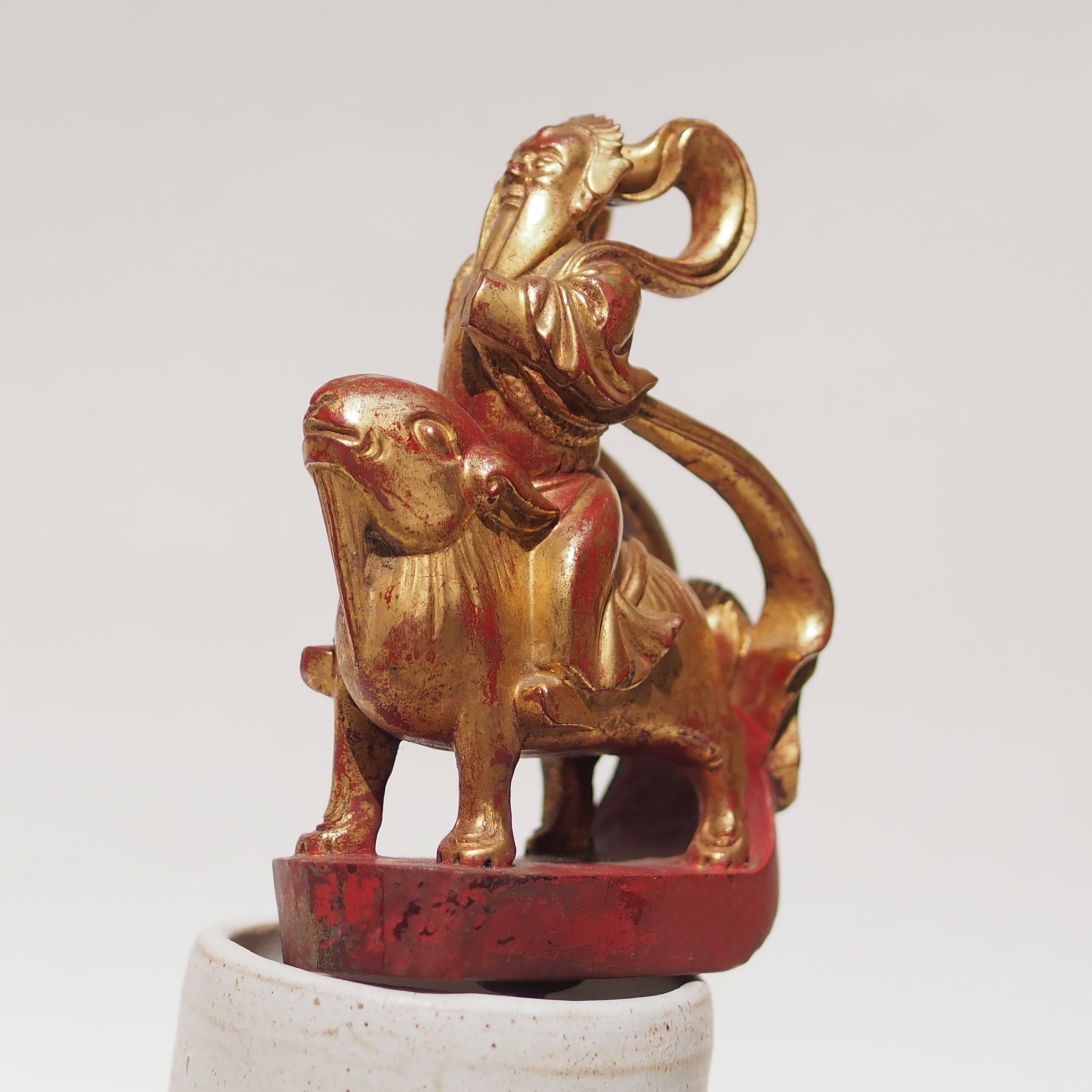
Golden Wood Carving

W50xL100xH140mm, China

This is the figurine of one of the five goat riding saints, the legend goes back to 880 B.C. when Guangzhou was constantly hit by famine and plague, there were 5 saints each with a different colour garment and each riding a different colour goat.  The 5 saints each offer 6 stalk of rice to the residence and bless the city to be free of famine.  The goat 羊 is  homophone to the word blessed 祥, which resulted in Guangzhou being also known as the 5 Goats City.  It was a wish for the ancient farmers, never to stave again.

Srimanok

W500xL450xH500mm, Philippines

This is the mystical chicken from Mindanao of the Philippines, a predominantly Muslim island in the south.  In Islamic legend, the prophet Mudammed found a bird in the first of the 7 heaven, the bird is so large that its crest touches the second heaven.  Its crow would arouse all creatures except humans and judgement day would arrive when the crowing stop.

The word “sari” means colour / garment, “manok” means chicken.  This is expressed clearly in the sculpture which is a symbol of blessing.

The Maranao believes Sarimanok is a totem bird called Itotoro which has a twin bird called Inikadowa.  Inikadowa is a spirit bird that is unseen and through Itotoro as a medium, one can access the spirit world.