Archives for category: fabric

W100xL600mm, Thailand

The Hmong tribe is one of the 5 major hill tribes in Thailand, the Hmong is a sub tribe of the Miao tribe in China.  It is believed that due to the cultural reforms brought on in the Qing dynasty, a search for more fertile land that have brought on a massive immgration in the 18th century.  According to records in the Chinese literature, the Miao tribe can be dated back to 3rd century BC.

These embroidery were decorative pieces on the sleeve or collar of the Black Hmong costume, unfortunately the garments which these embroidery have been on were too worn to be kept, these are the pieces that have been salvaged.  Traditionally, these garments were worn during the Hmong New Year in November or December when the harvest has been completed.  They are combination of cross stitching and patchwork, the embroidery patterns all have a subtle symbolic meaning; (left) a protection cross, (center) flowers, (right) snails.  These embroider pieces are a perfect for any handmade projects, bags, jackets, etc.
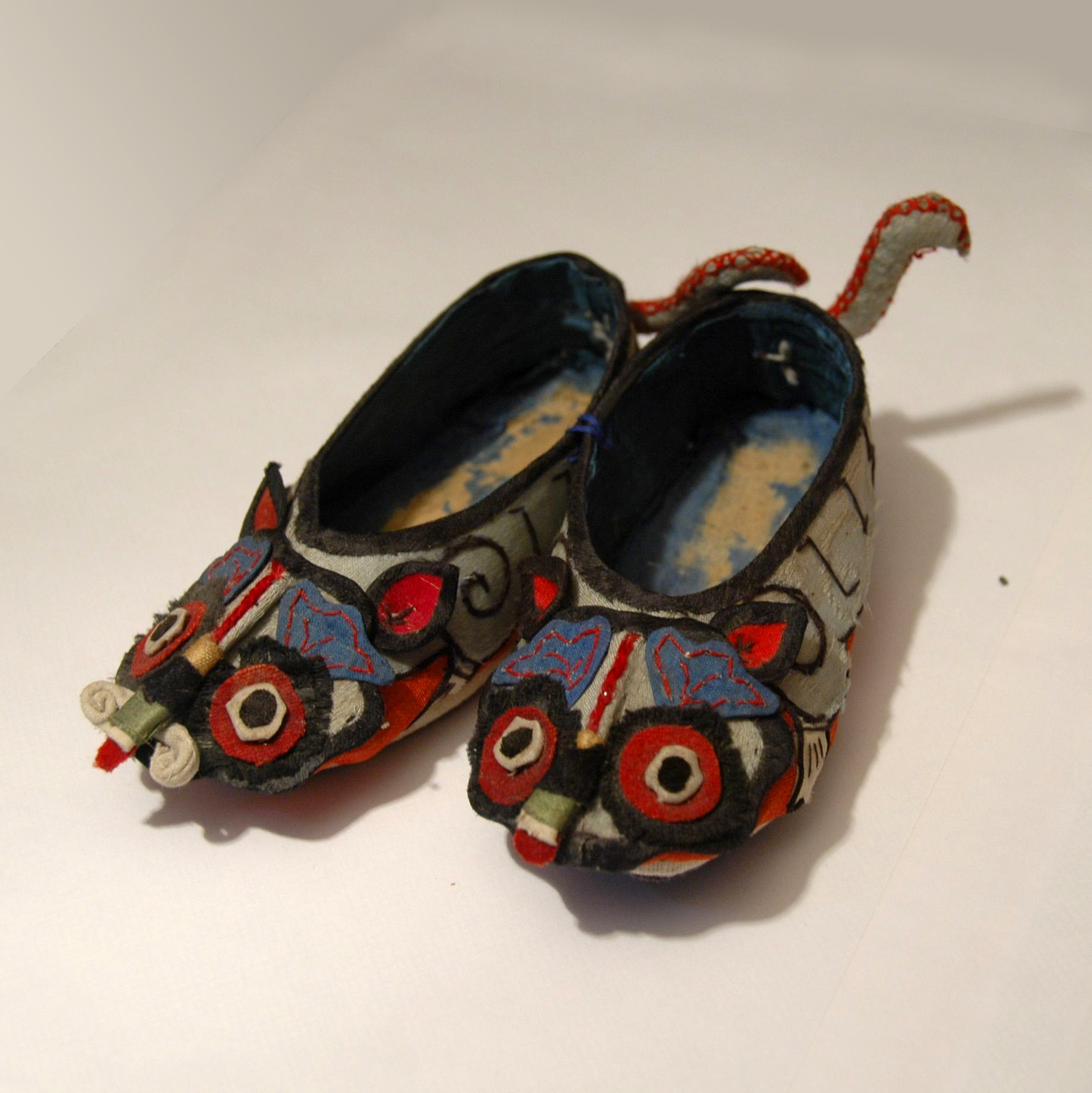
L130xH50xW50mm, China

Traditionally, this is one of the Chinese New Year gift a child will receive from their parents as a blessing for the year.  The story behind the tiger shoes goes like this; once upon a time in Yang Zhou, there is a kind heart boatman called Daai  Yang, one day came an elderly traveller who appreciated Daai Yang’s attitude and gave him a painting.  In the painting, there is a beautiful young lady stitching up a pair of tiger shoes.  Daai Yang really like the painting and hanged it up immediately when he got home.  That night, the lady in the painting came to Daai Yang, after a year of courting she bear a boy, for him.  The head of the village heard about this miracle and snatched the painting from Daai Yang, hoping that the lady will do the same for him.  The village head waited night after night but nothing happened.  Daai Yang and the son was very sad but helpless against the villain village head.  One day he met the old traveller again, she told Daai Yang to make a pair of tiger shoes for Xiao Hu and they will meet the wife again.  When the son worn the shoes Daai Yang made for him, the shoes grew wings and delivered him to the village head, the shoes then turned into a pair of tigers and chased the villain away.  The mother came down from the painting and the family lived happily ever after.  Since then tiger shoes took on a name of being able to protect the child.  RRrrrrrroarrrrR!

DIA120mm, China

Yesterday we talked about a representation of  the Xiu Qiu on wood carving (see Golden Wood Carving-01/08/2012), here is the real thing.  The legend behind the Xiu Qiu is a love story; some 800 years ago in the old town of Jing Xi, Ah Di was in love the with girl Ah Xiu of the neighboring village.  One spring, when Ah Xiu was shopping in the market, a rich arrogant brat had his eyes on her and want her as his wife.  Ah Xiu turned down the proposal because of her love for Ah Di.  When the wealthy guy was furious and bribed the court to give Ah Di a death sentence.  Ah Xiu was blinded by her tears but she decided to make a xiu qiu for Ah Di as a keepsake.  Before the execution Ah Xiu visited Ah Di at the prison and gave him the xiu qiu as a gesture of her love for him, at that moment the siu qiu lighted up and transported both of them to a place far away from their villages.  And of course, they lived happily ever after …  Since then it became a popular keepsake.

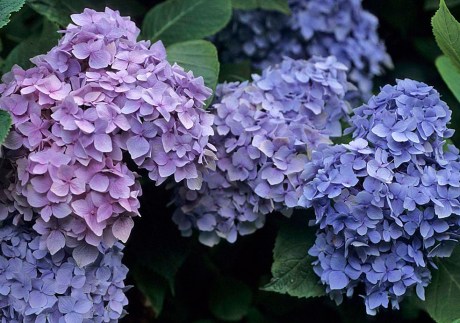
For its resemblance, the Chinese has also named the Hydrangea as the Xiu Qiu flower.

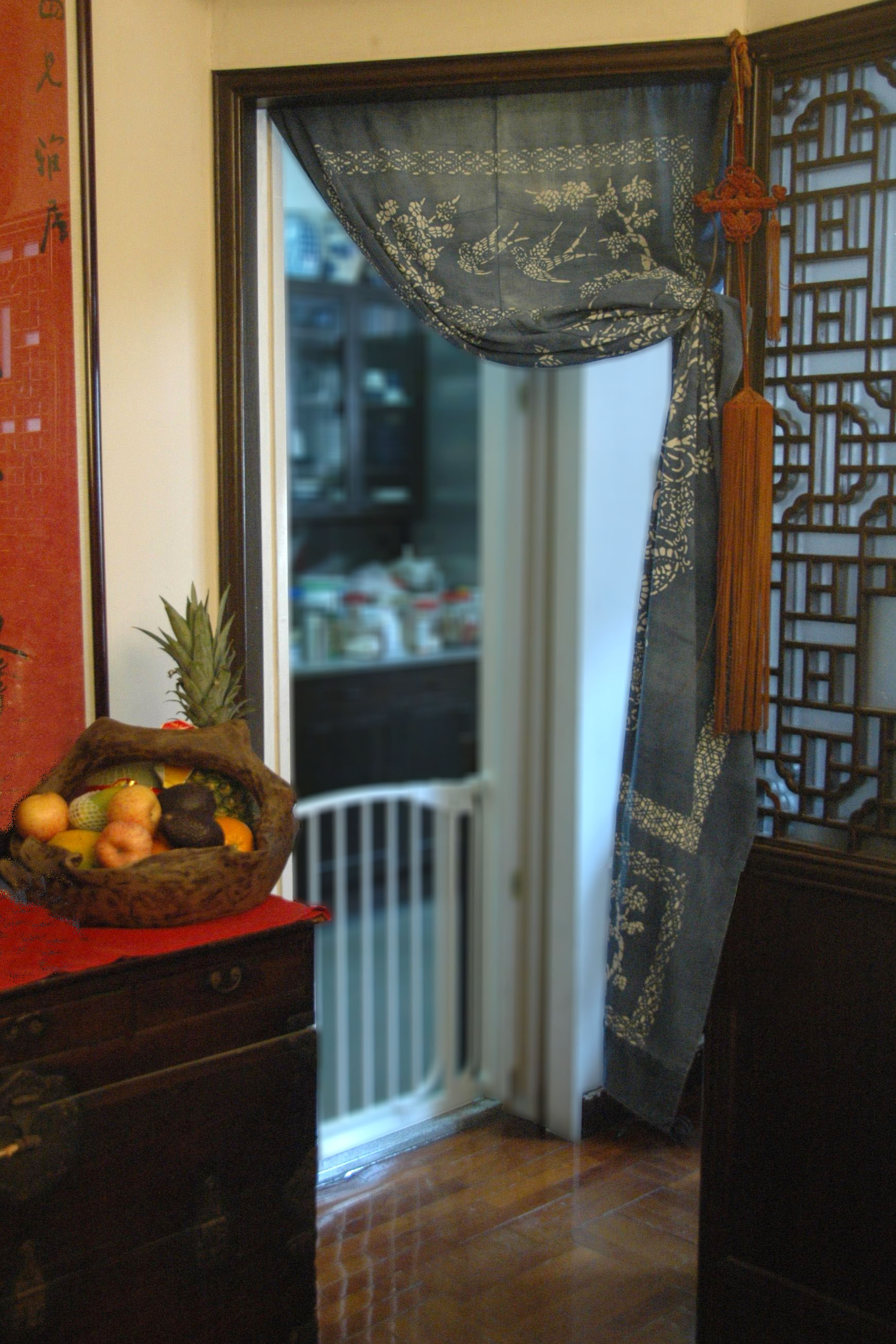
W800xH2000mm, China

This is an indigo dyed door curtain with a curtain holder (featured previously).  The fabric door curtain are a common item when air conditioner and heating were not as popular.  In the summer time, breeze can pass through even when the curtain are lowered, the curtain can also be easily drawn.  In the winter time, quilted curtain are hanged, sometimes even over a door, this prevent the cold are entering the room when the door is opened.  Spatially, the layer of fabric defined a space and its privacy. For people outside of the space, the softness of the fabric is a gentler barrier, muttering sounds can still be heard, one can easily lift up the curtain if one wants to.  For people inside of the space, the room is complete.  (You are probably wondering why we have a harsh gate behind the curtain, this is for our dog spike, unfortunately he failed to observe the idea of the soft barrier).  This reminds me of a Chinese saying “dog lifting the door curtain” = “with mouth and no hands (all talks and no action)”

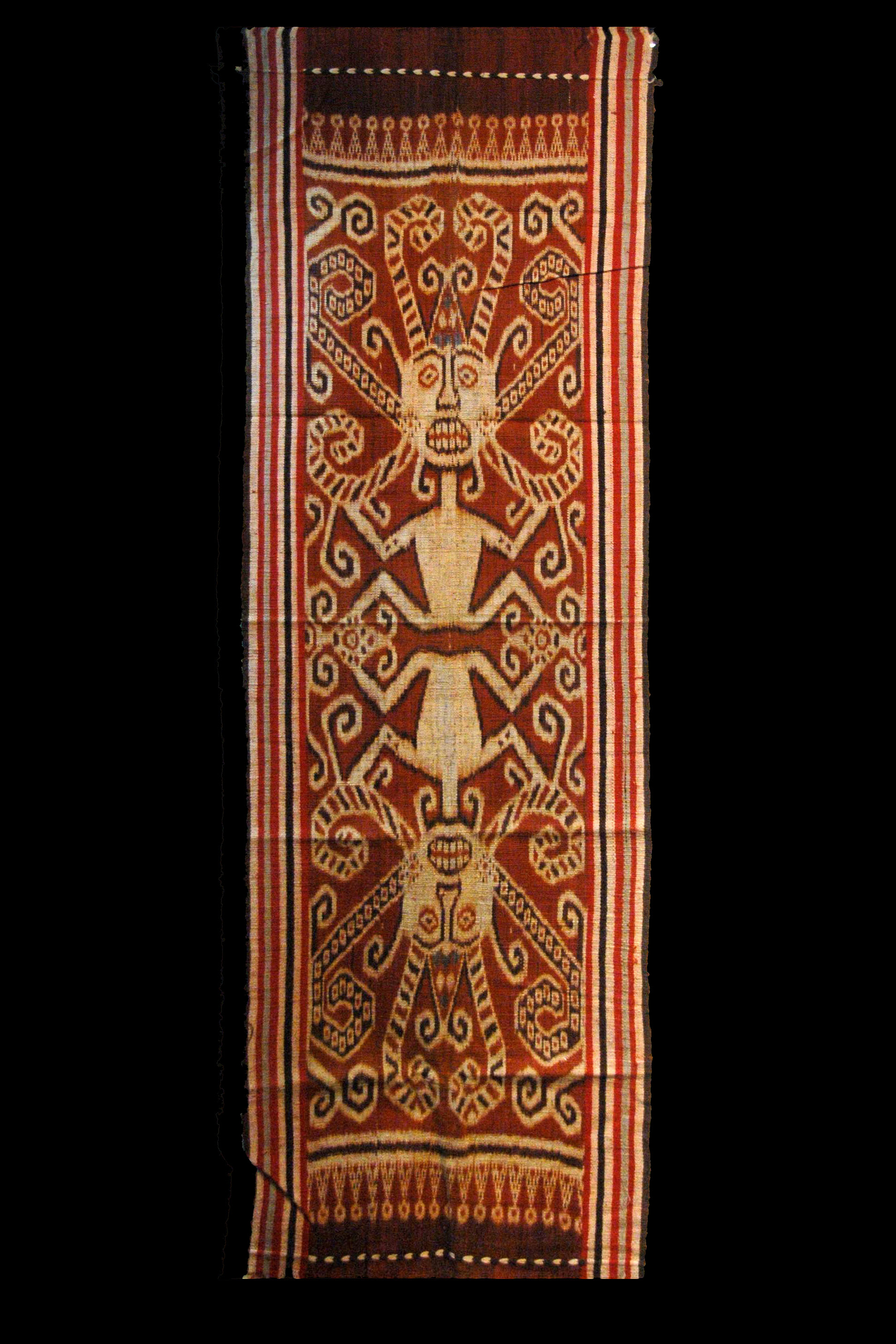
W400xL1450mm, Borneo Malaysia

Ikat involves a dyeing process which define the pattern in the yarn before the cloth is weaved.  Warp yarn are stretched on a tieing frame, bindings (dye resist) are tied onto the threads to create the desired pattern.  To achieve multiple colours, certain bindings will be remove before submerging into a different colour dye.  The tied yarn are then removed from the frame to be dyed.  The treated yarn are then carefully weaved.  This ikat is from the Iban tribe in Sarawak, Borneo, East Malaysia.  The Iban tribe are known to the world as the head hunters, the skill of which Iban men are judged by.  For the women, it is the skill of making ikat pua.  The pua are used in ceremonies; hung to mark out the ritual area, a birth of a child, marriage, funeral, healing, as well as to carry the head back after a hunting trip …

L1500xH500mm, Japan

This is a carp wind sock for the celebration of the Tango no Sekku festival (the Boy’s festival, now known as the Children’s Day).  The wind sock will be hung on a pole from April to early May.  Typically they will be hung up the roof on a pole from top down; the fukinagashi steamer, the biggest black koinobori (the father), the big red one (the mother), the small blue one (the son), the green, the purple and the orange koinobori (in sequence for the other children in the household).  As carps will swim upstream against all difficulties to achieve their goal, parents hopes their child will do the same to become a great person.

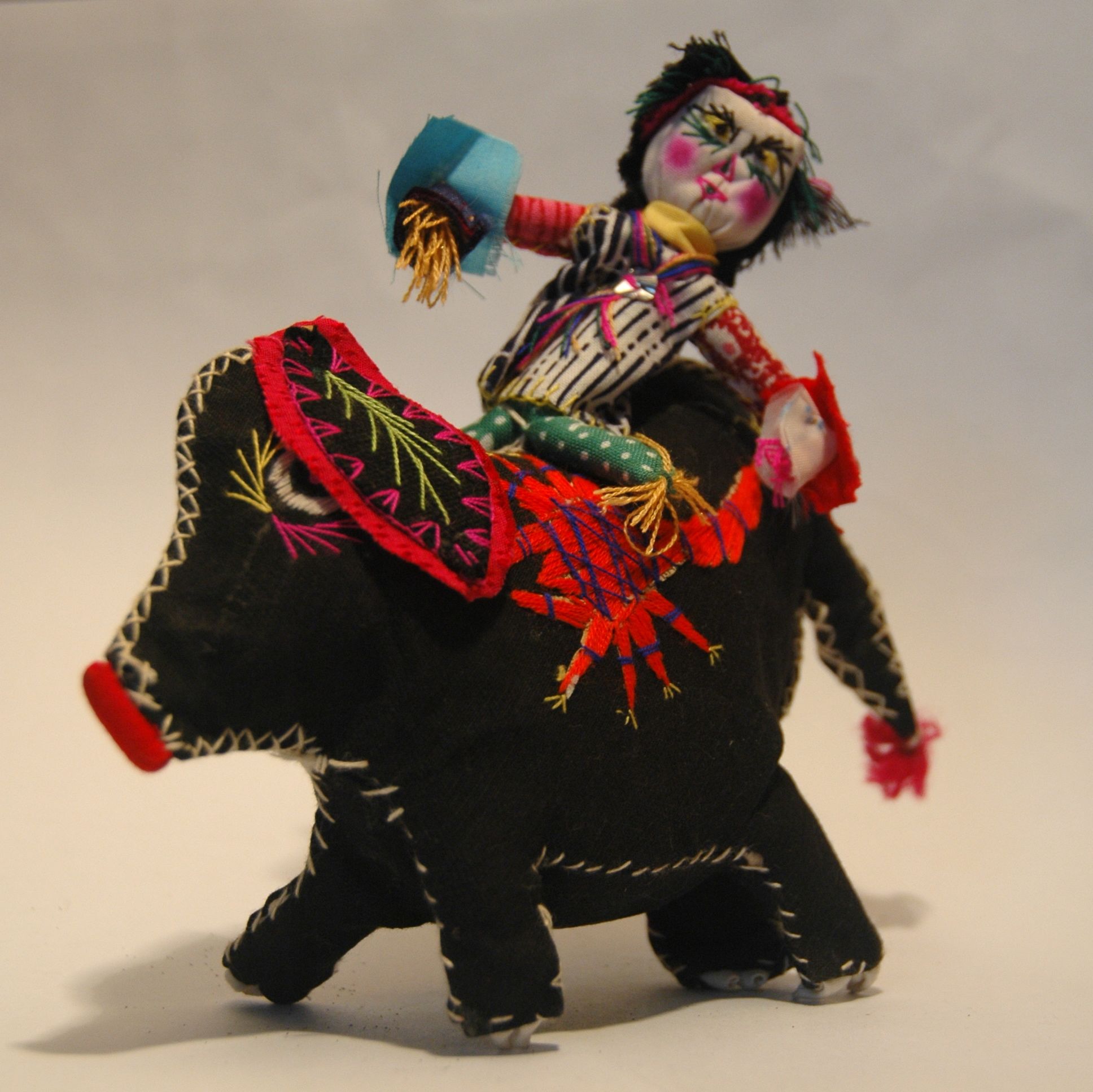
H150xL150xW50mm, China

Cloth toys are popular items made by mothers for their children in rural China.  They are made of everyday object; leftover cloth, cardboard, decorated with bold embroidery giving an animated life to the toy.  The cloth toy in this part of Shaan Xi area is noted for the head being flat and changing to a 3 dimensional body.

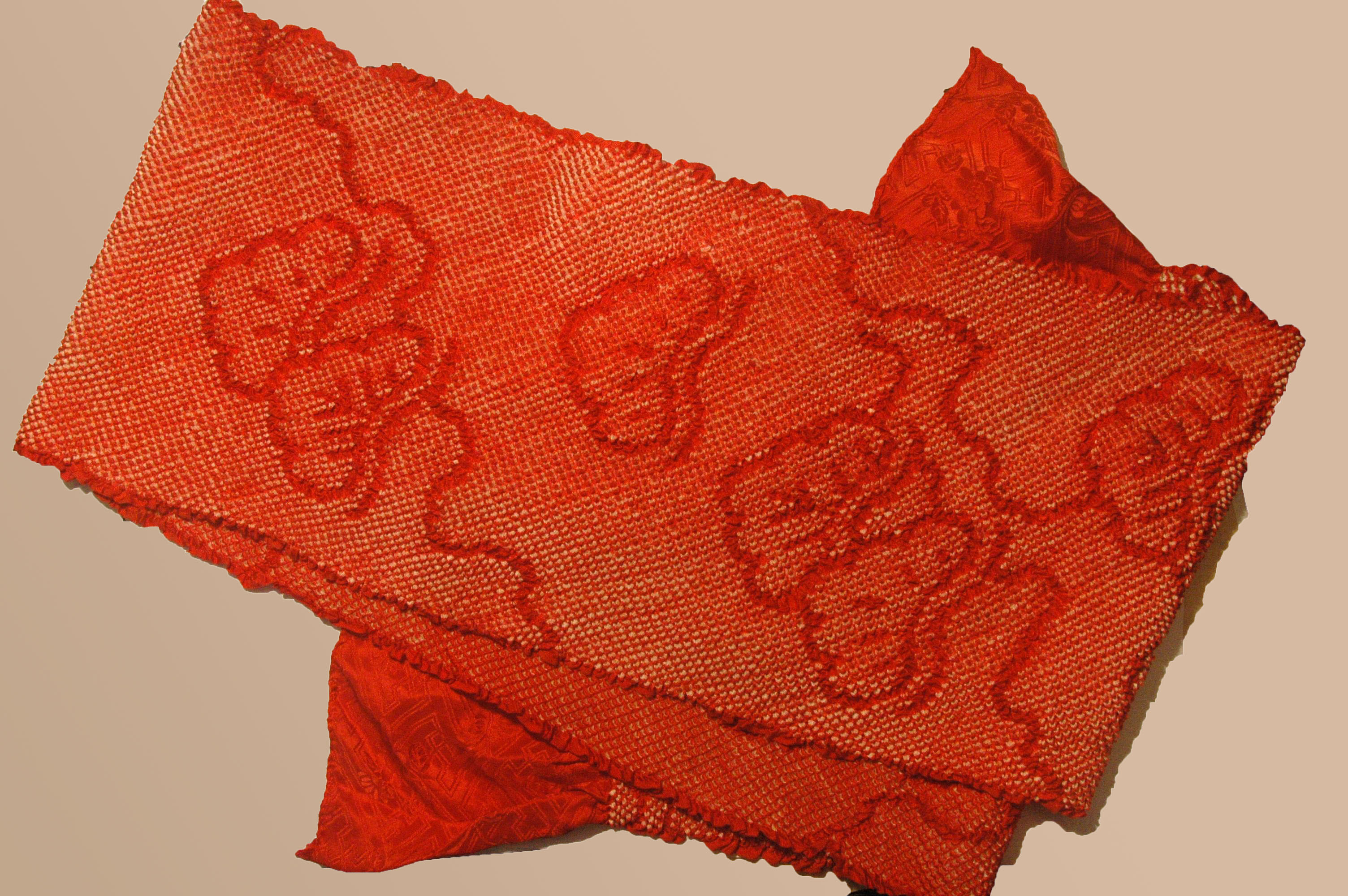
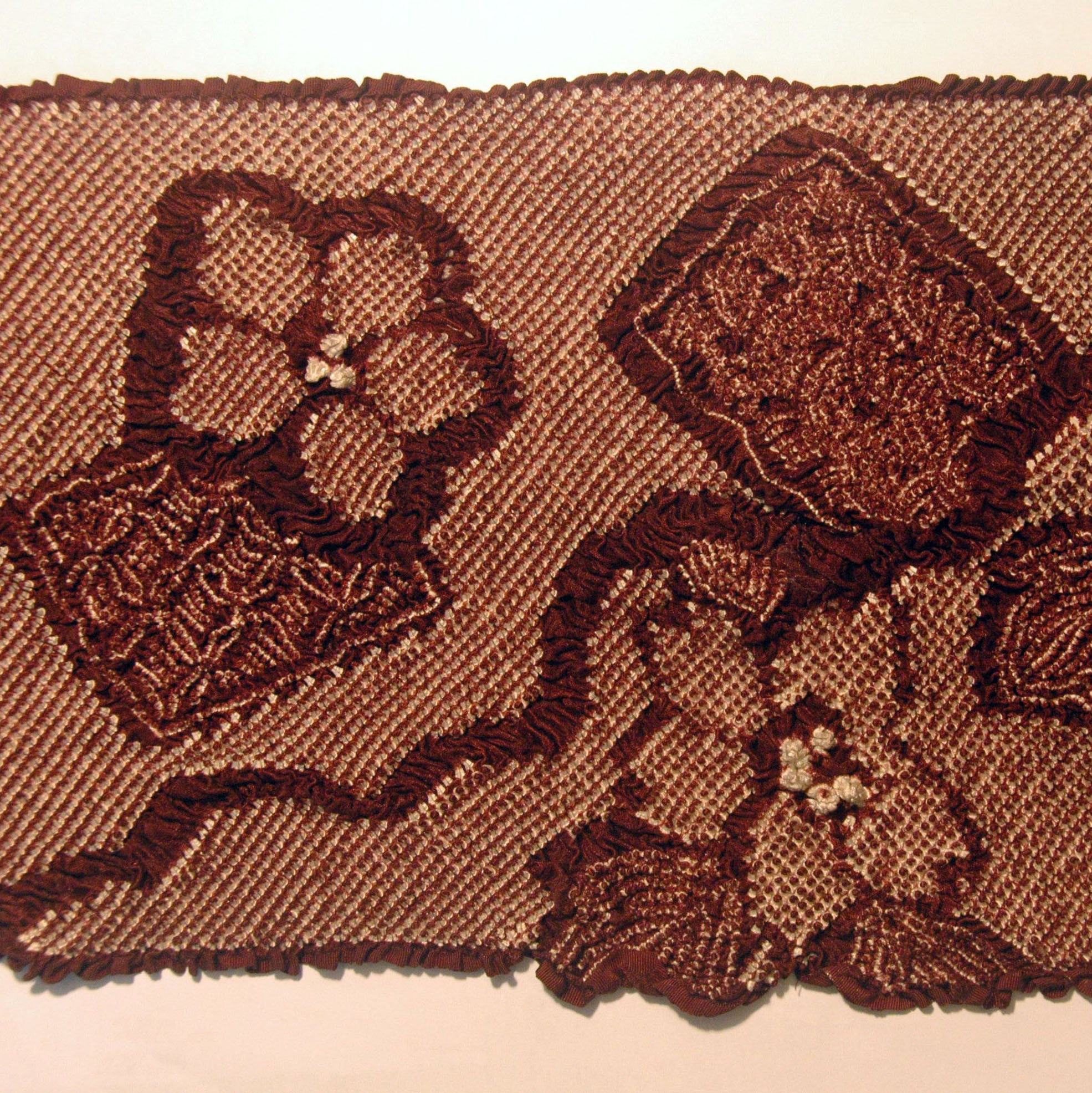
W120xL1400mm, China

This is a tie dye on a piece of hand woven silk.  A short knitting needle like tool is used to pinch the silk for tying, this give a small and crisp effect on the fabric.  The main outline of the pattern is not tied, resulting as a bold line for the design.  Because of the nature of the silk and small ties, the fabric becomes stretchy and elastic.  This technical was only developed in the last couple of decades, relatively modern in the long history of tie dye in China.

W180xL130xH80mm, India

These are stamps (Bunta) for making woodblock print textile.  Over a piece of draft pattern, the craftsman laboriously chisel out the design from a single block of wood.  Over at the printing sweatshop, plain colour fabric is stretched over the printing table.  The vegetable dye paste is placed in a tray and even out over a sheet of wire.  No draft or guiding sheet is used for the printing, the master printer would set out the outline colour, judging only by his eye, hands, points on the stamp and experience.  The stamp is placed and hit a few times by the fist ensuring a good impression.  The printing would go from left to right.  After the outline colour is finished, the second printer would follow, then the third etc.  The fabric is then put into an acid wash to fix the colour.

Textile Width 400mm, China

A paper stencil is overlay on a piece of white cotton fabric, then a paste made up of lime and soya bean flour is applied with a blade over the stencil.  The cloth is then put into the indigo dye trough for 20 mins then hang for oxidation for 30 mins (this process is to be repeated for 6-8 times).  After drying the starch paste will be scraped off, under the paste will reveal the original white colour.  For dyeing with a white background, 2 stencils would be used, one for the small pattern and second one for the background itself.  This Chinese indigo fabric uses a handwoven cotton fabric with natural indigo dye.

Curtain with the same dyeing technique.