Archives for category: costume

China

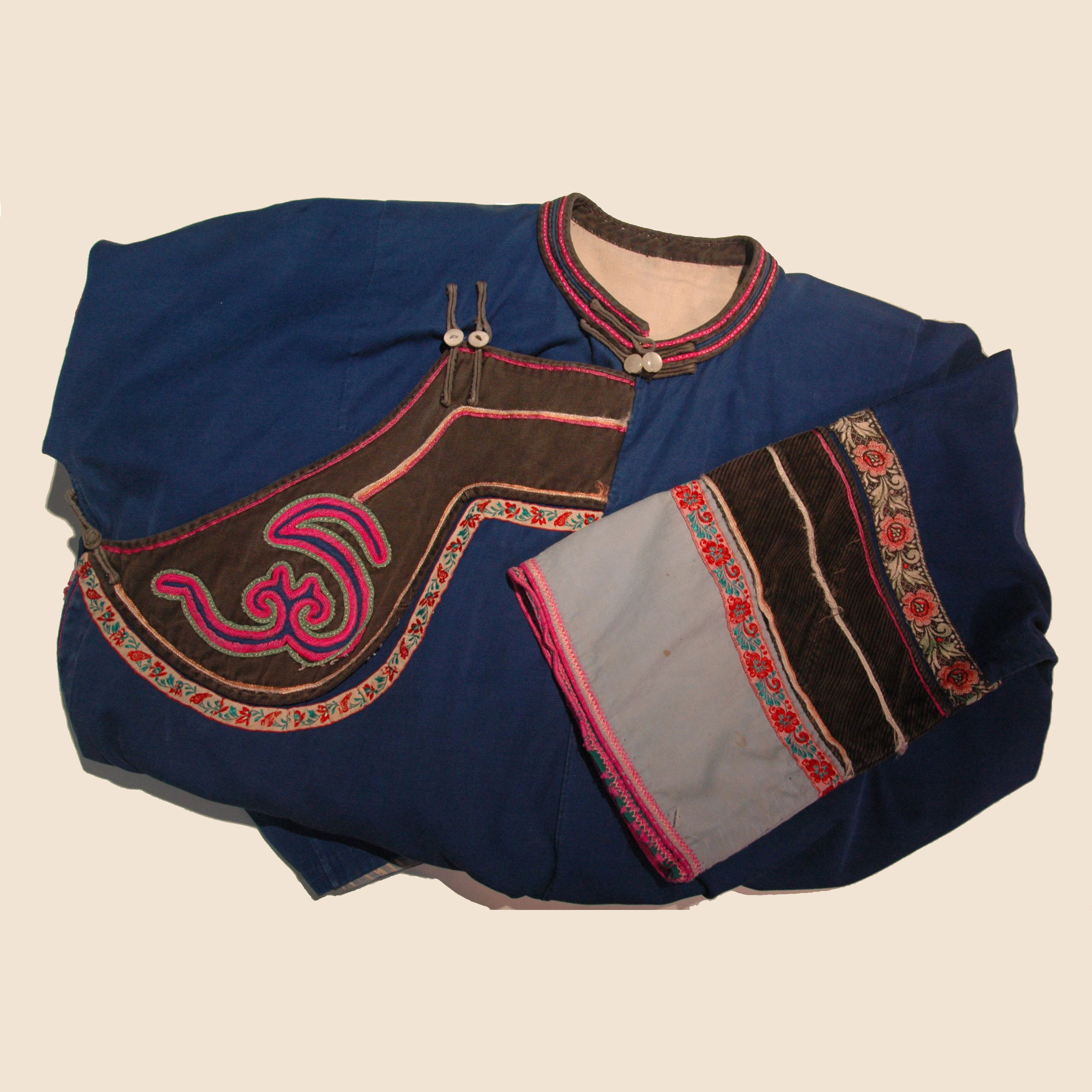
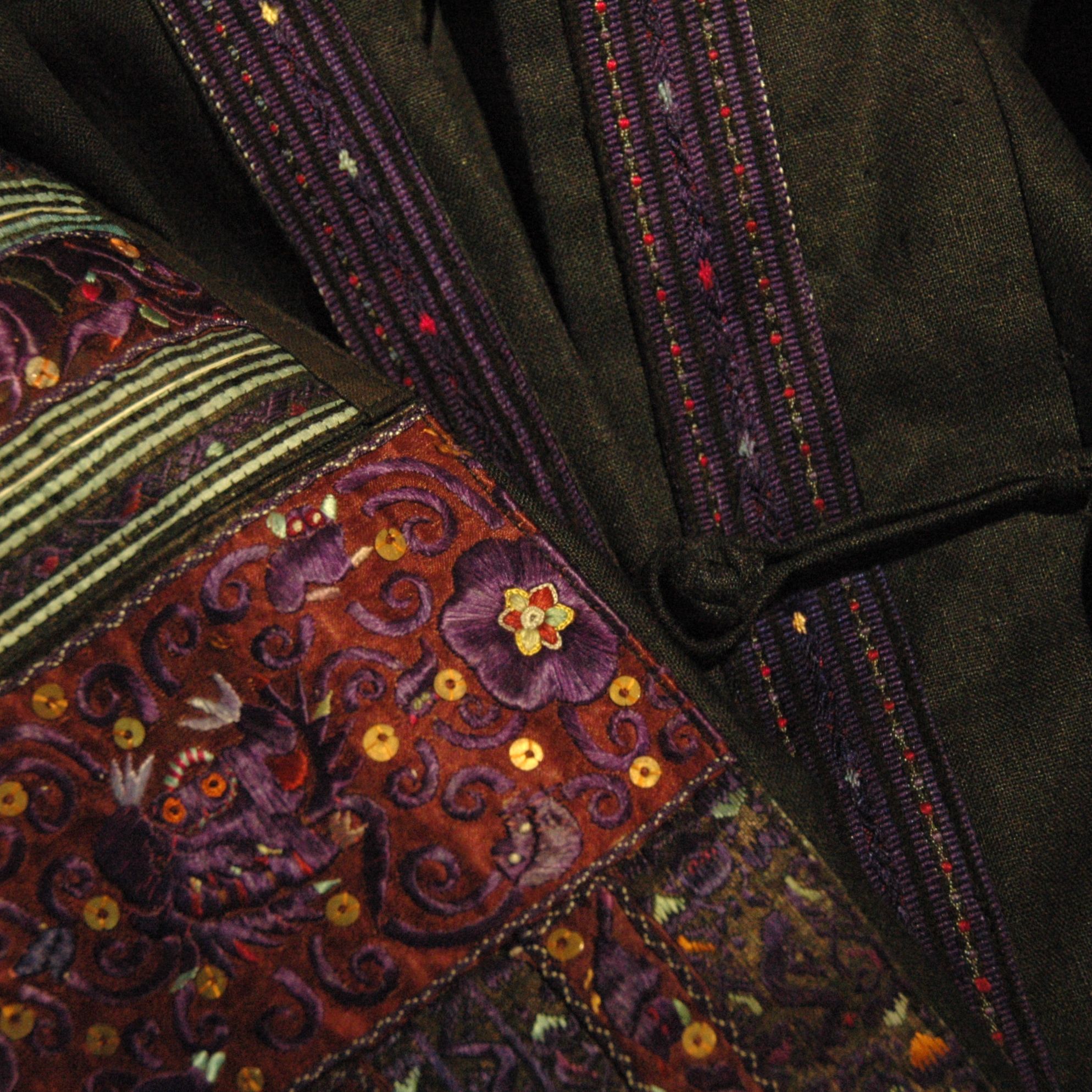
This is a jacket designed and tailored by our shop in the style of the Miao tribe.  The decorative pieces are embroidery from the Miao tribe in Gui Zhou.  The red eye creature in the embroidery (can you spot it?) is a three legged toad.  The toad represented wealth and good harvest.  This representation is shared by an old Chinese folk story; once upon a time there was an evil monster, the young Lui Hai had him defeated and it turned out to be a three legged toad.  The toad turned good and followed Lui everywhere fighting other monsters.  Lui also has a habit of aiding the poor, the legend has it that the toad has the ability of  bring wealth, at where he reside there is treasure.  The toad became a symbol of fortune and blessing.
W120xL1400mm, China

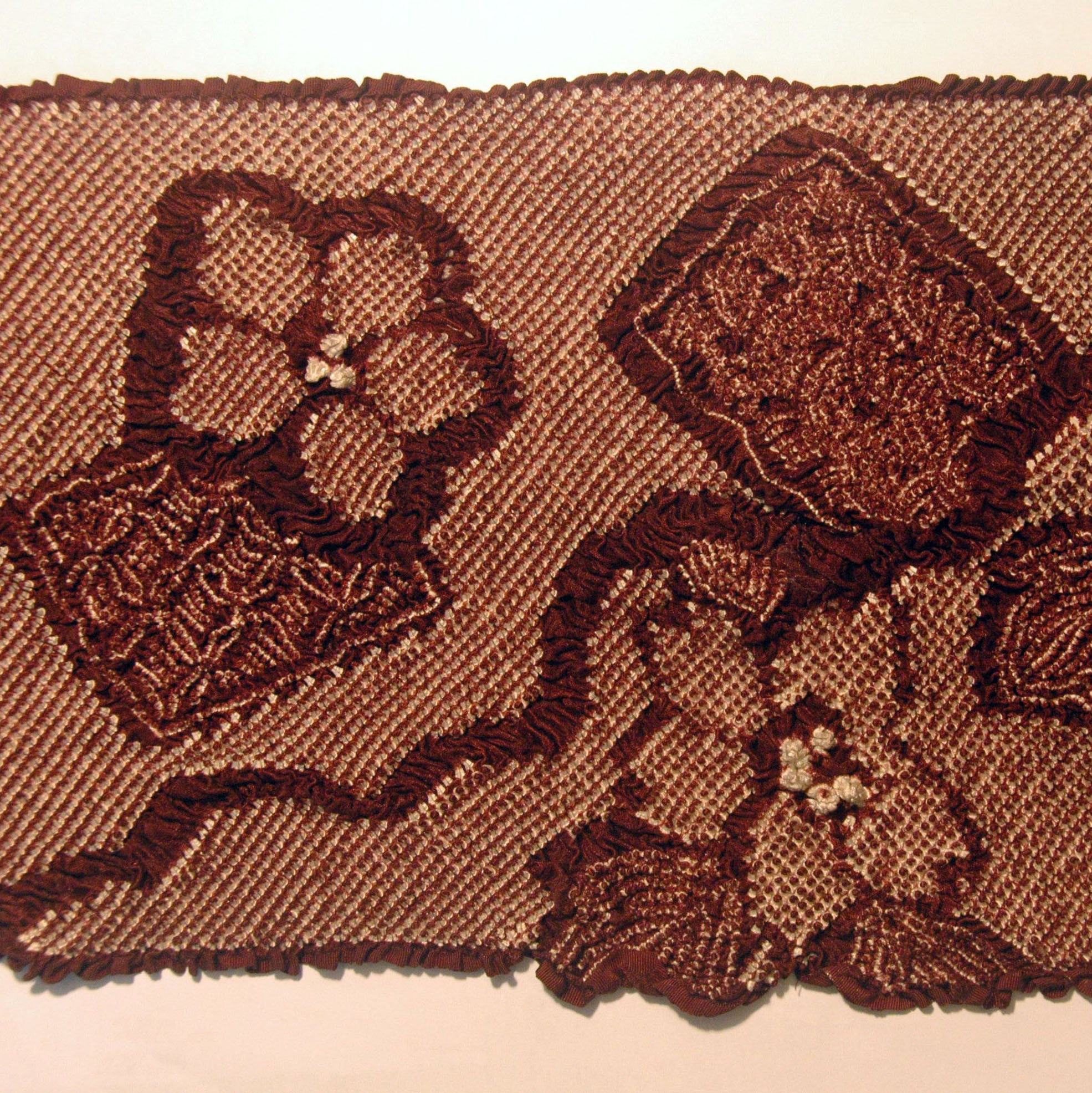
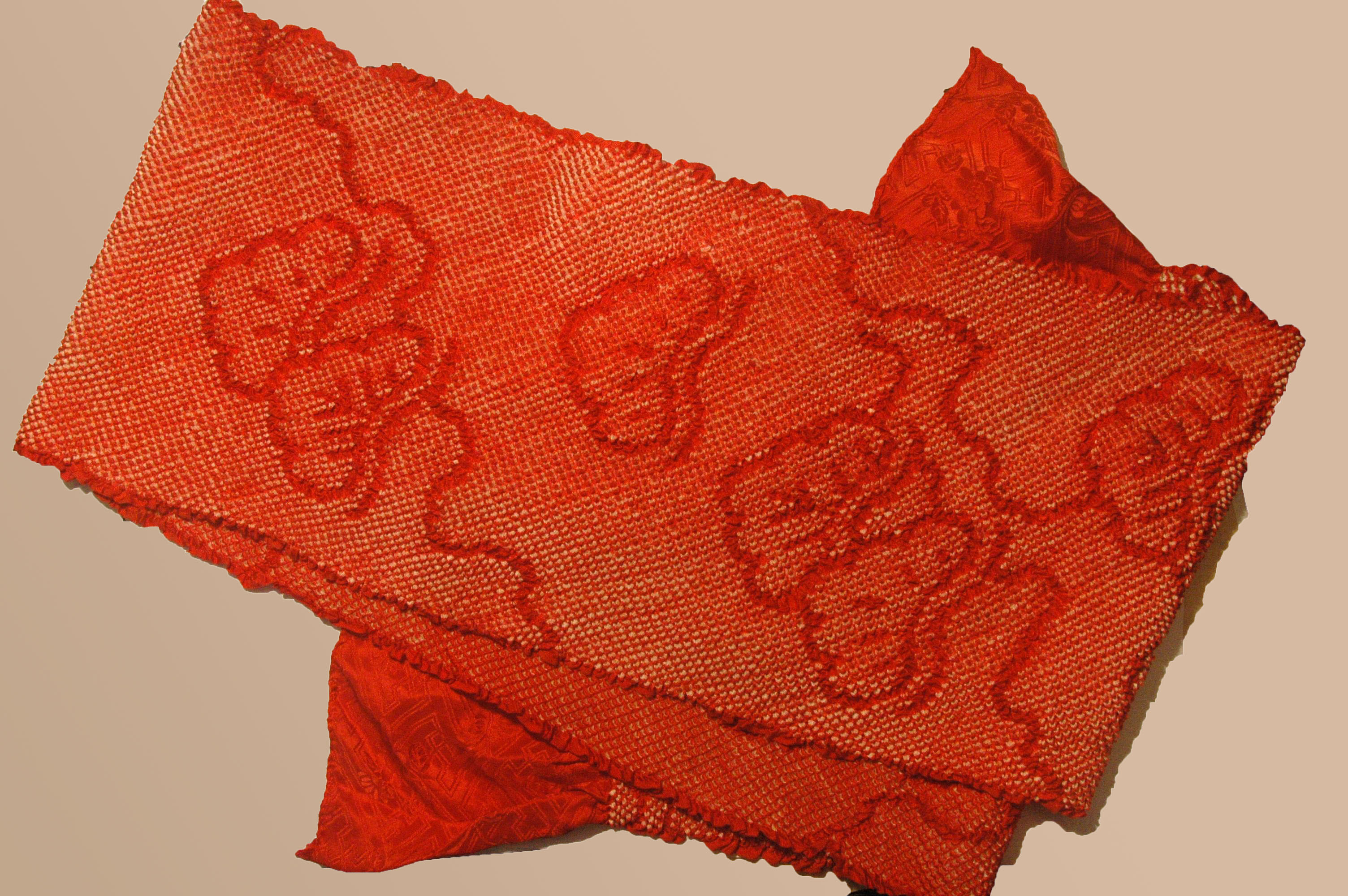
This is a tie dye on a piece of hand woven silk.  A short knitting needle like tool is used to pinch the silk for tying, this give a small and crisp effect on the fabric.  The main outline of the pattern is not tied, resulting as a bold line for the design.  Because of the nature of the silk and small ties, the fabric becomes stretchy and elastic.  This technical was only developed in the last couple of decades, relatively modern in the long history of tie dye in China.

W180xL250mm, China

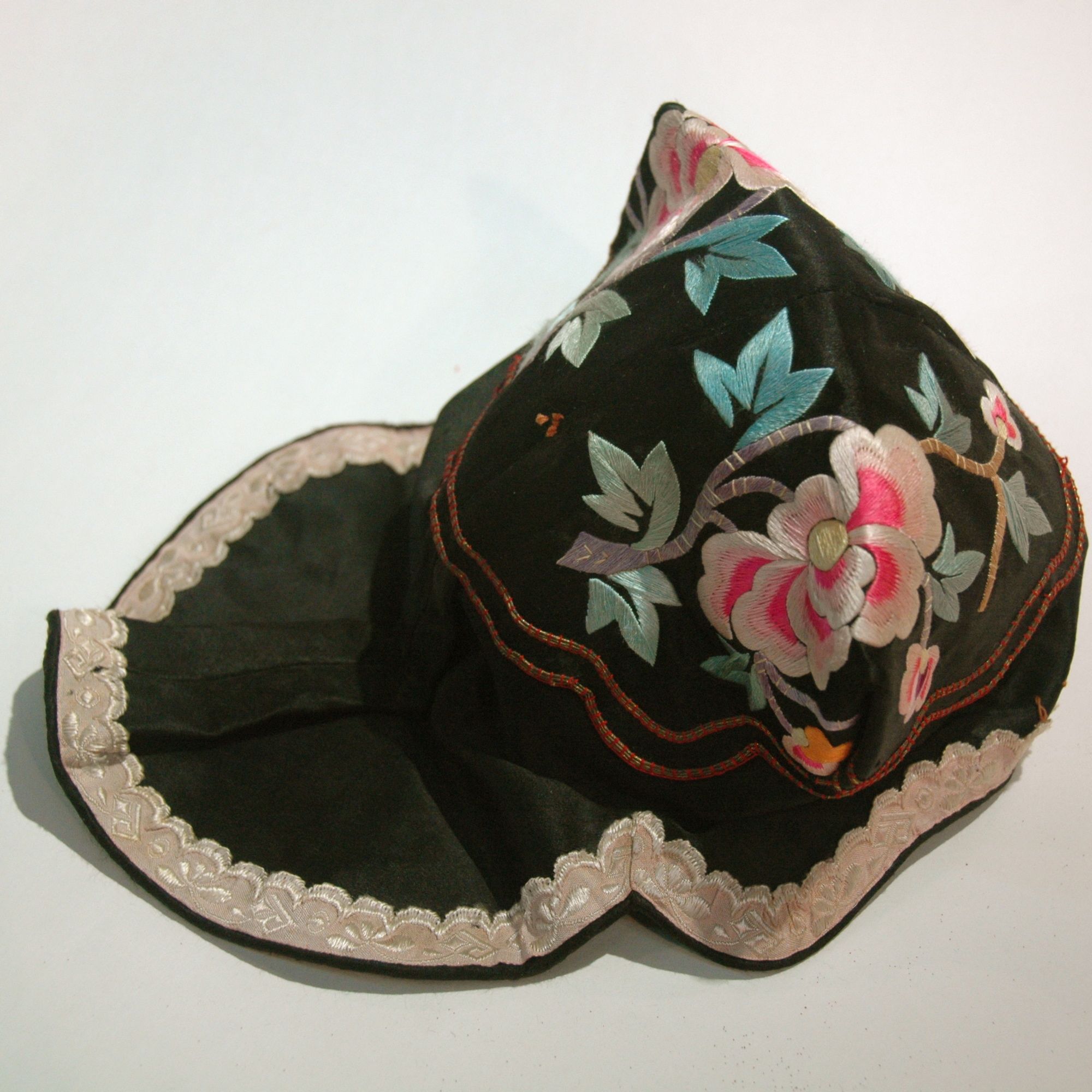
This is an embroidery hat for a child, flower pattern is embroiled on silk.  The embroidery would usually be made by girls in the family.  Please note that this is not a baseball style cap, the extension is not the bill but  a cloth that drap down the back of the neck.

W600xL900mm, China

This is one of the traditional costume of the Miao tribe from the Qian Chung Nan area  In fact there are over 200 different styles within the Miao tribe, different district would have their own costumes (hairstyle, accessory, clothing, etc) which has been modified along the different dynasty.  From the Qing dynasty, embroidery, silverware, Manchurian style left or right breasted garments were added into the collection.  This garment would have been worn by a middle age female; made with blue cotton, tailored to be loosely fitted with no collar.

L400xW100mm, China

The lady’s headband, Mei Lei, was most popular in Ming and Qing dynasty.  Thanks to the television drama, it is often associated as the costume of the granny, Mei Lei actually was a very fashionable item for women of all ages.  When it was at the height of fashion many style of Mei Lei appeared; black silk with gemstone, cloth patchwork with pearl, gold and gemstone, cloth or silk with embroidery, fur with gemstone, beaded, etc.  Like the snuff bottle for men, the headband was an accessory of status symbol.  As a functional item, the Mei Lei can keep the hair tidy as well as keep warm.  This particular Mei Lei is made of glass bead with a cloth lining on the inside.

China

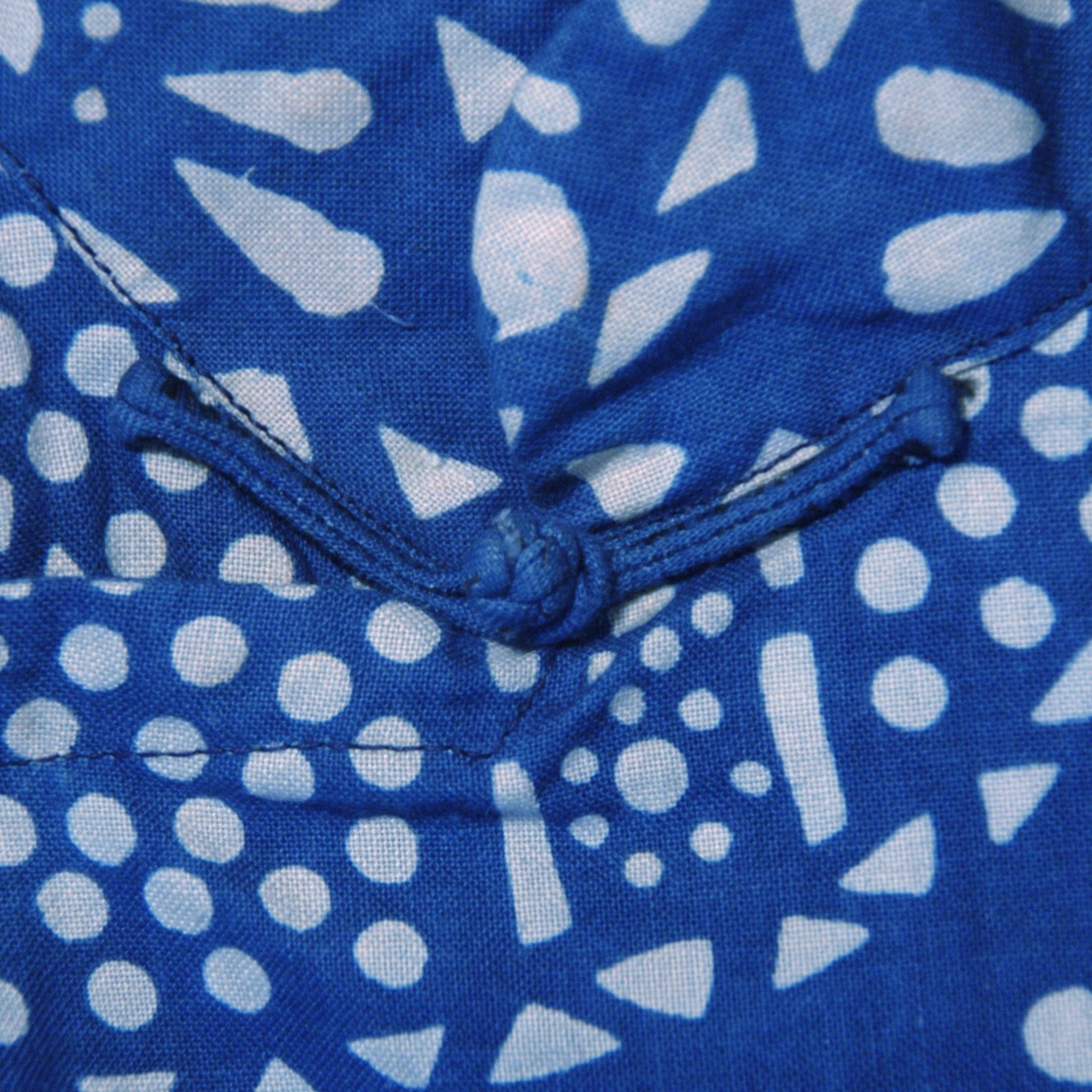
The Chinese developed a elaborated art of knotting which became popular in the Tang and Song Dynasty, however the concept of knotting as “button” did not appear until the Ming Dynasty, before that clothing were held together simply by tying up two strapes.  Apart from knot buttons other type of buttons appears e.g. copper, silver, pearl, agate, etc., apart from being functional, they also became a status accessory.   Knotting for buttons developed into several forms,some more elaborated than others, the knotting diagram shown above is for a basic design.

L250mm, China

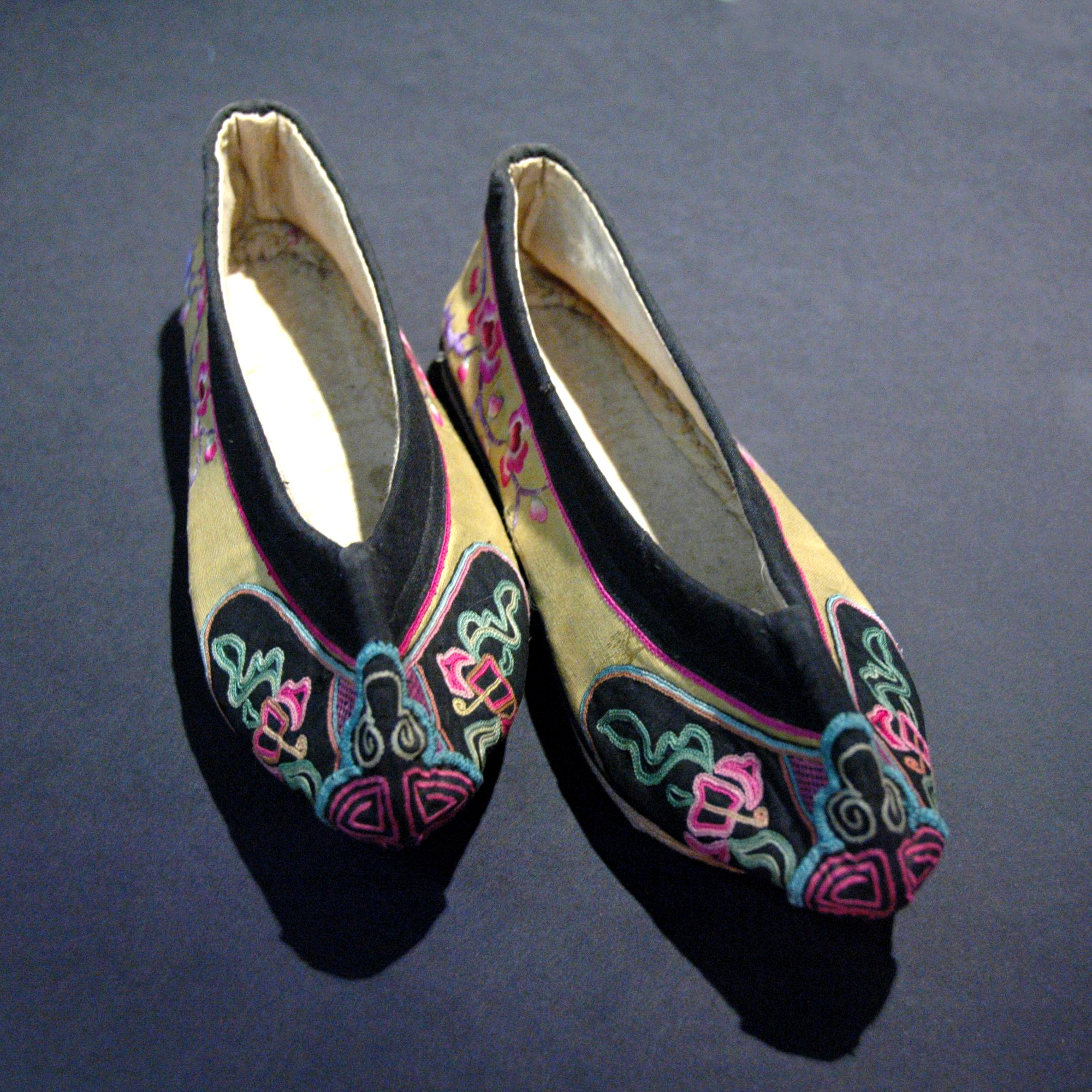
This is a pair of Miao Zu minority tribe embroidery shoes.  The Miao has their own individual language but not an individual text; their history is passed down the generations by word of mouth in form of songs or as a design on their costumes (by embroidery, accessories, folding, stitching, etc).  For example, Butterfly = ancestors, mother.  As fashion is their form of literature, it goes hand in hand that they have superb embroidery skills.  The skill would be passed down from mother to daughters.  Traditionally, embroiled shoes are worn by single young ladies who would select different shoes for different suitors and occasions.

DIA150mm, China

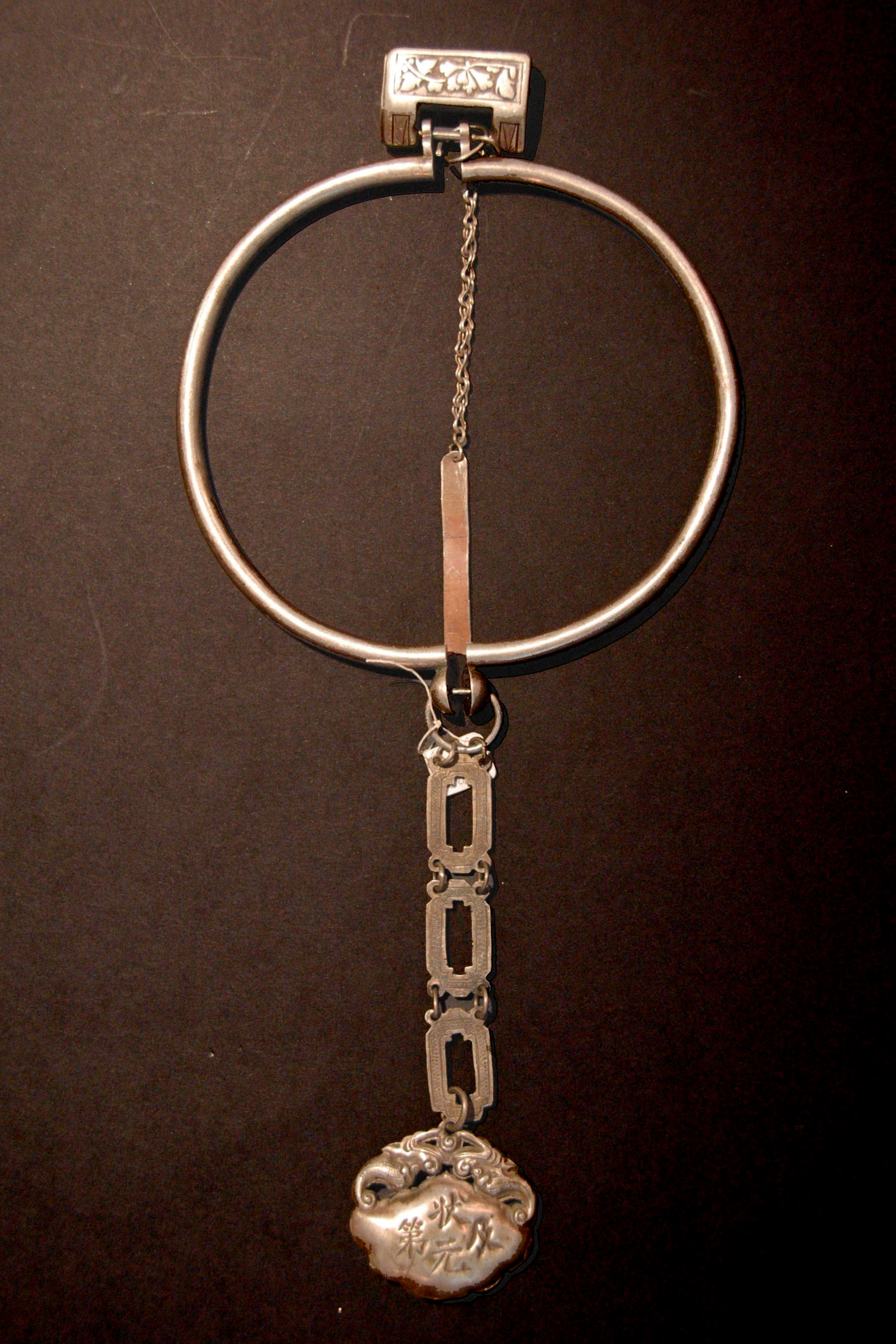
This is silverware gift for the baby’s 100 days birthday, a bit like the silver spoon for the baby shower in the West.  The child mortality rate in old China is very high, it is be believed that the locket would lock the life of the child to the living world.   The pendent is an add on blessing for the child’s success in the future.  The child will keep the necklace on till adulthood.