Archives for category: container

DIA200xH70mm, China

This is a bowl is called the vegetarian bowl, it is used for containing offerings for the Buddhist and Taoist gods on the individual god’s festival, new year and the day that marks the 16th and 21th birthday of  a boy.  The offering would be of  dried fruits, nuts, cakes, etc., presented in the form of a cone.  There is an old saying for people with intention, “coming not to worship the Buddha but to have a look at the offering bowls”.
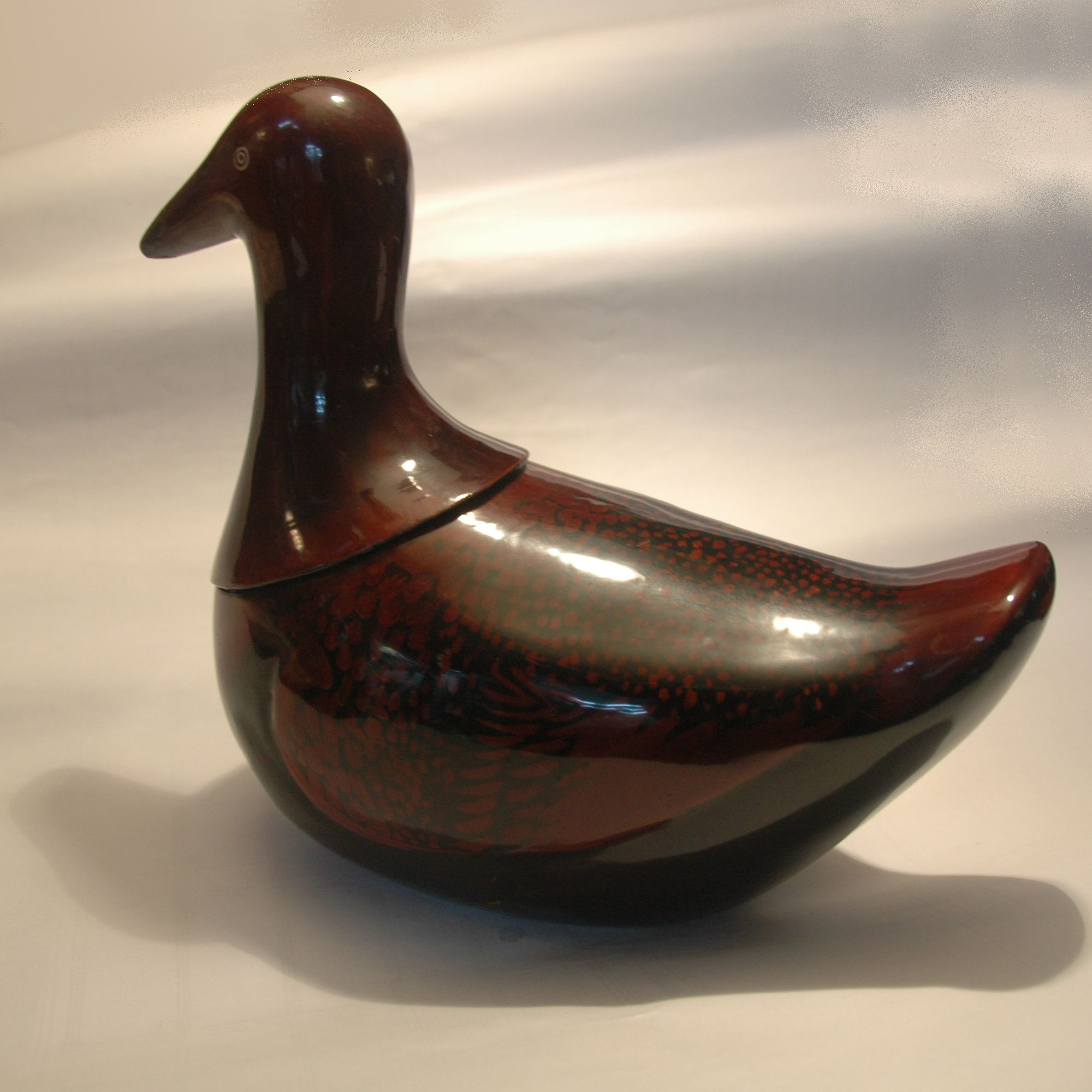
W130xL250xH200mm, China

This duck container is made with special technique known as Bodiless Lacquering.  Bodiless Lacquering is similar to the technique of paper mache; first a clay model is build, layers of ramie cloth are placed on the model with lacquer as the adhesive.  Once dried, the positive mould is released, the shell is then smoothed with putty and polished.  This technique was developed in the Qing Dynasty in the Fuzhou province creating lacquer ware that are light and durable.

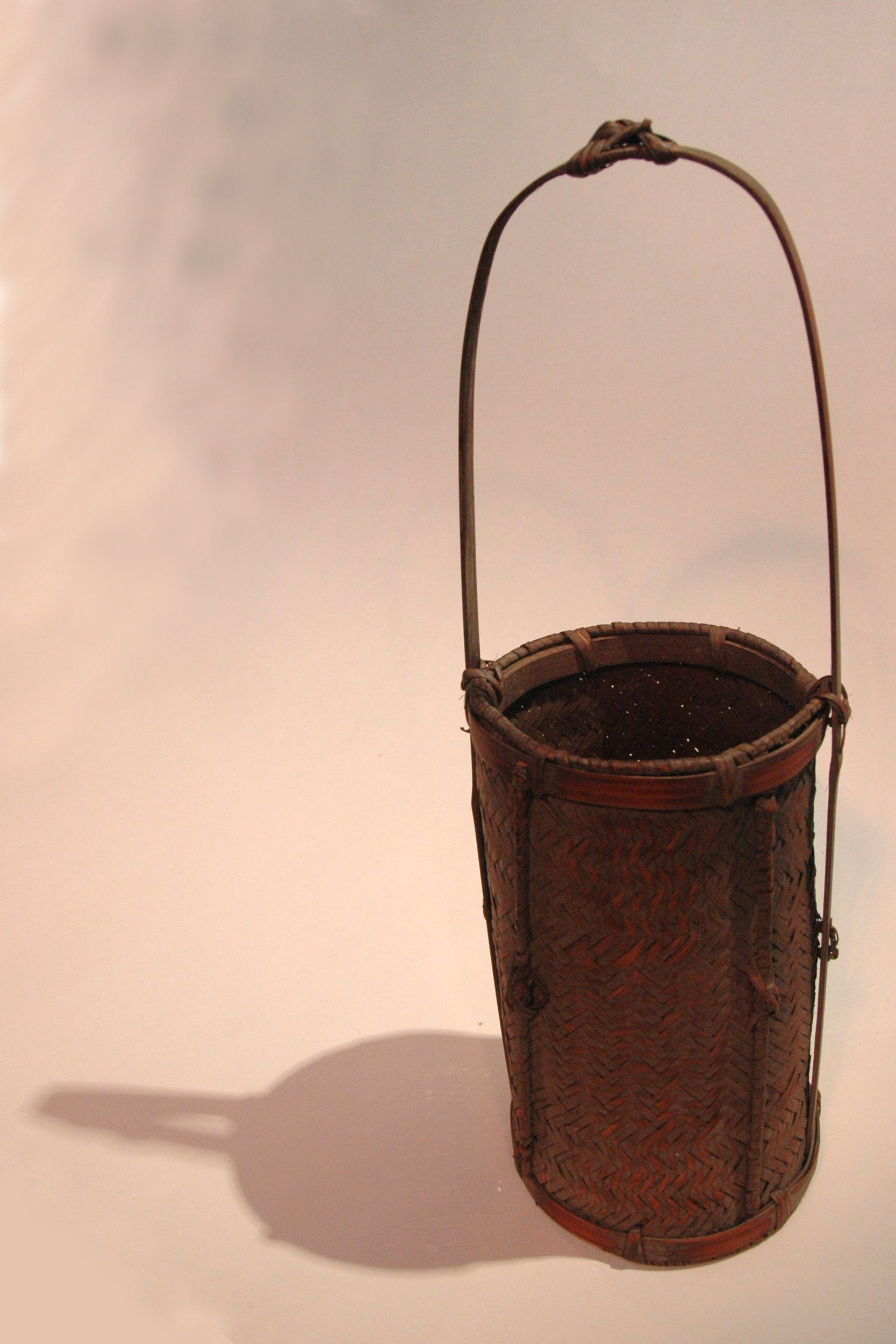
Dia110xH400mm, Japan

Bamboo as a material has been a very well utilised in Japan (and Asia) such that bamboo weaving became a specialized craft. Bamboo tree of 3-4 years old are cut, boiled to remove the oil and dried under the sun (there colour would turn from green to brown).  The bamboo is first split by a tool known as the Kikuwari (which looks a bit like the fruit cutter) dividing the bamboo stem into equal divisions.  The surface of the bamboo is then scrap off to allow the lacquer or other finishes to absorb.  To make the higo, each of the large section is split into half with the knife from the back side of the bamboo, the strip is peeled and then strip again to the desired width.  Finally, each strip is then rounded off on the 2 sides and the thickness evened, the higo is ready for weaving.  All these steps might sound simple but will take a very experience craftman to produce good quality higo, just for using the kikuwari to split straight down would take at least 3 years of practice.  This is a simple bamboo ikebana basket for Japanese flower decoration.

DIA300XH100mm, Japan

This is a wooden container for the preparation of sumeshi
(rice used for sushi).

  1. Cooked 6 bowls of rice with 100mm of kelp
  2. Prepare the vinegar dressing;
    60cml rice wine vinegar + 40g sugar + 10g salt
  3. Put hot rice in the wooden container and add in vinegar dressing
  4. Use a spatula and mix the rice
    (with some sliding and slipping action)
  5. Use a uchiwa (fan) to cool off the rice
  6. Once cooled, covered and ready for making sushi!

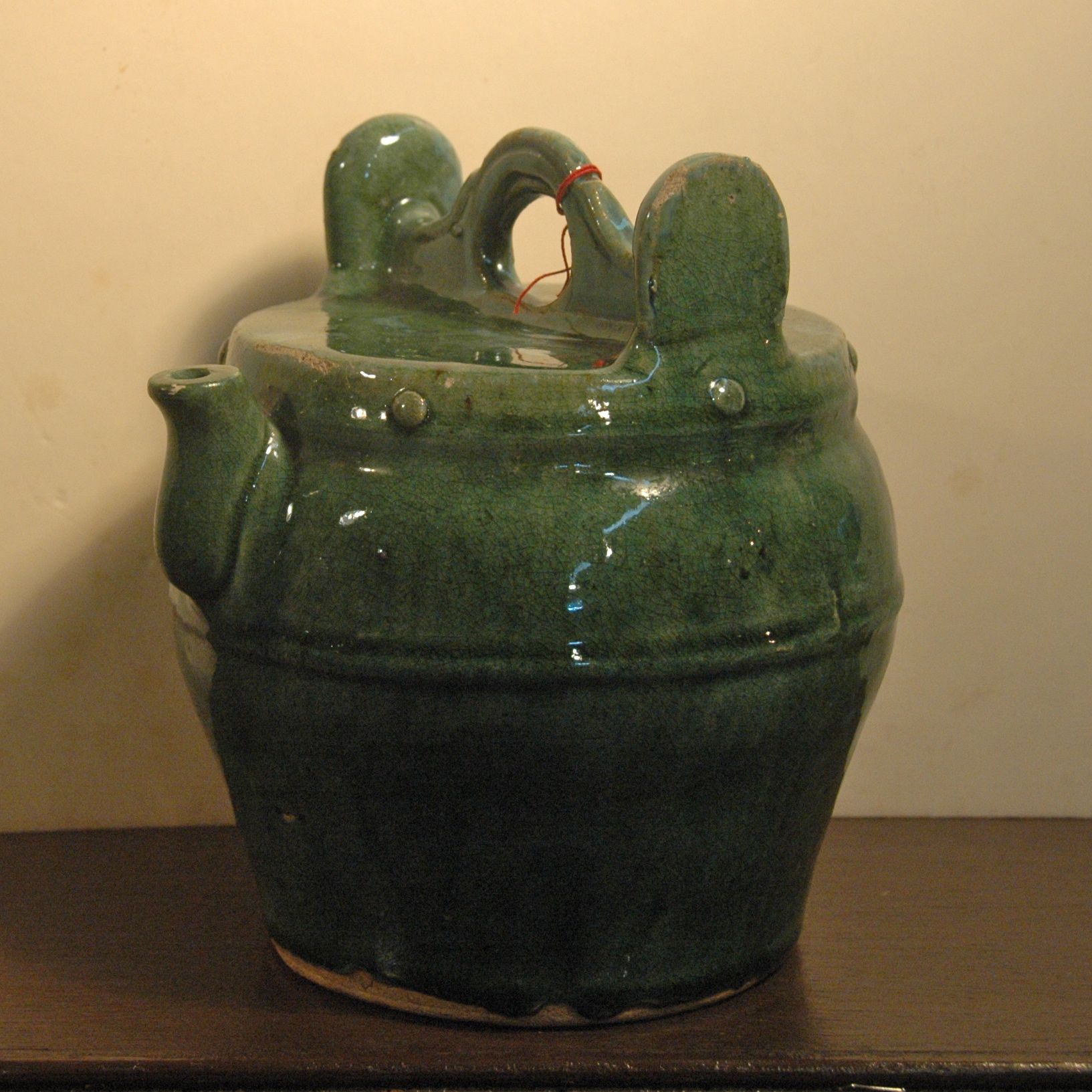
H180xW180mm, China

In the south western part of China days are long and hot, people especially labourer require large quantity of liquid to replenish.  In the Qing dynasty, small “two cents”  tea houses are quite popular in Guangzhou.  These tea houses, furnished only with a few tables and benches, are frequented by coolie taking their breaks and sharing their stories.  Hearty food, sweets and tea would be served which is in fact the origin of the morning dim sum.  This kind of  Shi Wan green glazed teapot would be found in such tea houses.

Dia250xH450, China

This is a birdcage both for raising a bird at home and for “walking” the bird.  The Chinese believed that even for home kept birds, they should be meeting with their birdy friends to share their songs.  In the south, this gathering would happen daily at the teahouse, usually in the morning over dim sum where the owners should chat with their friends and the birds theirs.

There are also the attachment to go with it; bird feed bowl,  bird feeding cage.

H120xW90mm, China

Snuff bottle is very popular in Qing Dynasty China, tobacco was introduced to China in the 16th century  smoking however is banned.  The use of snuff (powdered tobacco) is believed to have medicinal effect and therefore allowed, it quickly spread amongst the upper class and became a social ritual.  The container became more refined in terms of craftsmanship and the use material showing off the status of its owner.  This bottle is a red  overlay on transparent glass ground carved to illustrate bats (blessing).

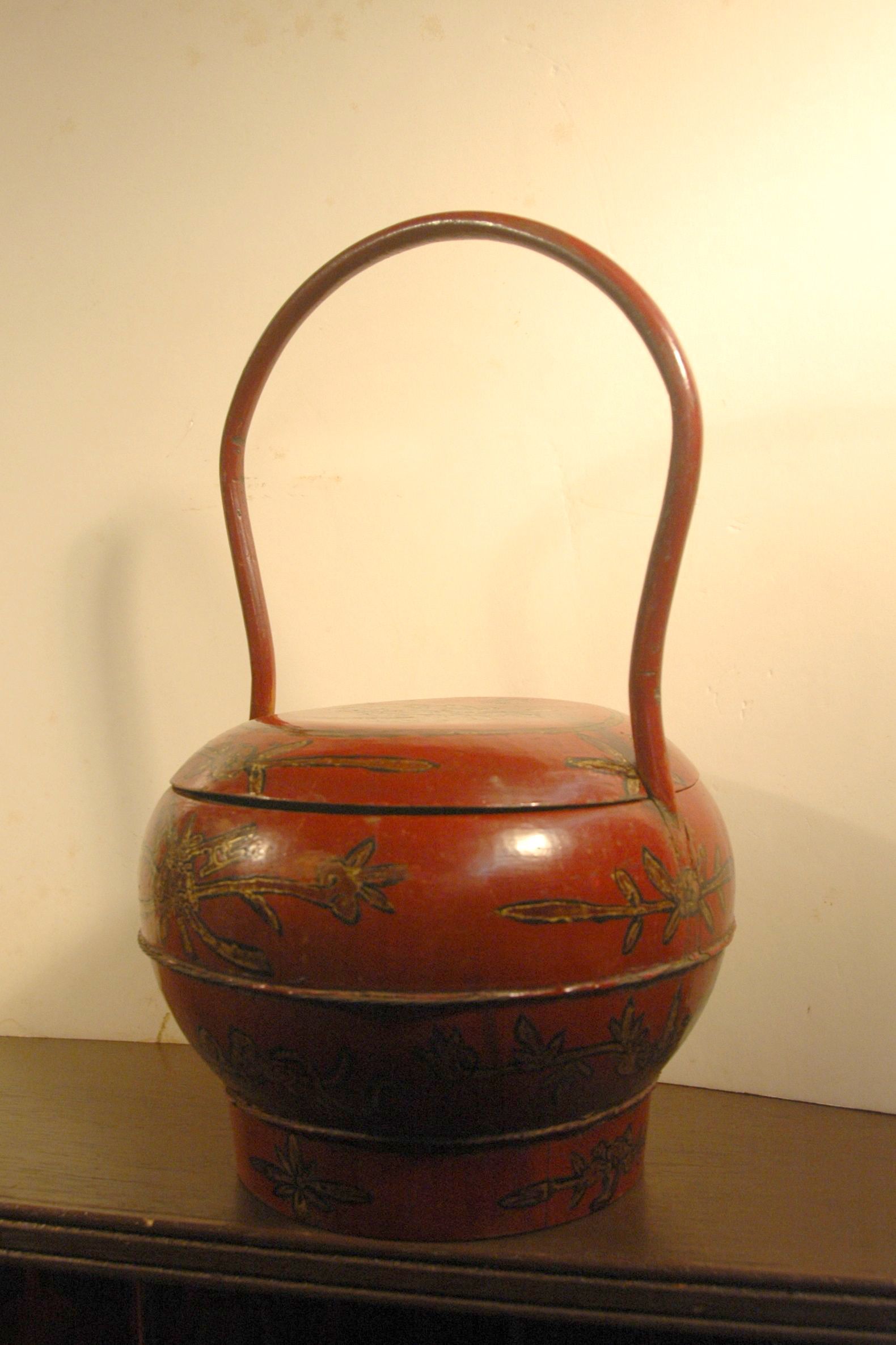
W220xH360mm, China

This is a rice container for the southern part of China. In a traditional Chinese family very often the clan would be living within one house / estate, all meals would be eaten together, rice would be cooked in a wok  in a kitchen far away, the cooked rice would be transported and served in a lacquered pail.  This pail is has a gold painted decoration over the lacquered.

Side tracking; the Chinese would insult a stupid person as a “rice barrel”,  someone who is “a gold painted lacquered rice barrel” would transfer to someone who is well package but in fact an idiot (the precise word has escape me, please help to suggest the word).  This is very nice item, I hope the story wont stop you from taking it home.  :)

H300xDia250mm, China

This is a ceramic vase for the preparation of pear wine.  The vase is coated with a blue glazing while text in relief are unglazed.

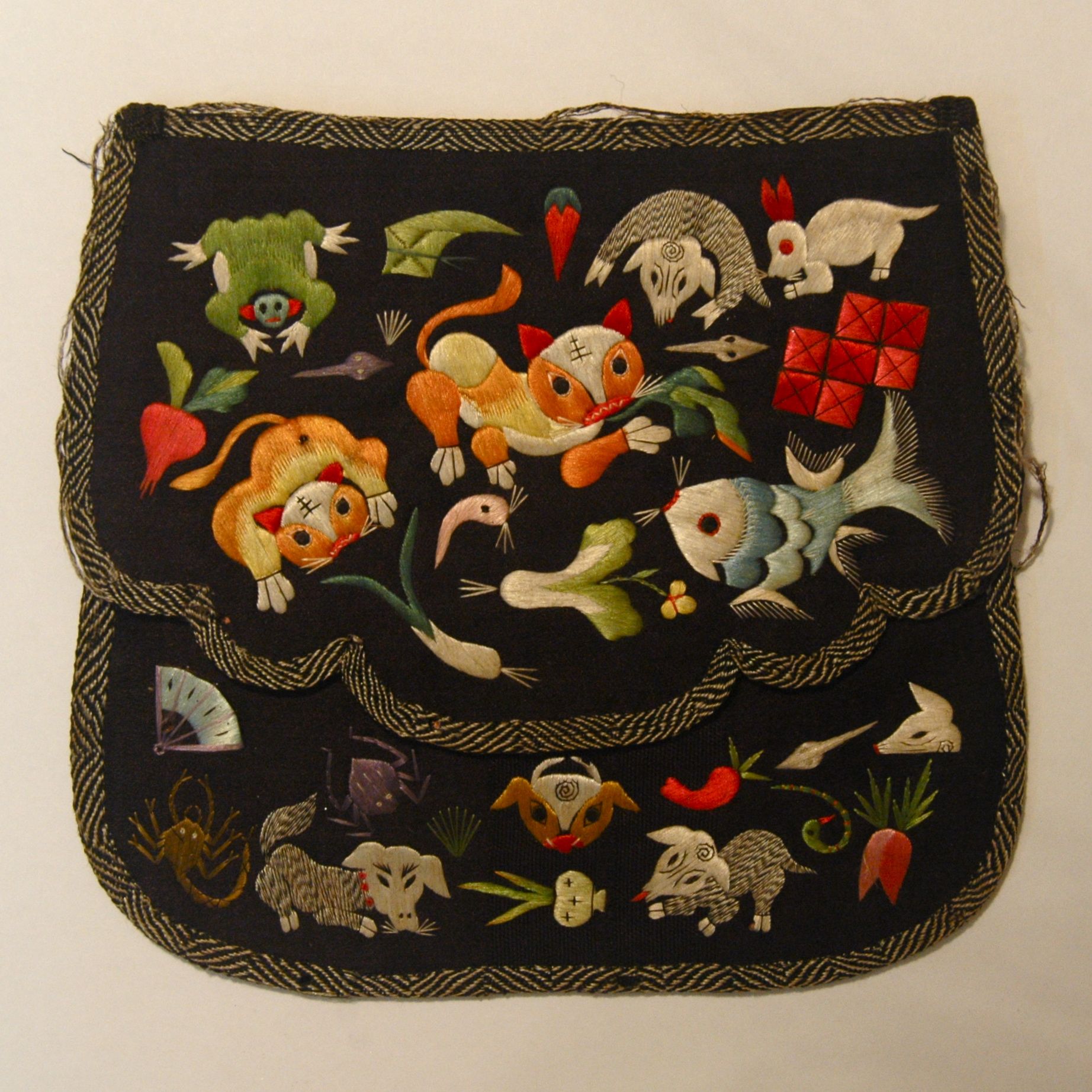
W120xL120mm, ChinaThis is a money pouch embroidery created by young girls not more than 12 years of age.  Among other items they prepare will form part of their dowry.  What is interesting of this this pouch is the design of the embroidered animals, though the original pattern might have come from the mother or great grand mother, they nevertheless captured a young girl’s perception of the world.