Archives for category: container

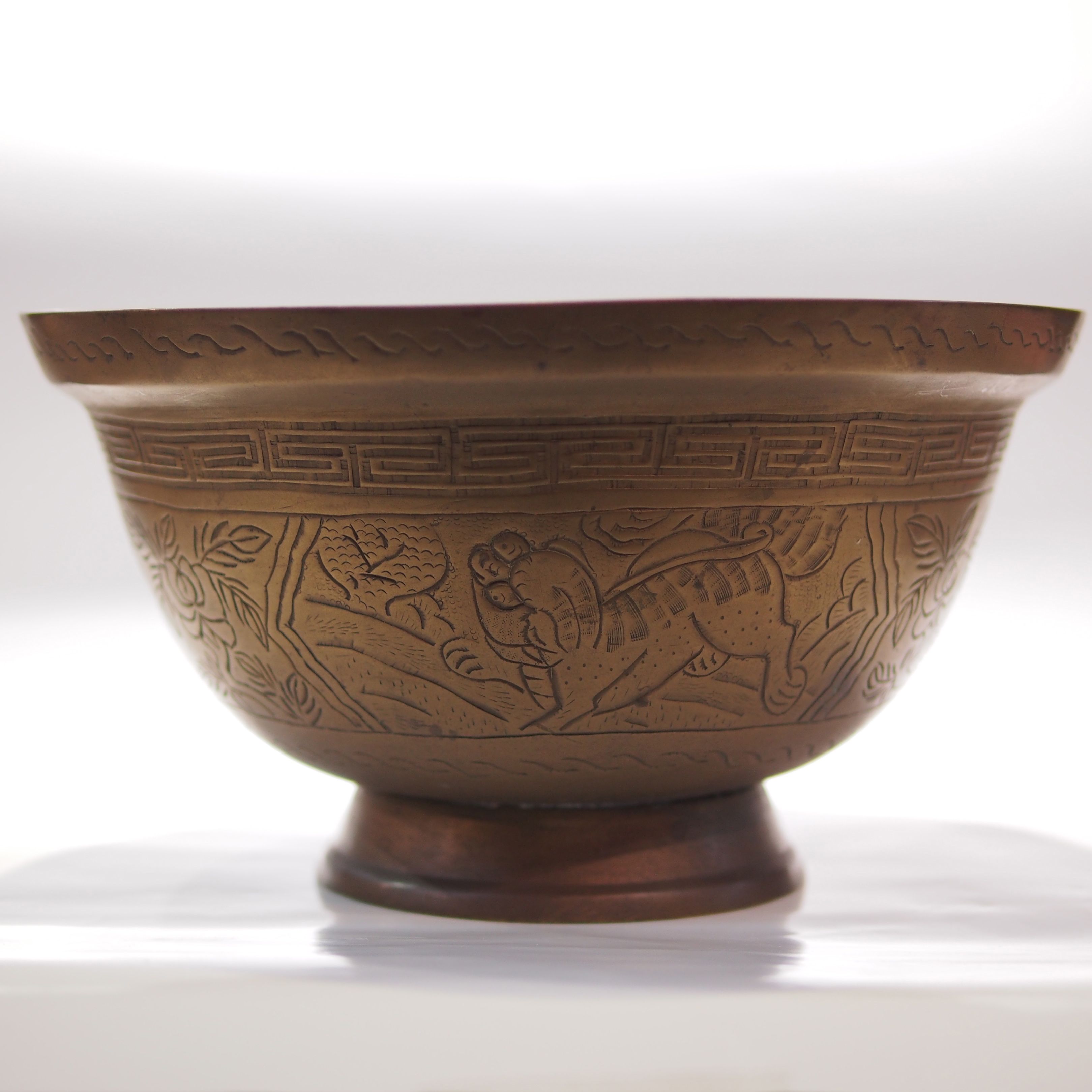
bronze bowlDIA270xH150mm, China

Perfect for beating egg white, melting of chocolate or just as a fruit bowl.

In the old days this bronze bowl would have been uses to provide offering in a Chinese temple.
See our other offering containers; offering bowl, eight trigram bowl, bronze plate, lacquer dish.

OLYMPUS DIGITAL CAMERA

blue rock  W130xD20xH80mm, China

A curious blue object.

This is no modern art but a carving of the Shou Shan stone.  The blue, without the artistic symbolism of Western art of the sacred, the heaven, the ideal, the escape etc etc was a mean of disguise.  During the cultural revolution, all objects of art and decoration were target to be destroy and its owner punished.  The owner must have treasured this object, instead of destroying it like many art object at the time, a layer of blue paint was applied to escape the prying eyes of the red guards.

Odd at it is, we have kept the blue paint on, as it is part of the history of this object.

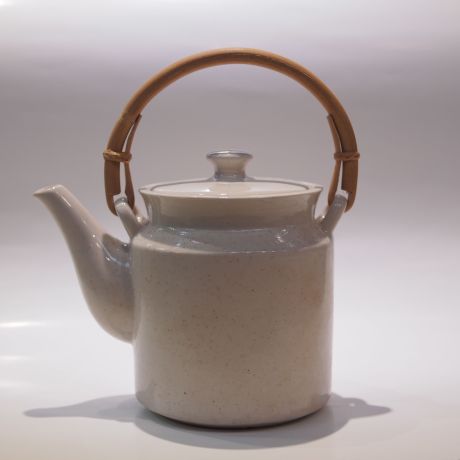
Tea Pot

DIA120xH150mm, China

This is our family teapot, though it might look very modern or even muji like, the form has been around since the late Qing dynasty.

My first association of a teapot was from a drawing, then the nursery rhyme. When I was old enough to go to restaurants that I met the first teapot in a tea house (the place where they serve Chinese tea and dim sum).  It was a comical looking object, perfectly fitting to the first two descriptions I had learn, rounded short and stout.  It was not until later when I was trusted to pour tea for myself that I realized it is impossible to maneuver this typical Chinese teapot.  The design is appalling, the pot is short and long, the momentum pivoted from the handle made it heavy to hold, then the handle to small making your fingers scorch by the side of the pot.  It is made worse by the dripping spout and the lid that keep falling off.  If the Chinese love to drink tea then why would this become the standard teapot for tea houses and restaurants?  Looking at the history of Chinese teapot where the form was influenced mainly by the development of tea brewing method, design of teapots were sophisticated and refine, it would seems that there is no place for an object like this to survive.  My only guess is that it has been modeled after one of the miniature zi sha teapot, the special teapot where the fragrance of the tea is celebrated.  Tea leave packed, brew for seconds with small amount of hot water which is completely drained out for consumption.  The whole design evolve around the power of the smallness, scaling it up loses all its meaning whatsoever.
four season flower bowl four season flower bowlDIA160xH60mm, China

The four season flowers, Narcissus, Lotus, Chrysanthemum, Plum Blossom, were a popular decoration for pottery and other works of art.  They symbolizes a good fortune for all the four seasons.

Click to see the other four season flowers pottery ware.

The four seasons are appreciated all over the world, here is Mutter’s amazing performance on Vivaldi.

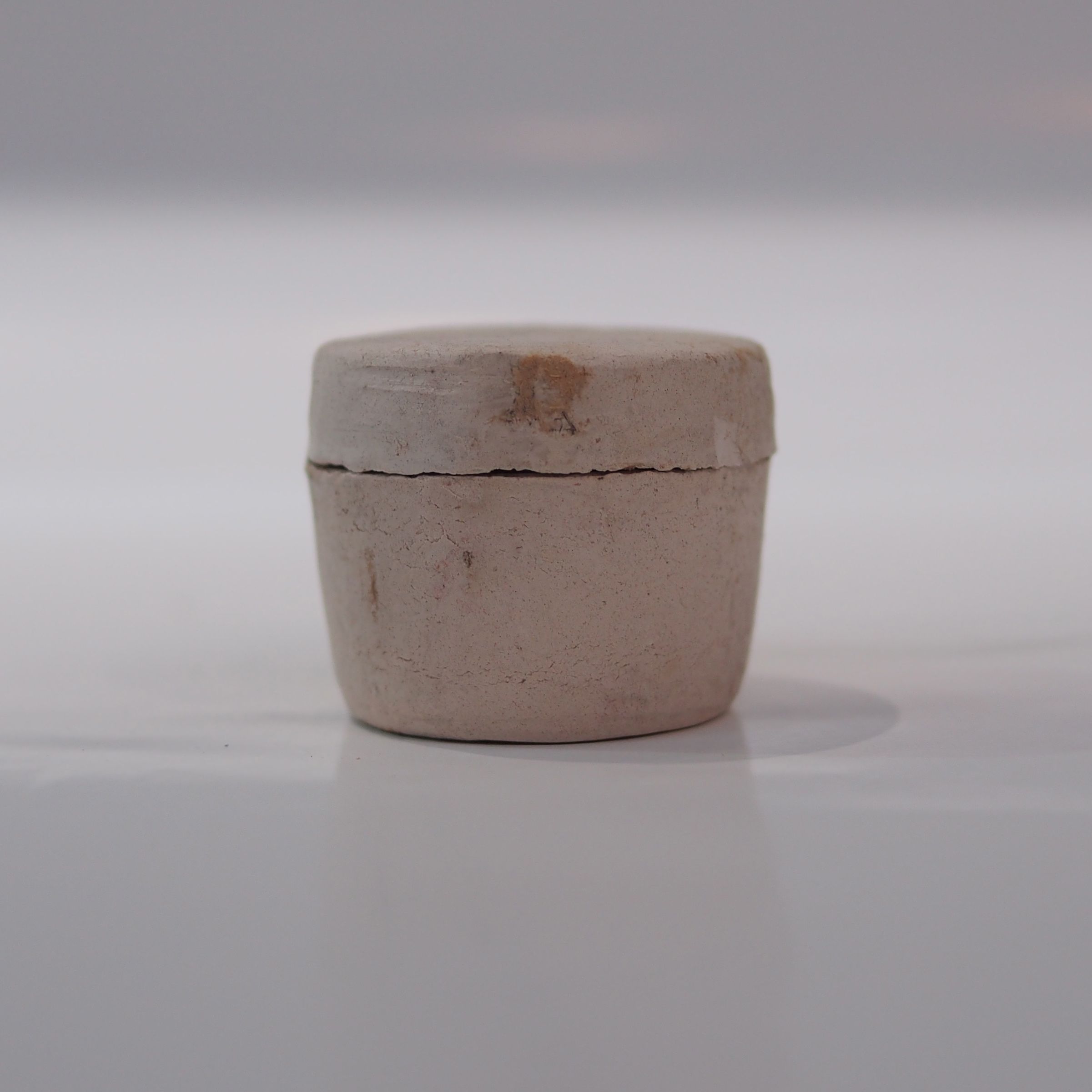
small opium jar

DIA40xH35mm, China

This small pottery jar was a container for opium.

A cheap packaging of the opium den which would then be transferred to a more delicate bottle.

It is similar to today’s disposable plastic bag for pills.

small jar

OLYMPUS DIGITAL CAMERA

DIA210xH30mm, China

This plate gave me an impression that it is not Chinese, this feeling most likely came from the scribbling scripts on the plate which resembles a foreign language.  But on closer inspection, there is a mark on ten o’clock which inscribed the word 熏.  This happened to plates that were quite common, a mark for identifying your own if they were to be mixed up in a lot of similar ones.

The pattern on the center, two, four, six, eight and then o’clock resembles a flower, as sunflower is not a common object on Chinese pottery, it would be fair to assume that it is a chrysanthemum.  Looking at the scribble again, there seems to be a repeating icon which makes the language again unlikely.  Scrolling foliage pattern is typical for Chinese floral pattern, basing on this i started by search and this is probably what the original designed was like and after years of abstraction by the village craftman, the design has transformed itself altogether.

brush standW70xD50xH20mm, China

Continuing with the stationary items, this ceramic ware is a brush holder.  A holder for the small brush, unlike the previous brush rests where they are lay horizontally, the brush here are inserted into the small holes and left standing.  The small container is for keeping a bit of water in case the brush has gotten a bit dried.  This kind of brush stand are usually used by the people who are writing all the time, e.g. the doctor, the pawn shop owner, the restaurant manager etc.

charcoal basketDIA230xH120mm, China

This bamboo weaved basket is known as a Wu Fu, a basket for storing charcoal for brewing tea.  It use can be dated back to the “Book of Tea” by the Tang Dynasty scholar Gu yuan Qing.  The name Wu Fu is sophisticated way of refer to the charcoal basket, the word “wu” means black, dirt – which is the charcoal, the word “fu” is a grand mansion – the humble basket.

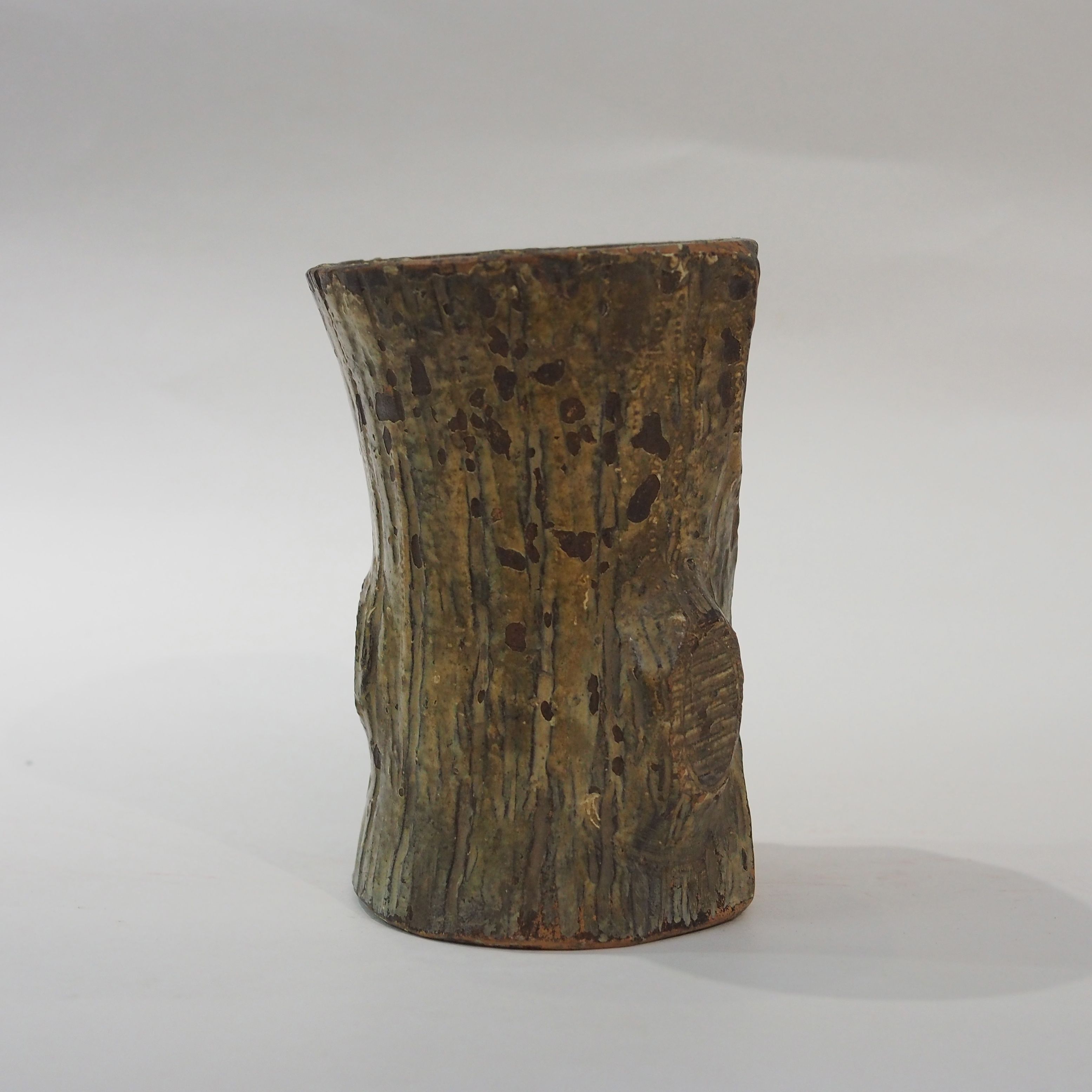
pen holder

DIA80xH420mm, China

This brush holder is in the form of a tree log, it is made with the stone is found outside of the mineral jade, the so called skin of jade.  As the material and colour is completely different from the jade, part of the “jade skin” is sometimes used as an articulation for jade carvings.  Here it is used on its own to resemble the bark of a tree.

Click here to see our other brush holders.

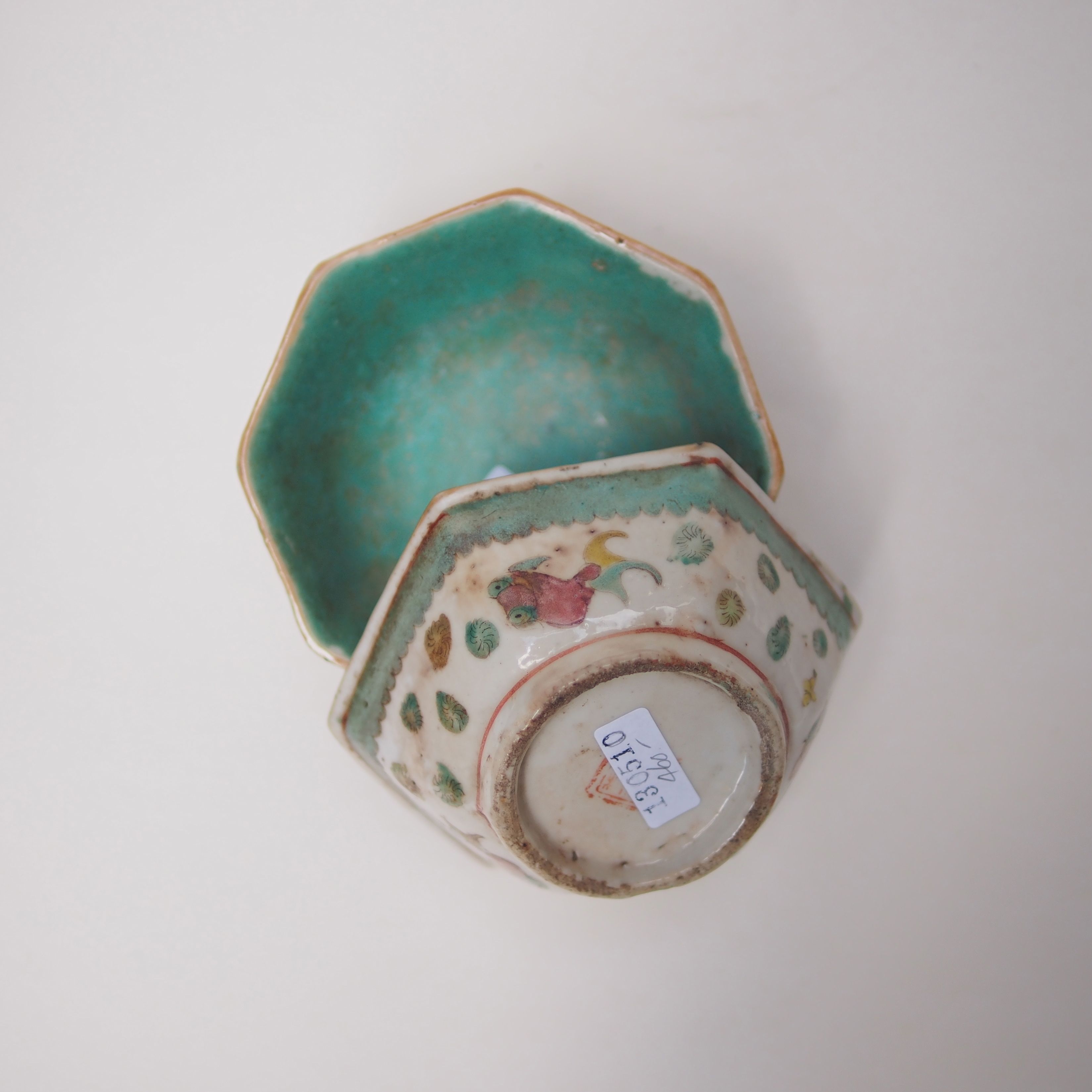
bowl

bowlDIA120xH50mm, China

This pair of octagonal bowls are decorated with goldfish, a traditional blessing symbol.  Gold 金 (Jin) Fish 魚 (Yu), the word “fish” shares the same pronunciation with the word surplus 餘 (Yu).  A lot of chinese decoration symbols follow the play of homophone, these might all be a bit superstitious and arbitrary but in the days of old rural China when  life is hard, these kind of blessing is an expression hope for a better life.  Even in today’s world, these kind of subtle tradition carries on e.g. in Hong Kong, an Empty 空(Hung) Residence 宅 (Zaak) would be call a Blessed 吉(Ji) Residence, as the word “emtpy” 空(Hung) has the same pronunciation as 兇 (Hung) – a murder house.  Changing a word that make no sense to the original meaning just for the sake of avoiding a bad homophone.

Anyway, ain’t these goldfish the cutest?!