Archives for posts with tag: wood

DIA250mm (BOWL DIA220mm), China

This lotus leave was the lid for a container which unfortunately is not with us anymore.  I think it will make a great presentation for lotus leave rice if you have a bowl of similar size or best of all make a  pottery one.  This will be my new pottery project, will keep you updated on this.  Meanwhile, you can start practicing on making my favorite lotus leave rice first.

INGREDIENTS (for 2)

  • 1 lotus leaf (fresh if possible)
  • 300g cooked rice
  • 0.5 tsp salt
  • 40g diced roast duck
  • 40g diced roast pork (Char Shui)
  • 40g diced prawns
  • 40g diced crab meat
  • 40g diced mushroom
  • 1 egg
  • 3 tbs water
  • 2 tsp soy sauce
  • 1 tsp chinese wine
  • 1 tsp sesame oil
  • 0.5 tsp salt
  • 0.5 tsp sugar
  1. wash the lotus leaf thoroughly then put it in boiling water till soft, rinse with cold water and pad dry.
  2. make a thin omelet with the egg, let cool and cut into thin slices.
  3. heat the wok with a little hot till smoke raises, add in and stir fried the diced prawn followed by the diced roast duck, char siu, mushroom and finally the rice and the seasoning.
  4. brush the lotus leave with oil, spoon in the fried rice and fold up the lotus leave like a gift.
  5. put it in a bowl and steam for half and hour.
  6. put the lotus leaf parcel in a nice container and enjoy!

L340xD170xH70mm, China

Apology for the misinformed blog yesterday.  This box should be a name card holder, yes, the traditional name card are of this size.  Traditionally, a few days before a visit, a box containing a name card (tie) with the purpose of the visit will be delivered to the person’s estate.  If the tie is not rejected that the meeting will go ahead, otherwise the box with the tie will be returned to the sender.

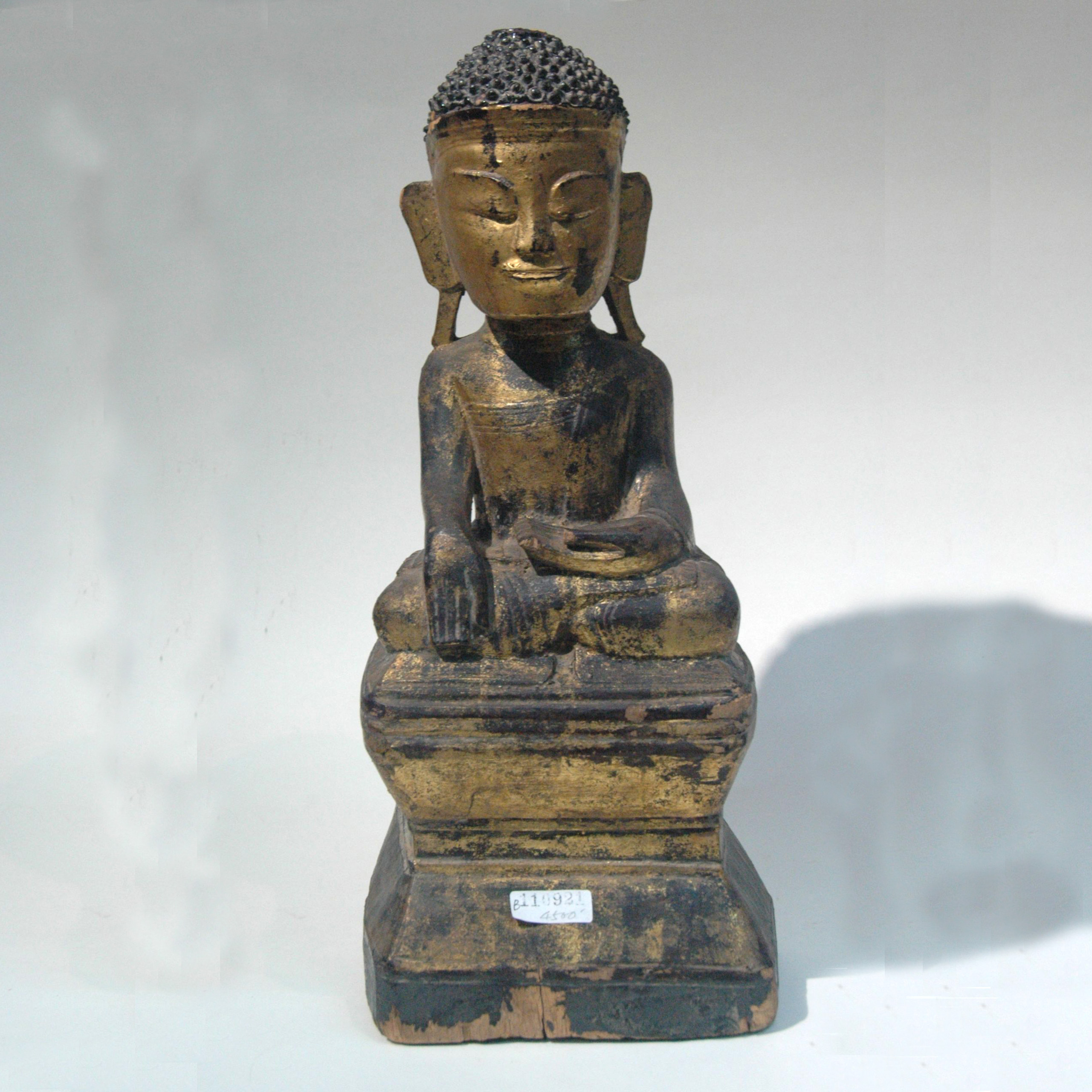
W150xD120xH370mm, Thailand

This is a Buddha statue in the Bhumisparsha Mudra posture, with his right hand resting on knee while reaching toward the earth and the left hand lies on the lap facing upward.  This gesture is also known as the “earth witness” which is the most iconic image of Buddhism.  This gesture symbolizes unshakability and steadfastness; the legend goes just before Siddhartha Gautama was enlightened to become the Buddha, demon Mara called upon his armies of monster to attacking, hoping to scare him away from his meditation under the bodhi tree.  Siddhartha stayed unshaken and  continued his mediation.  The demon claimed the enlightenment for himself and called for his monsters to give witness to his superior spiritual achievements, Mara then asked Siddhartha if anyone could give witness for him.  Siddhartha simply extended his hand to reach the ground and the earth responded and giving witness for him.  Mara was defeated at his own challenge and vanished.  The next day Siddhartha Gautama enlightened to become the Buddha himself.

H100xW50xD60mm, China

Wonder what a villain looks like?  This is a typical villain of the Chinese glove puppet, all villains have a white painted face with black features.  A word of caution: the white face villains came in all different ages, from a young chap to the bad government official and finally the elderly villain.  The shown in the photo here is one of the main villain in a puppet show, someone who has high power and no fear, for example, a prime minister who gave manipulate the emperor  etc.

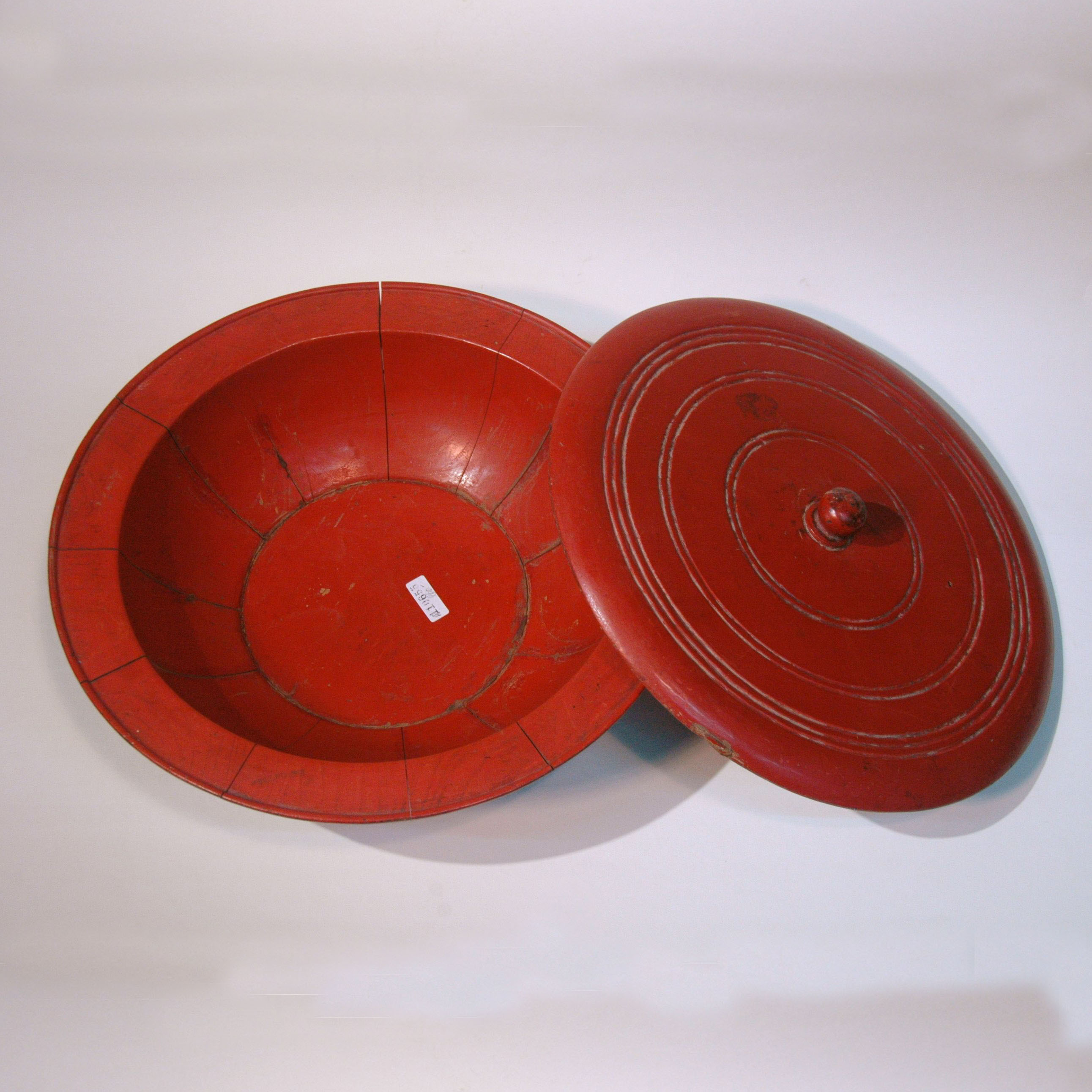
DIA340xH100mm, China

This red lacquer box is part would have been part of the dowry item in a traditional Chinese wedding.  In old China when the country is agricultural based, male is regarded as asset to the family with their labour and sadly , especially for the poor, female took on a minimal role in society.  It is said that a wealthy family their daughter is married off, a commoner’s daughter would be given away at the marriage and a poor man would have his daughter sold.  Wary of how the daughter’s life would be when she enters the groom’s family, the bride’s family would try their best to come up with an elaborate list of dowry so to ensure the status of their daughter in the new home and that she would not be seen as “sold”.  It so extensive that the production of the dowry would be categorized into wood work, carving work, lacquer work, box and bucket work and costume making.  In the morning of the wedding day, a team would set out from the groom to the brides house, after noon time, the team would return with the bride and the dowry procession.  For the riches, the dowry would be a full procession which goes on for miles.

This lacquer box is for storing confectionery.

 L380xW100xD20mm, China

This was an opium scale, I believed that this is only a bolder name for a scale of measuring items that are small and expensive (precious was the original choice of word but would be a wrong one if this were indeed an opium scale). The scale packed neatly into a custom carved out wooden case with the pivot rod is made out of elephant bone.
For how a Chinese scale works, please see the earlier post Scale which fits in a bamboo case.

W390xD320xH800mm, China

This chair is called a Lamp Hanger Chair, it got its name because it takes on the form of a bamboo oil lamp hanger used in southern China.  This style of chair went back a long way, it was even depicted in a painting in the 5 Dynasty period of around 950AD, it then became the most typical chair type in the Ming Dynasty.   The chair has a simplistic form and uses mainly rounded rod as key members.  This particular chair is a smaller version of a typical chair.

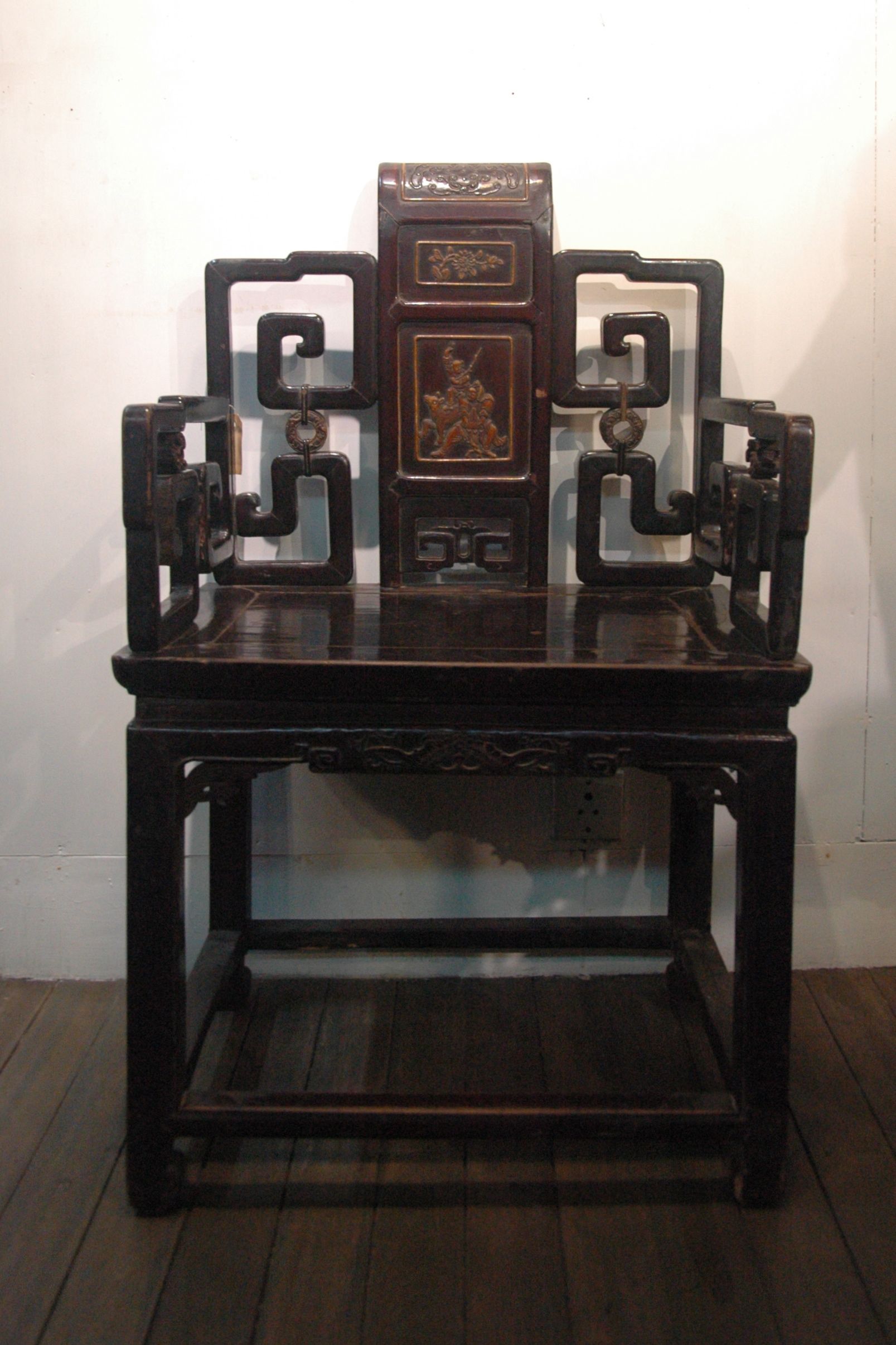
W470xD370xH950mm, China

This is one chair from a pair.  This type of chair is known as “chair with armrest, scroll style headrest with guai zi dragon pattern”, my translate is not perfect but believe me the Chinese name is equally as long.  The armrest need no explanation, the scroll style headrest refers to the top of the head board that turns in at the back similar to that of the old Chinese scroll.  The head board is decorated with relief carving panels of blessing symbols.  The guai zi dragon is the pattern that forms the back and the armrest of the chair, it is also echoed as a decoration on front of the seat and at bottom of the legs.  Guai zi dragon is a pattern that is commonly used in furniture and architectural decoration; it is broadly divided into 2 styles, a more realistic type where from pattern one can tell the head and claws of the dragon where the dragon is usually quite animated and a more conceptual style (as on this chair).

This type of chair was popular from the middle Qing dynasty, particularly in the Southern region of China.  It is normally placed in the study, on the 2 sides of the table or facing the table.

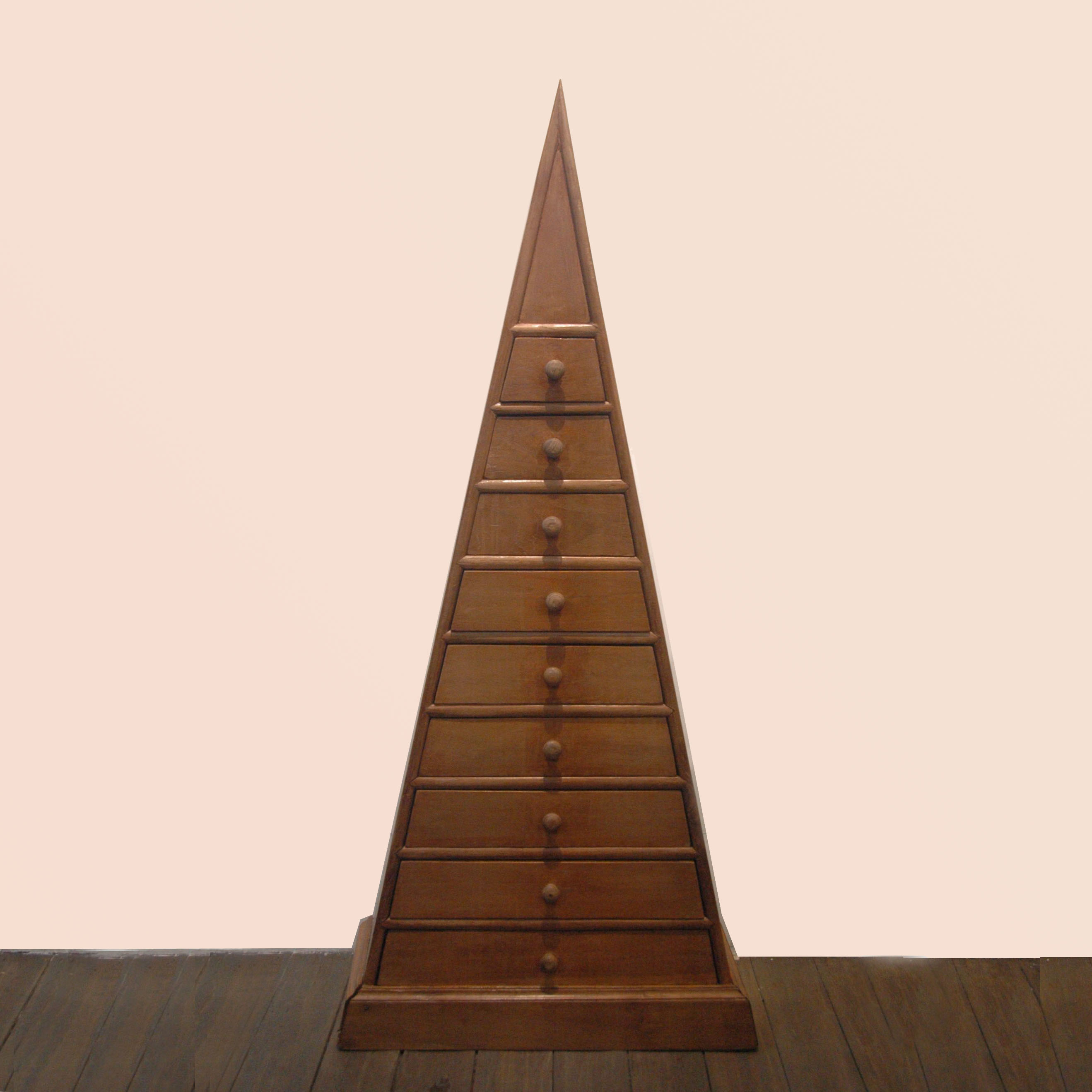
D170xW450xH1100mm

This item has been in the shop for as long as I can remember, being an architect I can see it as a concept for a skyscraper, a vertical city, etc.  But there is something more to it, it seems it really should belong to a fairy tale where these drawers open up to endless possibilities and magics.

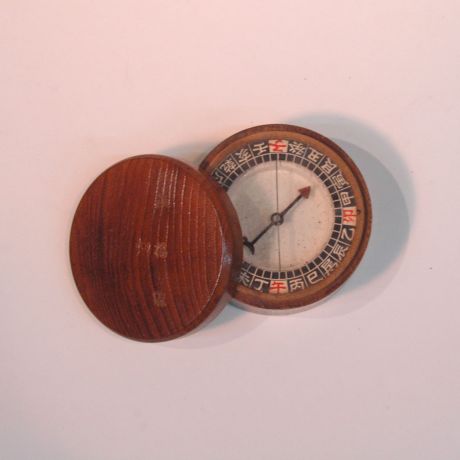
DIA100xH60mm, Hong Kong

This is a compass used by Tanka clan, a clan who lived on junk boats along the coast of Southern China and worked as fisherman.  As it is a day to day object, their compass is more simple then the traditional geomancers’ compass.  The compass for the Chinese is not only for telling the direction but related to space (direction extending to the universe) and time (past and future) as a whole

The Chinese Compass Points

Chinese navigators reduced the compass they inherited from the geomancers to its simplest form, using only 24 points, or even reducing them to 12 or 8.  The dial itself is divided into segments of 15 degrees each, represented by 24 Chinese characters.  These are the compass points, which scholars say were the basis for calculations by diviners and geomancers in ancient times.  These compass points were stabilized in their present system by at least the early 8th century.  These characters used on the compass dial are not the characters commonly used in China to represent directions.  Their origin or etymology is, for the most part, lost in the mists of antiquity.  But scholars have traced many of them back to over 4000 years ago when they appeared on “oracle bones” used to look into the future.  12 of the characters ;  子 zi, 丑 chou,  寅 yin,  卯 mou, 辰 chen, 巳  si, 午 wu, 未 wei,  申 shen, 酉 you,  戌 xu, 亥 hai, have been traditionally grouped together and referred to as the 12 branches.  8 of these character 甲 jia, 乙 yi, 丙  bing, 丁 ding, 庚 geng,  辛 xin, 壬 ren,  癸 gui,  are part of the traditional grouping knon as the 10 stems.  The remaining 4 乾 qian, 坤  kun , 艮 gen,  巽 xun derive from one of the earliest Chinese works on divination, the I Ching.  In very ancient times, the 12 branches were applied to the months of the tropical year and the 10 stems were used to name the ten day week.  Diviners used the stem/ branch combinations of the day, month and year of birth as basis for their calculations and conclusions.  The 12 brances are also associated with the Chinese zodiac; the rat, ox, tiger, hares, dragon, serpent, horse, gost, monkey, cock, dog and bear.  Each of htese creatures is supposed to exercise an astrological influence over a particular 2 hour period of the day, and one year out of every 12.

子 zi – North, rat, 23:00-01:00
癸 gui – N15°E
丑 chou – N15°E , ox, 01:00-03:00
艮 gen – NE
寅 yin – N60°E, tiger, 03:00-05:00
甲 jia –  N75°E
卯 mou – East, hare, 05:00-07:00
乙 yi –  S75°E
辰 chen –  S60°E, dragon, 07:00-09:00
巽 xun – SE
巳  si – S30°E, snake, 09:00-11:00
丙  bing –   S15°E
午 wu – South, horse, 11:00-13:00
丁 ding – S15°W
未 wei – S30°W, sheep, 13:00-15:00
坤  kun – SW
申 shen – S60°W, monkey, 15:00-17:00
庚 geng – S75°W
酉 you – West, cock, 17:00-19:00
辛 xin – N75°W
戌 xu – N60°W, dog, 19:00-21:00
乾 qian – NW
亥 hai – N30°W, pig, 21:00-23:00