 W110xH150mm, Hong Kong
A series of paper cutout greeting cards of cats by Mountain Folkcraft.
Here a blue cat in a sitting pose, ever wonder how many ways they can sit?
Have a good weekend and spend some time with the cat!
W110xH150mm, Hong Kong
A series of paper cutout greeting cards of cats by Mountain Folkcraft.
Here a blue cat in a sitting pose, ever wonder how many ways they can sit?
Have a good weekend and spend some time with the cat!
 W15xD24xH42mm, Hong Kong
A paper sculpture of a three dimension impression of a fish swimming downward.
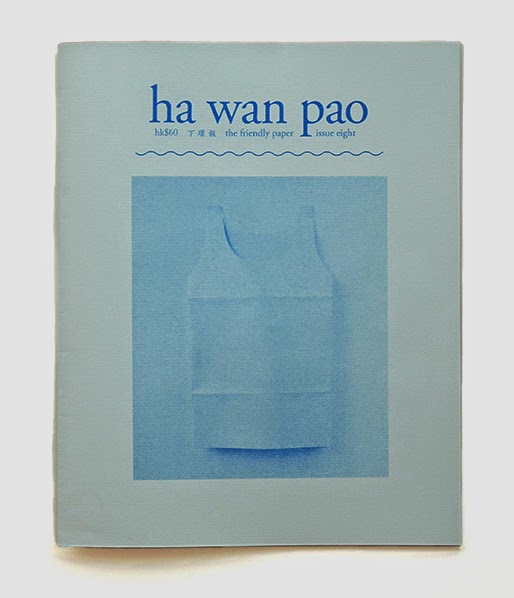 The new issue (issue 8) of Ha Wan Pao is out and is available at Mountain Folkcraft and the following stocklists.
Ha Wan Pao is a monthly paper about people who make beautiful things. whether they’re making comic books, tofu or shoes; what they have in common is the quiet pursuit of excellence.
Ha Wan (下環) is an old name for Wanchai – the Hong Kong neighbourhood where the project was born.
HWP is created by Anna Gleeson with contributions from Furze Chan.

W410xH550mm, China
This is a Wei Fong school wood block print.
The Wei Fong school of the Shan Dong province began in the late Ming dynasty and flourished in the Qing dynasty. Known for the bold composition and the reflection of life with humor. The wooden stencil of this print was carved by the artisan Zhao Lan Peng of the Wei Fong New Year Print Studio in the 80s.
The subject of the print is Guan Yu, the red face general of the 3 Kingdom period. In the novel, “Romance of the Three Kingdoms”, General Guan took on loyal and fearless character which is worshipped by the police and the triads alike.
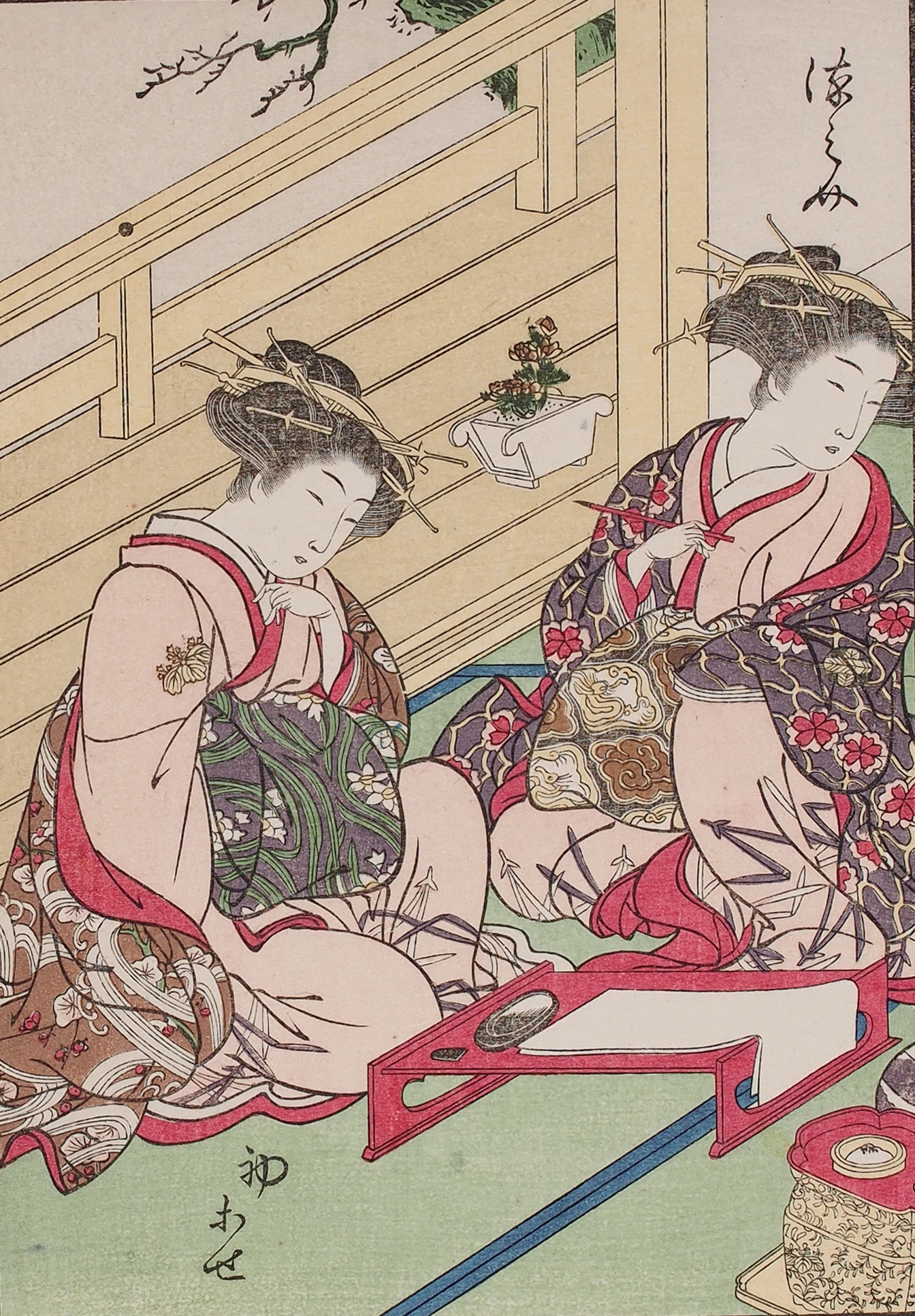 W160xH220mm, Japan
This Ukiyo-e print two kōshi-jōro (high ranking courtesan) contemplating on a writing a letter.
Would it be a letter to home, a lover or a desirable client?
The movie Sukuran describes life inside Yoshiwara as a courtesan, the rivalry, survival and love.
 LxHmm, China
This Yang Liu Qing wood block print depicts a scene of the Duan Wu Festival where the dragon boat race is taking place. From the costume, it would be a time of the Republic of China period, the cue hairstyle has gone, the appearance of western style hats.
The dragon boat race began as a rescue operation of the respected Qu Yuan who leaped into the river to kill himself. Fisherman gathered ringing gongs to scare the fish away, feeding them zong so they will not harm him. Hundreds of years later, it came a festival that attracted even the Emperors would participate viewing the race.
Today is 5th of lunar May, and you have probably feasted on the traditional dumpling (zong) over the past few days. The Hong Kong Dragon Boat Carnival will take place on this weekend and this year it have the setting of the Victoria Harbour. Click here for more details.
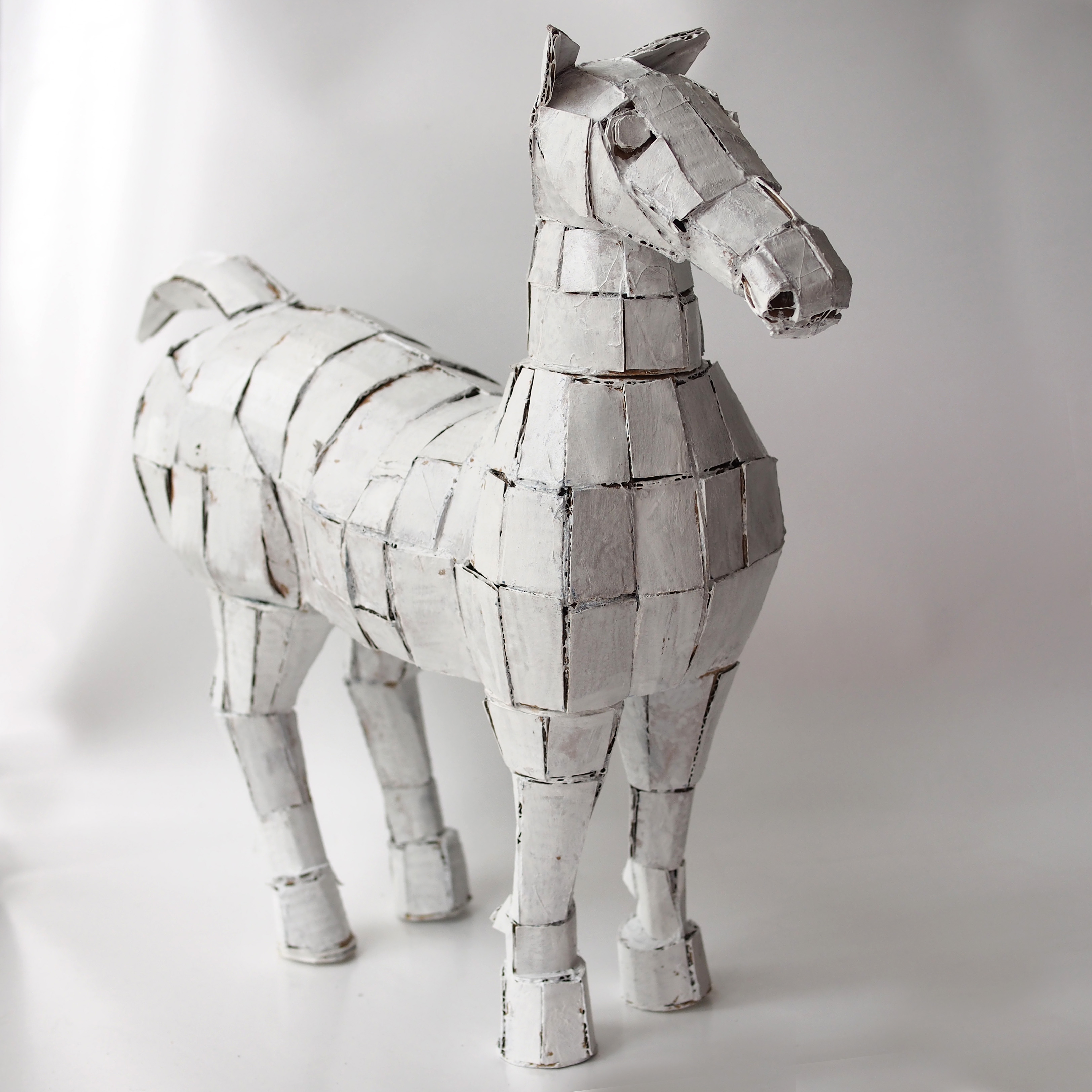
W100xL300xH300mm, Hong Kong
Inspired by the Han dynasty wooden horse, this white horse is constructed entirely with paper.
Horses were highly priced in the Han dynasty (200 B.C. – 220 A.D.). The use of war chariots started in the Warring State period (450 B.C.) and gradually replaced by cavalry in the Han dynasty. This change was brought about by the discovered of the heavenly horses, a superior breed that is found in the Feghana Basin (today’s Afghanistan). Failing to obtain these horse peacefully, lengthy wars took place; Chang An, the capital of Han, is far far away from Feghana Basin (some 2000km away, that is if we take the plane, and much more by foot). The long journey was exhausting and food soon ran out, by time the Han army reaches the Feghana Basin, the starving troops were defeated even by the smaller war lords. General Li Guang Li, led the remaining of his men back to Chang An. The emperor gave the general a larger army and a large supply of food and sent off again. This time they reach the Dayuan capital, Khujand, with no difficulties. The Han army was no match with the enemy, half the men was killed in the first battle. General Li changed his plan and instead of fighting with the Dayuan, he succeeded in cutting off the water supply to the city. Within the city the nobles revolted against the ruler and offered a tribute of 3000 heavenly horses.
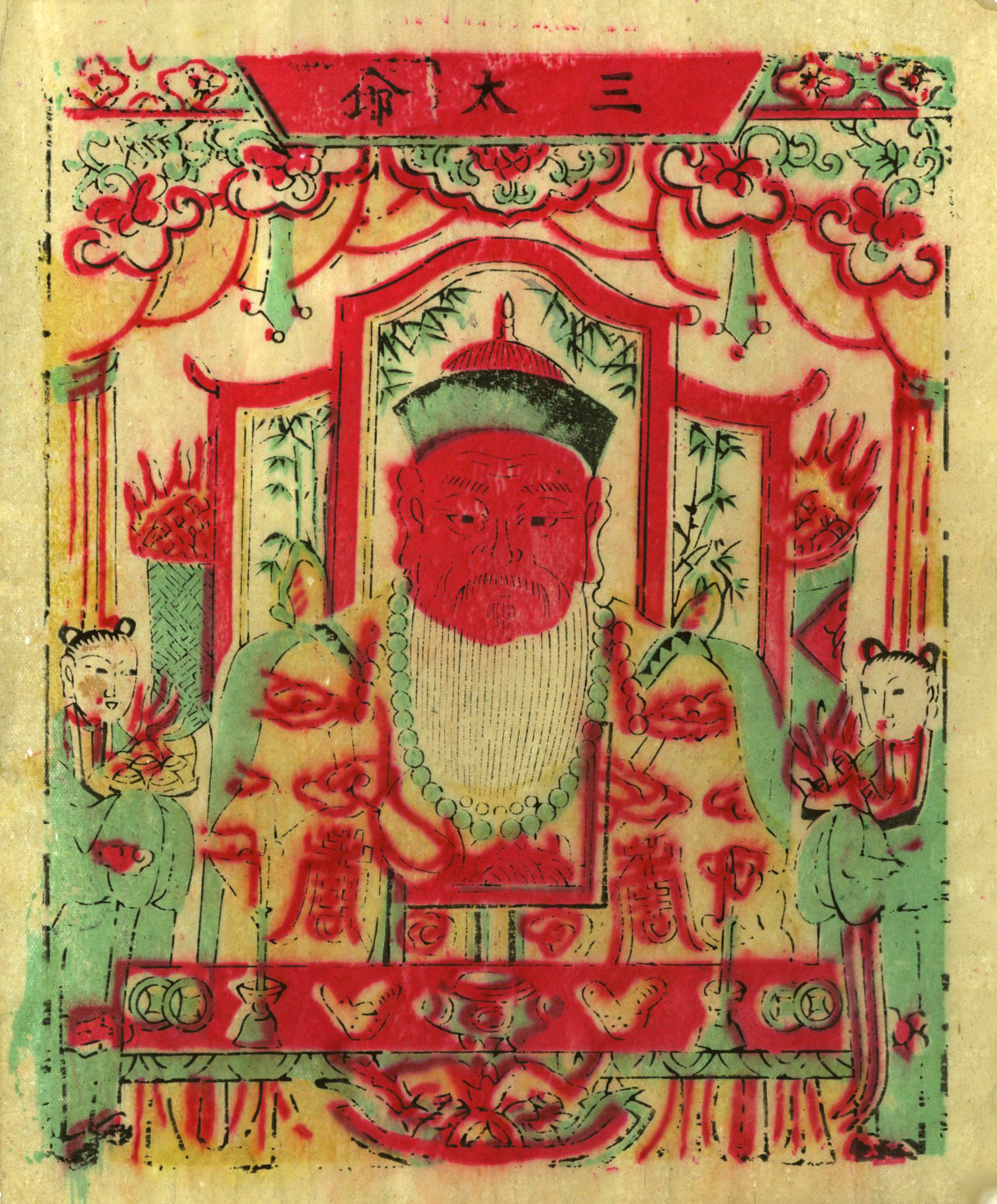
W220xL300mm, China
This is a new year print of (Hu) San Tai Yi 胡三太爷, one of the home protectors worshiped in the villages in the North East China. The most famous ones are saint Hu (胡) and Huang (黄), both Hu and Huang is a common Chinese surname, it is however referring to two animals the fox (狐狸) “Hu Li” and the weasel (黄鼬) “Huang You”. Out of respect, their real identity is disguised and humanized. San Tai Yi, is the most powerful home protector, he is the brother of the legendary Nine Tails Fox Goddess who helped Yu the Great to calm the floods in prehistoric China (2200BC).
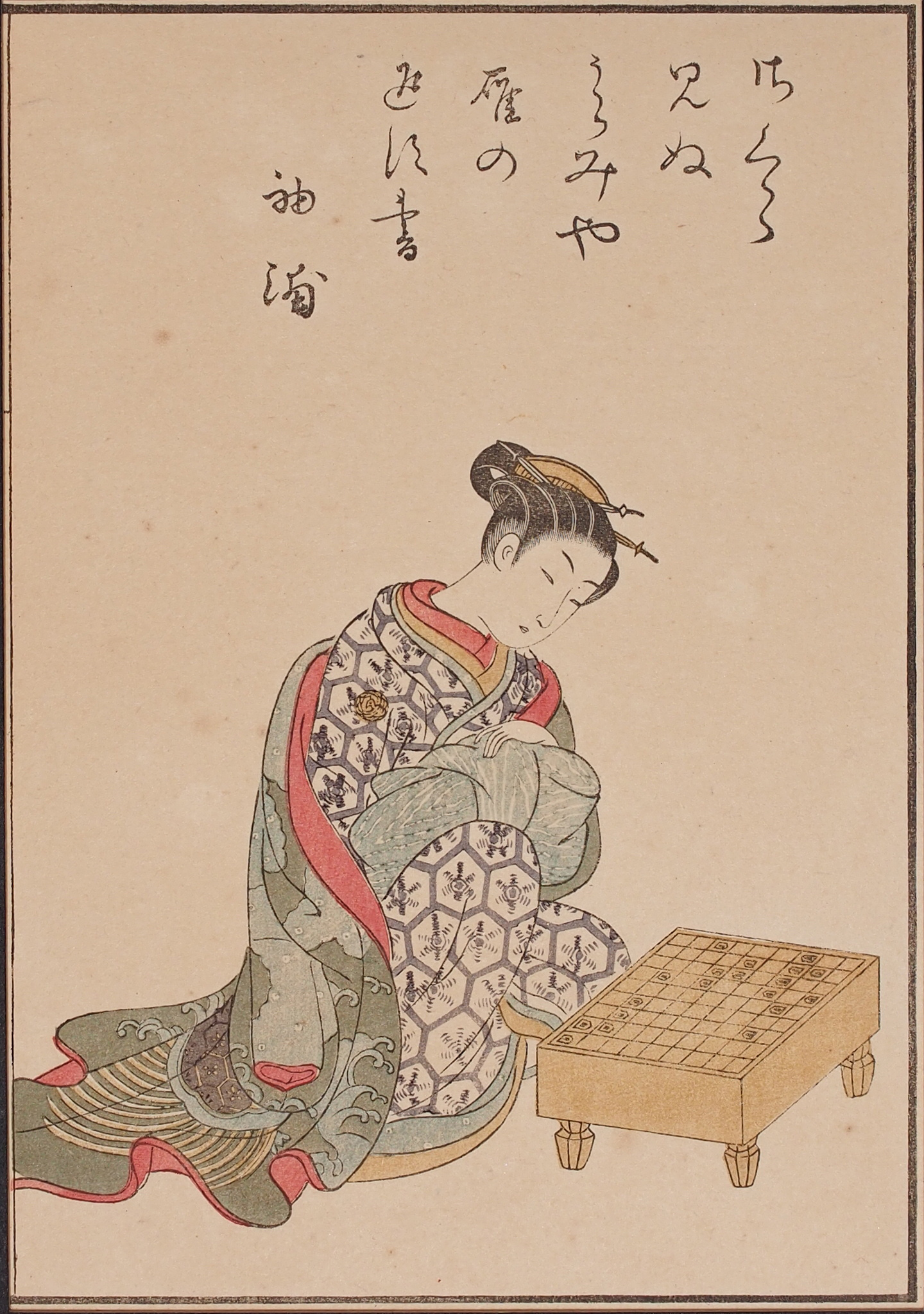 W160xH220mm, Japan
This is an ukiyo-e print depicting a courtesan of Yoshiwara playing a game of go (published 1910s)
In the Edo period, the Yoshiwara area (now the modern Asakusa of Tokyo) was the only district of pleasure that was licensed. Unlike other red light districts in the world, courtesans are trained to be cultured, to be the ideal companion; waka poetry, the game of go, chess, playing cards, calligraphy, ikebana, tea ceremony, incense ceremony and other things.

 Mountain Folkcraft