Archives for posts with tag: chinese

L150xW110mm, China

The opera character of this paper cutout is Wei Chi Gong of the Siu dynasty who was persuaded to defect from Siu to join the first Tang empire by the Tang emperor.  The story of the opera begins when Wei was still a general of the Siu empire whom went on war with the Tang, not only did he won, he disarmed a Tang general Yuan.  This general was humiliated and when Wei join the Tang empire, he made up excuses to have Wei killed, luckily the plan failed.  Years later, when the Tang emperor was losing his war, general Yuan left him and ran for his life.  Luckily Wei arrived to save the day.  This is Wei story in the opera but perhaps you know him as the Chinese door god, but that’s another story…
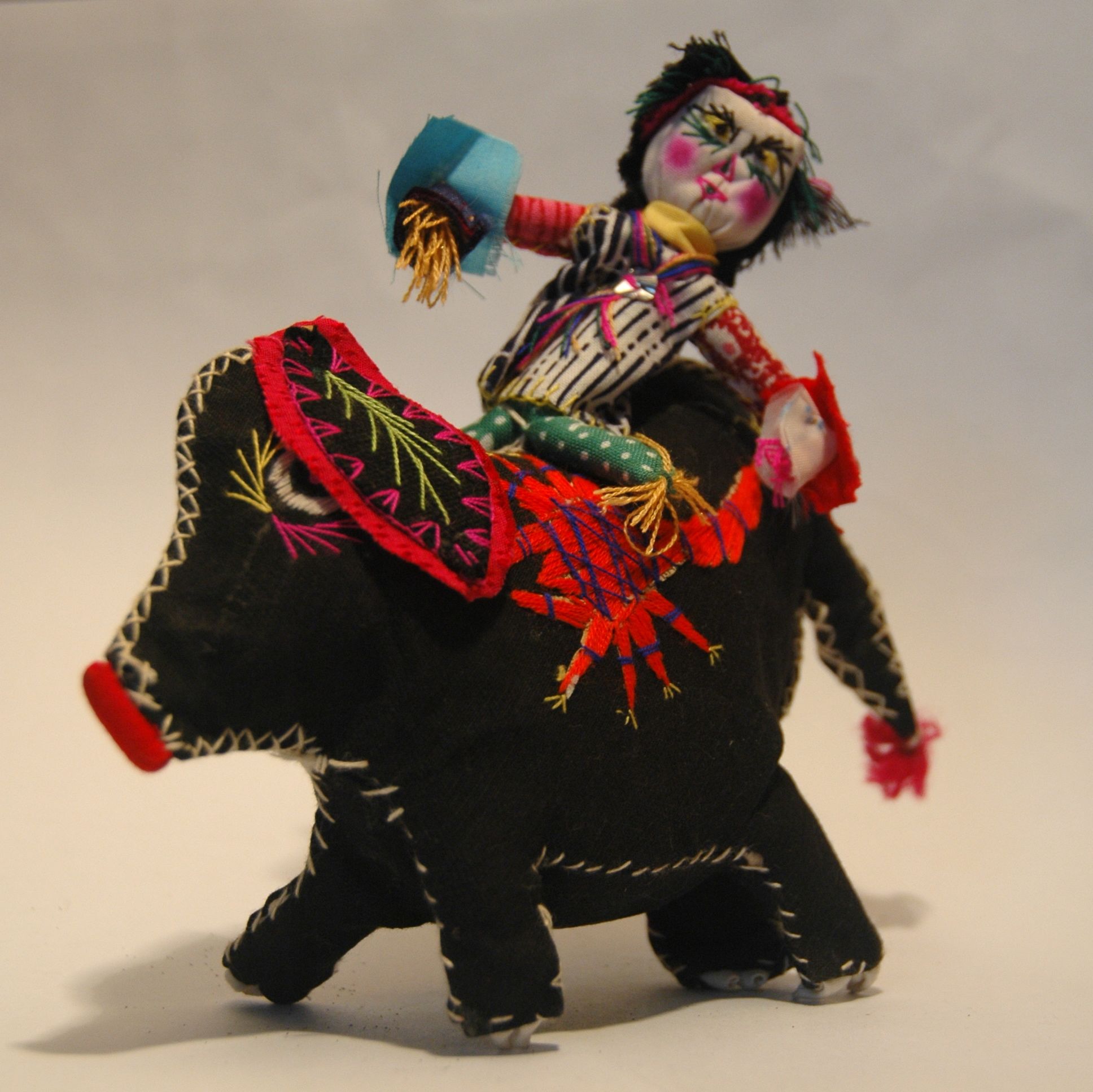
H150xL150xW50mm, China

Cloth toys are popular items made by mothers for their children in rural China.  They are made of everyday object; leftover cloth, cardboard, decorated with bold embroidery giving an animated life to the toy.  The cloth toy in this part of Shaan Xi area is noted for the head being flat and changing to a 3 dimensional body.

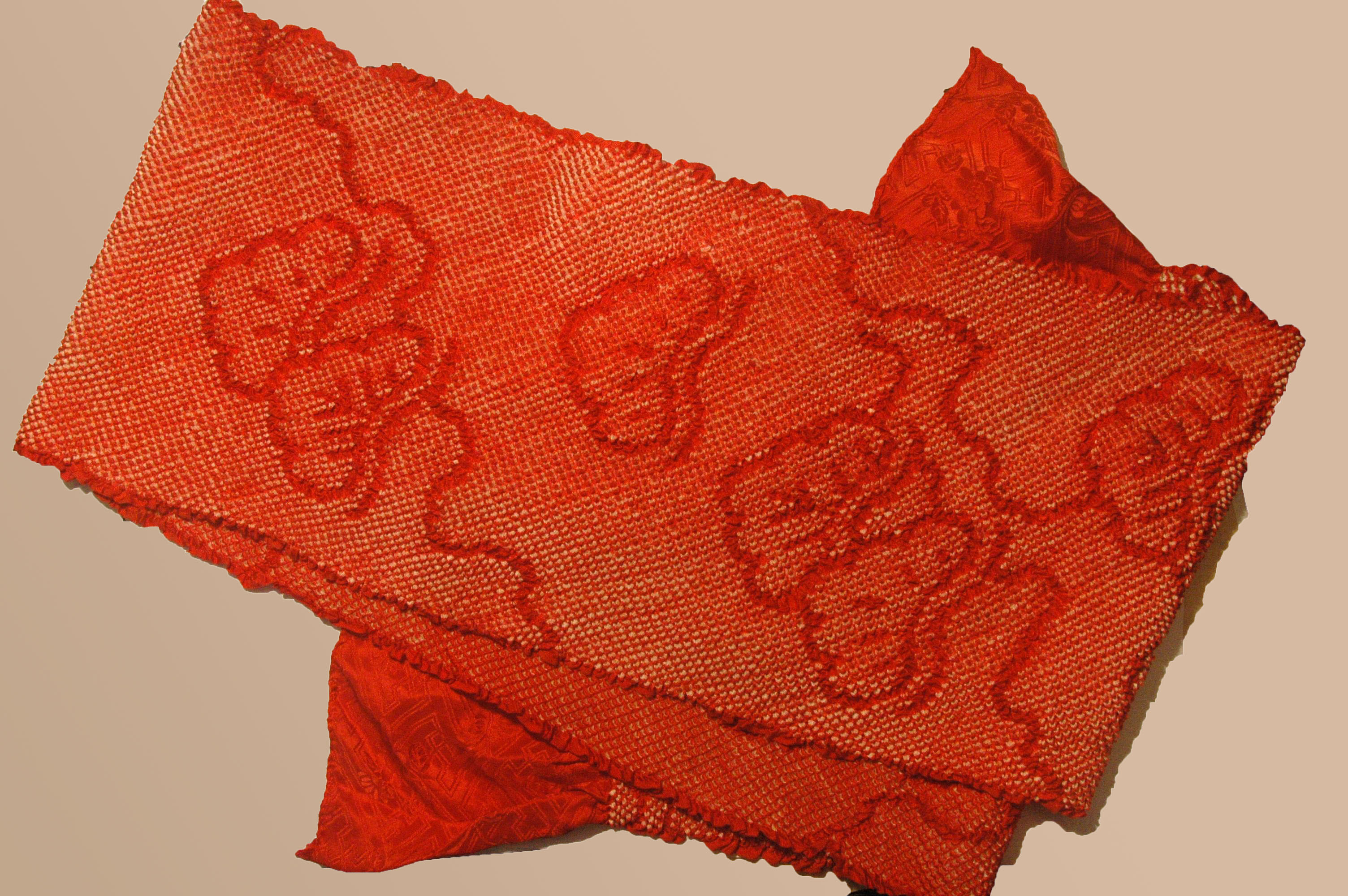
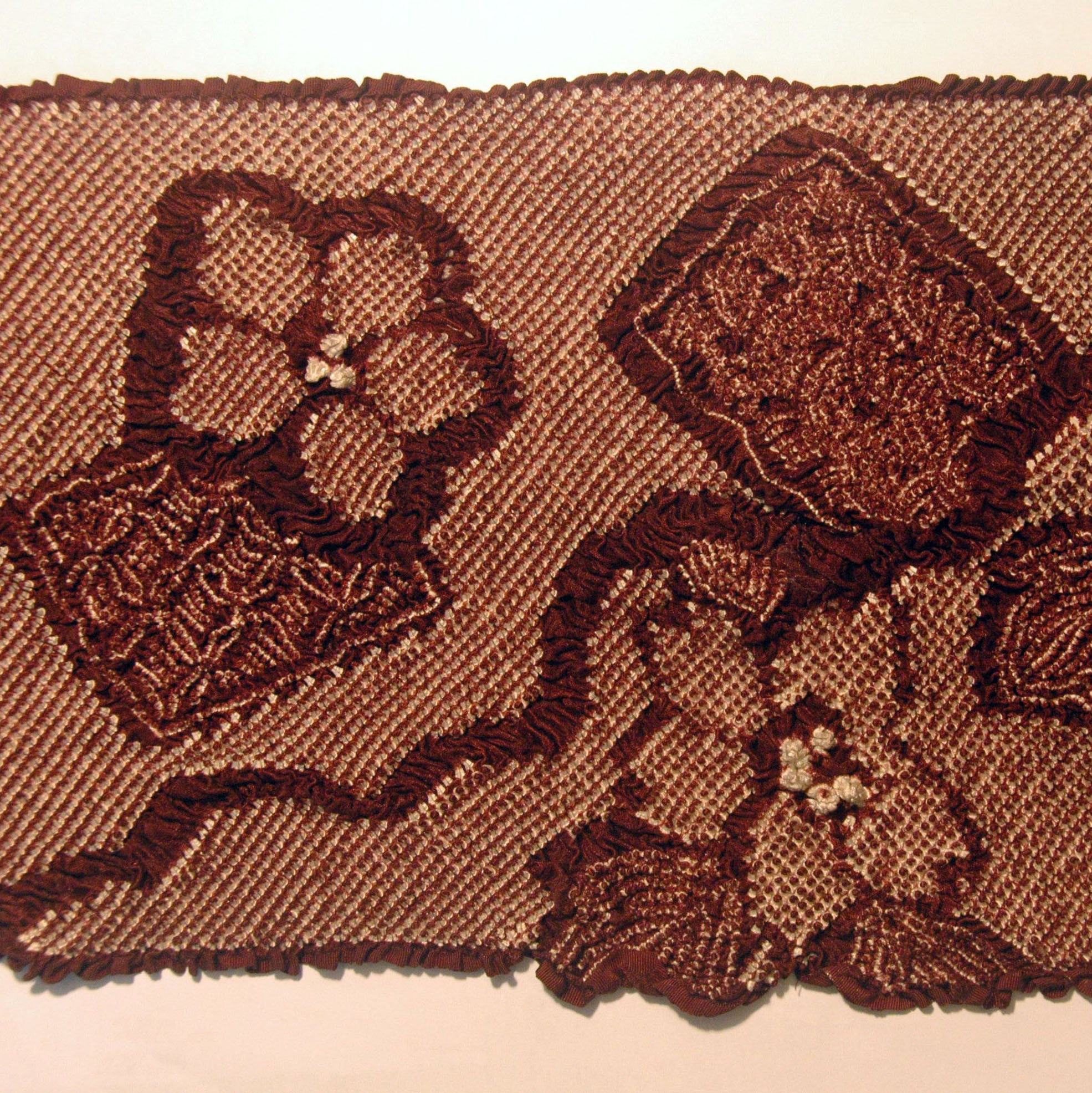
W120xL1400mm, China

This is a tie dye on a piece of hand woven silk.  A short knitting needle like tool is used to pinch the silk for tying, this give a small and crisp effect on the fabric.  The main outline of the pattern is not tied, resulting as a bold line for the design.  Because of the nature of the silk and small ties, the fabric becomes stretchy and elastic.  This technical was only developed in the last couple of decades, relatively modern in the long history of tie dye in China.

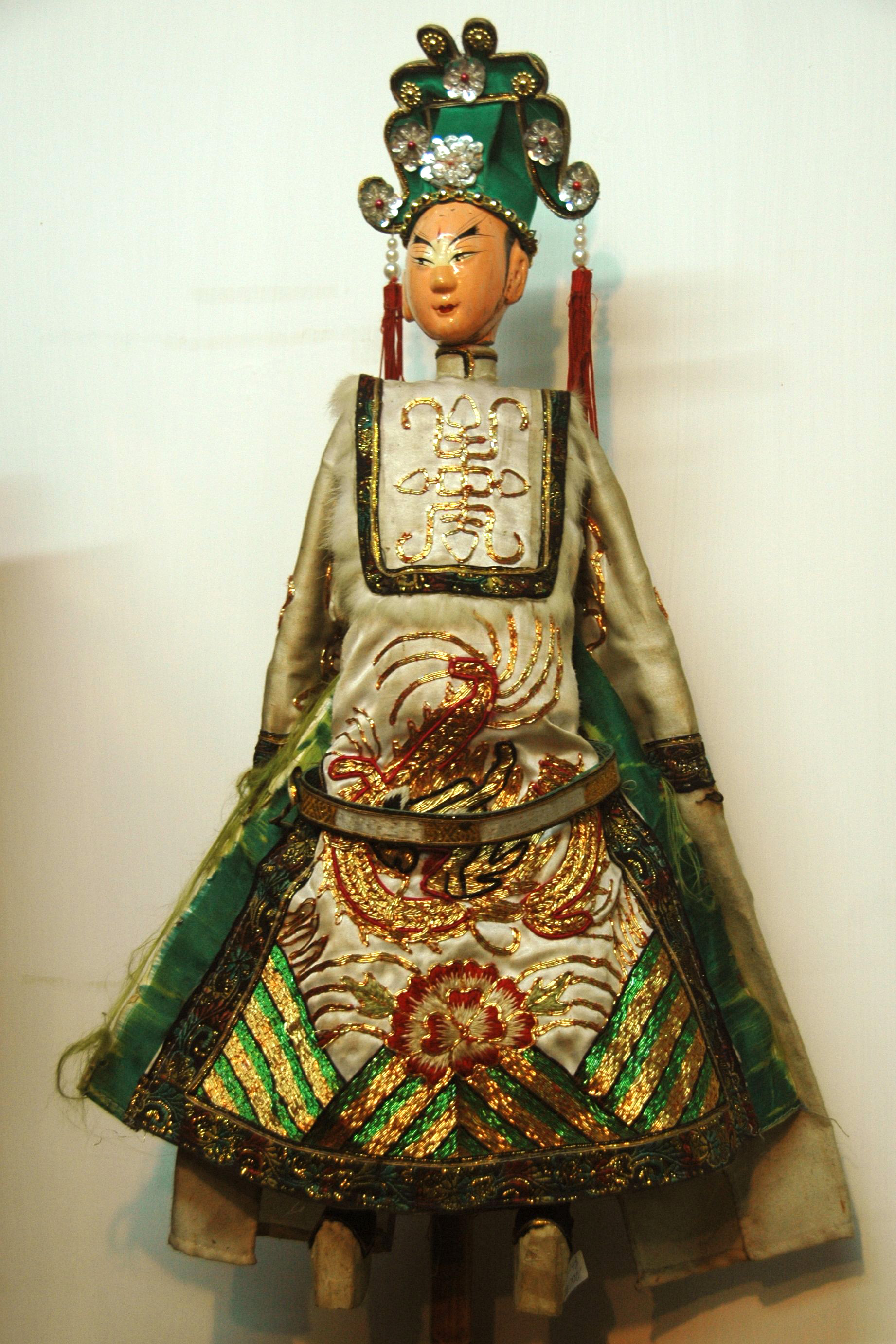
H500xW150mm, China (Chaozhou)

This is a Chaozhou wire puppet.  The head and the body are made by 3 separate specialist craftman, a pottery is charge of the clay head, an embroider is responsible for the costume and the puppet maker for the body, legs, hands and putting the puppet all together.  The body is made with a piece of local soft wood (Erythrina variegata) that has been treated by wetting and drying against cracking and snapping.  The clay head is painted over with the facial characteristic for the different character of the puppet show and these also go for the costume.

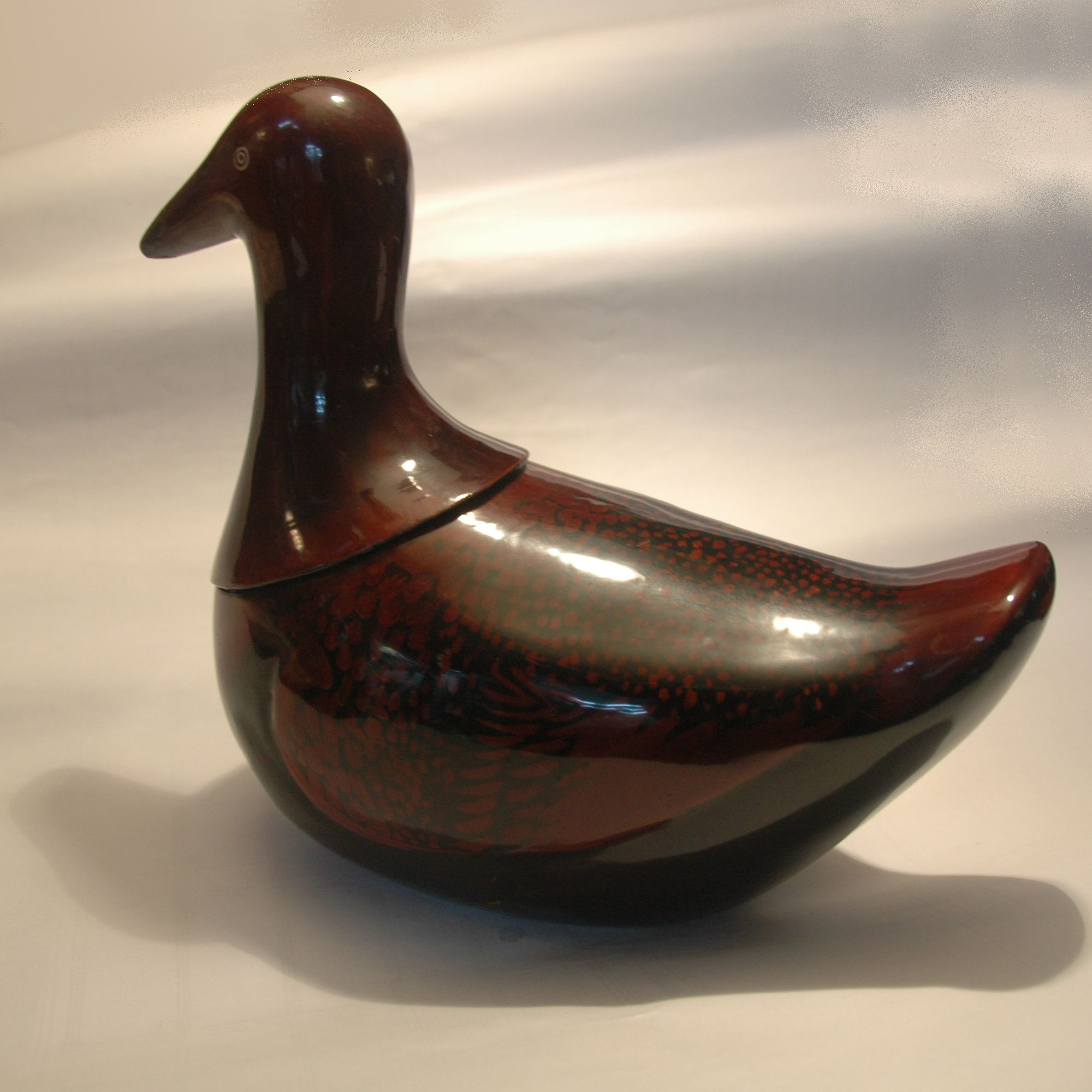
W130xL250xH200mm, China

This duck container is made with special technique known as Bodiless Lacquering.  Bodiless Lacquering is similar to the technique of paper mache; first a clay model is build, layers of ramie cloth are placed on the model with lacquer as the adhesive.  Once dried, the positive mould is released, the shell is then smoothed with putty and polished.  This technique was developed in the Qing Dynasty in the Fuzhou province creating lacquer ware that are light and durable.

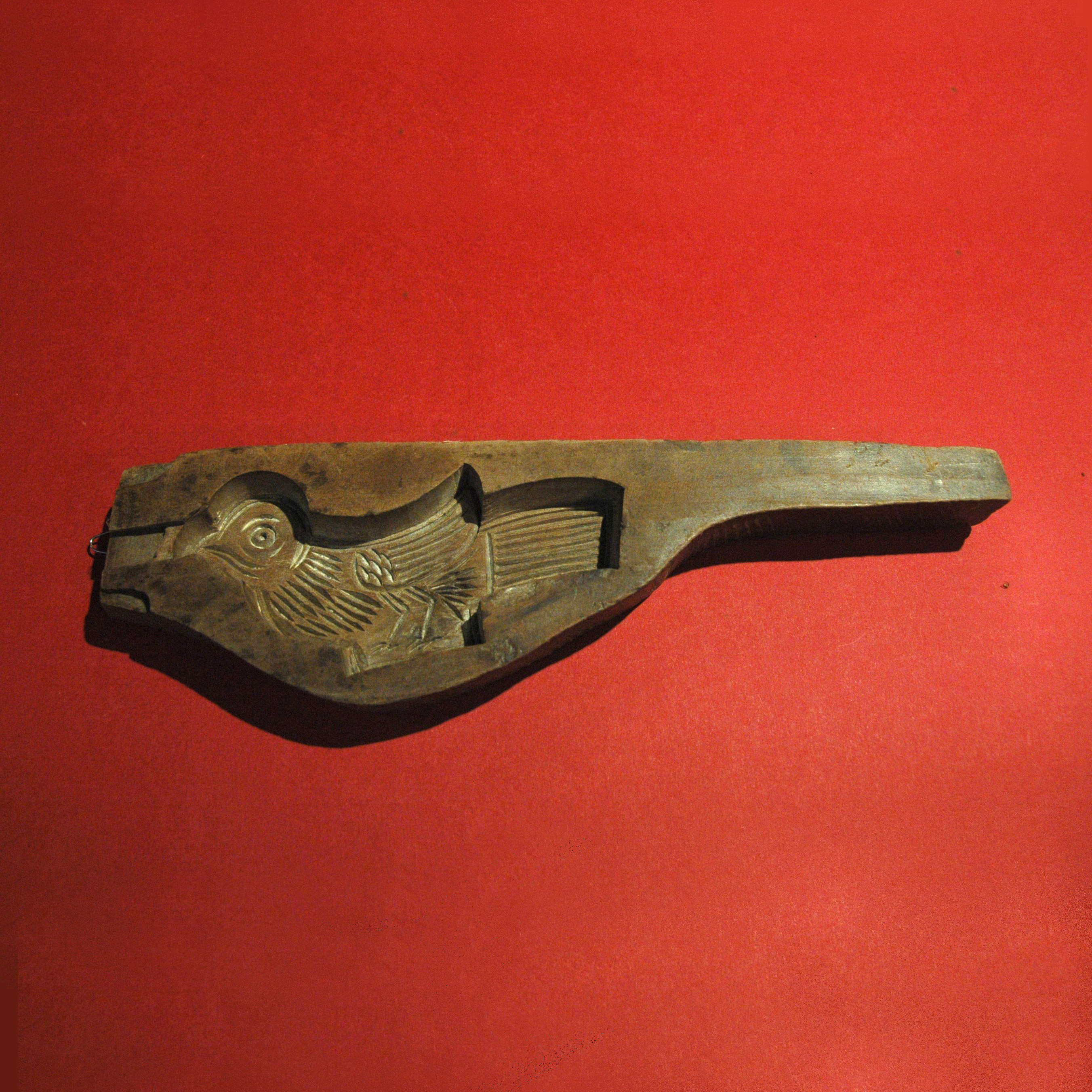
W80xL250mm, China

Traditionally a household would have a collection of different pattern cookie moulds; fish, cat, monkey, bird, bat, plants, etc.  These mould will be used for the several festivities each year with different recipes.  At the beak of the bird in this particular mould, one can see a carving adjoining to the edge of the mould, this air channel will make it easier when releasing the cookie from the mould.

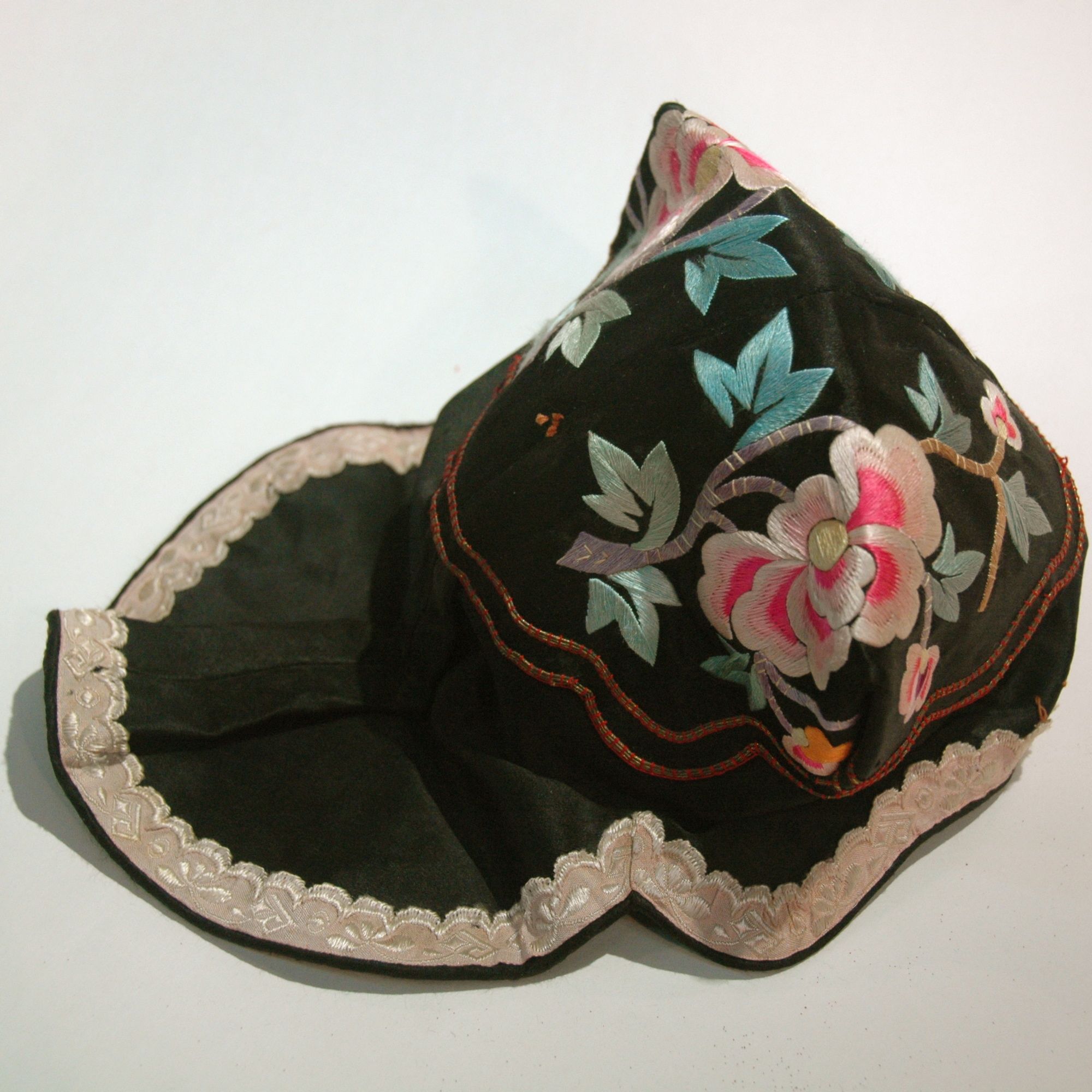
W180xL250mm, China

This is an embroidery hat for a child, flower pattern is embroiled on silk.  The embroidery would usually be made by girls in the family.  Please note that this is not a baseball style cap, the extension is not the bill but  a cloth that drap down the back of the neck.

W220xL300mm, China

Over Chinese New Year, wood block prints which express good fortune, blessing and protection would be posted in every household, shops, basically anywhere with a roof over (even at livestock are kept).  These prints are replaced on every New Year.  This print is of the Eye Goddess of the Taoist religion, she is one of the 15 mother goddesses, it is believed that her prayer would heal any problem of the eye.  The  Goddess print will be displayed in clinic of an eye specialist and at home of those that have sight problem.

H120xW120mm, China

This is a green glazed shade of an oil lamp, the shade act as a guard for fire prevention and fuel saving device.  Its other function is to keep the hungry mouse from consuming the precious oil.

Textile Width 400mm, China

A paper stencil is overlay on a piece of white cotton fabric, then a paste made up of lime and soya bean flour is applied with a blade over the stencil.  The cloth is then put into the indigo dye trough for 20 mins then hang for oxidation for 30 mins (this process is to be repeated for 6-8 times).  After drying the starch paste will be scraped off, under the paste will reveal the original white colour.  For dyeing with a white background, 2 stencils would be used, one for the small pattern and second one for the background itself.  This Chinese indigo fabric uses a handwoven cotton fabric with natural indigo dye.

Curtain with the same dyeing technique.