Apology for the misinformed blog yesterday. This box should be a name card holder, yes, the traditional name card are of this size. Traditionally, a few days before a visit, a box containing a name card (tie) with the purpose of the visit will be delivered to the person’s estate. If the tie is not rejected that the meeting will go ahead, otherwise the box with the tie will be returned to the sender.
The character on this wood block print is not a Chinese version of Avatar but the hero Guang Hui Wang who was attributed the title of the country’s protector. The name Guang Hui Wai is itself a title given to him by general Chen when his effigy was worshiped during Chen’s battle to pacified Ziang Ziu some 300 odd years later. Guang Hui Wang became an idol god in Ziang Ziu and the legacy spread to Taiwan and South East Asia through the immigration of the Ziang Ziu people. Now back to Guang Hui Wang, his real name is Xie An, he lived in East Jin dynasty (320-385 AD). Xie An was a great scholar as well as a politician and a military leader. Apart from winning numerous battles, reclaiming lost territories and resolving disputes between nobles within his country; he is much admired for speaking and acting with morality and justices, not taking sides in the court and lastly being able to step away from power after battles were won. Xie An was borned in a established family, he was well known for his intellect, charm and good looks (this being reconfirmed by his poem with the famous Wang Xi Zhi and his portraits) … who someone please explain why he has turned into Avatar in all the new year prints?
Here is a clip from the procession in Southern Taiwan for Guang Hui Wang and the Xie family.
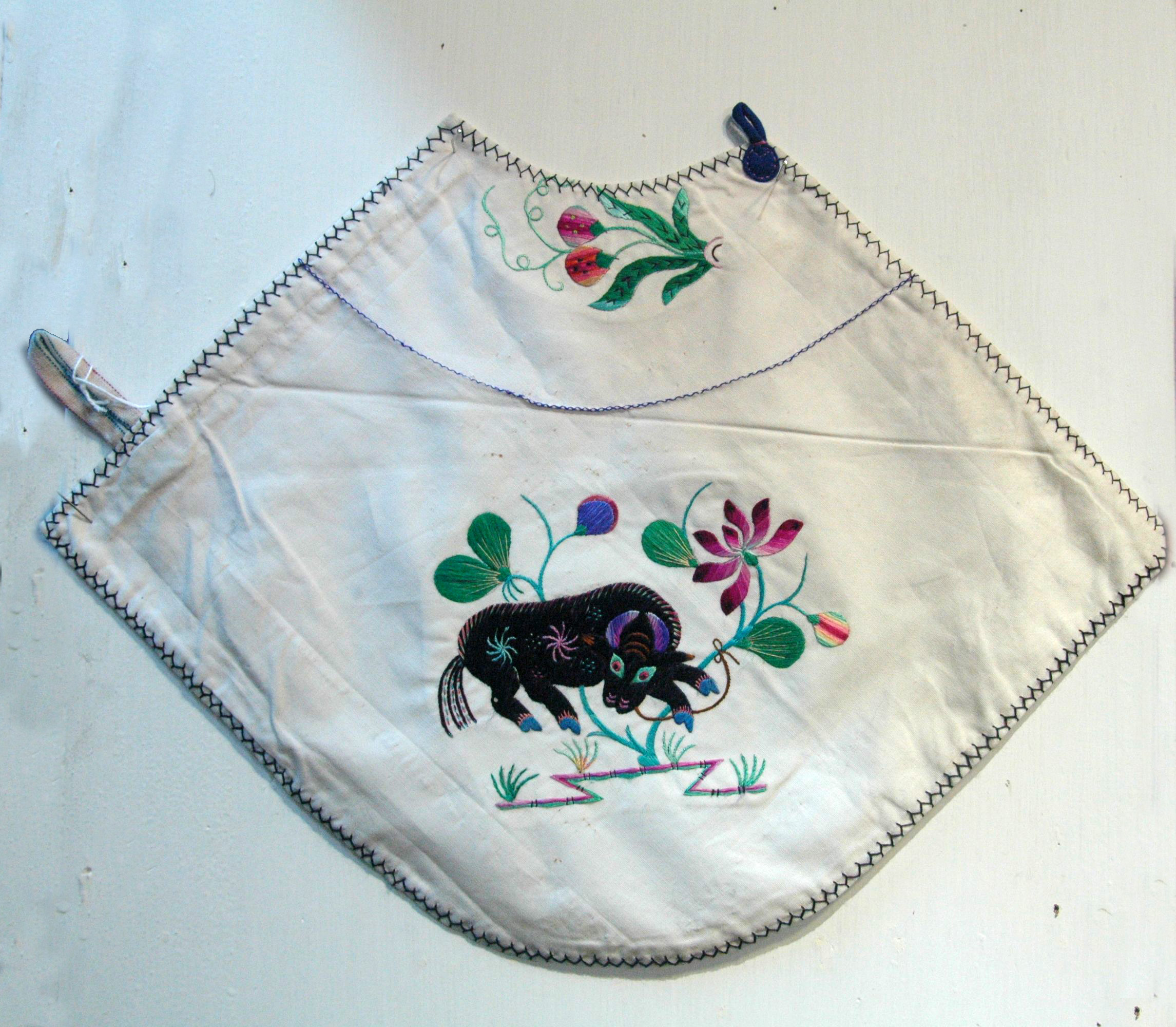
This embroidery is from a silk du dou, a more elaborated version than the one shown in the previous post – du dou. The du dou is the traditional undergarment for the Chinese; it was invented by Nu Wa and Fu Xi, the Chinese version of Adam and Eve and this is their version of the fig leave. The embroidery has a symbolic meaning of fertility; in the center is a baby with a long life locket, under him is is a pomegranate (a fruit of many seeds), over him is a bat (which has the same pronunciation as “blessing”)
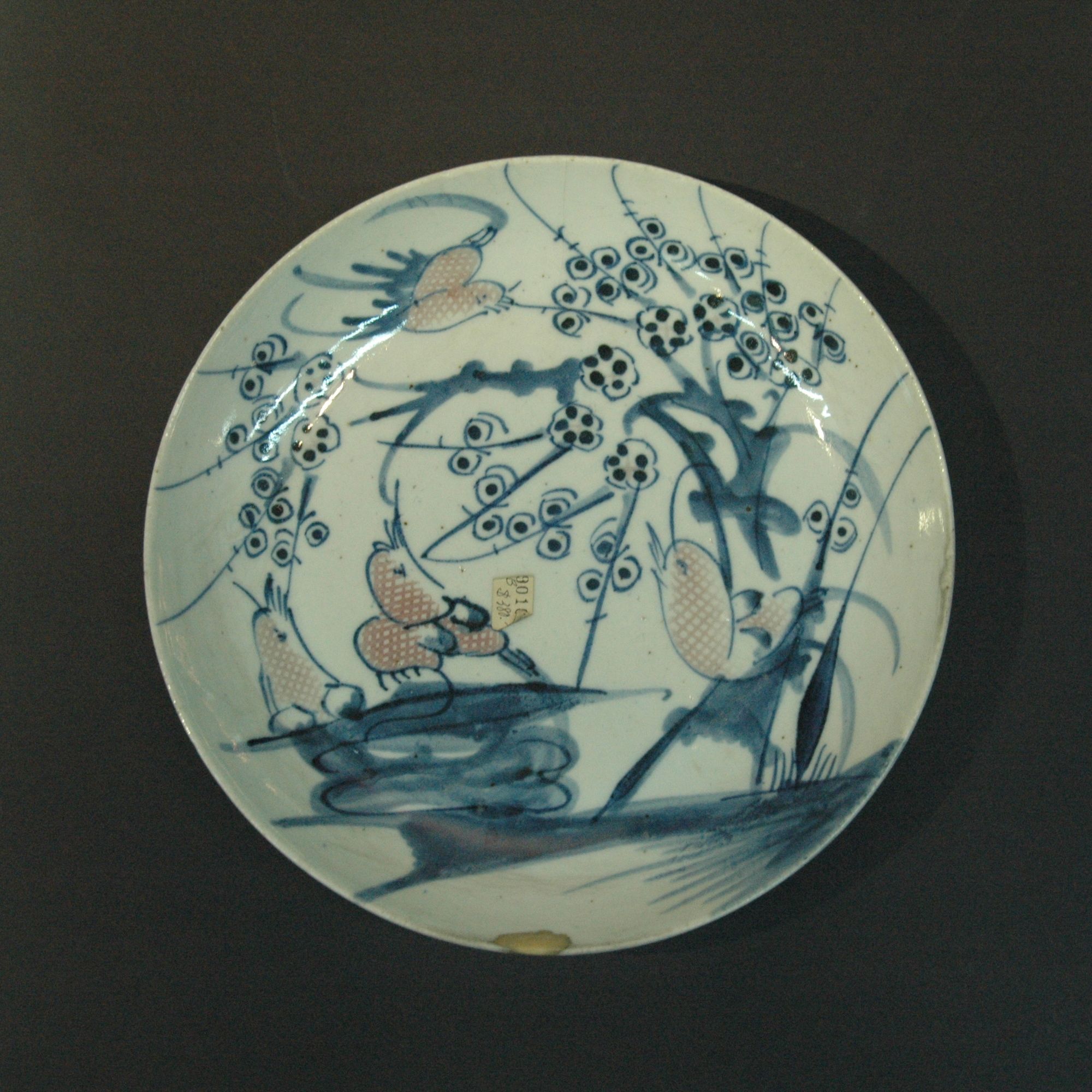
The composition of this plate of the bird and the plum blossom which gave the plate its name – plum & bird plate. The theme of bird and plum tree can be found on painting, pottery, jewellery, stationary, etc. The pair sometimes are fighting for the attention of spring and sometimes delivering good news, they are often seen together. Plum tree blossoms in the spring time, a start of a new year, both a sense of joy and happiness. The bird, pica pica, is a special bird, according to the Chinese “Book of Birds” (around 500B.C.), the pica pica is capable of telling the weather – “If it sings with its head upwards it will be sunny, if it cries with its head facing down it will rain, people will be happy just listening to it sing”. Looking at the plate, it seems weather will be good tomorrow, have a nice day everyone!
Though it is not a pica pica (magpie) and it didnt sing, nevertheless its a nice clip.
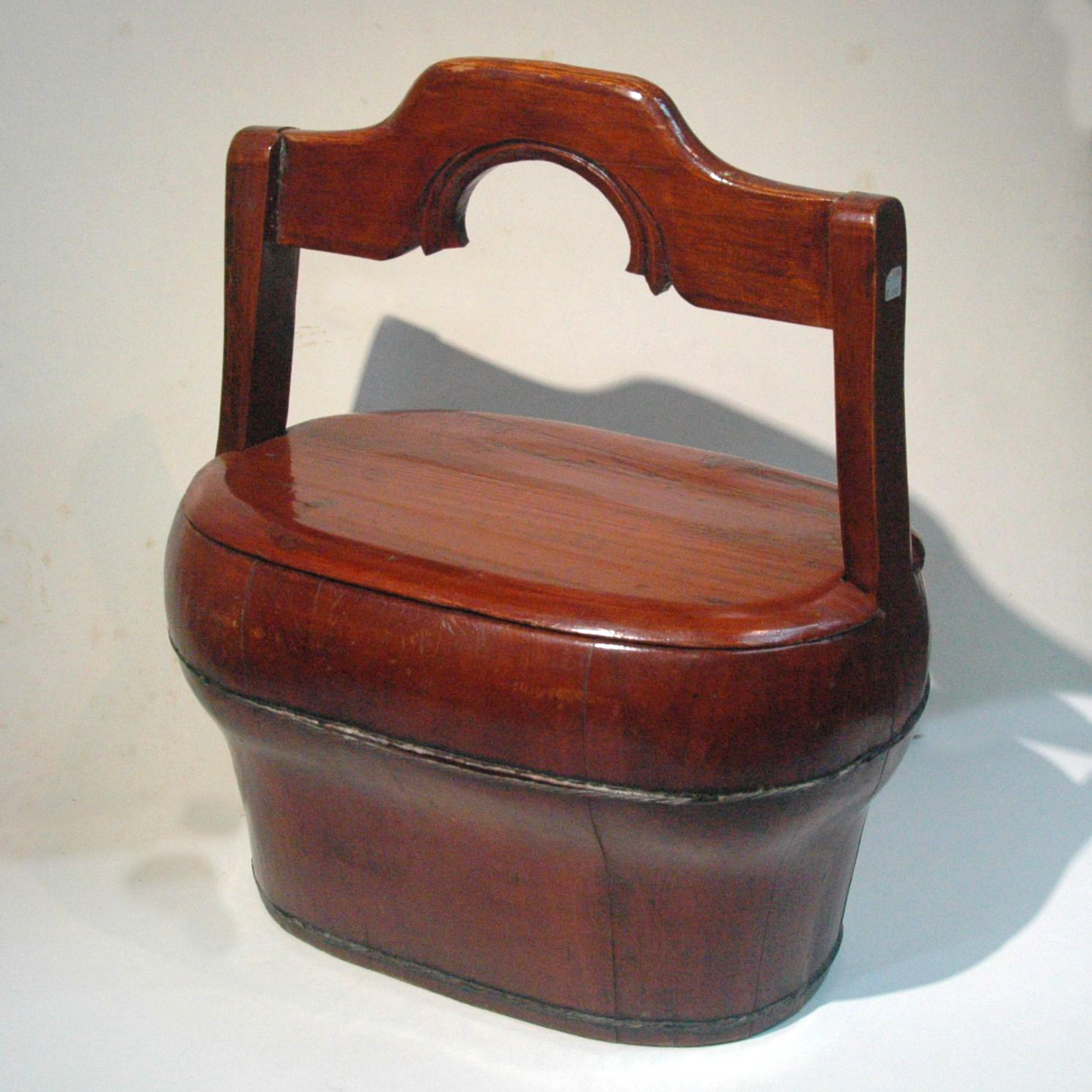
A wooden pail is an everyday item in a traditional Chinese household, it is included in every bride’s dowry (see the previous post – Lacquer Pail) and indeed there are many types. The one feature today is a plain version for storing food stuff such as sweet cakes, flours, grain or dried fruits. The container is constructed by several pieces of wood (like a barrel), its oval shape made the construction much harder.
This pendant is made from a piece of broken ceramic, from the shape of the piece it is likely to be of a medium size jar or a vase. The figure on the piece is part of the a war story, these figures or themes are known as Knife-Horse-People which is a popular theme in the Qing dynasty. See here for the clay version of Knife-Horse-People.
Though completely different, this ring seems like part of the portrait jewellery collection.
The Chinese started making wine some 5000 years ago and the container developed from bronze to lacquer, then to clay and porcelain. This blue and white porcelain is one that is used by regular folks, this kind of flagon are bold in form and in the pattern different from the usual blue and white porcelain ware.
The traditional Chinese unit for alcohol are measure in sheng, dou, dan.
1 dan = 10 dou
1 dou = 10 sheng
1 dou = app. 6000ml
This flagon holds about 2 dou.
If you can also hold 2 dou of Chinese wine, check our the Wine God wood block print!
Du Dou is the traditional Chinese undergarment to be worn on the upper part of the body. The top will be hang around the neck by a ribbon while the side is tied around the body by another ribbon. It is usually made by the female for their lovers, hubby, children or for their own use. The one used by the female are usually a simple red cloth without any embroidery, the one for the lover are more elaborated the theme for the embroidery will be some love story from opera, legends etc. The embroidery made for the children are that of blessing, zodiac signs, etc.
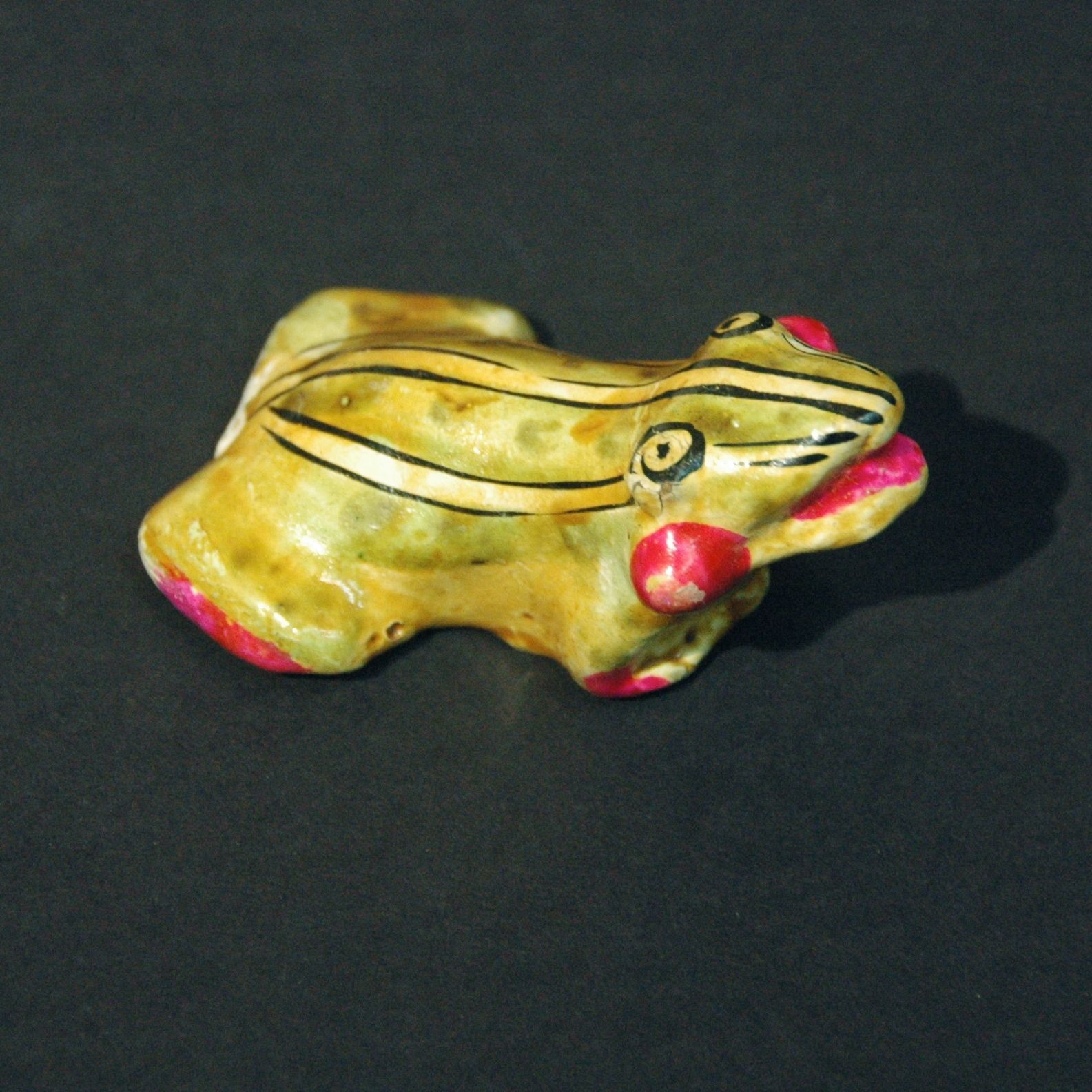
When I was a kid, the boys would go for a toad toy for it being ugly and frightening, something to scare the girls with. Today, with information from the internet, kids can tell that it is an amphibian of the order anura and probably the particular specie the toy resemble. In the old days, toad is believed to be one of the 5 poisonous creatures (snake, centipede, scorpion, lizard and toad) that could offer protection to the child. They can be found on embroidery, prints, toys, etc.
This neat container has 2 compartments for storing tea leaves. Pewter has traditionally been material used the tea leaves storage, it is an alloy which oxidized more slowly then metal like iron or bronze and less reactive to the tea leaves which organic. Tea leaves is known to absorb the smell in the environment, pewter being an odorless also has an advantage over other materials. Last of all, it is easily shaped to create an air tight container.






 Mountain Folkcraft