H150xW100xD80mm, China

This is a clay toy named Da A Fu; legend has it that once upon a time, the area of Hui Shan was inhabited by wild monsters.  The villagers were very afraid of them.  One day the the Sand Child god, named Da A Fu, was send from heaven to tame the  monsters. With magical powers, just a grin from Da A Fu, the monsters would become very gentle.  The villagers made clay figures of Da A Fu to commemorate him.  The figures are also used as a protector of devils.

W700xH550mm, China

This is a reverse glass painting; paint is applied onto a piece of glass which the image is to be viewed from the opposite side of the glass.  This art form was introduced from west to China in the Qing dynasty and likely by missionary Giuseppe Castiglione.  Being a Chinese court painter, he was a major influence in the oil painting history in China.

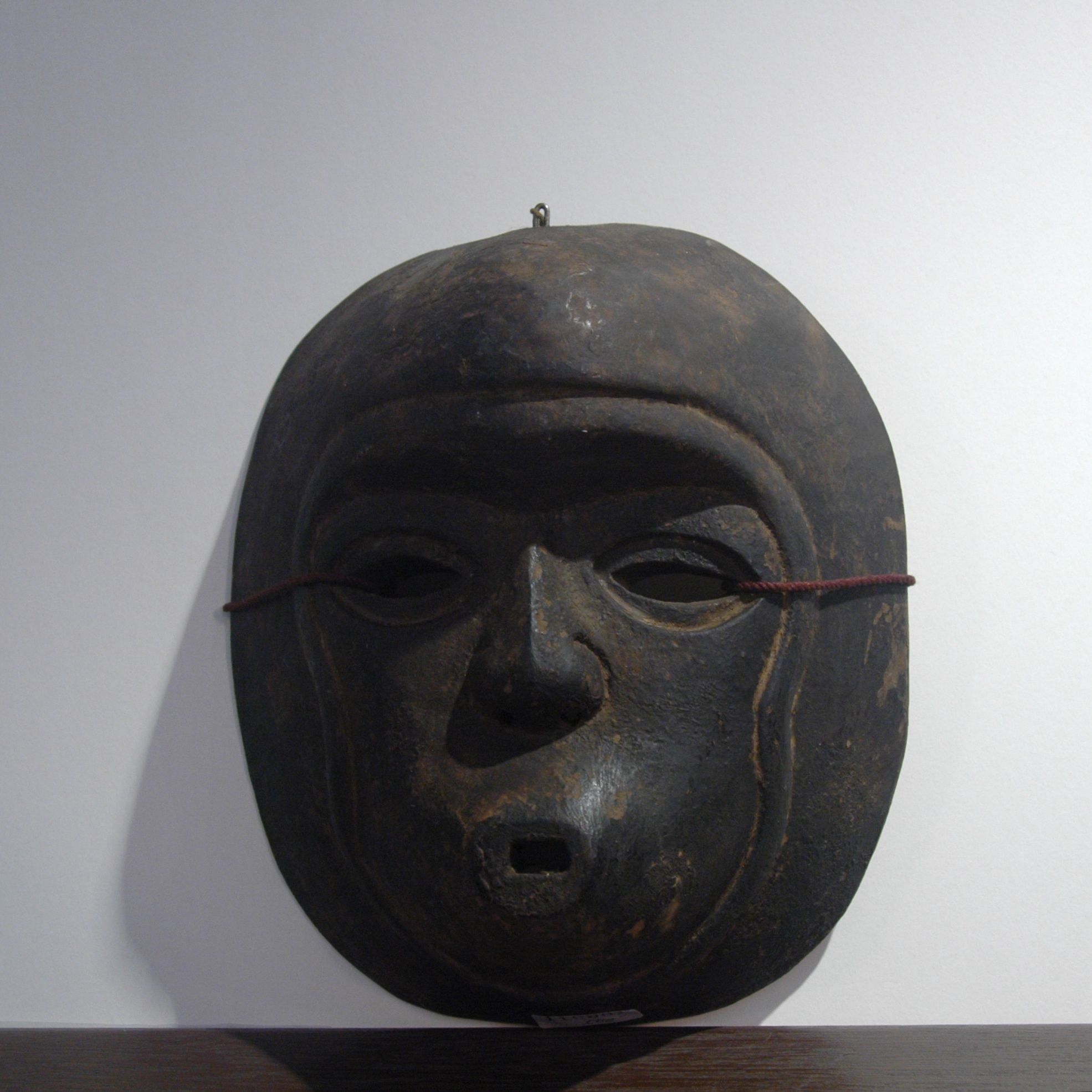
W200xH250mm, Indonesia

This is Java Topeng in the form of a monkey.  Actors would wear these masks to perform a traditional dance.  These performance usually take place at night and will last for several hours.

Dia250xH450, China

This is a birdcage both for raising a bird at home and for “walking” the bird.  The Chinese believed that even for home kept birds, they should be meeting with their birdy friends to share their songs.  In the south, this gathering would happen daily at the teahouse, usually in the morning over dim sum where the owners should chat with their friends and the birds theirs.

There are also the attachment to go with it; bird feed bowl,  bird feeding cage.

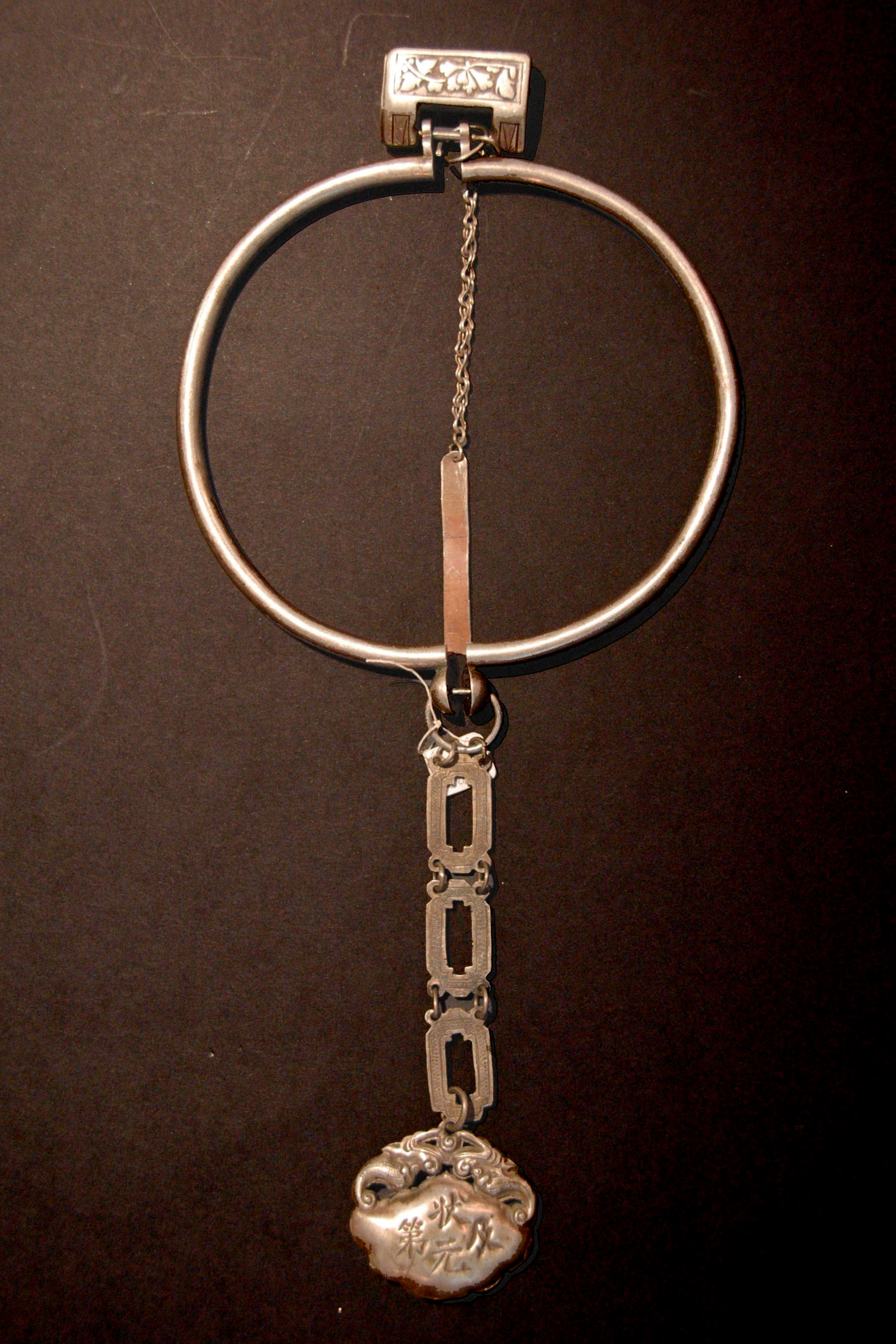
DIA150mm, China

This is silverware gift for the baby’s 100 days birthday, a bit like the silver spoon for the baby shower in the West.  The child mortality rate in old China is very high, it is be believed that the locket would lock the life of the child to the living world.   The pendent is an add on blessing for the child’s success in the future.  The child will keep the necklace on till adulthood.

H120xW90mm, China

Snuff bottle is very popular in Qing Dynasty China, tobacco was introduced to China in the 16th century  smoking however is banned.  The use of snuff (powdered tobacco) is believed to have medicinal effect and therefore allowed, it quickly spread amongst the upper class and became a social ritual.  The container became more refined in terms of craftsmanship and the use material showing off the status of its owner.  This bottle is a red  overlay on transparent glass ground carved to illustrate bats (blessing).

W250xH150xD150mm, Indonesia

This is a musical instrument known as the Okokan which is in fact a cow bell.  Originally the Balinese use the cow bell to keep track of their cows and buffalos in the field.  When the herd of cows move, the bell would sound like music playing.  This inspire the farmers to use it was an entertainment during harvest, it is also believe that the evil can be steered away as it does to the flies for the cows.  This Okokan is in the shape of a head with the tongue being the clapper.

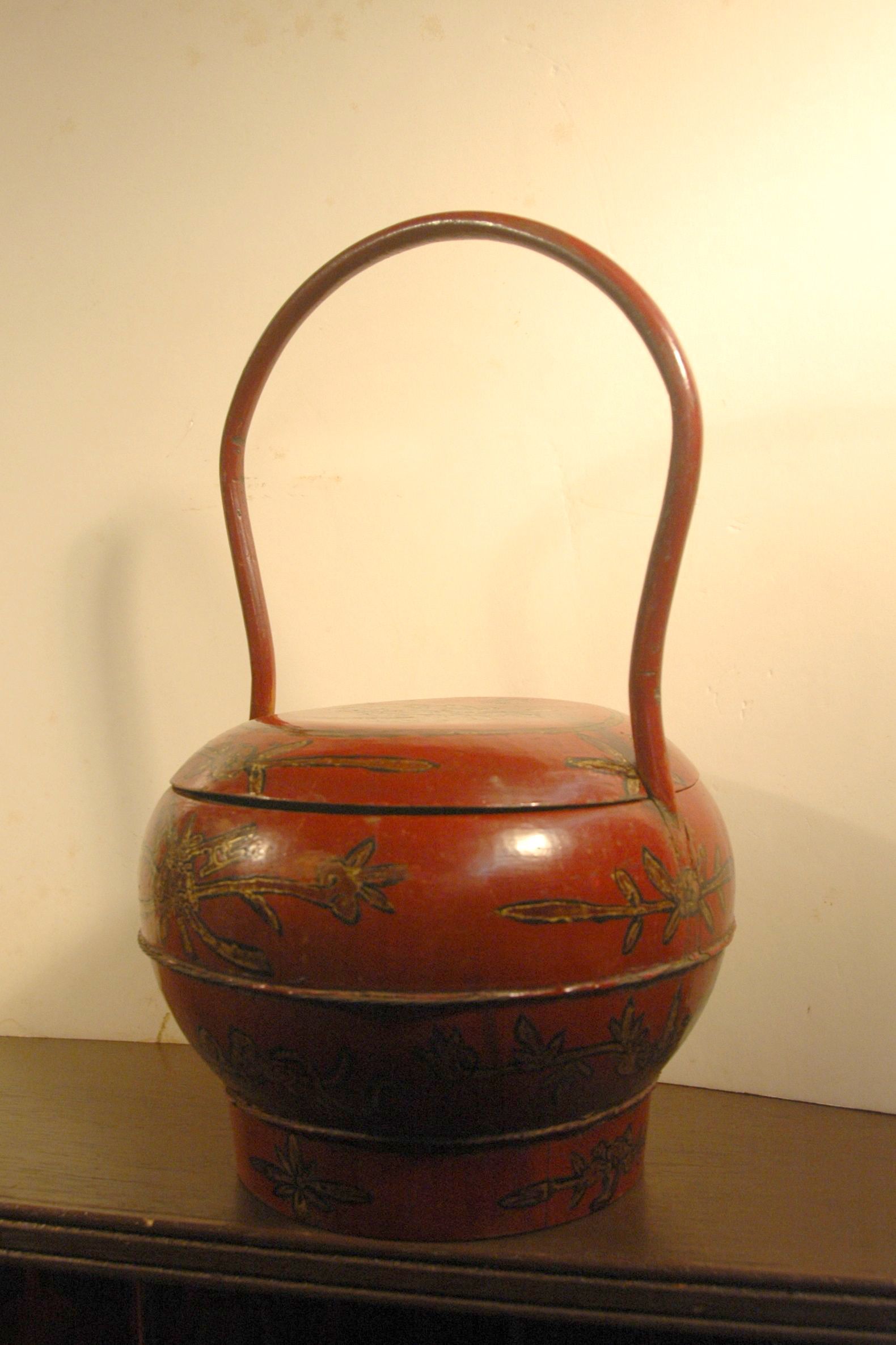
W220xH360mm, China

This is a rice container for the southern part of China. In a traditional Chinese family very often the clan would be living within one house / estate, all meals would be eaten together, rice would be cooked in a wok  in a kitchen far away, the cooked rice would be transported and served in a lacquered pail.  This pail is has a gold painted decoration over the lacquered.

Side tracking; the Chinese would insult a stupid person as a “rice barrel”,  someone who is “a gold painted lacquered rice barrel” would transfer to someone who is well package but in fact an idiot (the precise word has escape me, please help to suggest the word).  This is very nice item, I hope the story wont stop you from taking it home.  :)

W120xL150mm, China

Paper cutout are used as decoration, it is still very popular in rural china.  It is mainly practice by the girls in the village where the technique is often used as a basis to determine the skill of the bride.  The paper cutout artists, however, are mostly male dominated.   It can be made with scissors (often with a symmetrical pattern with folded papers) or with small chisel knifes.   This cat and kitten cutout is presented on a greeting card.

W150xH150xD100mm, China

Chinese root carving is a broad term for carving that includes root, bark, knots and bamboo roots.  The essence of these type of carving focuses on the natural growth of the material as well as abnormal growth.  Hence, the major part of the artwork is translation from nature and with a small enhancement in detail.  This type of carving is really material based, the knot, the grain, colours, etc.  This particular one is a bamboo root carving of a helmet and a surrendered monster.