This glove puppet head is of the character Gong Guang, belonging to the Jing (painted face) category, a supporting actor in today’s term but always representing a figure who is upright, loyal, strong and fearless of high power, it is denoted by the word Guang and the red face (gong). He would play the character of a courageous warrior such as JianWei of the 3 Kingdom.
The puppet is carved out from a single piece of wood and with hand painted features.
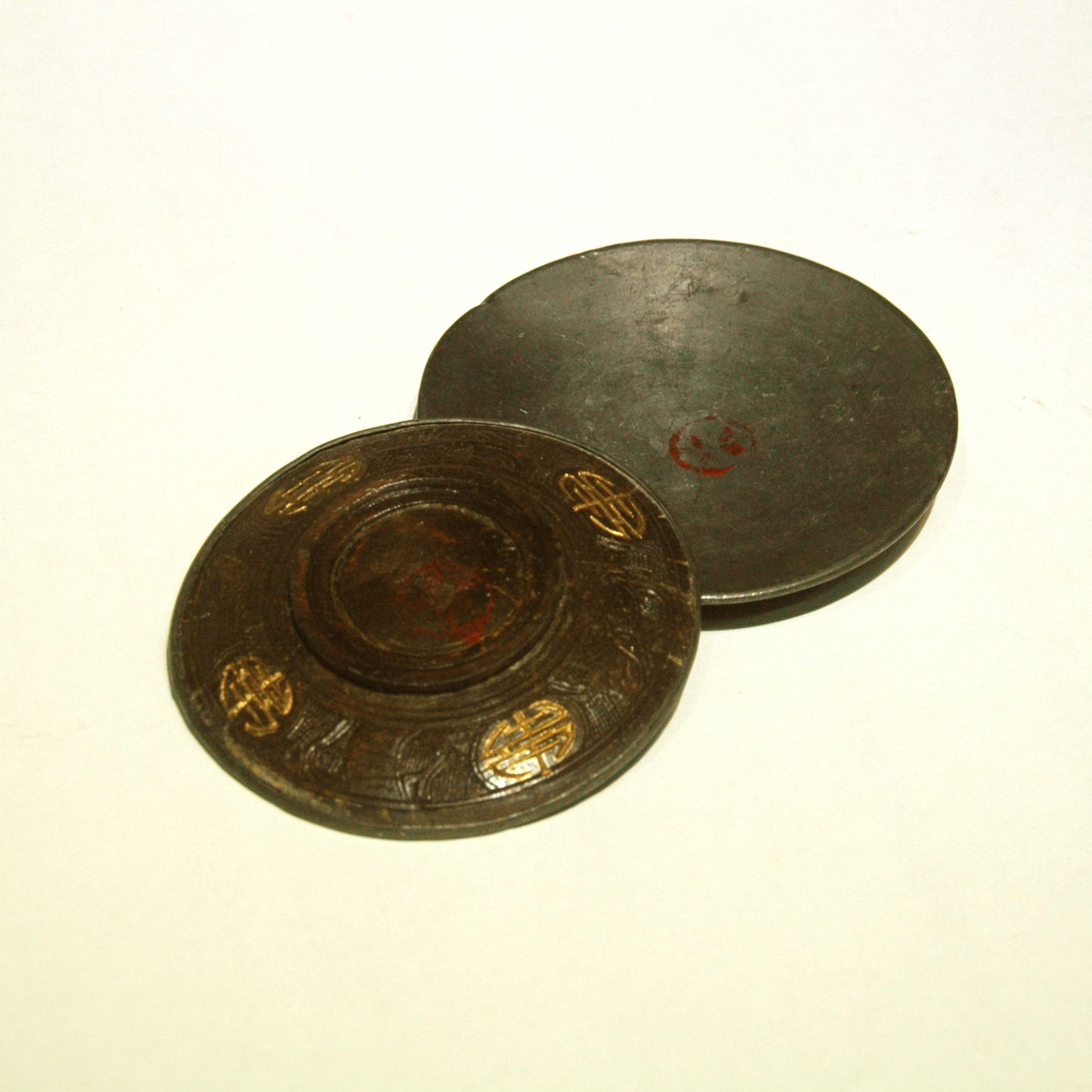
This is a pair of lids made with coconut shell and inlay with pewter, they would have been matched with a coconut shell cups but unfortunately the cups are not absent. Coconut as a material for tea ware has been used since the Ming dynasty, mainly as an exotic gift to the imperial court from the Hai Nam area. See also our previous post of the Coconut Teapot.
Comparing to the wooden box shown in the previous box, though both of the boxes are round, this is a more economical and sustainable way of achieving around wooden container. Unlike the previous post where the box is lathes out from a solid piece of wood, this box smartly uses the idea of wooden bending and of course a circular cylinder is always the strongest form (apart from a sphere).
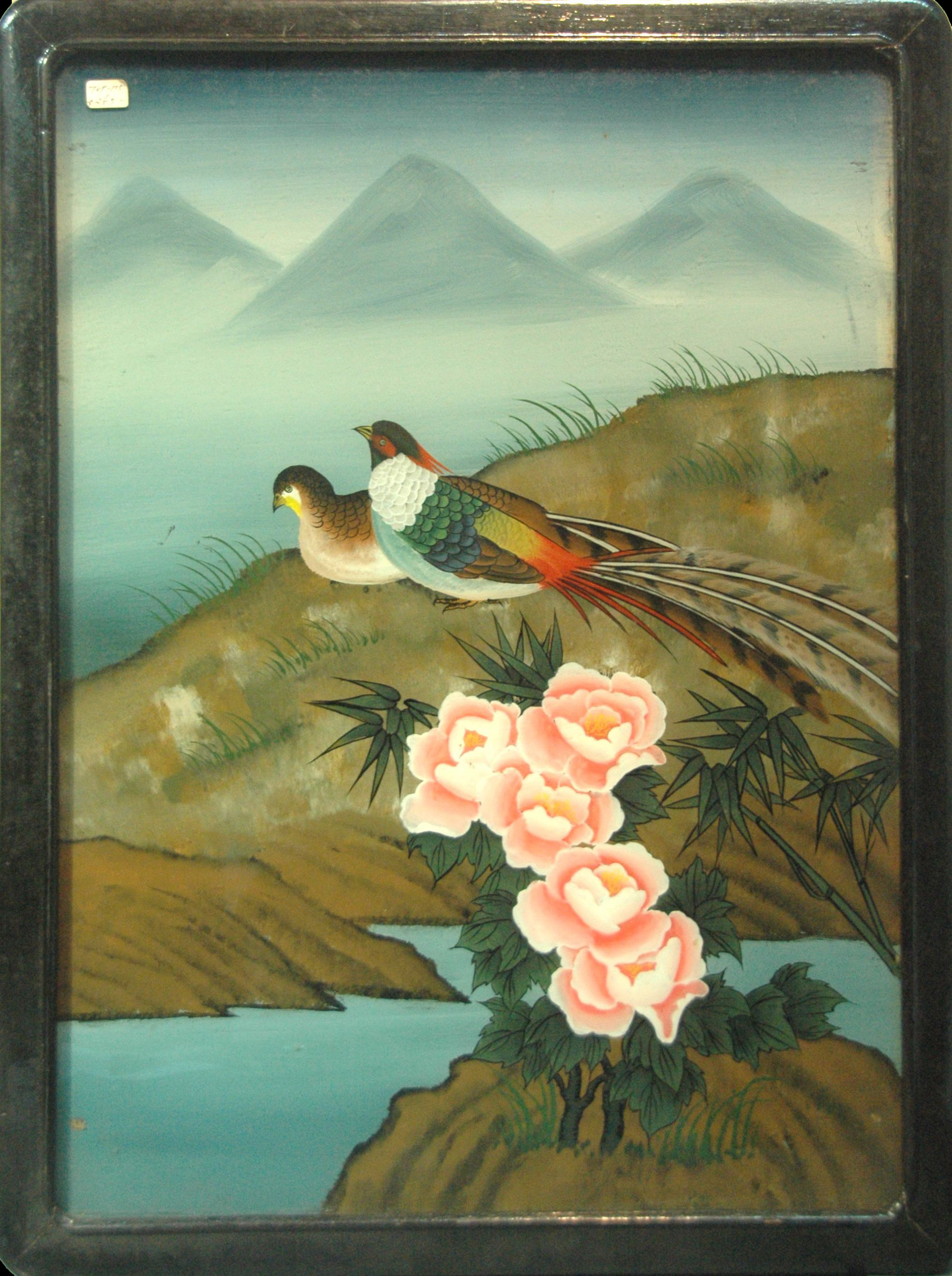
This is a glass painting of a pair of Lady Amherst’s pheasant (Chrysolophus amherstiae) which are native to south western China and north eastern part of Myanmar. For the Chinese, the Lady Amherst’s pheasant is a noble bird. At the time of monarchy the Empress, being the highest ranking second only to the Emperor, would have phoenix as a pattern. For the first ranking official, their costume would have a red crown crane, while the second ranking official the Lady Amherst’s pheasant. The third ranking, the green peafowl and the fifth the silver pheasant, the eighth being the quail.
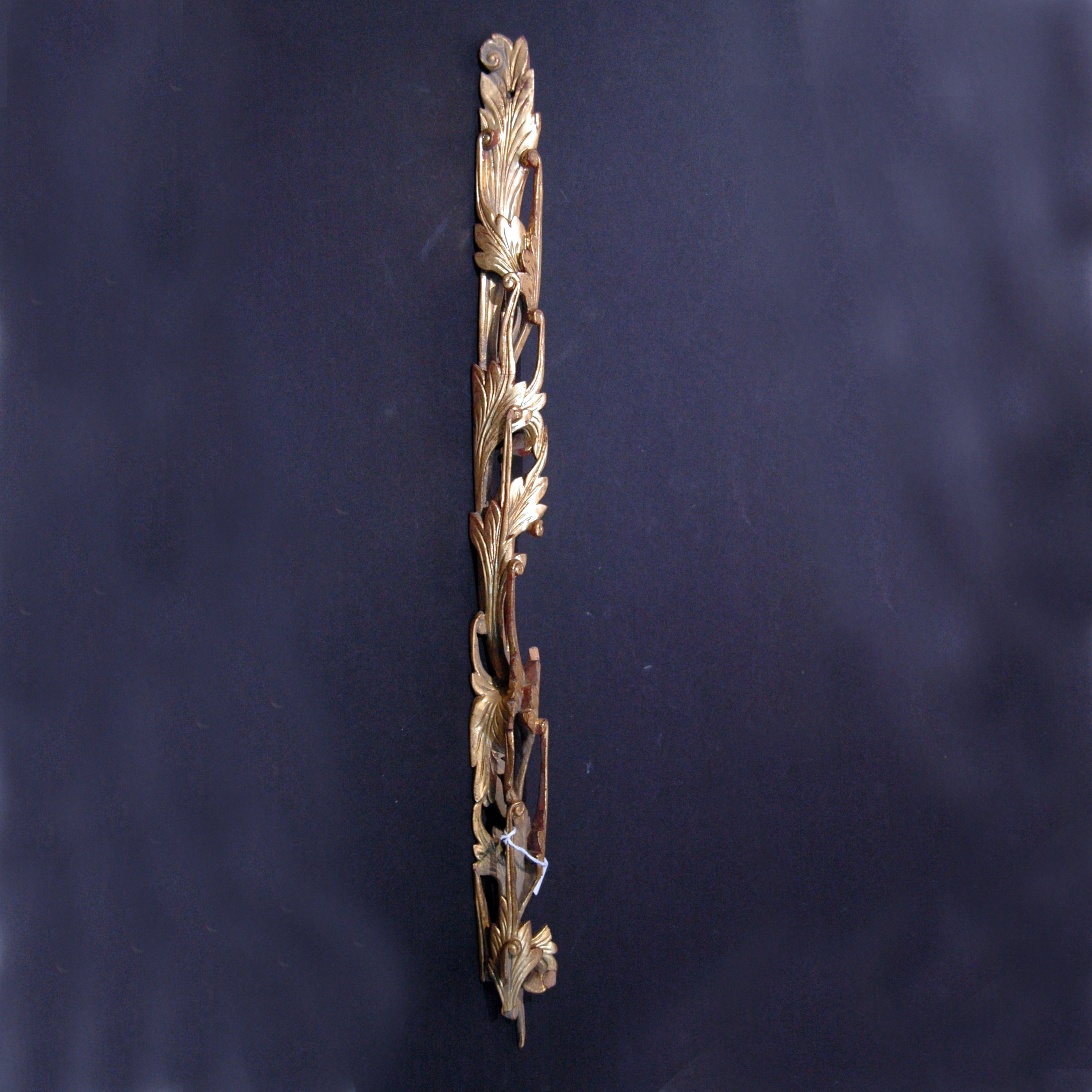
This engraving of the plant reminded me the pattern of the arts and crafts movement. Most probably also for the love of nature, the wall climber pattern was one of the first pattern to be used for the Chao Zhou golden wooden carving. Apart from wood carving it is also a popular pattern for pottery and more abstractly on costume.
This lotus leave was the lid for a container which unfortunately is not with us anymore. I think it will make a great presentation for lotus leave rice if you have a bowl of similar size or best of all make a pottery one. This will be my new pottery project, will keep you updated on this. Meanwhile, you can start practicing on making my favorite lotus leave rice first.
wash the lotus leaf thoroughly then put it in boiling water till soft, rinse with cold water and pad dry.
make a thin omelet with the egg, let cool and cut into thin slices.
heat the wok with a little hot till smoke raises, add in and stir fried the diced prawn followed by the diced roast duck, char siu, mushroom and finally the rice and the seasoning.
brush the lotus leave with oil, spoon in the fried rice and fold up the lotus leave like a gift.
put it in a bowl and steam for half and hour.
put the lotus leaf parcel in a nice container and enjoy!
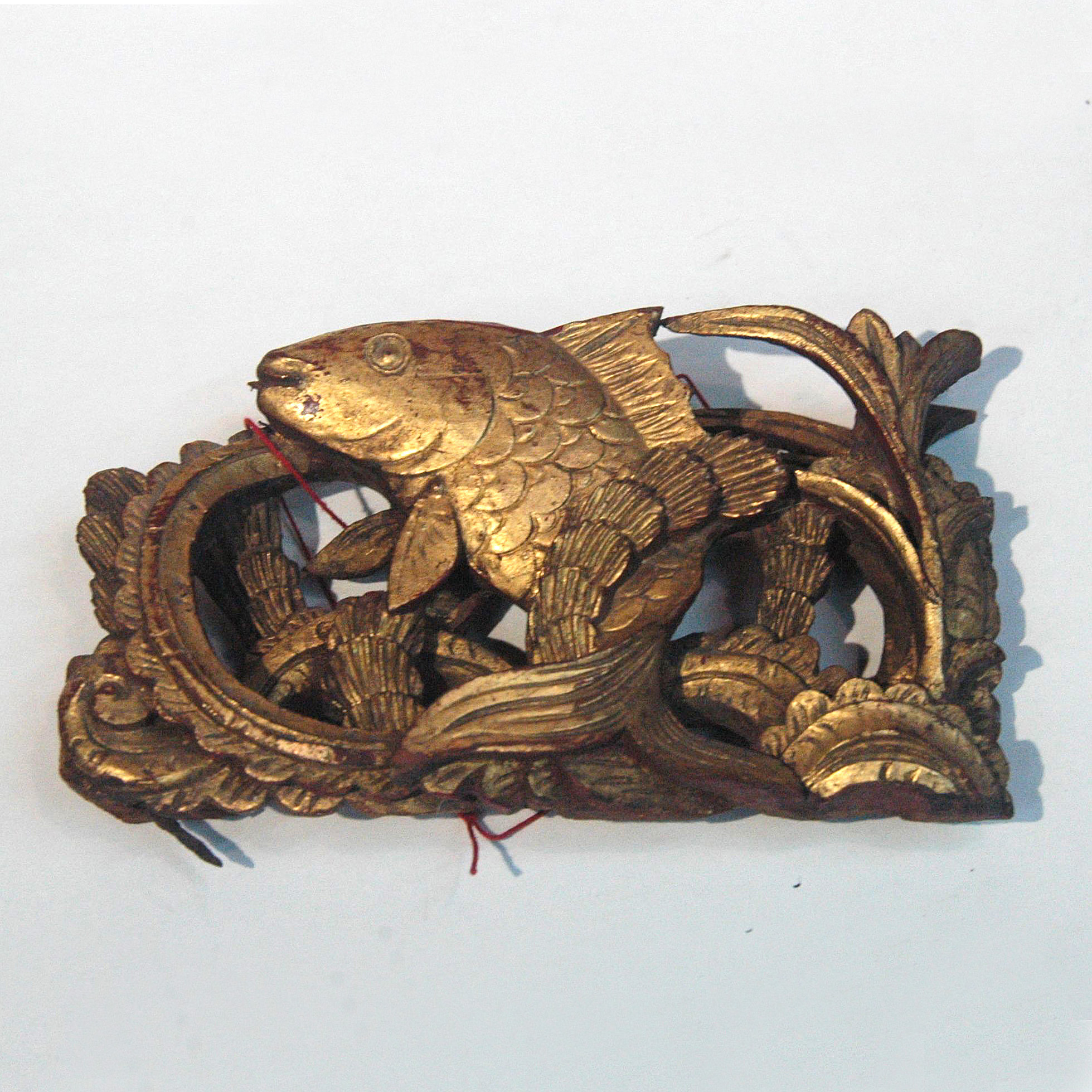
The carp fish is a blessing symbol for the Chinese, there are many legends regarding the carp fish and here is one of them:
Once upon a time there is an orphan named Ji Qing, without a family he made his living as a boat tracker on the Chuan Jiang River. Life was hard but he lived his days joyfully, being a good swimmer he is able to retrieve any objects his passenger accidentally dropped into the ocean. Diving deep into the water he had a special bond with the carp fish, even if he is hungry he will not harm them, his friend made fun of him and called him silly Qing. One day when he was tidying up the tow string, he saw a beautiful golden carp but at the same time a water snake was about to make it his dinner. Ji Qing threw the string on the water snake and saved the golden carp, he took the injured carp to his hut and nursed it for days. One evening exhausted from a day’s water he rushed home to see the carp but it was no where to be found. Oddly on the table was 4 gold bars and there carved the words, “I have jumped to the sky and swam to the reef but failed to be a dragon (it is believe that if a carp can jump over the mountain it will turn into a dragon), here I am to give wealth to Ji Qing.
Apology for the misinformed blog yesterday. This box should be a name card holder, yes, the traditional name card are of this size. Traditionally, a few days before a visit, a box containing a name card (tie) with the purpose of the visit will be delivered to the person’s estate. If the tie is not rejected that the meeting will go ahead, otherwise the box with the tie will be returned to the sender.
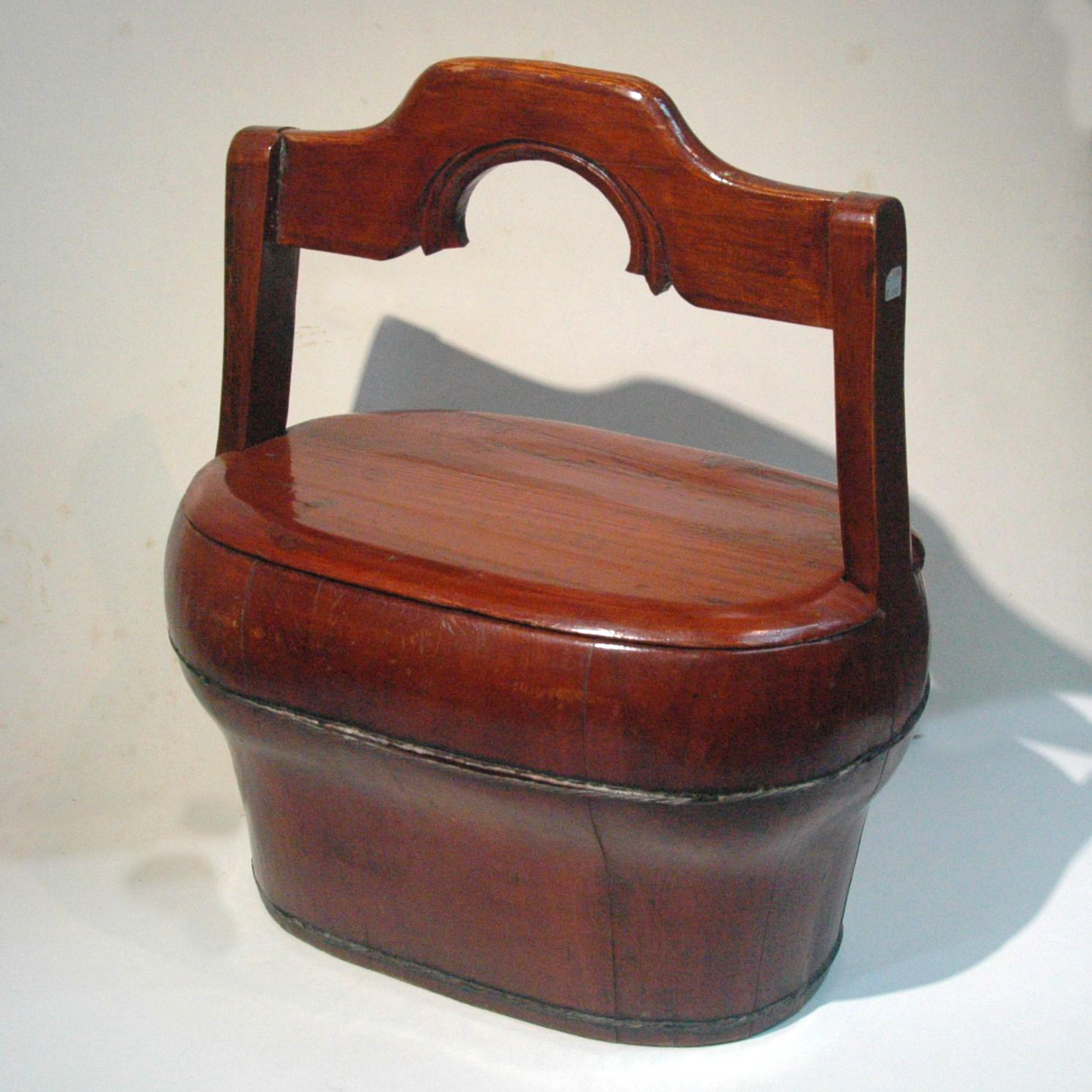
A wooden pail is an everyday item in a traditional Chinese household, it is included in every bride’s dowry (see the previous post – Lacquer Pail) and indeed there are many types. The one feature today is a plain version for storing food stuff such as sweet cakes, flours, grain or dried fruits. The container is constructed by several pieces of wood (like a barrel), its oval shape made the construction much harder.
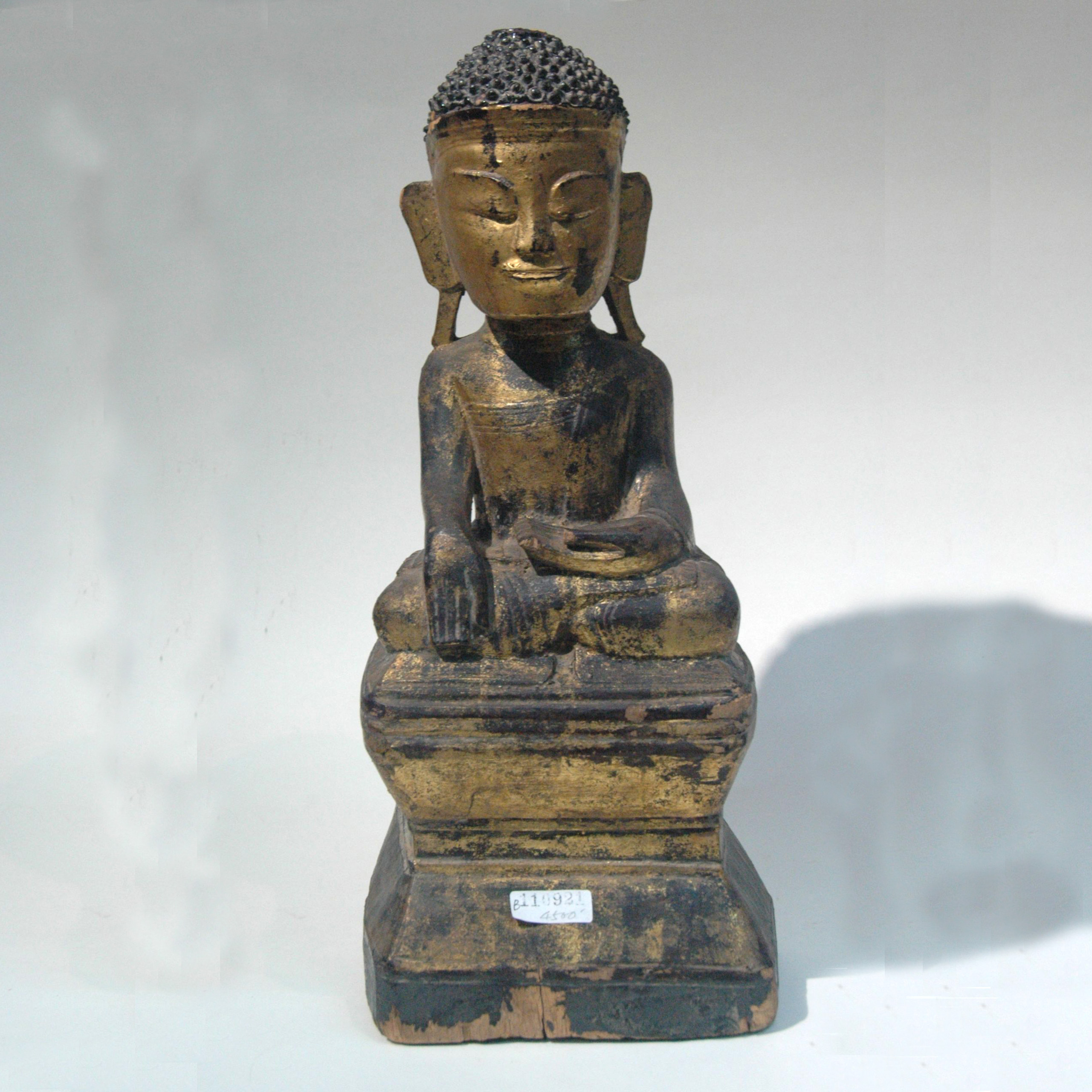
This is a Buddha statue in the Bhumisparsha Mudra posture, with his right hand resting on knee while reaching toward the earth and the left hand lies on the lap facing upward. This gesture is also known as the “earth witness” which is the most iconic image of Buddhism. This gesture symbolizes unshakability and steadfastness; the legend goes just before Siddhartha Gautama was enlightened to become the Buddha, demon Mara called upon his armies of monster to attacking, hoping to scare him away from his meditation under the bodhi tree. Siddhartha stayed unshaken and continued his mediation. The demon claimed the enlightenment for himself and called for his monsters to give witness to his superior spiritual achievements, Mara then asked Siddhartha if anyone could give witness for him. Siddhartha simply extended his hand to reach the ground and the earth responded and giving witness for him. Mara was defeated at his own challenge and vanished. The next day Siddhartha Gautama enlightened to become the Buddha himself.






 Mountain Folkcraft