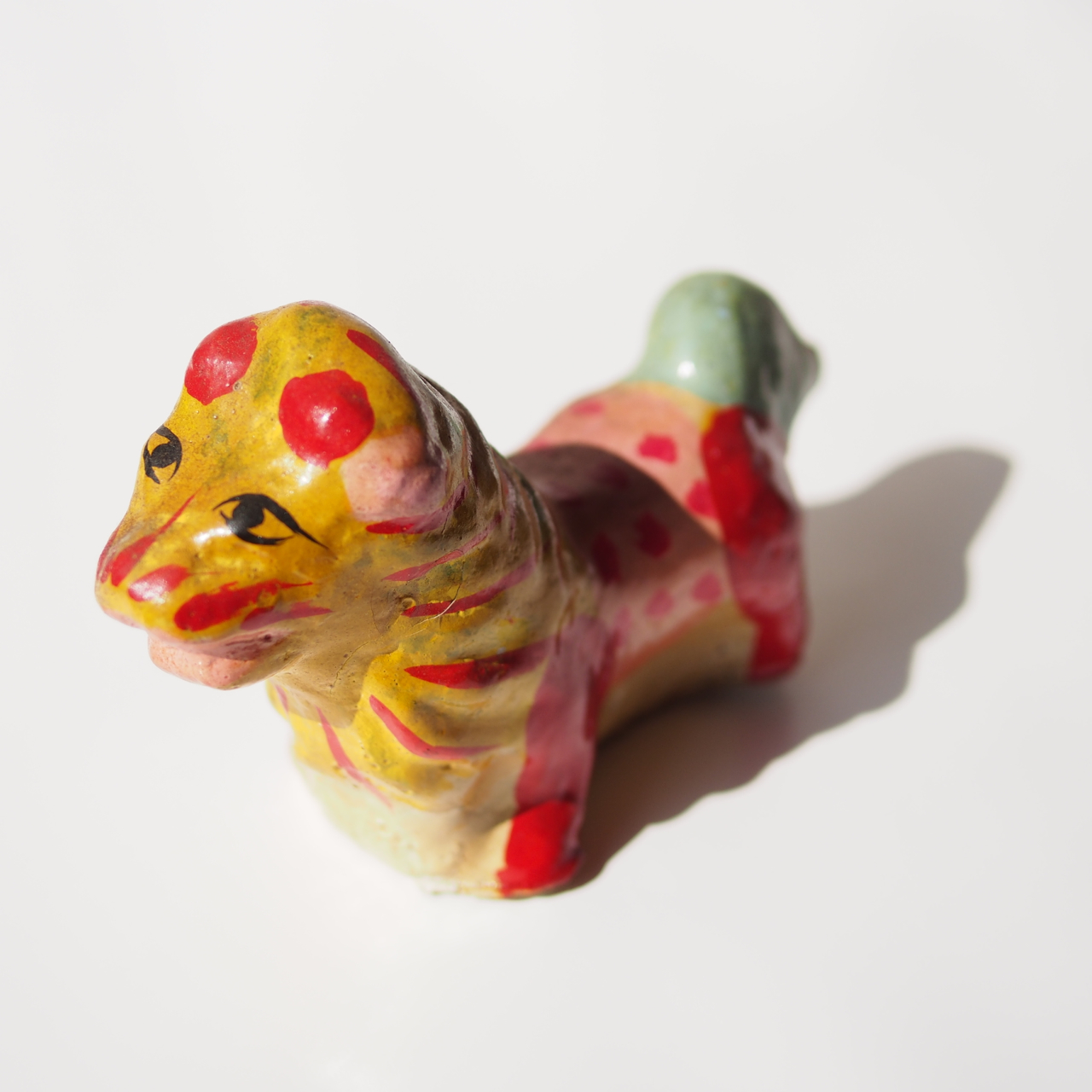
 L190xW70xH120mm, China
May we wish you a joyful X’mas!
Click here to see our other toys.
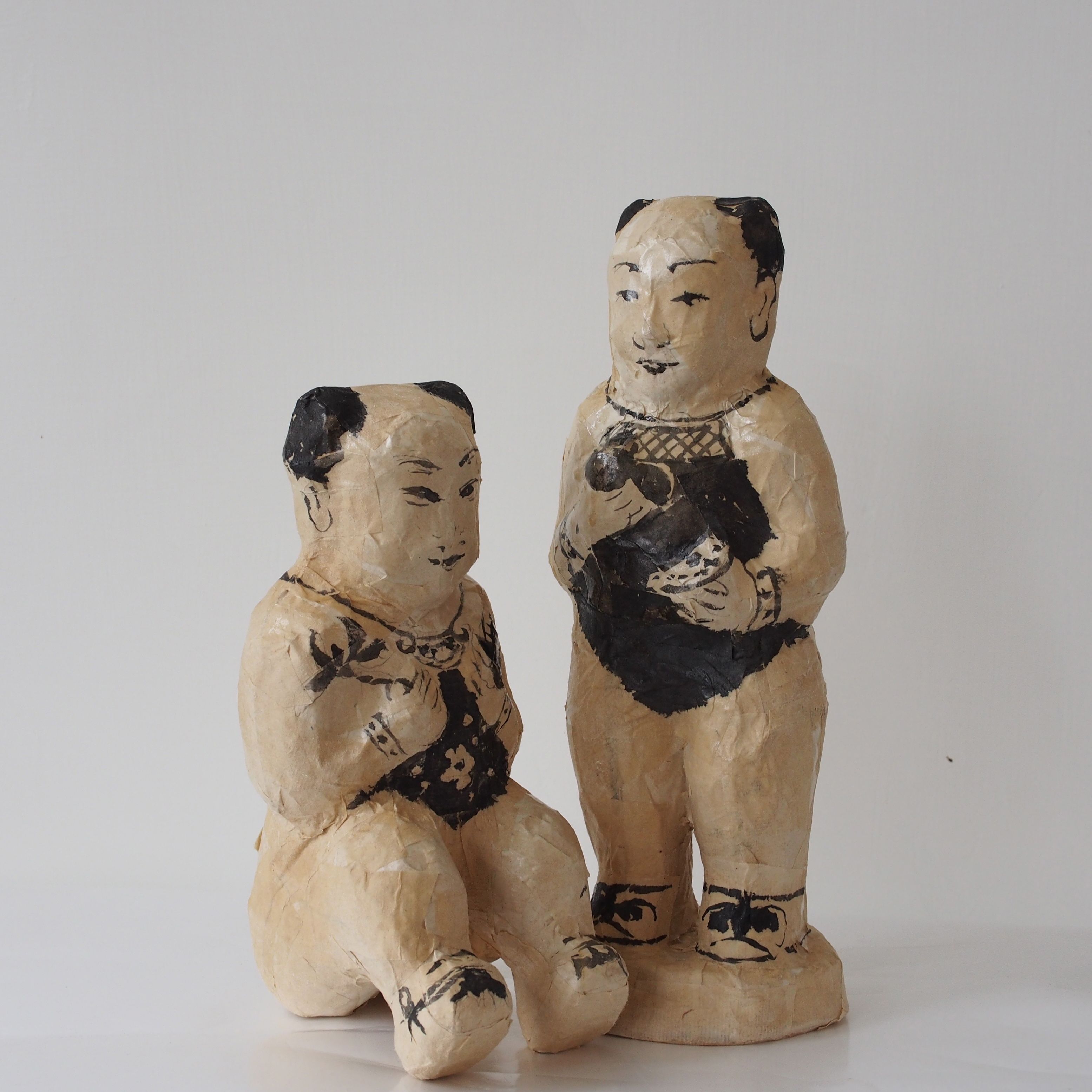
sitting W110xD140xH220mm, Hong Kong
Cute pairs of paper mache dolls inspired by the Ci Zhou kiln dolls.
They are the first in the series, stay tune for their transformation!
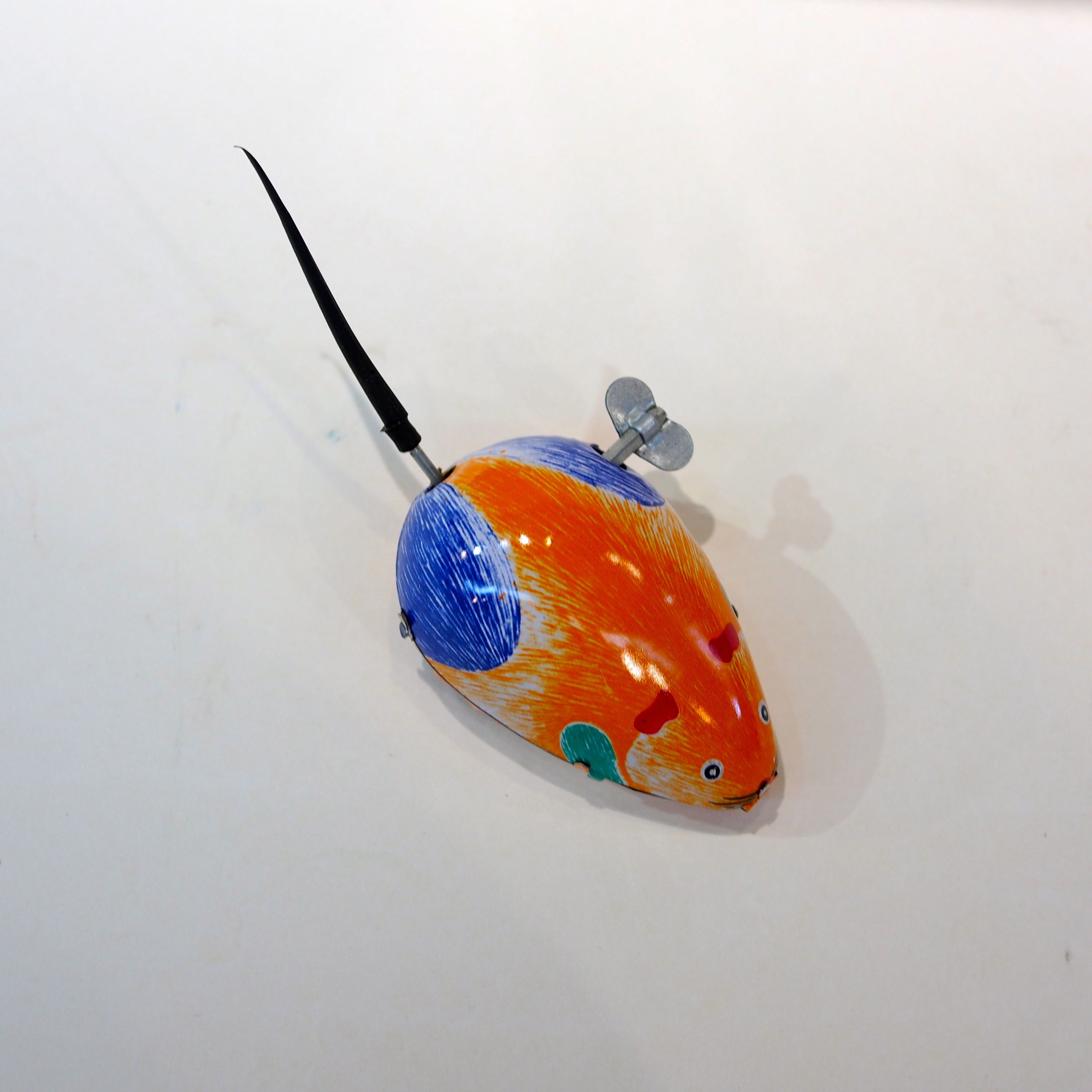
W50xL130xH40mm, China
An orange mouse that has probably had a feast of carrots.
To see our other tin toys, click here.

W150xD50xH110, China
A roly-poly monkey toy.
The story goes like this; in the Sung dyansty, there was an additional of a baby boy to a wealthy household. Precious and spoiled, he cried every night till dawn. Worried that something was wrong, the family consulted all the well known doctors in town but cries continued. One day, the father came home with a clay toy shaped with a rounded bottom and a small top. The child pushes, it wobbles and bounces back, it amuses the child and the crying stopped. The father believed that it was a blessing from god and had the figure of Guan Yin painted onto it, hoping it will protect his family from toppling. Unfortunately, one day the child broke the clay toy in half, a bad omen the father thought but the clay cannot be put together again. Cleverly, he used the broken toy as a mold and created a paper mache version and it became a popular folk toy in China.

W 130D50xH130mm, China
Clay figurines are a popular toy for adults and childern allover China and could be dated back to over 5000 years. In the area of Xu Zhou, clay figurines of dogs, pigs, rooster, duck and even houses were found in Neolithic sites. The tradition continues and was the most established in the Ming and Qing dynasty more subject matter were covered. The more natural non coloured version were favored by intellectuals while the mono white and black version are amulet figures. This figurine being decorated with colour is toy tiger.
Click here to see our other tiger clay toy.
 W100xL120xH140mm, China
As the clay toys of Nie Jia Zhuang was selected as the Chinese Intangible Cultural Heritage, it also signified that it is a dyeing art which is in need of protection. The making of clay toys in the area dated back to the Ming dynasty, folk song was sung about these colour clay toys. Up to the 80s, they were ever so popular, every kid would own one.
This roaring tiger, has a leather waist which forms as a bellow to the squeak inside the front half of the body.
 W60xL140xH90mm, Japan
Though tiger is not native to Japan, its worship has started before the first tiger was imported from Korea some 400 years ago. The figure was generated from painting, tales and imagination, it is believe that the tiger is a symbol of strength and health. This is a paper mache tiger with a noddy head.
Here is a collection of the paper mache tiger wood block print by Shirayanagi Eiichi (http://www7b.biglobe.ne.jp/~kokakuro/essay/110619shiroyanagi/toratoratora.htm to see the complete description)


W90xL200xH230mm, Myanmar
Burmese paper mache is usually made by applying layers of thin, tough, paper and rice paste to a clay model of an elephant. After drying for a day or two, the object is then given a coat of white paint. The body is painted with brightly coloured enamel paints.
These paper maches are not only toys. A donor may commission objects in different shapes for presentation to a pagoda or monastery on special occasions. They are usually made by craftsmen or their families in the vicinity of the pagodas.
This animal paper mache collection from SOIL is avaible at Mountain Folkcraft during the ASIAN FOLKCRAFT event.
 W110xL100xH60mm, China
The WWII Avenger Airplane? What do you think?

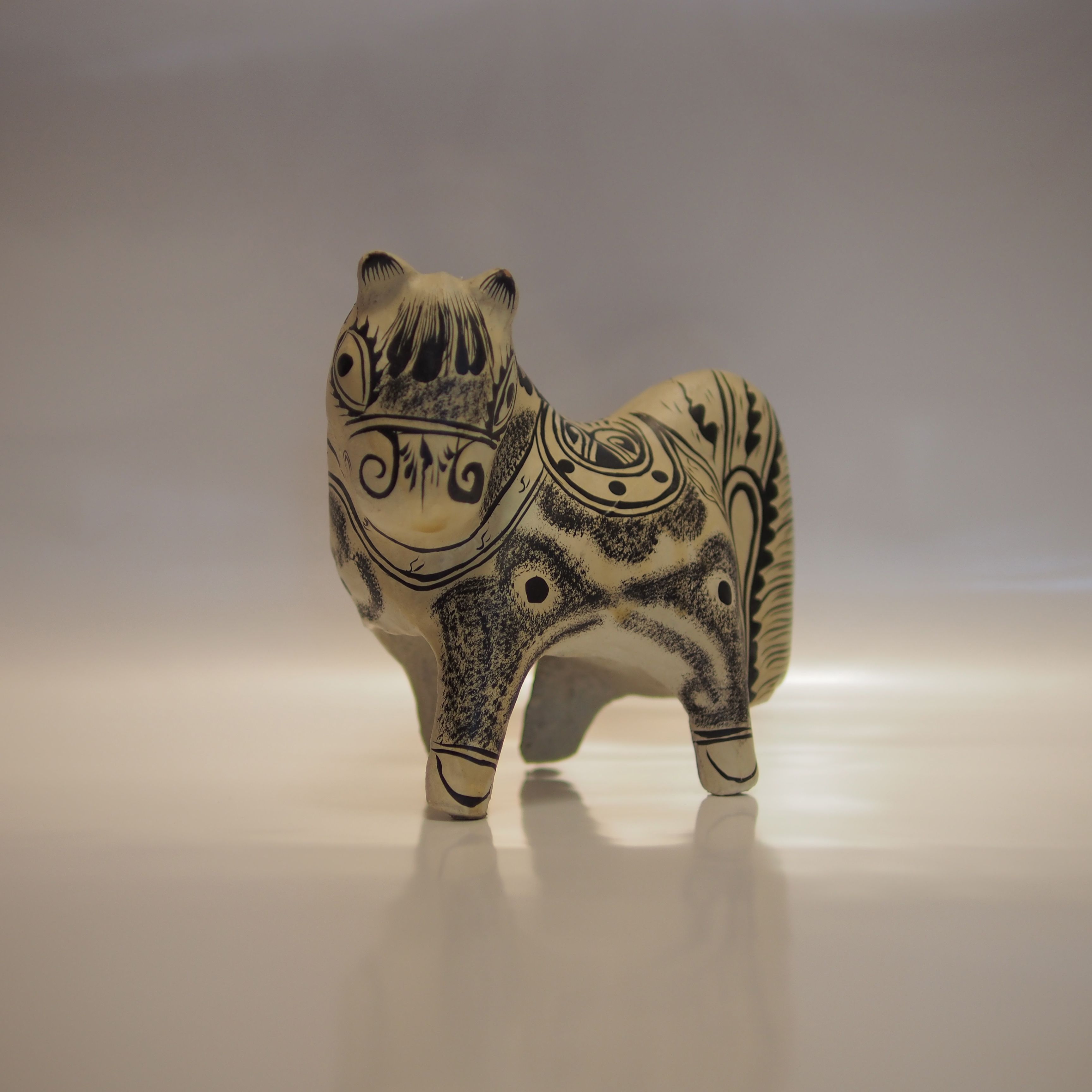
H150xL150xW100, China
This sweet little clay horse is by the Hu Xin Min, an artisan who successfully injected new spirits into the traditional craft.
The Feng Xiang province has a long and famous for making clay figurines, they are dramatic and bold in patterns, a blessing present for the Chinese New Year, festivals. The history of Feng Xiang goes back to the Tang dynasty, the first emperor Zhu Yuan Zhang had the 6th division of his army based in the area. During peaceful time, these soldiers from the south made clay figurines as a pass time. Later on, the soldiers settled in the village and named it the 6th division village and the tradition of craft of clay toys started.
 Mountain Folkcraft