Archives for category: stationary

OLYMPUS DIGITAL CAMERA

L170xW120xH20mm, China

The plum blossom has been an object of admiration by the scholars of China.  Along with the orchid, chrysanthemum and bamboo, the 4 gentlemen plants have been a constant subject for artistic creation from poem, verses to painting and carvings.  Each of the 4 are given an individual personality; the plum blossom – noble arrogance, orchid – eternal elegance, chrysanthemum – cool glamour, bamboo – humble but dignify.

The inkstone being a treasured item of a traditional scholar is a place to be decorated.

Now, nothing to do with noble arrogance but isnt he the sweetest … with the plum blossoms on his head.

W140xH140mm, Hong Kong

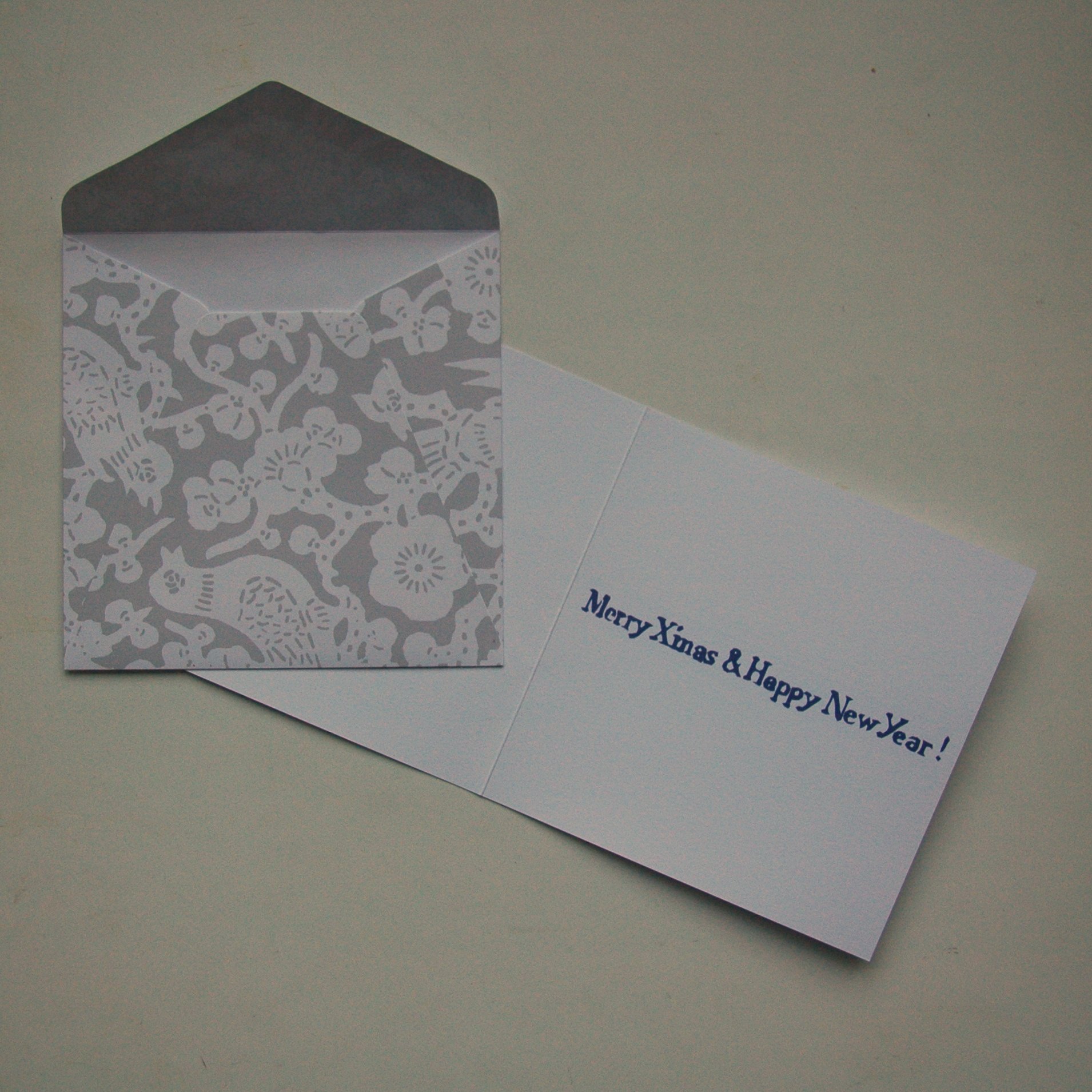
Its about time to write your X’mas cards, check out our newly designed cards!

DIA50xH70mm, China

This is small vase is a stationary, a water drip for diluting the ink.  The 2 other water drips featured in our previous posts ,which both has a mouth piece, those are known as “shui zhu”, one like this is known as a “shui cheng”.  Water drip is one of the essential stationary besides the fundamental 4; paper, brush, ink and inkstone.  Its small size and its basic utilitarian function enable the craftsman to be more expressive on the material, form and decorations.   The water drip is an articulated item for the scholar, an item kept at the desk which would reflect the owner’s passion.  I tried hard to think of an equivalent object for today’s scholar and failed, at best an old fountain pen and at worst a desktop pattern.  Is it because nowadays we owned too many objects?  Or has the digital life leave us little individuality?

This item selected by Furze for the Something Old Something New exhibition and is available at both Mountain Folkcraft and Soil.

L340xD170xH70mm, China

Apology for the misinformed blog yesterday.  This box should be a name card holder, yes, the traditional name card are of this size.  Traditionally, a few days before a visit, a box containing a name card (tie) with the purpose of the visit will be delivered to the person’s estate.  If the tie is not rejected that the meeting will go ahead, otherwise the box with the tie will be returned to the sender.


L310xW180 (when folded)

W400xH250, China

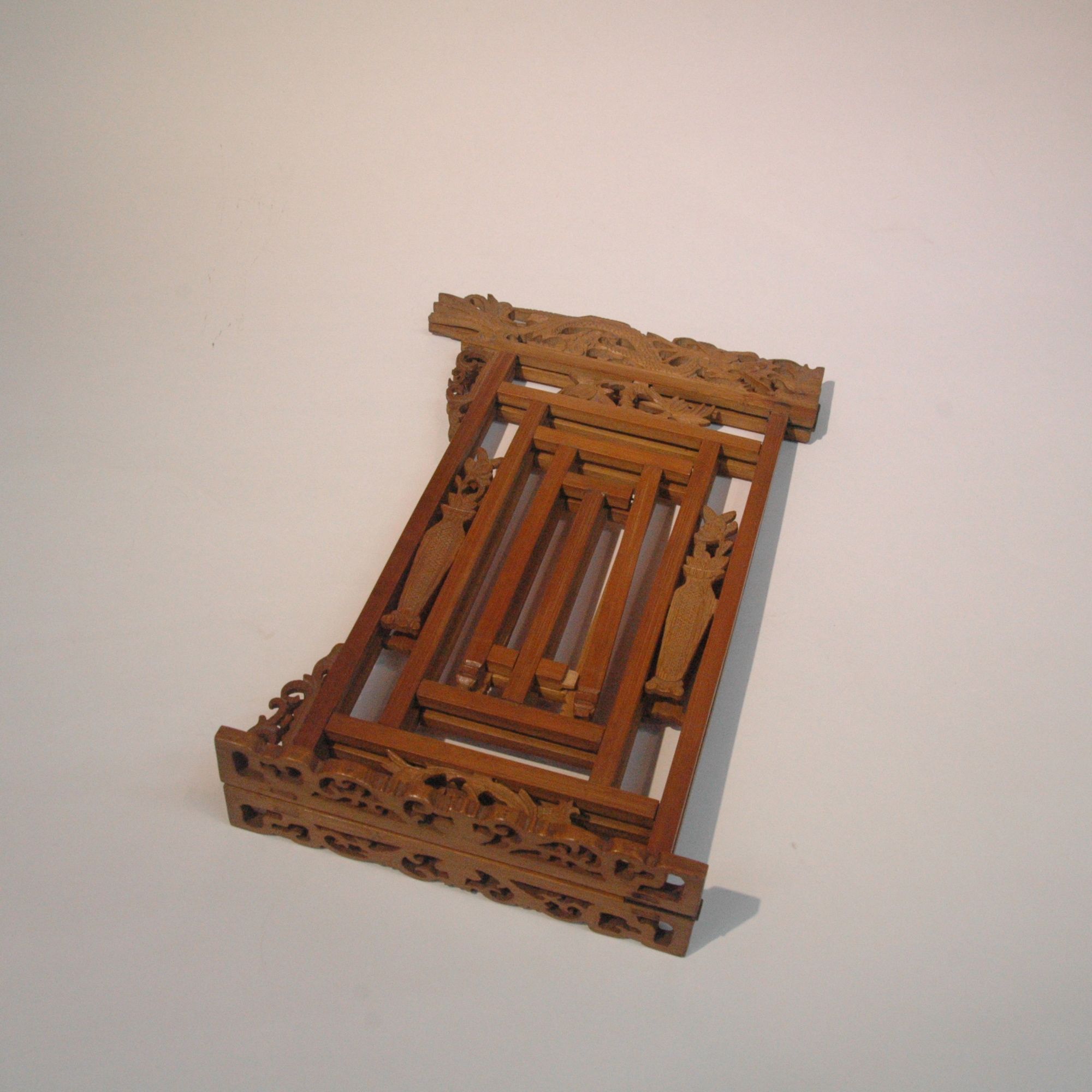
This is a holder for Buddhism script that is made of bamboo, it can be folded for easy transportation.  Since its invention over 1000 year ago, it has also been adopted to be used as a book stand.  The angle of the tilt for the book can be adjusted to suit the position of the reader.  It was one of the stationary items for the wealthy scholars which is now all to be replaced by the mighty ipad.

W70xL100xH60, China

This blue and white porcelain box, now displayed as a toothpick holder, was used as an “ink pad” for the Chines. It is a container for the red paste used with the Chinese seal. The ink paste has been used since the Qin dynasty and at that time using clay, the clay is made into small balls and soften with water when use, it is used as a seal for a document, similar to the wax seal in the West (only that the document is of bamboo, text written in lacquer, the envelope being as string which is then sealed). By the Tang dynasty, as paper is developed the ink paste is also refined, cinnabar replaced clay as the seal paste which is closer to today’s paste. Also see our previous post “A Seal Case“.

W100xD70xH130mm, China

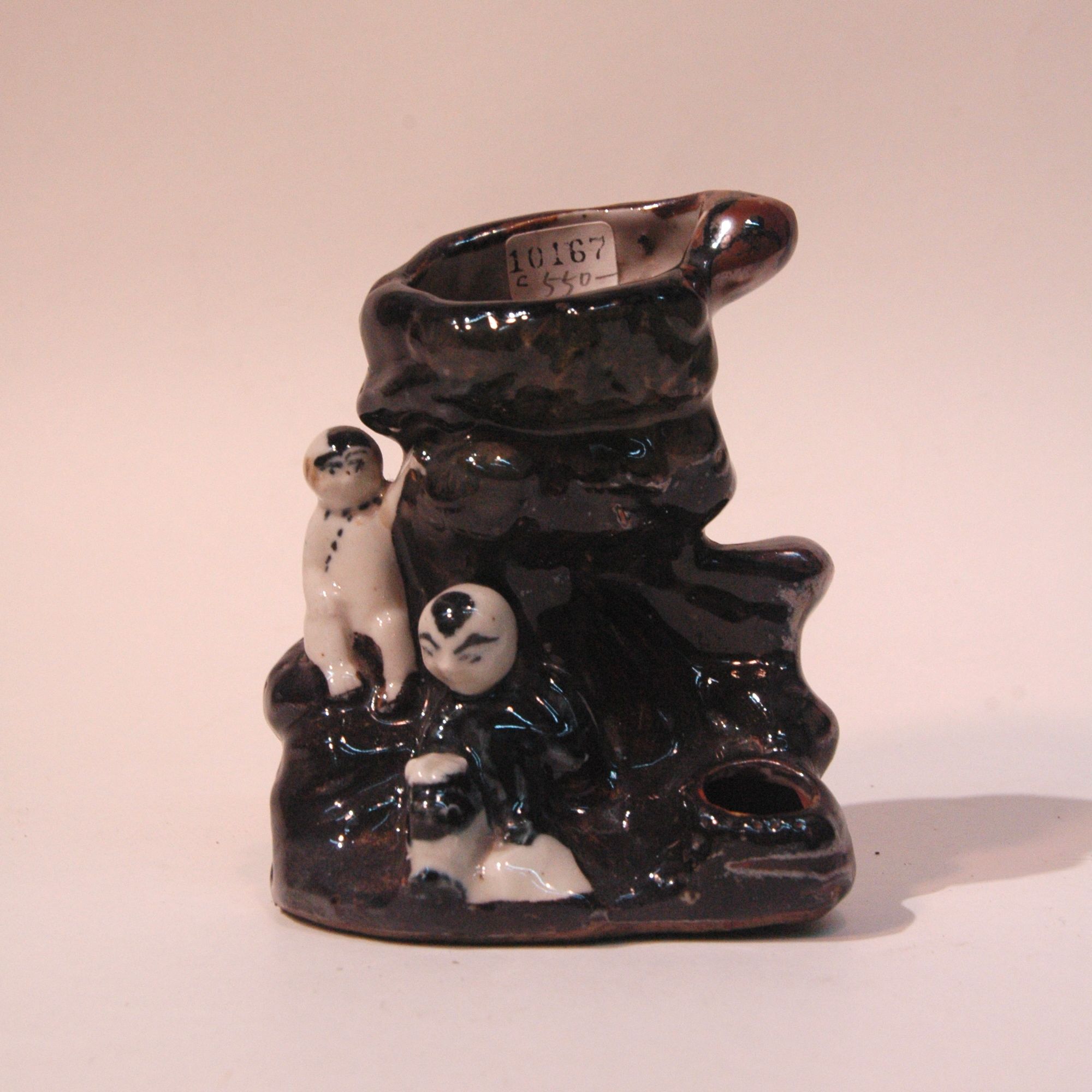
This sweet mountain is in fact a pen holder (particularly like the little guy on the top grabbing hold of the rock as if he is scared of falling off), this is perhaps one that is made for a child, like this water drip.  Like today’s parents, parents in the past has also wracked their brains trying to get the child interested in studying or at least stay at the desk.  See our other version at Ceramic Pen Holder.

W80xL60mm, China

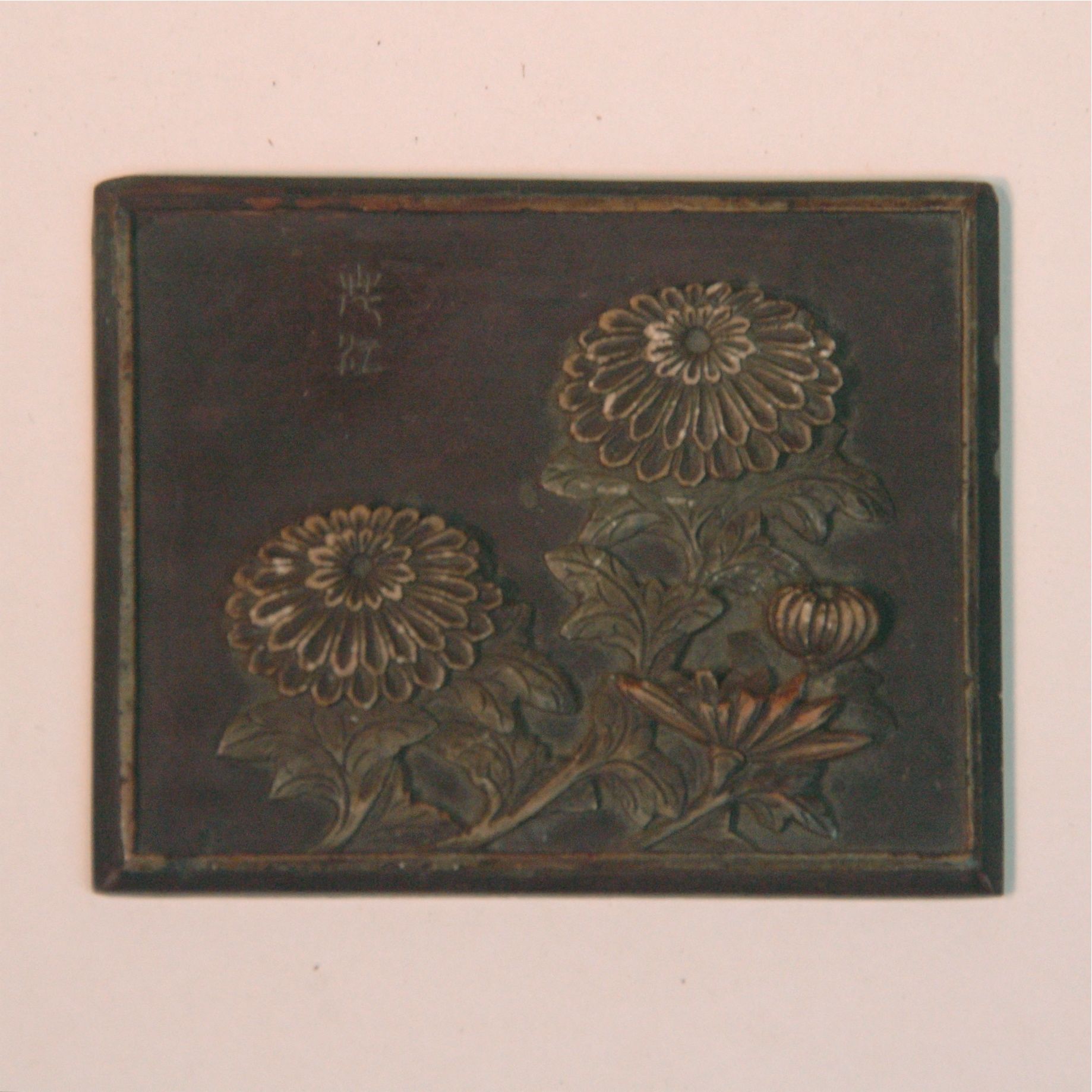
This is a stone carving use for the decoration of a small yan ping (see our other entries; yan ping and again yan ping).  Yan Ping is part of the Chinese stationary, it is designed to be used as a screen for shielding the ink well from drying.  The carving is a relief of the chrysanthemum flowers from a small piece of stone, the slight polish gave the flower its shading and tones.

W50mmxD30mmxH70mm, China

In the old days, every morning the ink will be grind on the inkstone.  Water will be added so the ink stick will be dissolved, water is also added during the day to dilute the ink on the stone.  For the ease of controlling the flow water, the water drip was invented.

This water drip of child and carp figurine which would have been made for children; the composition is a traditional one of blessing, carp being resilient and full of vitality which is what every parents would wish for their child.    Also see our earlier entry for a different form of  water drip .

W80xD60xH130mm, China

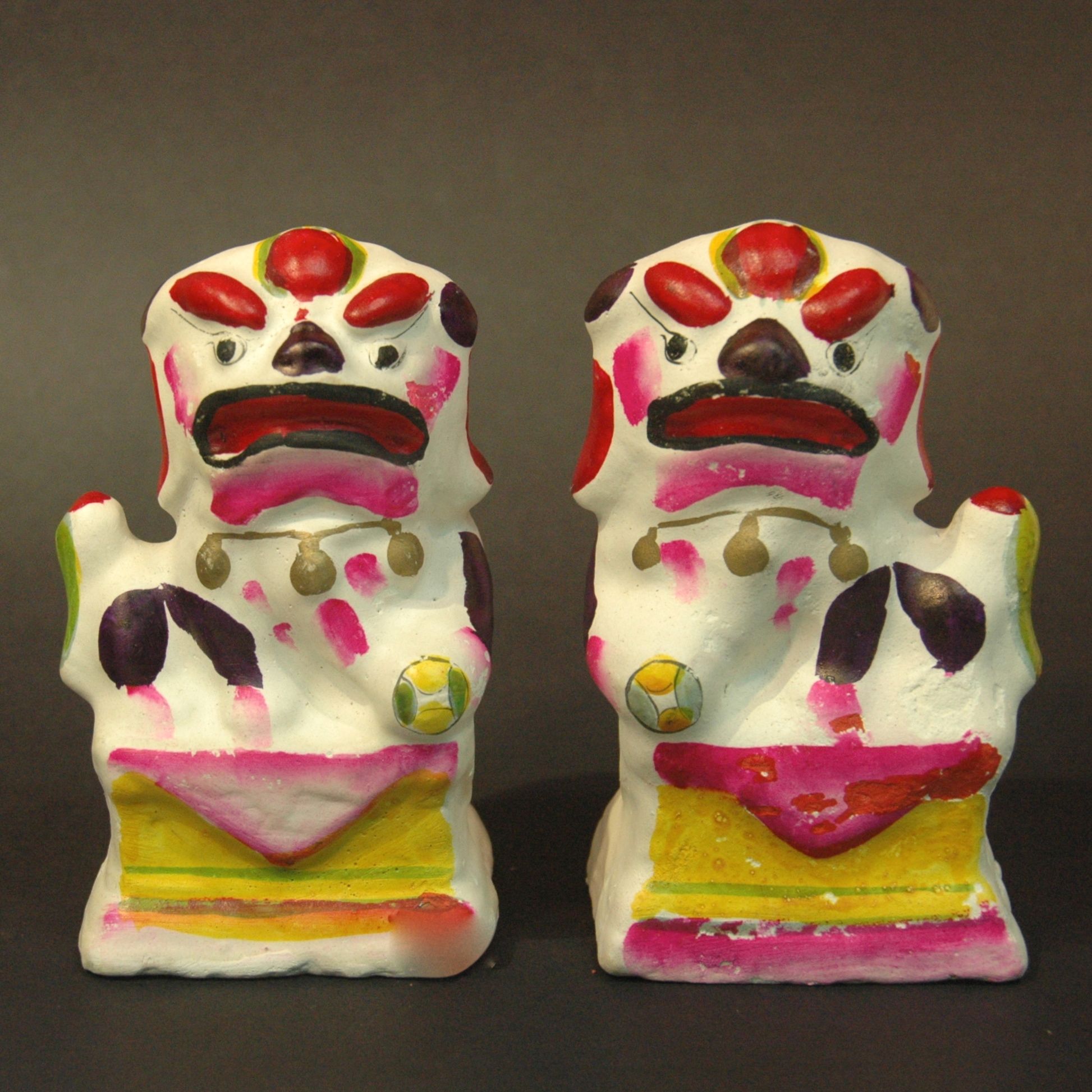
This is a toy from the famous Nie estate village, it is believed in the Ming dynasty a man named Nie arrived from He Bei on the run from a business failure.  On his desperation he arrived with his wife to a village in Shan Dong, even exhausted and penniless his mind was still reminiscent on the days of high life.  He grabbed a handful of clay and formed it in a clay tin, he then filled it with a bit fireworks and left the top open with a small hole.  Upon ignition, there comes an amazing fireworks display, it instantly became a hit and he name it Guo Zi Hua (fireworks in a pot).  It soon turned into a speciality of the village, the clay figure became more decorative and take on figurines of humans and different animals, so after the display of the fireworks, one get to keep a clay toy as well.  As time goes by the fireworks were taken out and the focus started on the clay figurine toy itself.

This is a pair of clay lions which about from being a toy also can function as bookends.