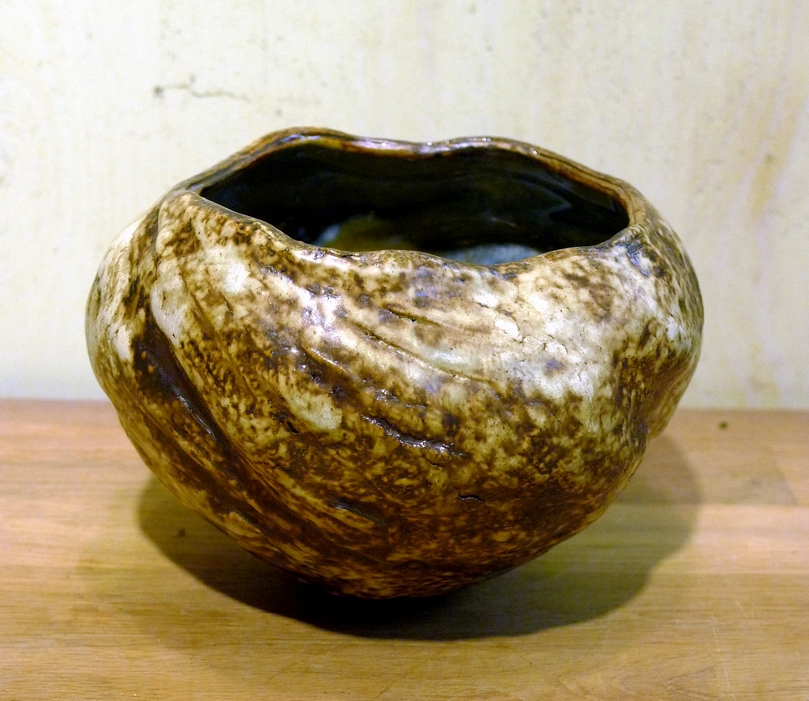
 DIA120xH100mm, Hong Kong
Metallic washed and Glazed Stoneware
Planter Bowl
POTTERY ART BY CHRIS LO
MOUNTAIN FOLKCRAFT
DIA120xH100mm, Hong Kong
Metallic washed and Glazed Stoneware
Planter Bowl
POTTERY ART BY CHRIS LO
MOUNTAIN FOLKCRAFT
 DIA170xH240mm, Hong Kong
Metallic washed
White glazed
Stoneware teapot
with
handmade bamboo handle
POTTERY ART BY CHRIS LO
MOUNTAIN FOLKCRAFT
We are honored to have a series of work by ceramic artist Chris Lo for Mountain Folkcraft.
Chris Lo is a local ceramic artist. Graduated with a bachelor’s degree from the Chinese University of Hong Kong in 1990. Chris has been specializing in ceramics since 1993. Three years later, he founded Cobo Ceramic Workshop and continue to explore the relationship among man, time and space which are well expressed in his work. Chris has participated in numerous exhibitions in Hong Kong, China, Taiwan, Japan and Europe. His works are collected by the Hong Kong Museum of Art, the Hong Kong Heritage Museum, the National Museum of Chinese History (Beijing) and private collectors.
Catch the Collide / Converge exhibition to see Chris and other’s ceramic sculpture before it closes on the thur the 28th.
Watch this space for the following days to see the collection!
 DIA220xH160mm, China
Hotpot is a popular dish in China.
Fresh meat and vegetable bleached with boiling soup then dipped into a variety of different sauces is super tasty. Hotpot used to be a winter dish; eating around the stove with meat just off the pot, rice wine and friends is the perfect meal for a freezing evening. Since the invention of air conditioner, we just find any excuses for such gathering, even on a 30+c summer night.
Before the induction stove, the canister gas stove, charcoal is used to heat up the soup for hotpot. Despite its appearance, this is stove for the hotpot where a traditionally a chimney donut shaped copper pot would be placed over the porcelain stove. Charcoal will be placed in the slot at bottom which opened up to the center of the stove and into the copper chimney, the copper conducts the heat to the rest of the pot.
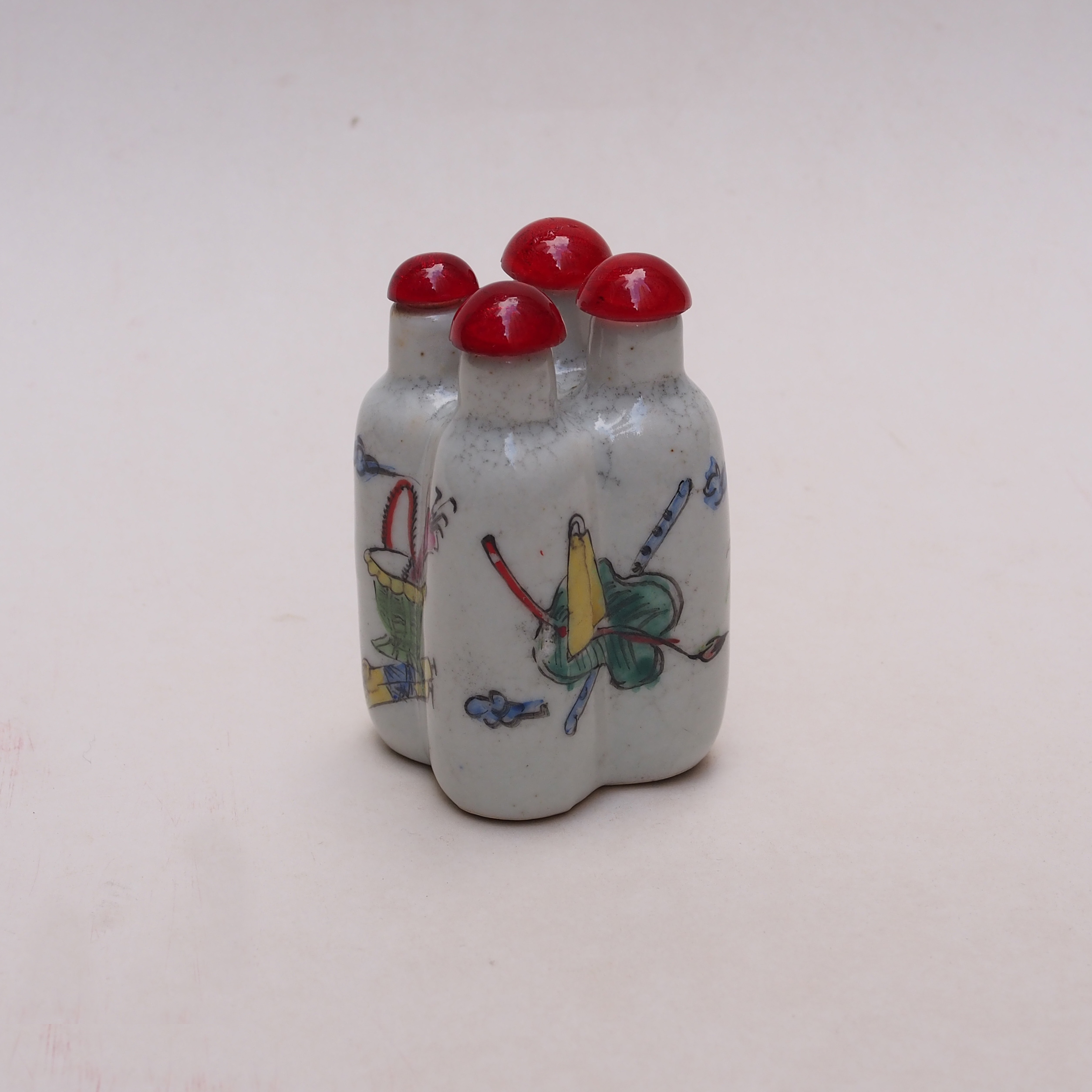 W45xD45xH75mm, China
A snuff bottle decorated with 8 treasures used by the Taoisit 8 Immortals, “An Ba Xian”.
Gourd – Iron Crutch Li
Fan – Han Zhong Li
Fish Drum – Elder Zheng Guo
Sword – Lu Dong Bin
Lotus – He Xian Gu
Basket of Flower – Lan Cai He
Flute – Philosopher Han Xiang Zi
Castanet – Royal Uncle Cao
These 8 treasures have special powers;
Gourd – saving the world
Fan – resurrection
Fish Drum – prediction
Sword – keep evil at bay
Lotus – purification of the soul
Basket of Flower – direct line to the Saints
Flute – revitalizing all creatures
Castanet – purifying the world
When I was writing this, I thought the Gourd being able to save the world would be all that we need, but writing on all the other 7 treasures are even more powerful. For the world we live in now, we need the Castanet more than ever.

“In the beginning, all is without form and void. Subsequent to collision, interaction and convergence, order is created; form and cognition appeared. That’s how our story begins.
Seven individuals; seven entangled minds converged through clay and expressed in one exhibition.
Akin to many urbanites, we live with heavy workloads and pressure in everyday life. Pottery cleanses our souls; mends cracks of regrets left behind as we grow up; clears tangled thoughts; awakens the seed of creativity buried deep within us. It nourishes our lives.”
14 – 28.08.2014
(tue – sun, 13:00 – 18:00)
Pottery Workshop Gallery
G/F, 24 Upper Station Street,
Sheung Wan,
Hong Kong
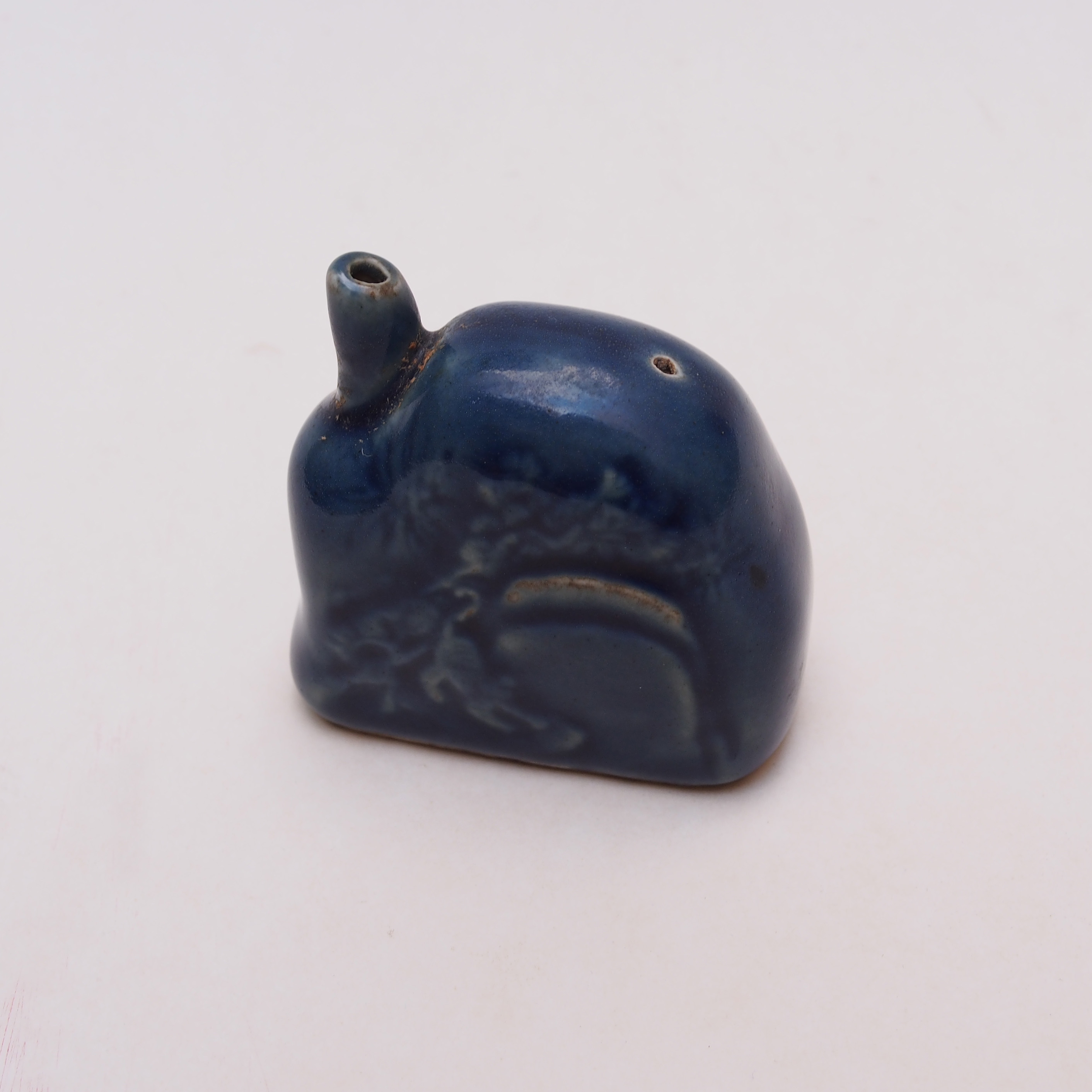 W60xD30xH60mm, China
This little gadget is a part of the traditional Chinese stationary. A vessel to contain water for diluting the ink on the inkstone, known as a water drip. The water is drip out from the spout, the velocity of the flow is control by easing the finger placed over the small hole. These water drips though functional is also a item of delight for the scholars, one would have several of these, if I would have to draw a parallel in today’s world … iphone cases I suppose?
 W100xD60xH190, China
This is a item which used to be in every household, a pottery chopstick drainer, a bit like the cutlery drainer which is now replaced by the plastic draining tray. I must admit I am part of the plaster tray generation and have never seen the chopstick drainer in action.
On the drainer is written 百子千孫, hundred of sons and thousands of grandsons, a blessing of fertility. At a time when mortality rate is high, a large family to continuation the bloodline is the most important aim in life, though it does such a priority in life as much (particularly with China’s one child policy) its still seen as a welcome blessing for the family.
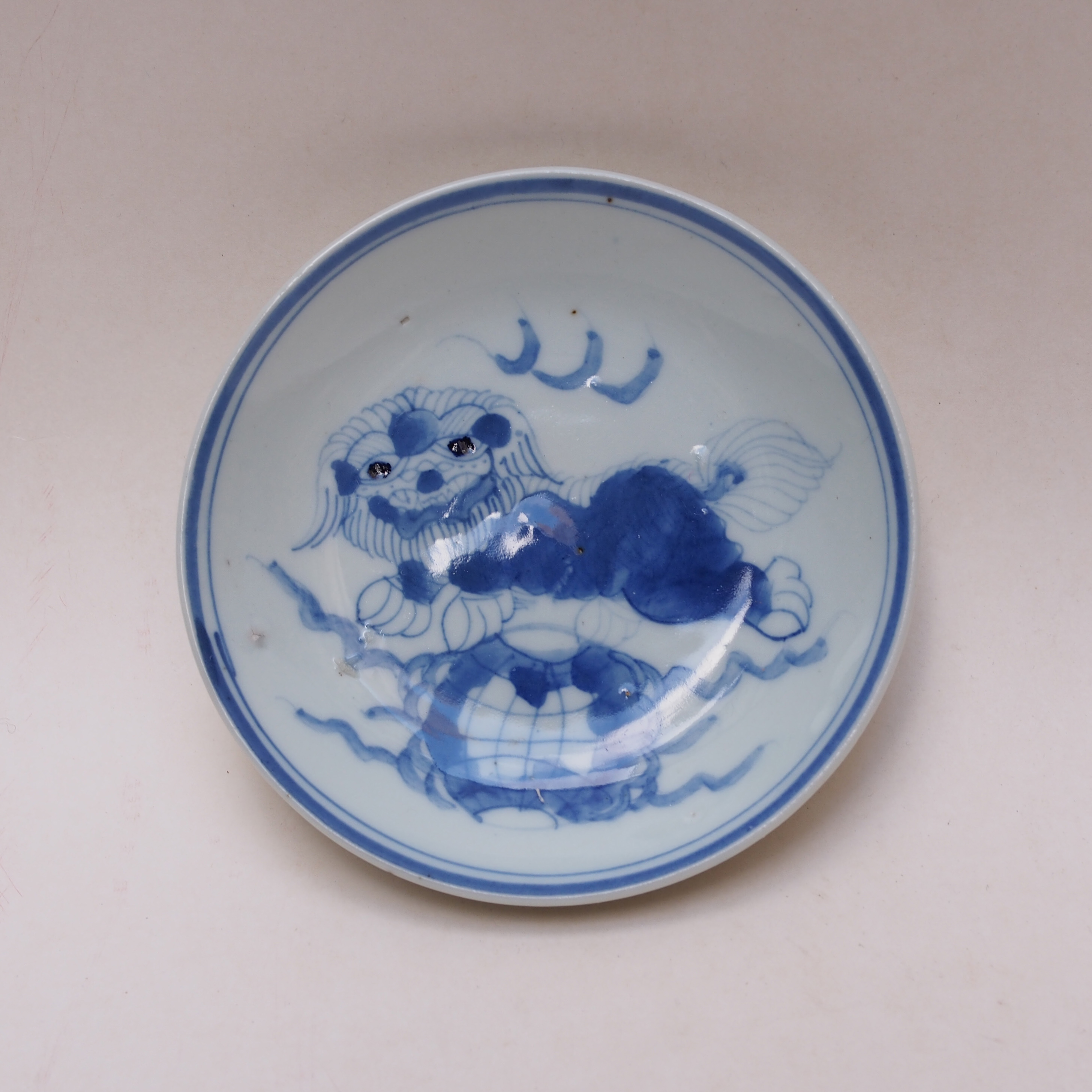
DIA150xH20mm, China
To celebrate the victory of Germany winning the World Cup, here a plate with the lion playing with a xiu qiu.
The composition of the lion playing with the ball is a traditional blessing pattern. The lion being nonnative in China was a mystical creature, not only is it the symbol of power and strength, it is also the carrier of the Manjusri Bodhisattva. Lions sculptures are often found outside buildings as the guard against evils. Here is the legend of how this supreme creature start getting addicted playing with balls; during the Southern and Northern dynasty, there is a general named Zong Que who was in a losing battle. Zong thought of a way to breaking out of the surrounding enemy, he had the soldier build a figure of the lion, put on a mask and dressed in yellow fur, from a distance the enemy thought the lion has arrived and flee, enabling Zong’s army to escape from the situation. The army celebrated with the local villages and the tradition went on, to humanize the lion more movements were added as well as the xiu qiu ball. The pattern of the lion and the xiu qiu is a blessing of strength and energy.
Click here to see our other items of the lion and the xiu qiu.
 Mountain Folkcraft