Archives for category: paper

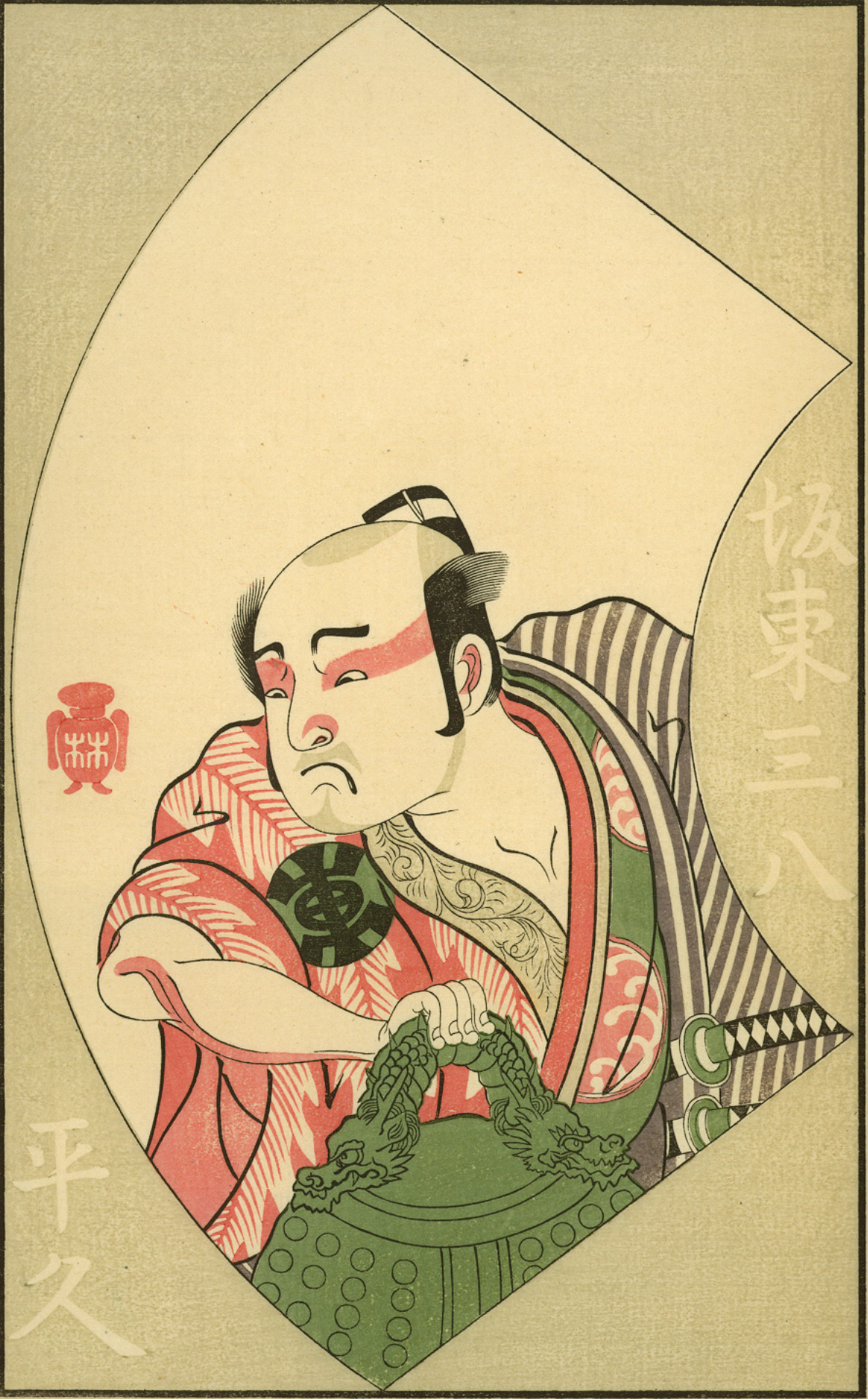
L240xW150mm, Japan

This is an ukiyo-e print of the actor Bando Sampachi I (Heikyu) as Yawata no Saburo published in 1770.  The print beared the tsubo seal of the artist Katsukawa Shunsho.  Katsukawa Shunsho is the leading artist of the Katsukawa school which specializes in prints of the kabuki actors, sumo wrestlers and bijinga (beautiful women).  Shunsho pioneered in realistic portrait of the kabuki actors which contrast with the stylized prints of the Torii school with the individuality of the actor himself identified.

W220xL300mm, China

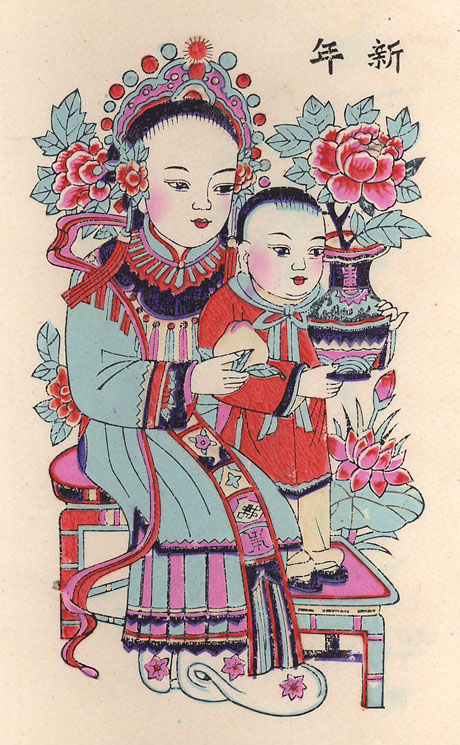
A wood block print of the lord of medicine Sun Si Miao, he was a doctor and Taoist priest of the Tang Dynasty.  He is said to live to 140 years old.  However, when he was sickly child, the family used up all their saving to treat his sickness.  Being a very gifted child, he studied all forms of medicine, he dedicated his life to save as many people as he can and refused to become a doctor for the court.  He has made a huge contribution to the Chinese medicine; not only did he wrote the “Thousand Golden Prescriptions”, a complete medical ethics, started gynaecology and pediatrics in Chinese medicine and more.  This is a new year print that would be seen in Chinese medicine clinic.

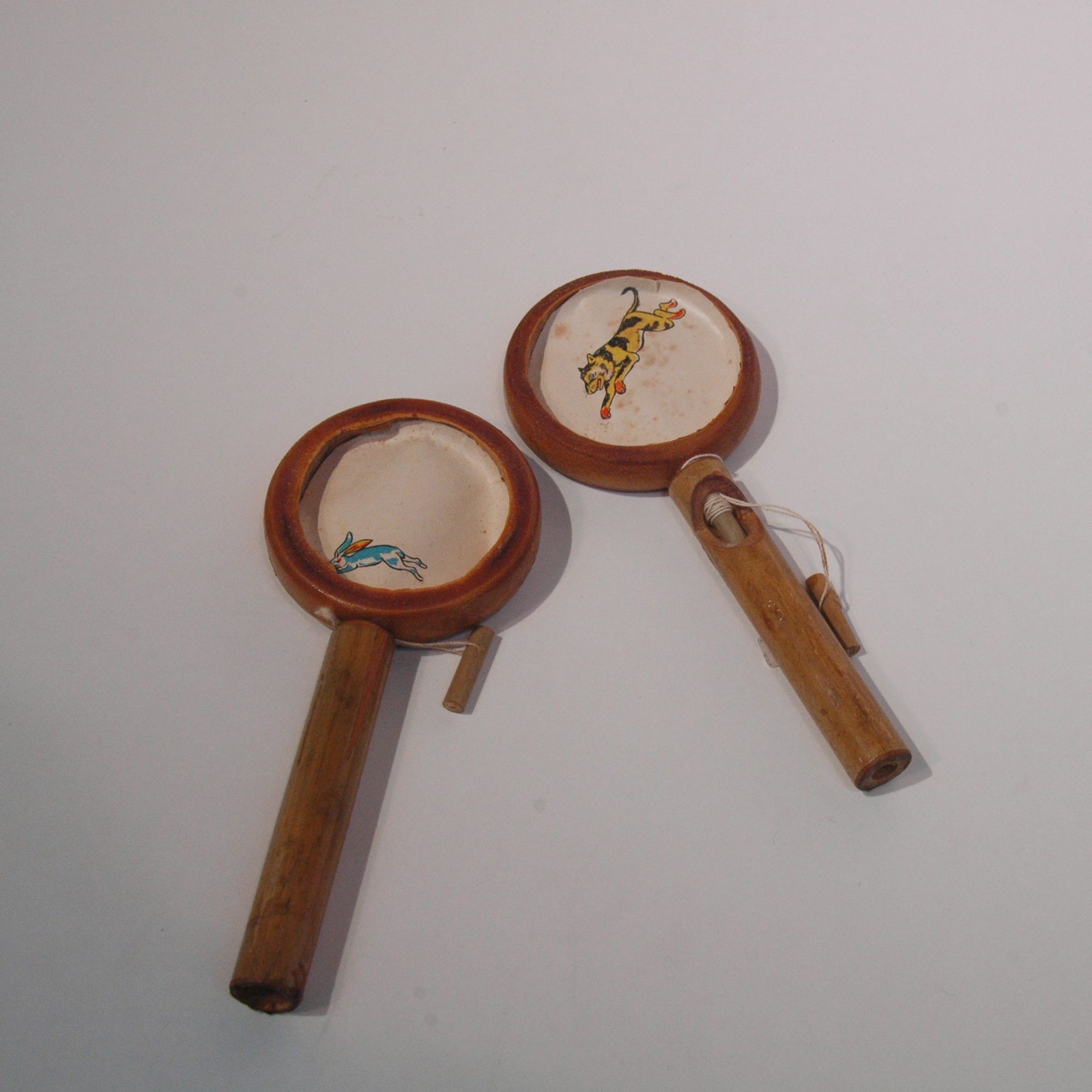
DIA70xL160mm, China

This is a Chinese version of the thaumatrope; by pulling the string that is attached to the axial of the circular frame, the image inside the frame will turn over and over again.  The 2 images from both side of the frame will appear as 1 due to the persistence of vision.  The momentum of the spin will cause the axial to spin at the reverse direction result in a prolong animation.

click on me!

W280xL360mm, Japan

This is an Ukiyo-e Print published in 1862 of the topic of the Kanda Festival.  Kanda Festival is one of the 3 Shinto Festivals in Japan; it is a festival to celebrate the victory of the battle of  Sekigahara.  The festival is biennial, in years of odd number in the western calendar.  Originally the festival is held on 15th Lunar September, nowadays is held on the closest weekend to 15th May.  On Saturday, there are a parade of floats with 300 people, on Sunday, provinces will bring over 100 small and large portable shrines to the Kanda Myojin.  The Kanda area where the festival takes place is at the heart of tokyo, the uptown area.

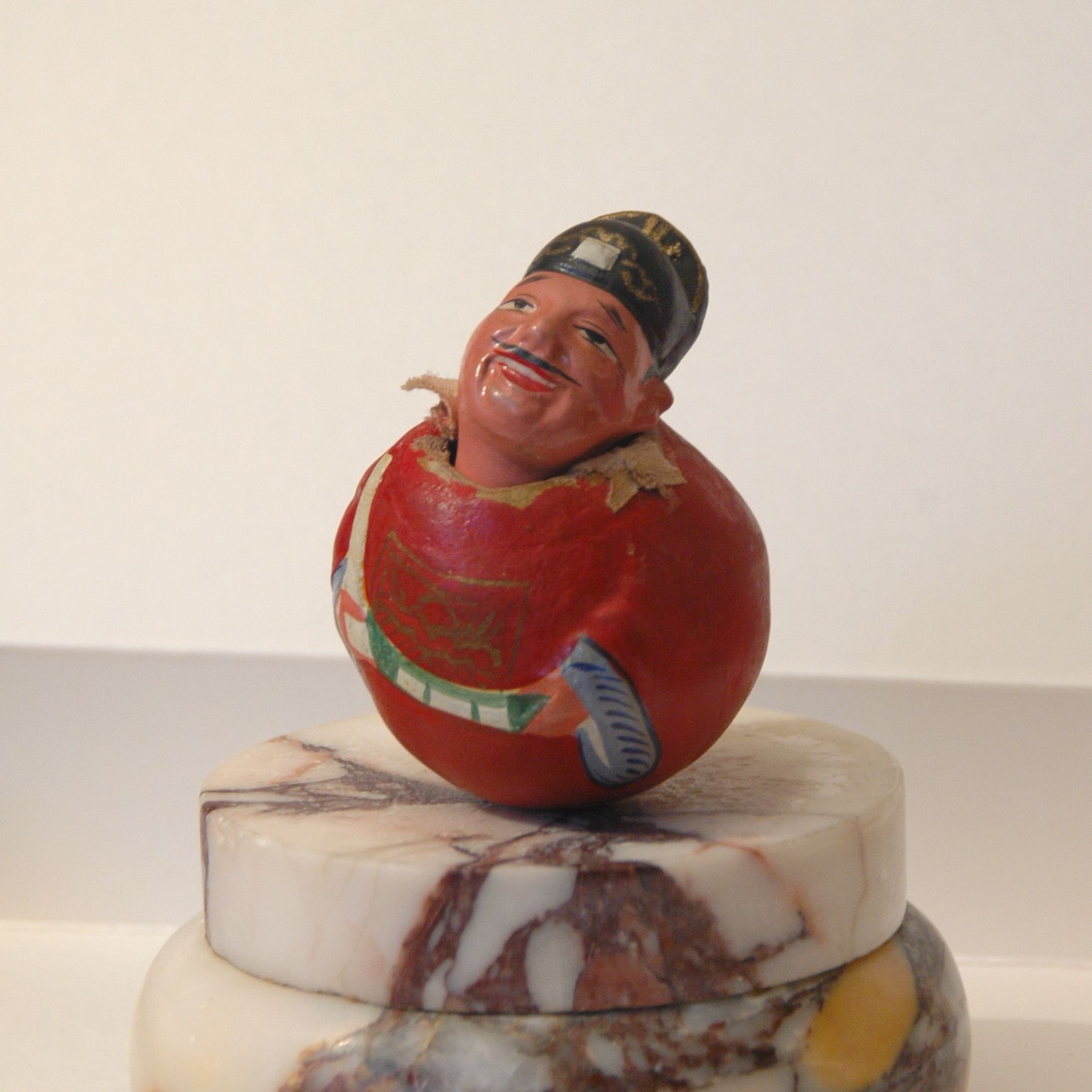
DIA60xH80mm, China

Today is the 5th day of the Chinese New Year and the day for welcoming the Money God, the Money God has his four assistants will visit and bless randomly a handful of people.  On the day of the 5th, you might notice that shops and households trying to draw their attention with fire crackers or food in front of their statue (or nowadays the free posters that come with the weekly magazine).

It is a toy for the drinking game since the Tang dynasty, after wobbling, the person he is looking at will have to drink up!  This money god roly poly toy is made of paper with clay as a weight.

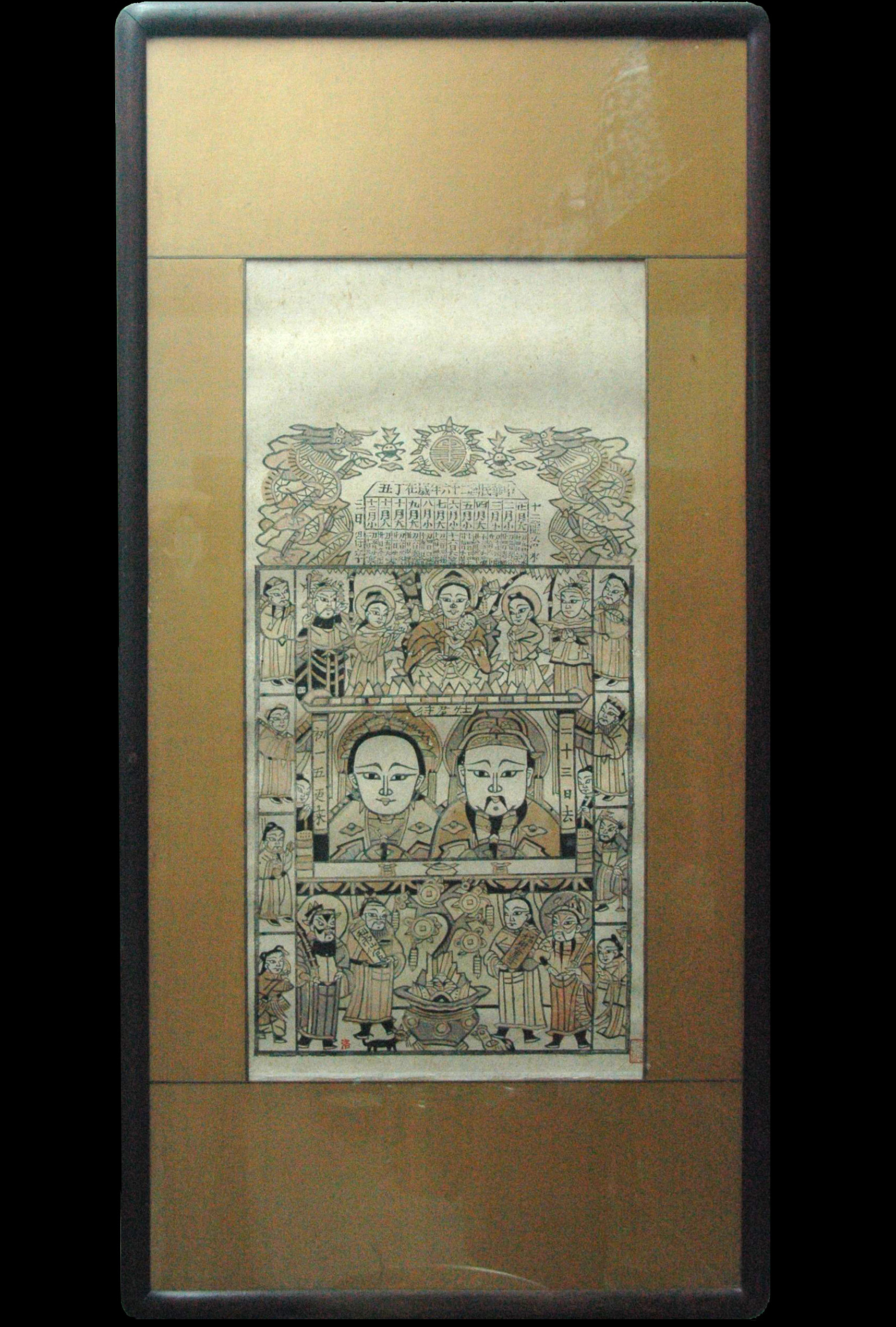
W500xH900mm, China

Previously we talked about preparing the Kitchen God for his report to the Jade Emperor, traditionally today (4th day of Chinese New Year) is the day to welcome him back to the household.  (see Kitchen God Wood Block Print-12/04/2011)  The feast would be the same as that is served for welcoming a guest that has travelled from afar.  Everyone in the household has to be present so he can keep his censors for the new year correctly.

This wood block print was from the 26th year of the Republic of China, i.e. 1938.  Every year a there will be a new calendar for the Kitchen God.  The two gods in the middle are the  Kitchen God and his wife, on the upper row is the god of fertility, the 4 gods on either sides are 3 categories of saints (upper, middle and ground), the lower 4 are the junior money gods and the money bringing kid and the pair of door gods.  For this particular kitchen god, his schedule is tighter then the one traditionally practice, he departs for the Jade Emperor on the 23rd eve and returns on the 5th hour of the New Years day.

W140xL180xH160mm, China

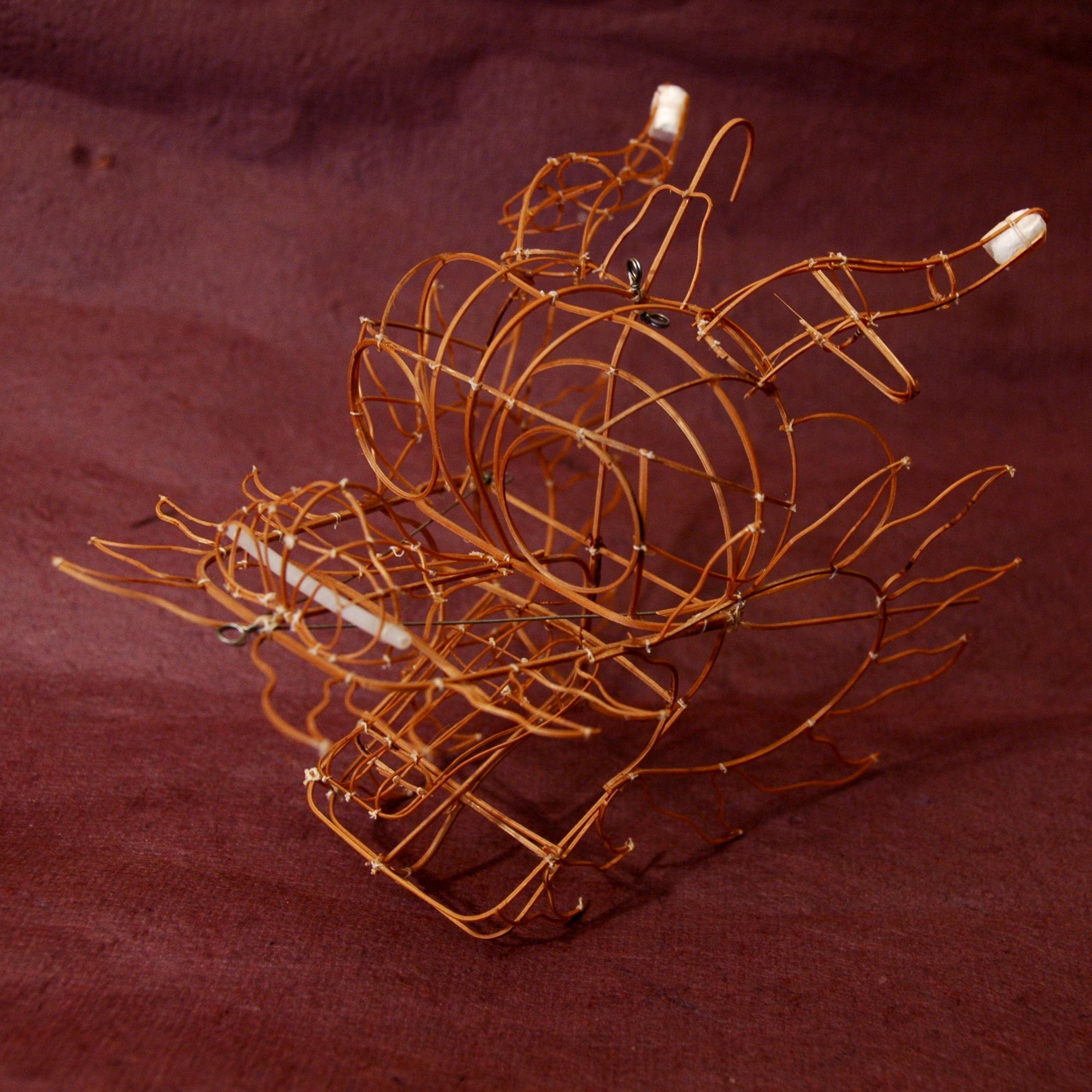
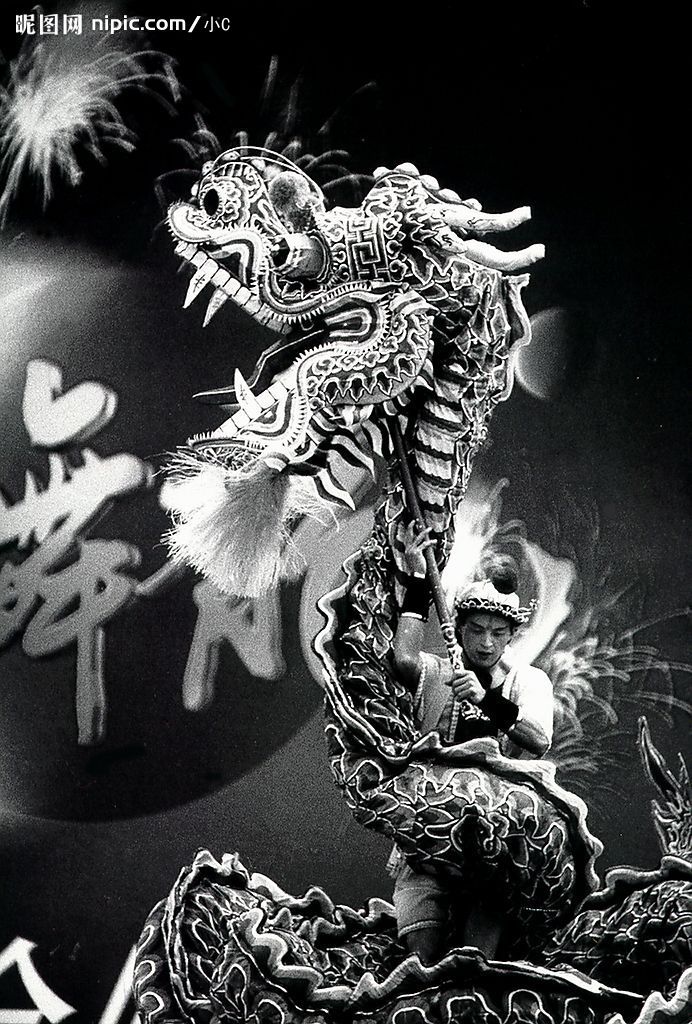
Everyone must have seen the dragon dance during Chinese New Year, ever wonder how the dragon head is constructed? Here is a miniature version of the bamboo structure that goes under the paper or cloth constructed skin (which belongs to a dragon kite). Bamboo stripes are bend and tied together at junction points with a paper knot. For the actual performance piece the structure will be will be stronger and bolder. The body is made with piece of red cloth with resembled the scale of the dragon, with rods every 1.8m apart for the dancers to control the body. The length between the head and the tail can go up to 4m. Another dancer will raise a sphere for the dragon to chase.

In a traditional dragon dance, in a ceremony the body of the dragon will be invited out from the Dragon King Temple, the head and the tail will be attached and only then will the eyes be drawn on the dragon. Dragon is a creature both respected and feared by the Chinese, being the leader of the 4 spiritual creatures, it is believed to be able to control the sea and the weather, make it calm and peaceful or cause the wave to become furious. After the performances of the dragon dance, the head and the tail will be dismantled and burnt, only the body will returned to the temple to be kept for next year’s dragon dance.

W150xH200mm, China

Mountain Folkcraft wishes you at happy, prosperous, healthy year of the Dragon!

W280xH550mm, China

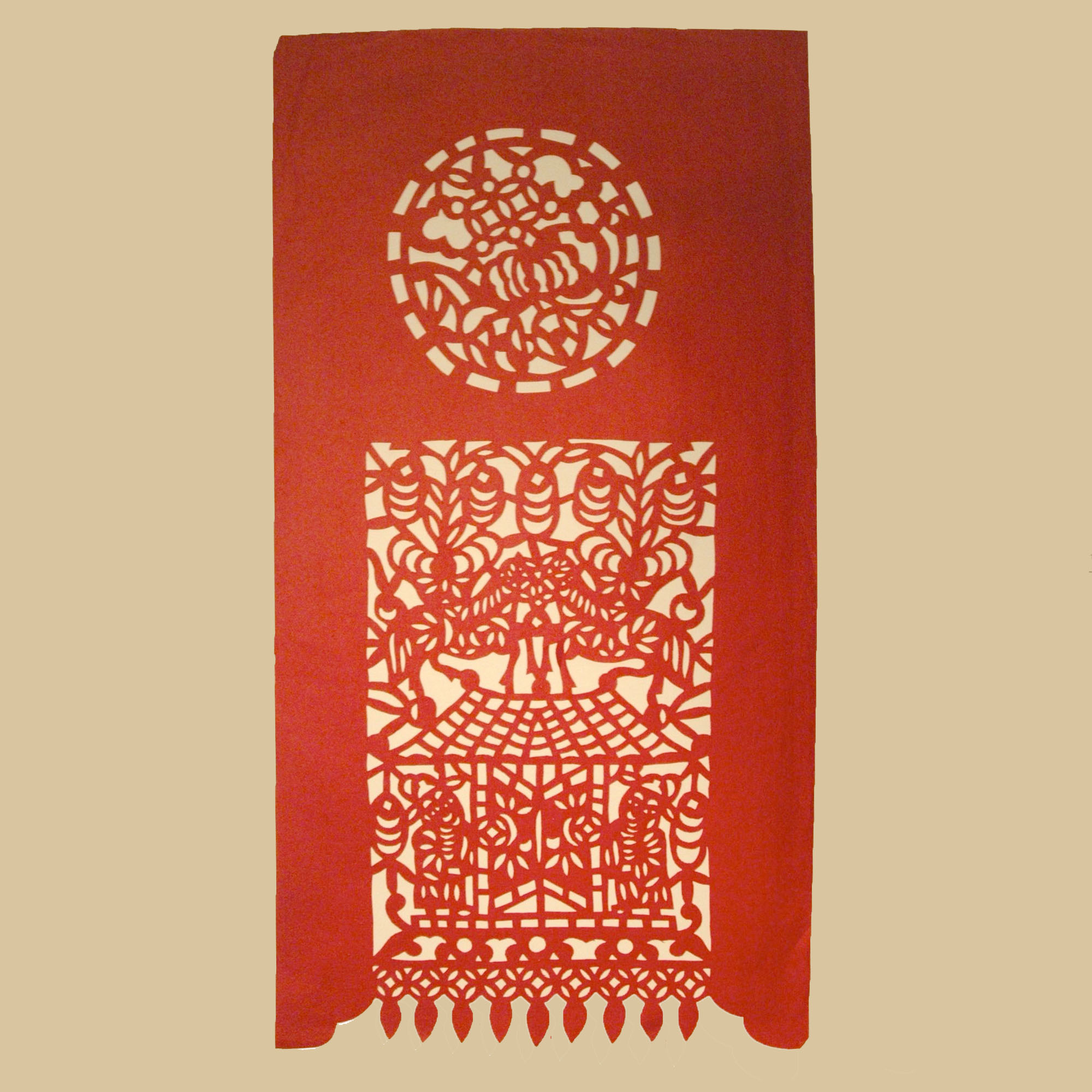
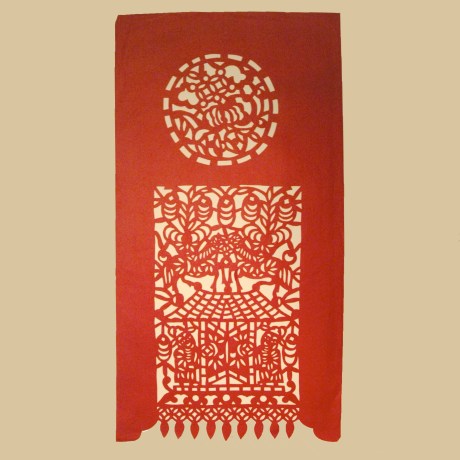
This Chinese New Year decoration is called the Diao Qian Er; a tradition that has been around since the Sung dynasty, a red paper cutout that will be hung on the lintel of the door.  Commonly, 3 pieces will be hanging on the lintel, 5 on the front door and on the window.  They are to be handle with care, if any is damaged before the 5th day of Chinese New Year, it will forecast a year of bad luck.  The legend of these lintel hanger goes like this; Jiang Zi Ya was made in charge of appointment of all the gods, when his wife found out he has this duty she wanted a title too.  Unfortunately, by then all the titles have been taken up, so Jiang made a title up and appointed her the god of  poverty.  Then he thought it is bad item, if the god of poverty entered the house of the poor, they will be more worse off and this is no job for any god, so he add on a small condition “the god of poverty shall not enter if the house is torn, she shall only enter those with wealth.”  People found out and decided to trick the god, torn piece of paper are stuck on the door and window, later these piece of paper became the Diao Qian Er.  This cutout has the pattern of coins, horses bring in gold and a happy household.
new year decoration.jpg

Come check out our new year decoration items!