Archives for category: painting / prints

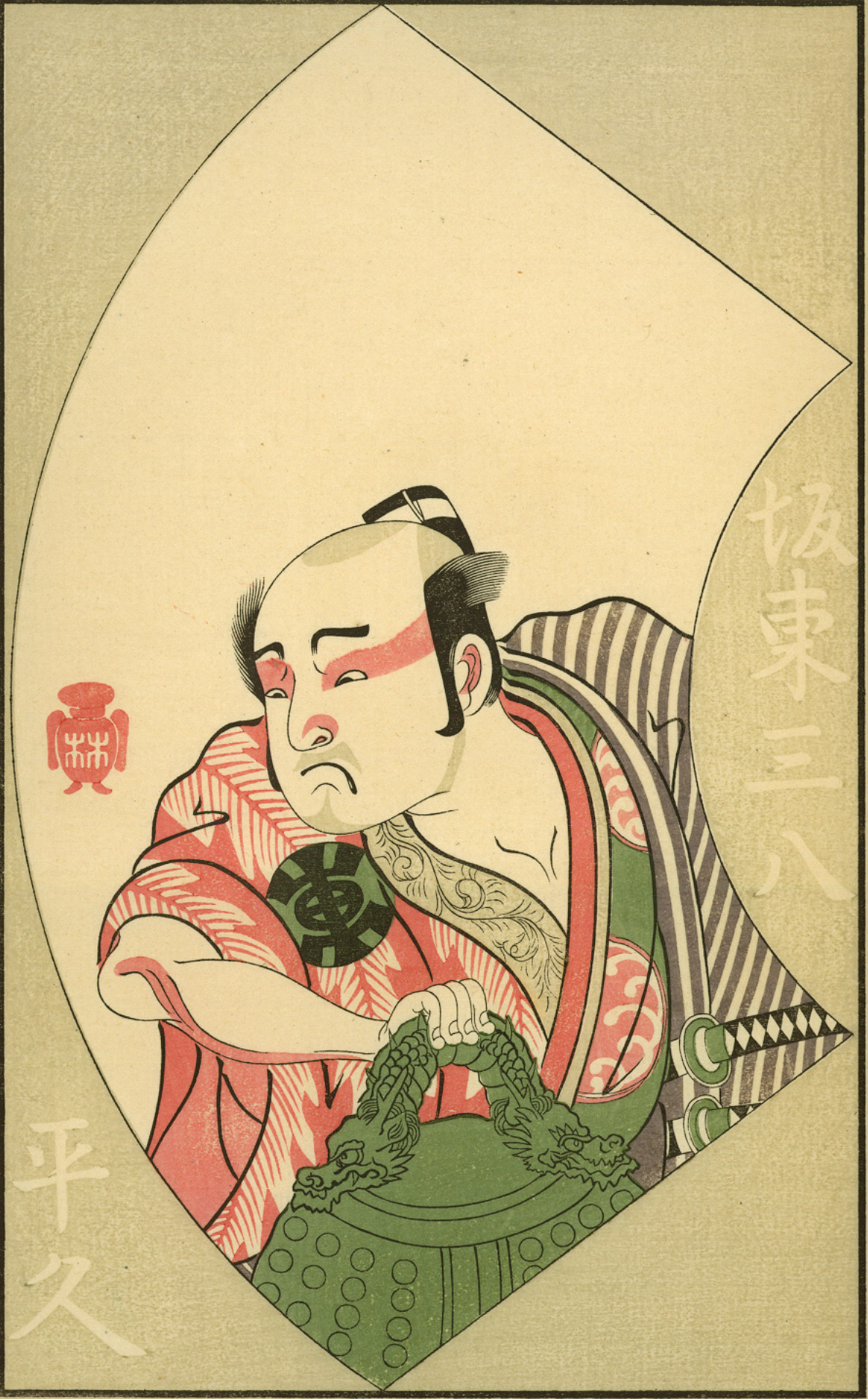
L240xW150mm, Japan

This is an ukiyo-e print of the actor Bando Sampachi I (Heikyu) as Yawata no Saburo published in 1770.  The print beared the tsubo seal of the artist Katsukawa Shunsho.  Katsukawa Shunsho is the leading artist of the Katsukawa school which specializes in prints of the kabuki actors, sumo wrestlers and bijinga (beautiful women).  Shunsho pioneered in realistic portrait of the kabuki actors which contrast with the stylized prints of the Torii school with the individuality of the actor himself identified.

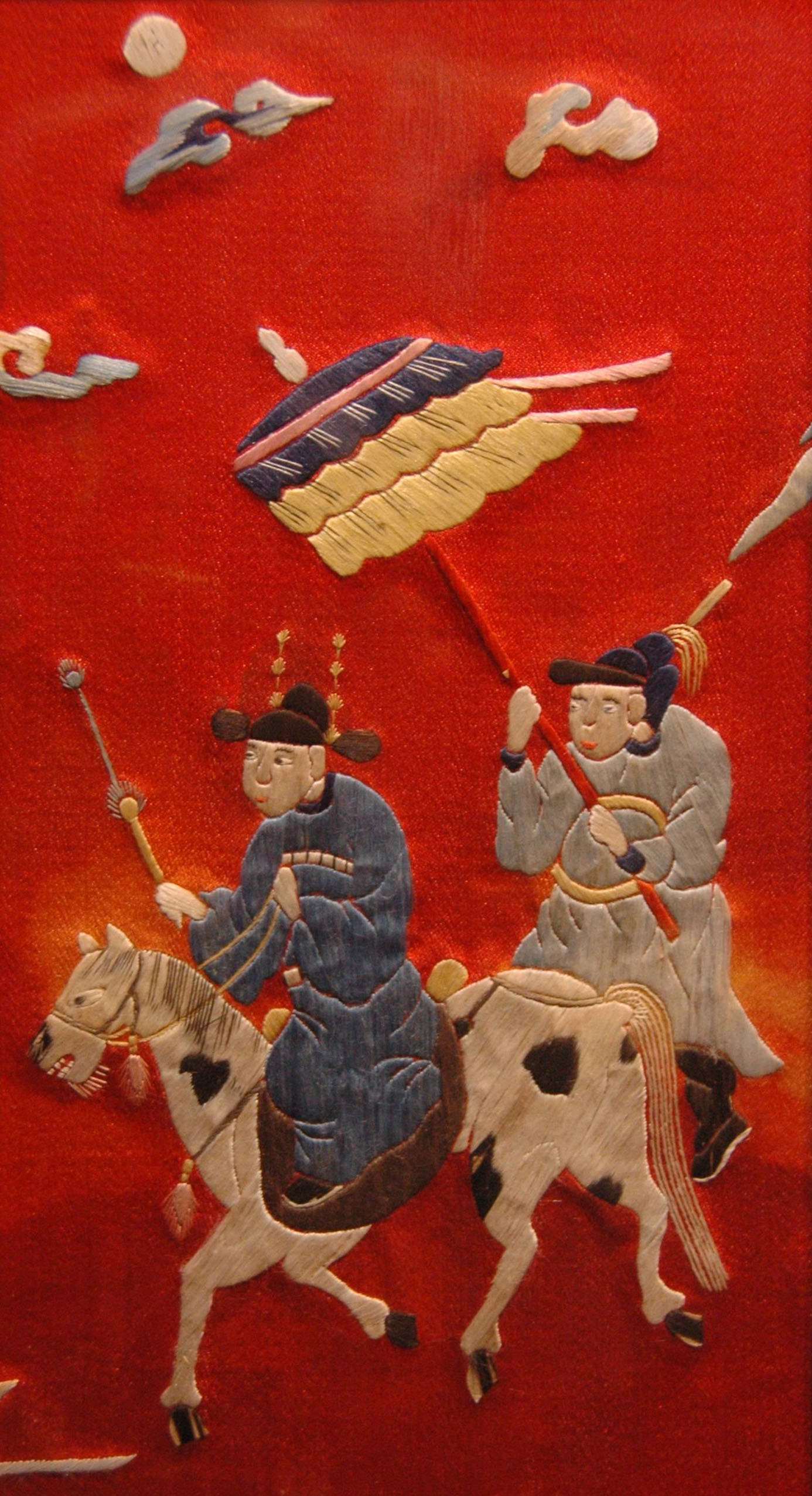
W100xH170mm, China

Since the Siu dynasty 605 AD, China has developed a system in the selection of her officials basing on a literature examination, this system continued till the last examination held in 1905.  By the Tang dynasty, the examination system was very refined; divided into several parts they are held at interval within a year, 50 topics are covered, all the examination will be overseen by the .  By passing the test, one gain the title of the test.  At the final stage, a selected few will be given questions set by the Emperor himself.  The top scholar, Zhuang Yuan, from the final exam will be paraded in the town of Beijing which is what this embroidery is depicting.  This embroidery is taken out from a large embroidery, something like a curtain, we have framed it as a painting.

W220xL300mm, China

A wood block print of the lord of medicine Sun Si Miao, he was a doctor and Taoist priest of the Tang Dynasty.  He is said to live to 140 years old.  However, when he was sickly child, the family used up all their saving to treat his sickness.  Being a very gifted child, he studied all forms of medicine, he dedicated his life to save as many people as he can and refused to become a doctor for the court.  He has made a huge contribution to the Chinese medicine; not only did he wrote the “Thousand Golden Prescriptions”, a complete medical ethics, started gynaecology and pediatrics in Chinese medicine and more.  This is a new year print that would be seen in Chinese medicine clinic.

W280xL360mm, Japan

This is an Ukiyo-e Print published in 1862 of the topic of the Kanda Festival.  Kanda Festival is one of the 3 Shinto Festivals in Japan; it is a festival to celebrate the victory of the battle of  Sekigahara.  The festival is biennial, in years of odd number in the western calendar.  Originally the festival is held on 15th Lunar September, nowadays is held on the closest weekend to 15th May.  On Saturday, there are a parade of floats with 300 people, on Sunday, provinces will bring over 100 small and large portable shrines to the Kanda Myojin.  The Kanda area where the festival takes place is at the heart of tokyo, the uptown area.

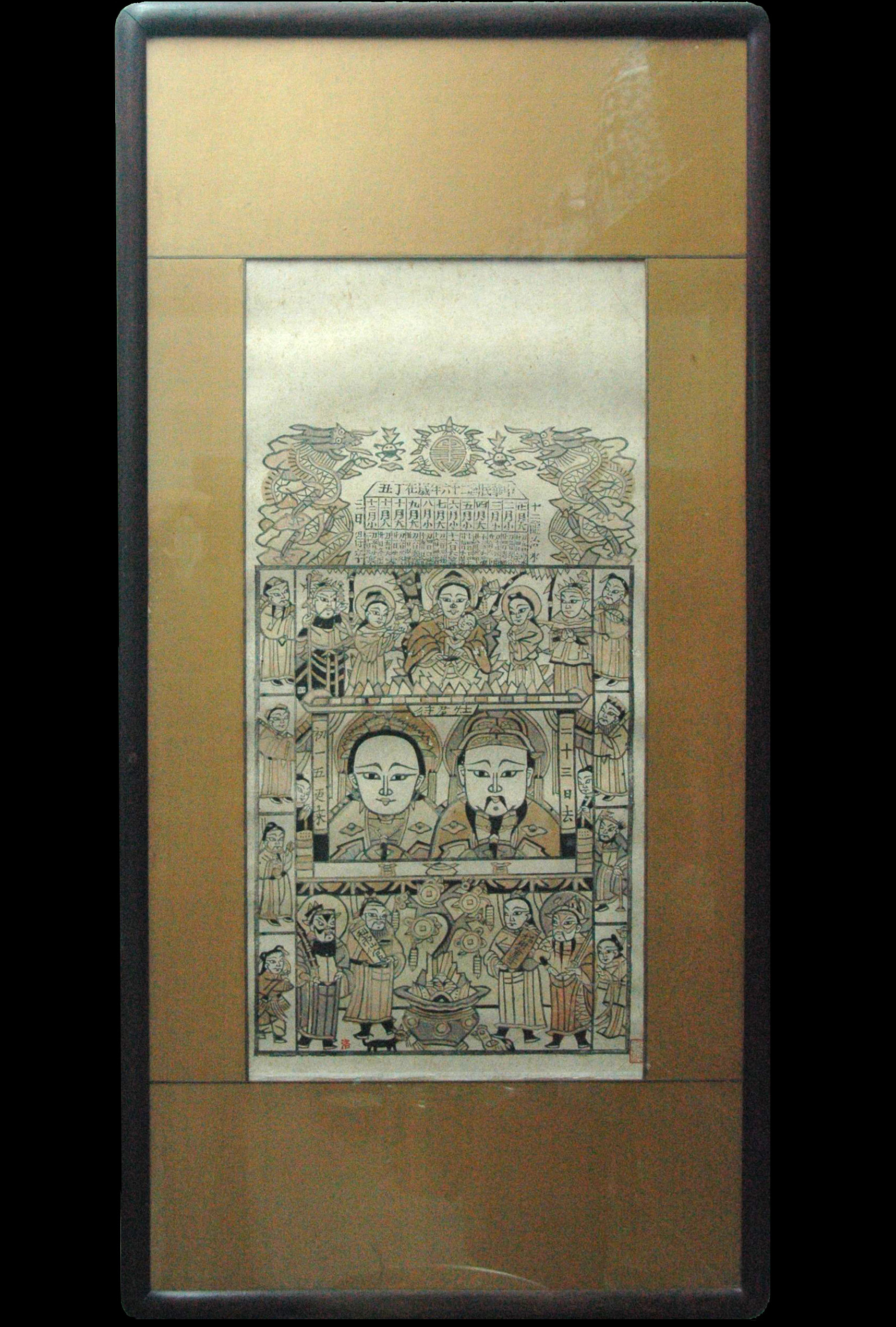
W500xH900mm, China

Previously we talked about preparing the Kitchen God for his report to the Jade Emperor, traditionally today (4th day of Chinese New Year) is the day to welcome him back to the household.  (see Kitchen God Wood Block Print-12/04/2011)  The feast would be the same as that is served for welcoming a guest that has travelled from afar.  Everyone in the household has to be present so he can keep his censors for the new year correctly.

This wood block print was from the 26th year of the Republic of China, i.e. 1938.  Every year a there will be a new calendar for the Kitchen God.  The two gods in the middle are the  Kitchen God and his wife, on the upper row is the god of fertility, the 4 gods on either sides are 3 categories of saints (upper, middle and ground), the lower 4 are the junior money gods and the money bringing kid and the pair of door gods.  For this particular kitchen god, his schedule is tighter then the one traditionally practice, he departs for the Jade Emperor on the 23rd eve and returns on the 5th hour of the New Years day.
W150xH200mm, China

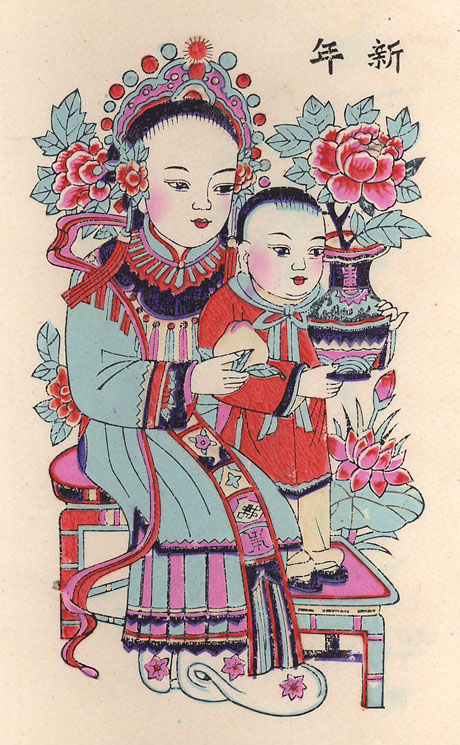
Mountain Folkcraft wishes you at happy, prosperous, healthy year of the Dragon!

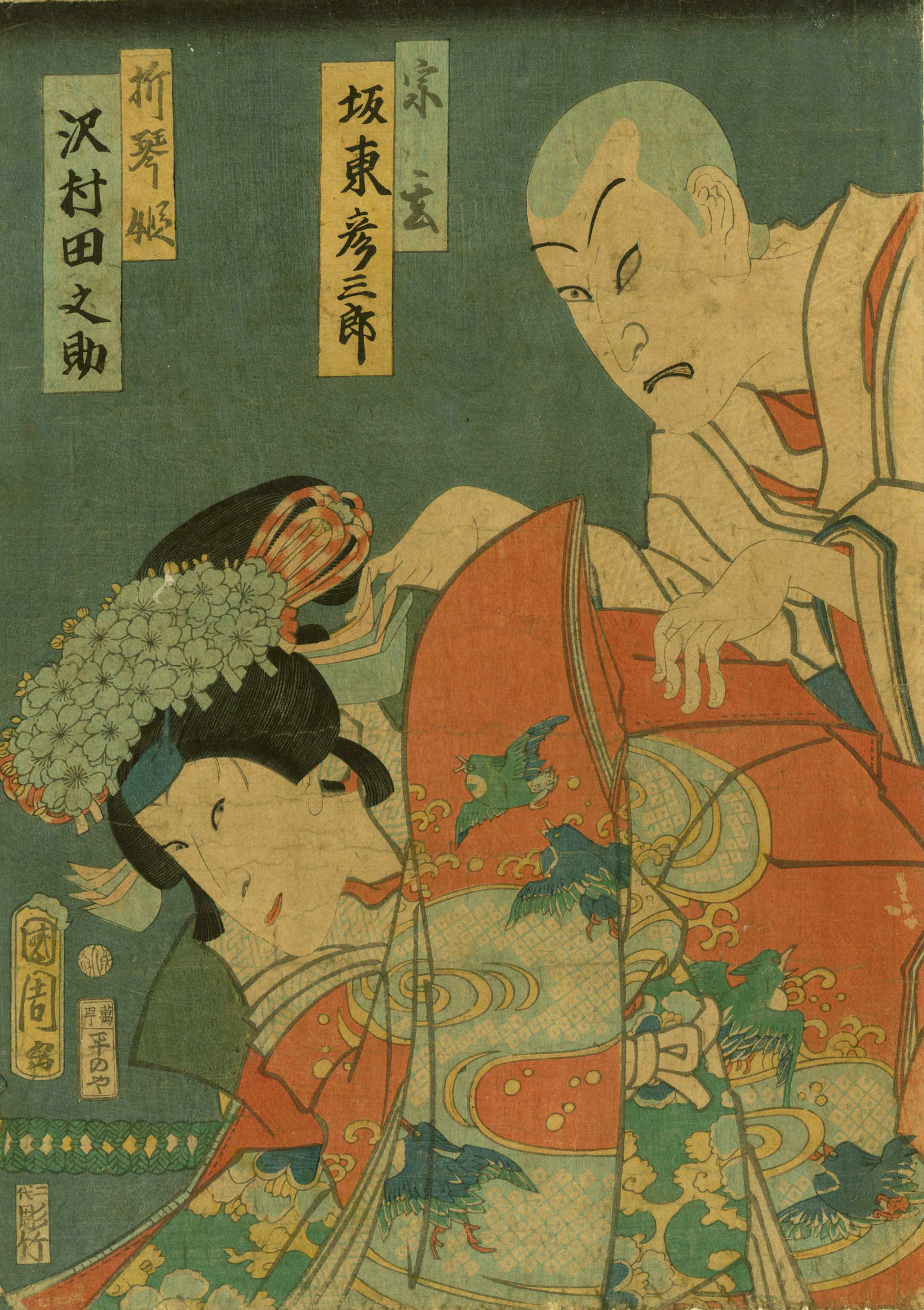
W240xL360mm, Japan

This is a Japanese wood block print by the artist Kunichita, published in 1862 by Hiranoya.  Kunichita was the founder of the Toyohara School and was one of the most famous ukiyo-e artist of his time.  His love with the Kabuki theater led him to work on ukiyo-e actor prints (prints of the kabuki actors and scenes from the popular plays).  In 1867, he was commissioned by the Japanese government to produce 10 pictures for the World Exhibition in Paris.  This exhibition strengthen the Japonism influence in the European art world.

This print is about the Kabuki play where monk Sogen (played by Bando Hikosaburo) became infaturated with the beautiful courtesan Orikotohime (played by Sawamura Tanosuke).  For this Sogen was expelled from the temple, tragically  Orikotohime died and he was left alone.

L150xW120mm, China

Wood block print presented on greeting card.

H540xW410xD200mm, China

This is screen is actually classified in history as a stationary, in the Song dynasty it is designed to be used as a screen to shield the inkwell from evaporation.  As time goes on, it became more of a desktop decorative item.  This cha ping has stone painting framed by mahogany.  The painting cleverly made use of the grain of the marble in the composition, at the back is a poem about a snow scene which reflect the marble grain.  The frame is removable, the painting can be taken out easily to show the reverse side.

W220xL300mm, China

This is a wood block print of the Kitchen God (Zao Jun) which traditional would be placed in the kitchen. He has been worshiped by the Chinese since about 1050BC!  The Kitchen God is believed to control the fortune of the household; at the end of the year (form 23 to 30 December of the lunar calender) he will report to the Jade Emperor all the kindness and evil deeds the family has done over that year.  The two assistant gods by his side, one hold a can with the record of the kind deeds and the other the evil record can.  Before the Kitchen God depart for his yearly duty, the families (usually on the 23rd) would make offering to thank him.  The offering are all sweet and gluey food, hoping it would stick to his mouth and sweet things would be said in his report.  Others would add a pair of couplet note to remind him, wine to to make him drunk etc.  hmmm … (also see The Return of the Kitchen God-01/26/2012)