Archives for category: Mountain Folkcraft X Soil

In China, the technique of lime / bean paste resist dye has a long history of 1300 years.  It is commonly known as “indigo print” all over the country.

The basic technique involved the application of lime and bean paste as a resist material.  A paper stencil, permeated with “tung oil” for the purpose of water proofing, is placed over the plain fabric where the lime / bean paste is applied.  The fabric is then dripped into an indigo vat.  The paste resist is scraped off to reveal the white design pattern.

Also see step by step guide from Hulu10.

Lime/Bean Paste Dye Fabric are shown at the Mountain Folkcraft shop in the Something New Something Old exhibition with Soil.
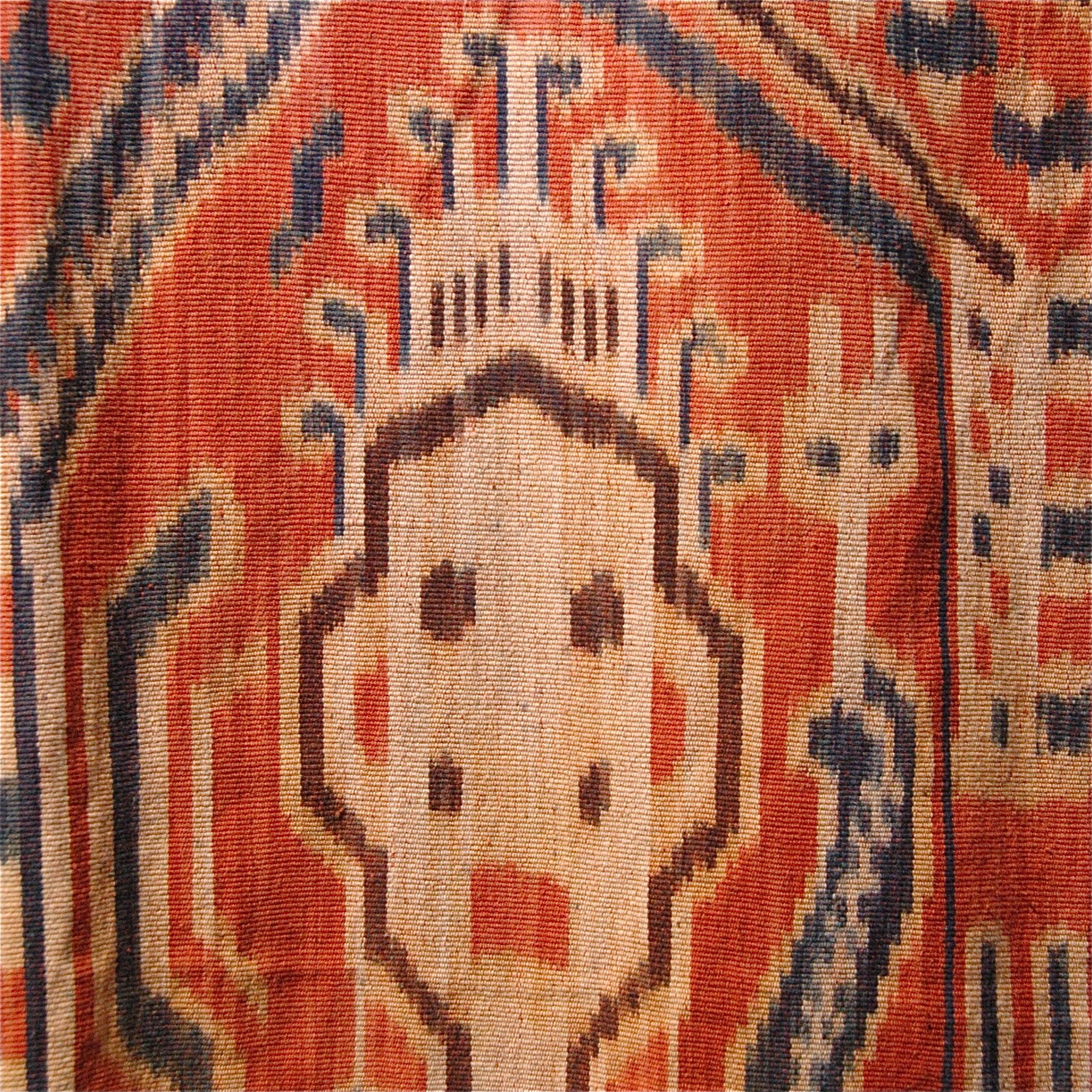
The technique of ikat dyeing starts before the actual weaving begins.  Certain yarn on the warp is wrapped up with thread or string.  When the dye applied to the warp, the wrapped up part form a resist to the dye.  Threads are then removed, leaving an area of undyed yarn.  It is then ready to be woven into cloth.  Because of the unevenness of the warp wrapping, the woven result has a characteristic ikat effect.

Ikat weaving is particularly laborious as the pattern is often pictorial, the warp has to be loaded on the weaving loom before carefully tying up the pattern.  After dying the warp has to be loaded but on the loom at the same location before weaving.

Indonesia ikat are a precious and sacred fabric use in ceremony.

Samples of ikats are shown at the Mountain Folkcraft shop in our Something New Something Old exhibition with Soil.

We are having a joint venture with Soil which will start tomorrow.
Mountain Folkcraft will be focusing on fabric items while Soil will be on other craft objects.
Do come visit both shops!

MOUNTAIN FOLKCRAFT. 12 WO ON LANE . CENTRAL . HONG KONG
SOIL . 43-45 SQUARE STREET . SHEUNG WAN . HONG KONG