Archives for category: Mountain Folkcraft X Soil

Hong Kong

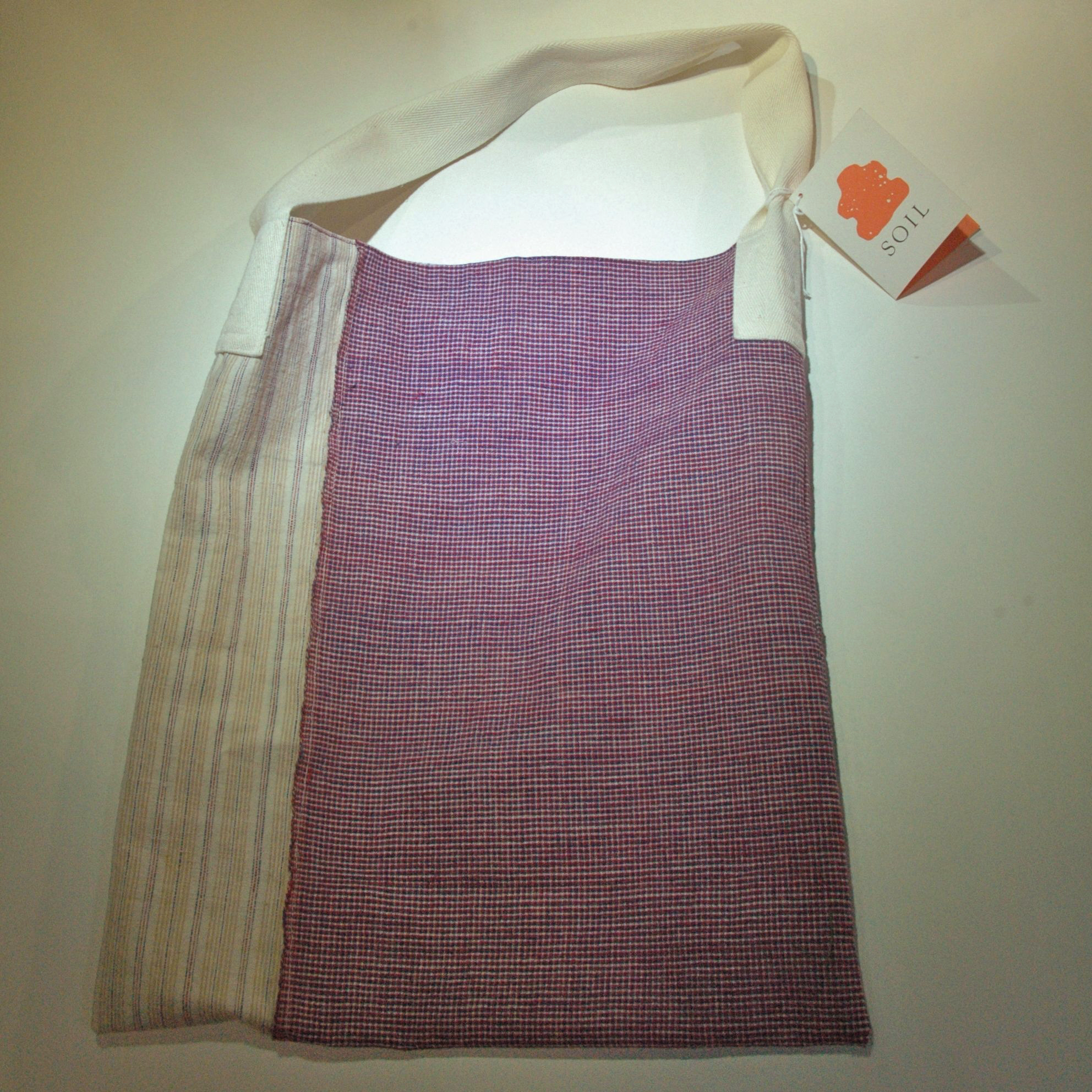
Denise is from Paiwan 台湾排灣族, an aboriginal tribe of Taiwan. Her interest on handwoven fabrics starts from her collection on minority costume.   She is not only a collector by has also become a craft designer.

These bags are made from her private collection of handwoven fabric, the construction of the bag is inspired by the traditional tailoring of the minority tribe.

Something Old Something New, a joint venture with Soil.

DIA130xH30mm, China

This was at the one time the most common bowl in the Guang Dong and Min Nan area, a bowl that is used in homes, street hawkers and local eateries, now a days they have been replaced by the durable plastic ware   Each bowl is hand printed with rooster, plantain and a flower.  There are a reasons of how the rooster made it to be the decoration for this popular bowl.

For the Chinese, the rooster is a protector of evil (see post Clay Rooster Whistle), it has also contained the 5 Chinese virtues (Knowledge = comb, Strength = footing distance, Bravery = fighting its enemy, Benevolence = calling others to feed, Credit = crowing every morning).  And finally, in the old days meat is a scarcity for common people, dishes are often decorated with chicken or fish to spice up the meal.

This item selected by Furze for the Something Old Something New exhibition and is available at both Mountain Folkcraft and Soil.

Hong Kong

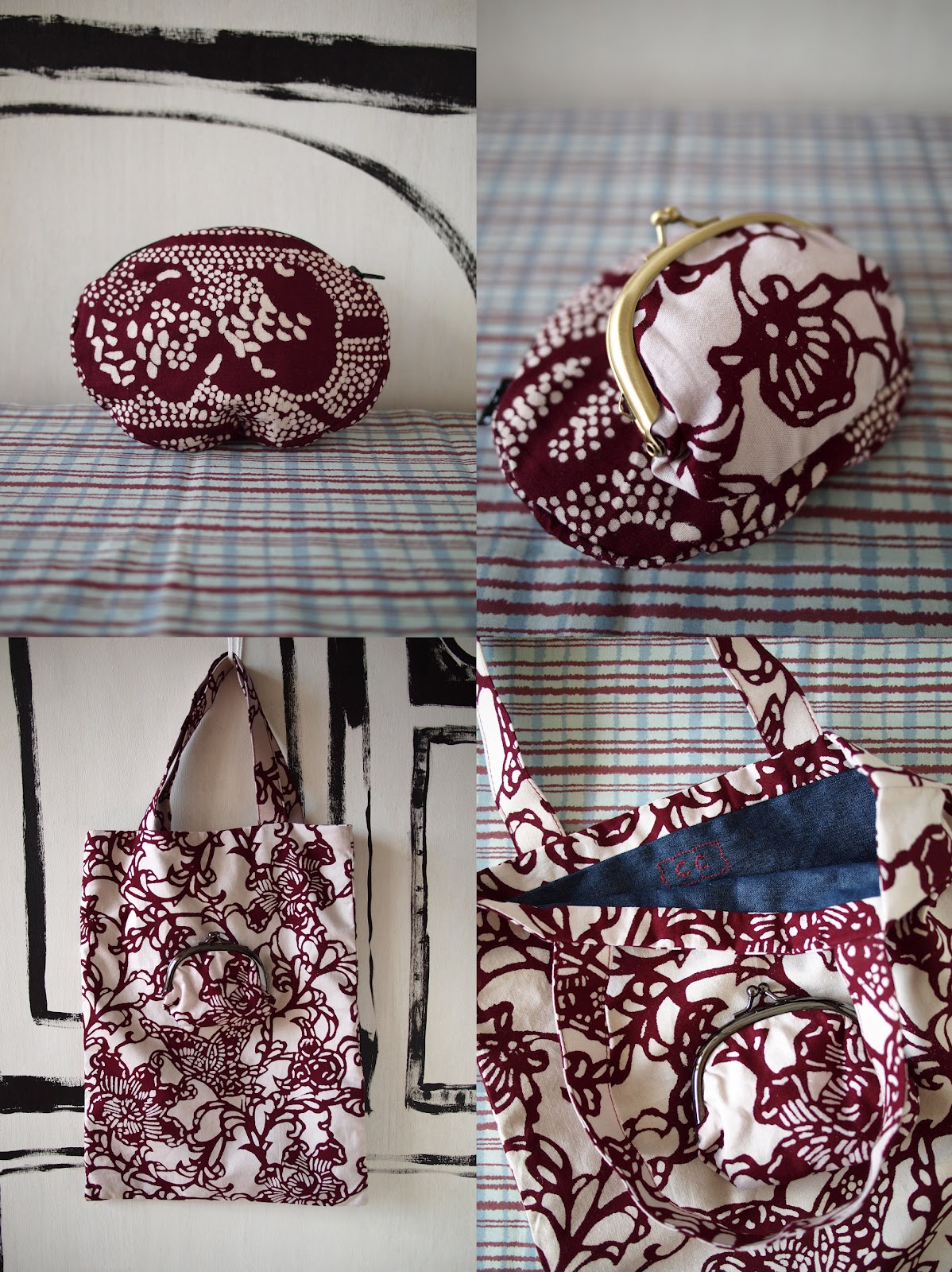
Using the fabric from Mountain Folkcraft, artist Cotton Car has created lovely purse and tote bags for the Something Old Something New exhibition with Soil.

A Pleasure in Metal Frame Purse

“besides stripes and round shapes
I enjoy working with metal frames as well
so tempting to attach it to other purses
like extra compartment, yet decorative at the same time”

Cotton Car primary source of inspiration comes from daily life, or everything around her.
To find out more about Cotton Car visit her blog @ http://cottoncar.blogspot.hk/

DIA 150xH50mm, China

This item selected by Furze for the Something Old Something New exhibition and is available at both Mountain Folkcraft and Soil.

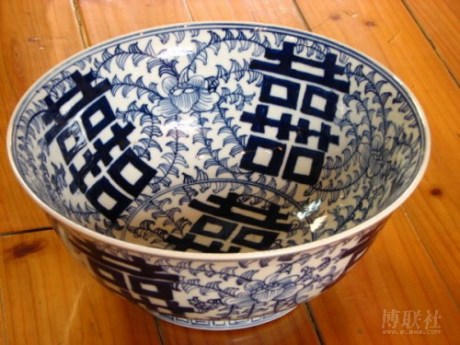
This is a folk version of the double happiness bowl; on the refined version the bowl is decorated with the word 囍 (double happiness) and a winding stem pattern that is popular in the Qing dynasty.  While the design is passed down from an official kiln to a commoner’s kiln, the design is abstracted over generation of craftsman.  This is likely to be due to that the craftsman are mostly illiterate and the design was taught to the young apprentice almost as a symbol from their master who has learnt it the same way.  Nevertheless, this abstracted bowl is known to them also as the double happiness bowl, equivalent to the original item.  The painter Wu Kuan Chung made this observation about the under glaze decoration of commoner’s kiln; some ideas which was inspired by daily life, they can being transformed into another type of art form by subtraction, multiplication or other means as long as it is still tied to the origin of living.

Can you spot the work 囍 and the scrolling foliage pattern?

Here are some hints;
the first 2 are folk version of a less simplified bowl and the last being a more refined version.  (I somehow preferred the abstracted version)

Answer: the pattern that looks like # is the word 囍 and the three circle is part of the scrolling foliage  pattern.
春 023

varies sizes, Hong Kong

For the Something Old Something New Exhibition with Soil, our curator and participating artist, Furze Chan, has created for us these Happy Dolls.  They are handmade by Furze with tie dye indigo fabric.

Furze Chan is a design freelancer in Hong Kong. Her works include publication design, web design and illustration. She owns 2 brands – “With Her Animal Poetry” and “Ferse Verse”. She was graduated in visual communications(Hong Kong Polytechnic University, the School of design)(BA) in 2006.

To learn more about Furze, visit her blog @ http://furzechan.com

Patch work is a piece of fabric formed by little pieces of fabric.  The idea of patchwork started early in ancient Egypt and northern China, possibly because of the shortage of material and the cold climate.  It was later developed as an art in Renaissance Europe and then became a popular during the period of new settlement in America.  The patchwork quilt at one time was the symbol of reminiscence of their mother countries.

In China, patchwork is called the “hundred swatch quilt”.  Upon a child first birthday, village friends and neighbors would each contribute a swatch of fabric, old or new, to the child as a present.  The mother would then patch these pieces of fabric to make a vest or a small quilt for her child, depending on the quantity she acquired.  The vest or quilt is supposed to embrace hundred of blessins and render the child a happy and healthy life.

Step by step guide for making a patchwork quilt from the International Quilt Study Center and Museum.

Discharge technique in fabric is to make the design pattern on dyed fabric by chemical means.  Diluted sulfuric acid agent is painted with a brush directly on the indigo dyed fabric.  Chemical reaction takes place as the acidic agent get in contract with the indigo dye.  The acidic agent will then discharge the indigo pigment, leaving a white pattern.  This method of pattern making allows more freedom in expression.  But most of the time, stencils are used in production because of labour.  The discharge fabric is finally rinsed in an alkaline bath to remove the acidic remains.

Here is a DIY version of the same technique, you can try it at home!

Discharge Dye Fabric are shown at the Mountain Folkcraft shop in our Something New Something Old exhibition with Soil.

This simplest kind of tied dye is by pinching up certain spots of a plain fabric, wrapped with thread or string and then putting the fabric to dye.  The wrapped areas resist the dye from getting in and thus form a white pattern in an indigo background.

Other than the above method, tied dye can achieve different effect by folding, pleating, stitching and twisting.

Tied Dye Fabric are shown at the Mountain Folkcraft shop in the Something New Something Old exhibition with Soil.

The term brocade to the Chinese denotes mostly brocades woven by the minorities in Guang Xi province, the Miao tribe, Dong tribe (Gaeml) and Yao tribe in particular.  The characteristic of these brocades are their vibrant colour combination and interesting geometric designs.  To achieve these means that they have to have several shuttles for different colour yarns and a special designed jacquard hand loom.

During the Ming dynasty, these minority brocades were articles of royal appointment tribute.  In the past, young girls by the age of 10 would have to start weaving a brocade of her own design and this would become her dowry for her wedding later on.  Motifs of brocade mostly are cloud, water, fish, bird and floral.  Brocades are used as quilt cover, wall hanging, cushion, head dress and belt etc.

Brocade Samples are shown at the Mountain Folkcraft shop in the Something New Something Old exhibition with Soil.

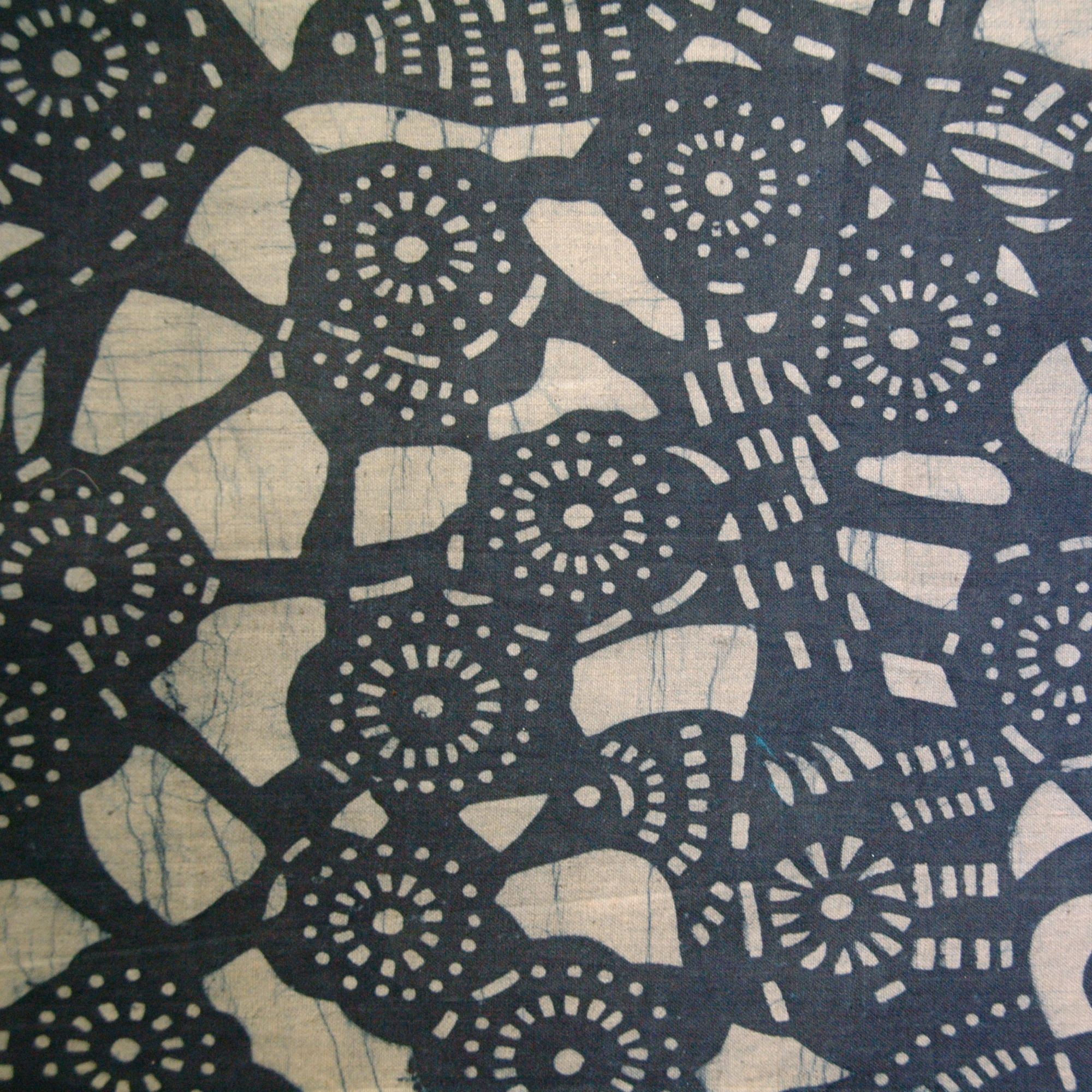
Wax resist is generally known as Batik.  Apart from Indonesia, south west region of China is believed to be one of the early development area of wax resist dye according to recent excavation reports.

Molten wax held in a special wax pen is used to draw design directly on plain fabric as a resist.  After the drawing work, the fabric is then put into a drying vat.  As wax is a brittle substance, dye gets through minor cracks which gives a characteristic batik result.

Si Chuan and Gui Zhou provences in China are well known places for wax resist dye fabric.

Wax Resist Dye Fabric are shown at the Mountain Folkcraft shop in the Something New Something Old exhibition with Soil.