After the miniature bamboo steamer, we have the miniature medicine pot. Made with a sandy type of clay, this pottery container is identical to the real thing. Unlike the normal teapot the handle and the spout are placed in the same direction which makes pouring easier. The doctor for Chinese medicine normally prescribe for the herbs to be boiled with certain amount of water (e.g. 6 bowls) and to be reduced to a lesser amount (say 1 bowl). It will be hard to judge by time how long the brewing will take and every now and then one will have to pour out the medicine to see if the correct amount has been reached.
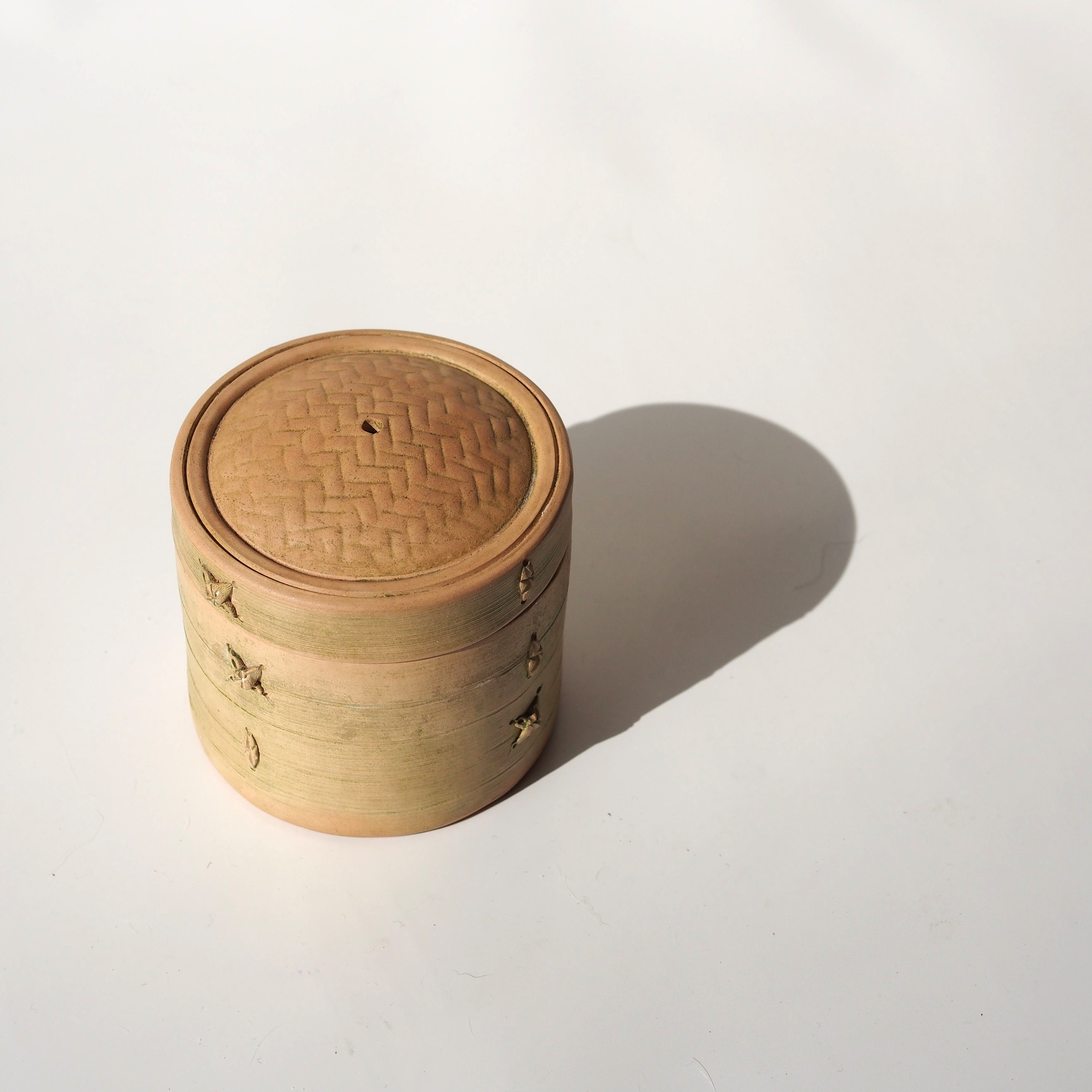
We have a large bamboo steamer in yesterday’s blog and today a miniture one is featured. This small tea container is a Yi Xing pottery, the famous teaware province. As all Yi Xing teapots are hand built instead of made by on the potter’s wheel, the artisan are extremely crafted with their hands. This miniature has all the details of the real bamboo steamer.
When one think of Yi Xing pottery, the dark brown colour clay (Zi Sha) comes to mind. The brown colour of the Zi Sha comes from the high content of iron. In the same area apart from the Zi Sha are other types of clay and the white clay is one of them.
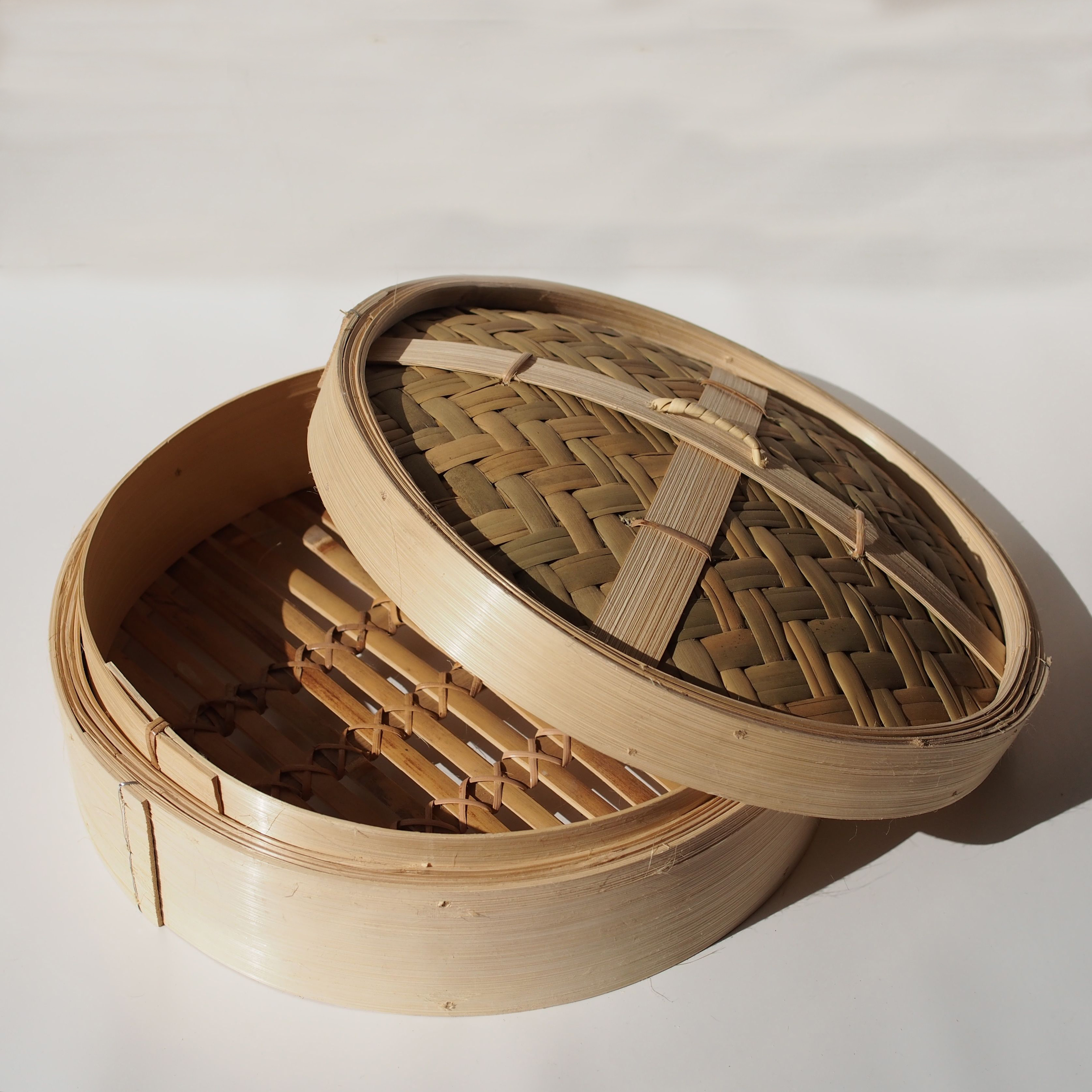
Food steaming has become one of the way to a healthier lifestyle; food is cooked at 100c over boiling water killing germs and the add of oil is not essential hence avoiding trans fat. Typically, the steamer would be placed over a wok filled with boiling water, the steam from the water would filled the steamer through the gaps at the bottom, the food would be cooked with all the juices and flavor retained.
It was said that the method was first invented for the Han dynasty army for rejuvenating their dried ration, the steamers can be stacked up to heat up large quantity of food. The elimination of oil used in this method also made the enemy harder to detect the location of the camp. However, with archaeological discovery the steamer seems be have appeared long before, to be as far back as the Zhou dynasty, some 2000 year ago.
Tomb cave painting of the Jin dynasty
Unfortunately, though the method lives on with the high tech electrical steamer, the age of the bamboo steamer is on its last legs, their used to be streets filled with artisan making bamboo steamers, now there is only a couple in the city. It seems like its ancestors, the bronze and the ceramic steamer, the bamboo version is replaced by the stainless steel and the plastic version.
Bamboo is a plant that can be found in most part of China, not only is it a source for food, it is also used from scaffolding for architecture, to delicate weaved containers and nowadays for flooring and even clothing.
This bamboo box, I found is one of those back to the basic ideas. Making use of the culm (the main shaft) and the nodes (the horizontal structure), a container is naturally form, the fibrous culm gives the box its texture.
Bamboo shoot, the sprout of the bamboo plant, is a great delicacy. It is harvested when it has barely seen from the soil, when its texture is still fruit like before turning woody. If it is left a night too long the bamboo shoot will be too hard to be consumed. It is not comparable to another other vegetables and the tin version is nothing close to the real thing.
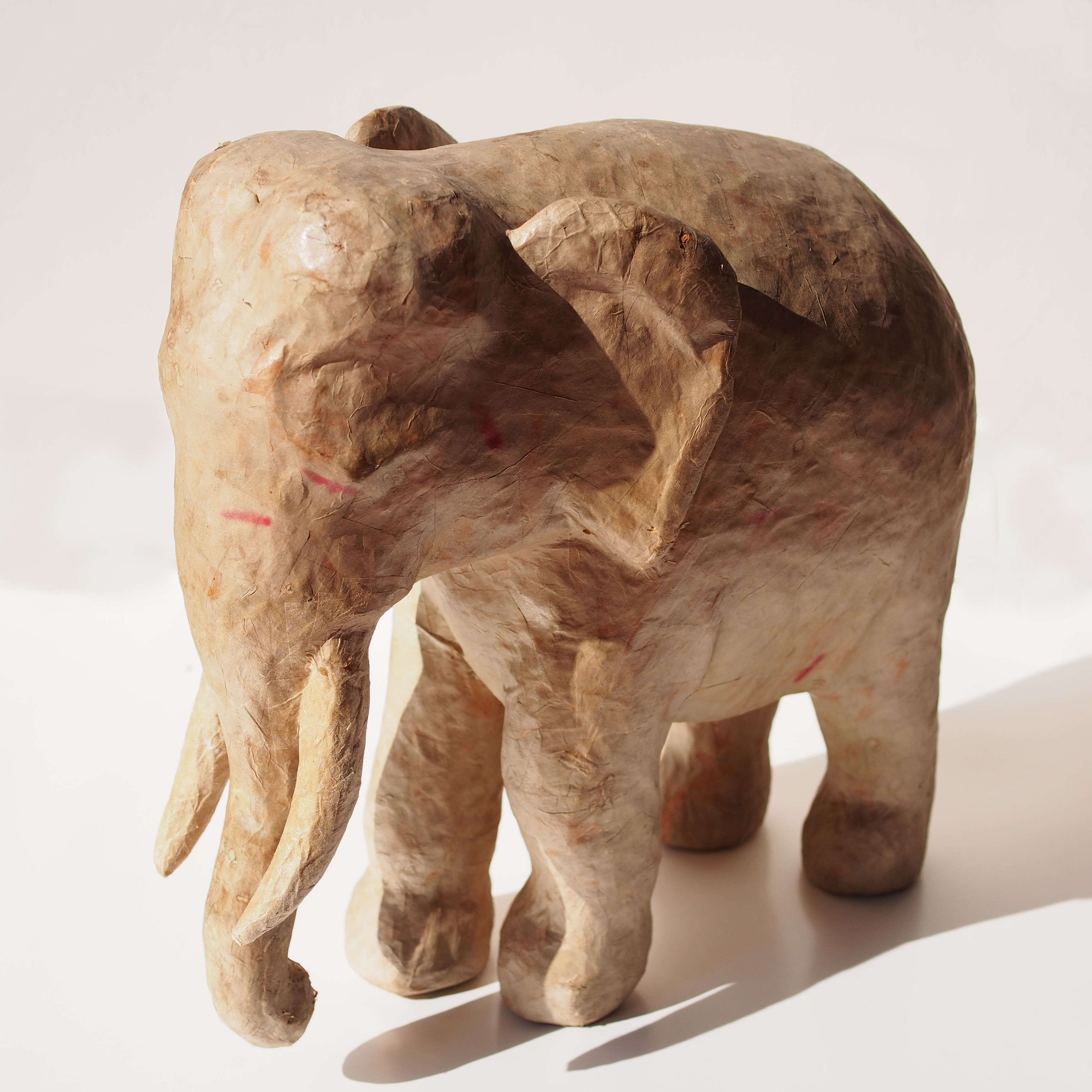
We have now associate the term white elephant to large and redundant project that is exhausting to maintain, e.g. the Olympic bird nest stadium or even Downton Abbey.
The white elephant first gained its sacred reputation from the appearance in the dream of Queen Maya (mother of Buddha). In the dream, Queen Maya was carried by our spirits to a lake in the Himalayas where she was bathed and pampered. Then came a white elephant holding a white lotus flower and circled around her 3 times. It is believed that the buddha took the form of a white elephant to be reborn on earth.
This sacred animal became a symbol of justice and power for the kings of the Southeast Asia and that it offers peace and prosperity. Temples, palaces were build for his home; musicians, cooks for its entertainments, etc. The white elephant is a rare, in today’s terms, it is albino (a genetic disorder which lacks pigments in the skin). In the old days, as they are rare, the king would use them as the highest reward. This would be a blessing if one has the means to sustain the up keeping of the sacred elephant but otherwise a curse and this is where the meaning of the modern idiom comes from.
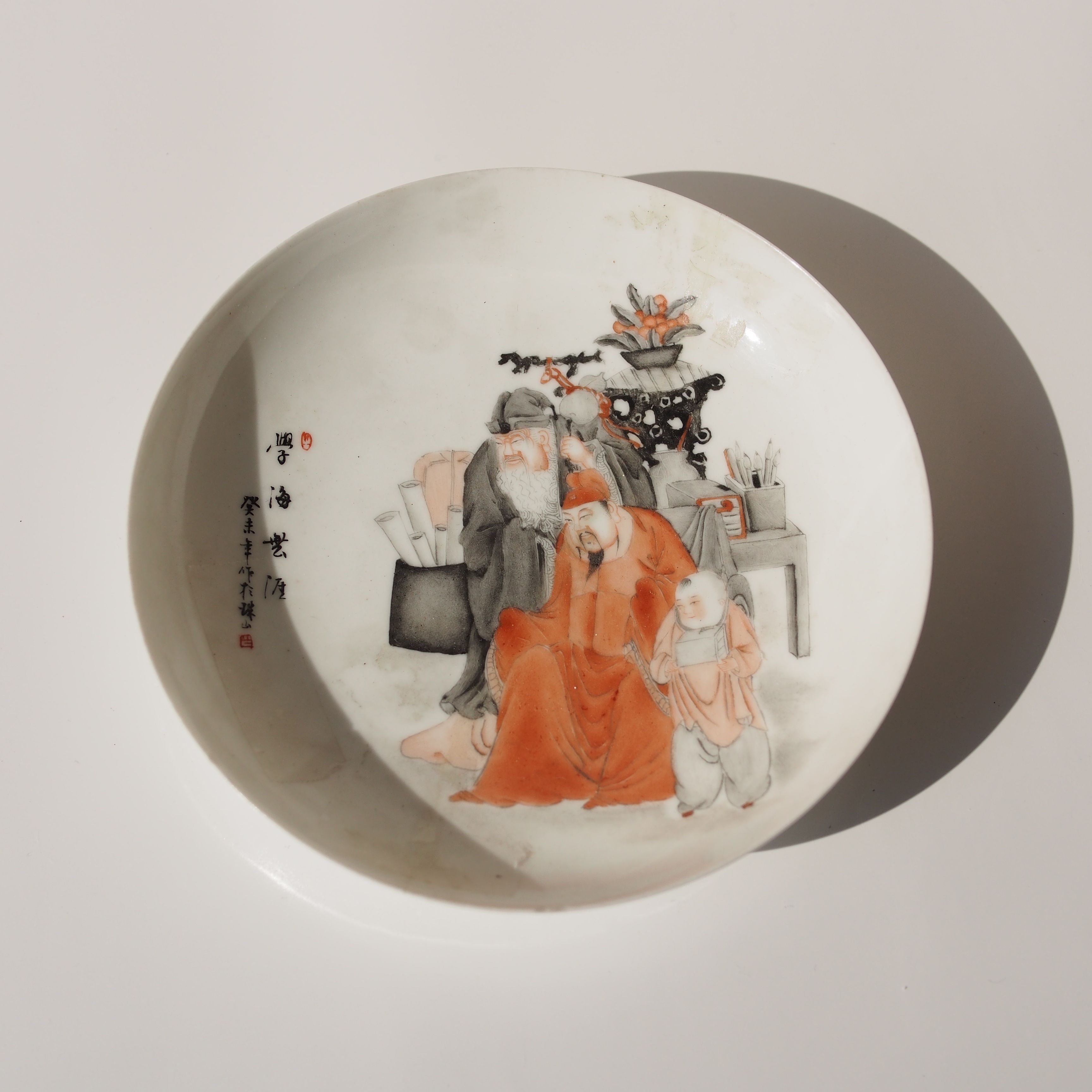
On the plate is painted 3 generation of scholars, the well learnt elderly man, the established and the scholar to be. Behind them are a selection of scholarly objects and collectibles; scrolls of painting and calligraphy, stationary, books and root sculptures. On the side of the plate is the phrase “knowledge with no cliff”, meaning knowledge is so board that it is like an ocean without an edge.
This phrase is well learnt by most young students, as an encouragement for acquiring knowledge. The phrase came from the late Ming well known writer Zhang Di who was born in a wealthy intellectual family. Well learnt, he indulges in decadent love of beauty; pretty maid, handsome serving boys, fashion, gourmet, elegant horse, glamour, crowds, painting, antiques, etc, etc. The life style and the political situation made him a poor man at later years, he found himself failure in all counts. This however, made his writing all the more powerful.
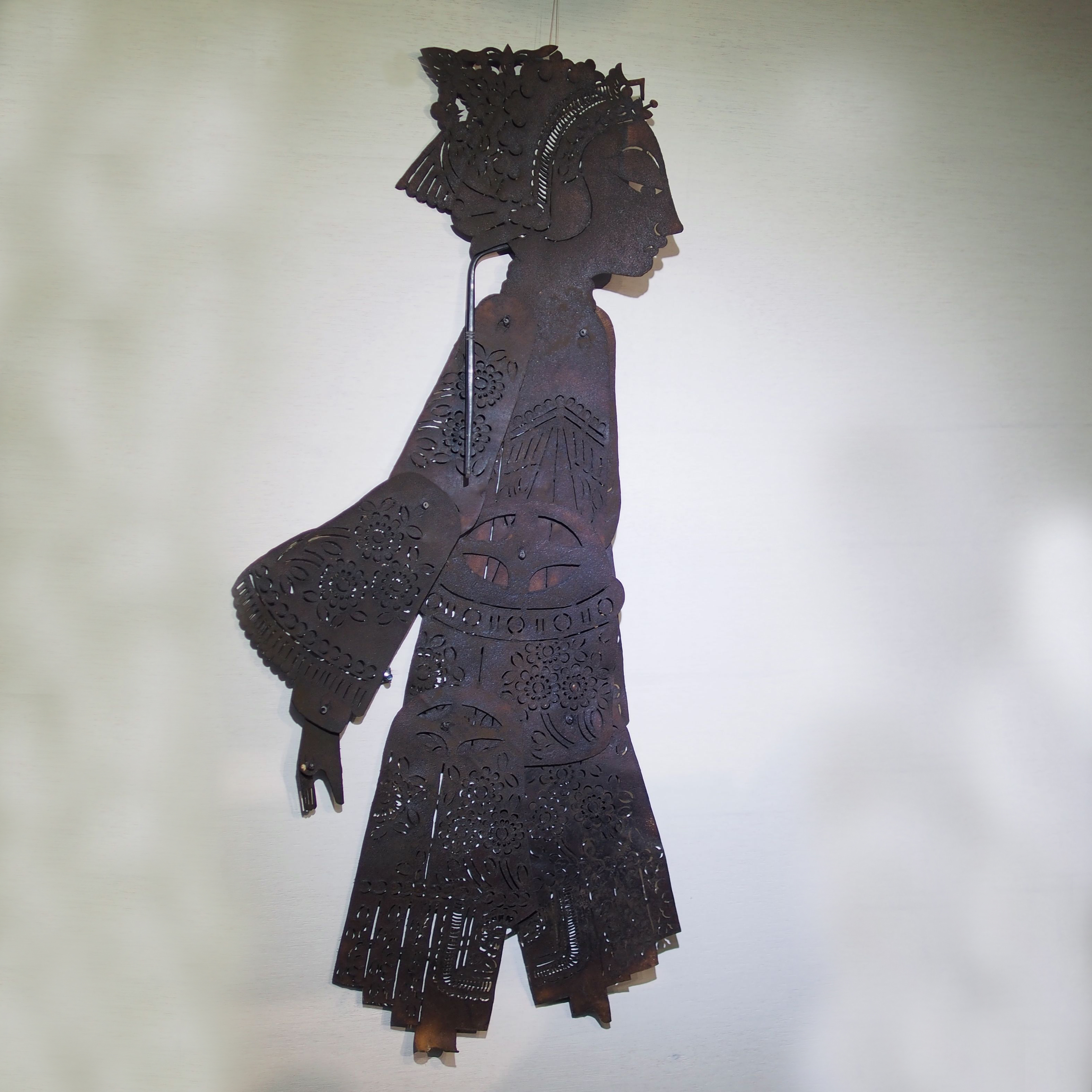
This shadow puppet came from a set we acquire from Indonesia, curiously the contained Indonesian characters as well as Chinese ones. Like this particular puppet, the head gear, the costume, the bounded feet, the facial features all points to a Chinese diva. I wonder if the set of shadow puppets were commissioned by a Chinese immigrant in Indonesia who is a bit home sick for Chinese shadow puppet. It became a fusion of the two, just as today’s wayang kilt some of which has departed from the traditional story of the Ramayana to include everyday events such as karaoke.
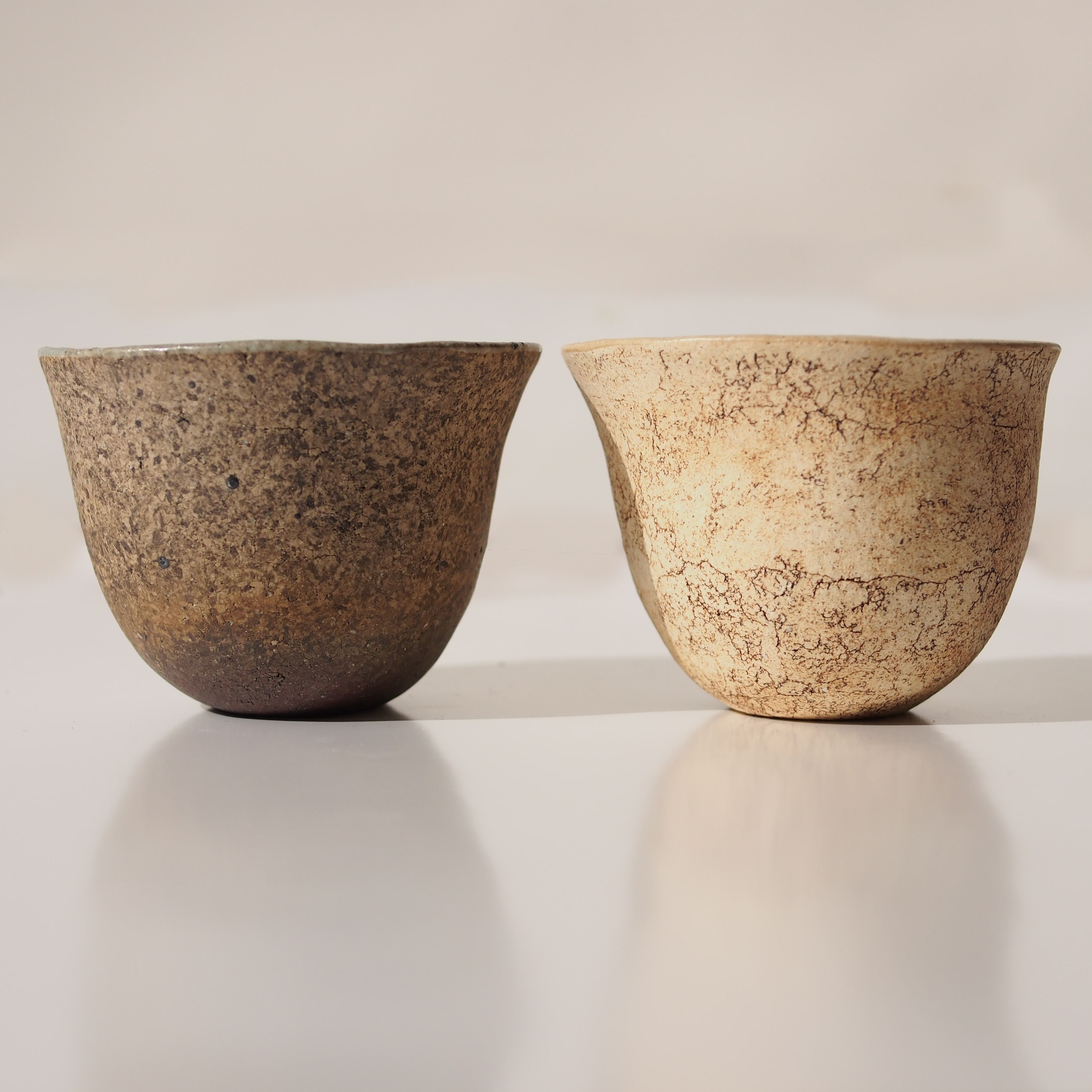
Handmade pottery tea bowls from Shigaraki, the texture on the exterior is rather rock like. One almost feel as if one is holding a piece of very fine stone. The inside of the bowls are glazed to prevent the tea from staining the bowl.
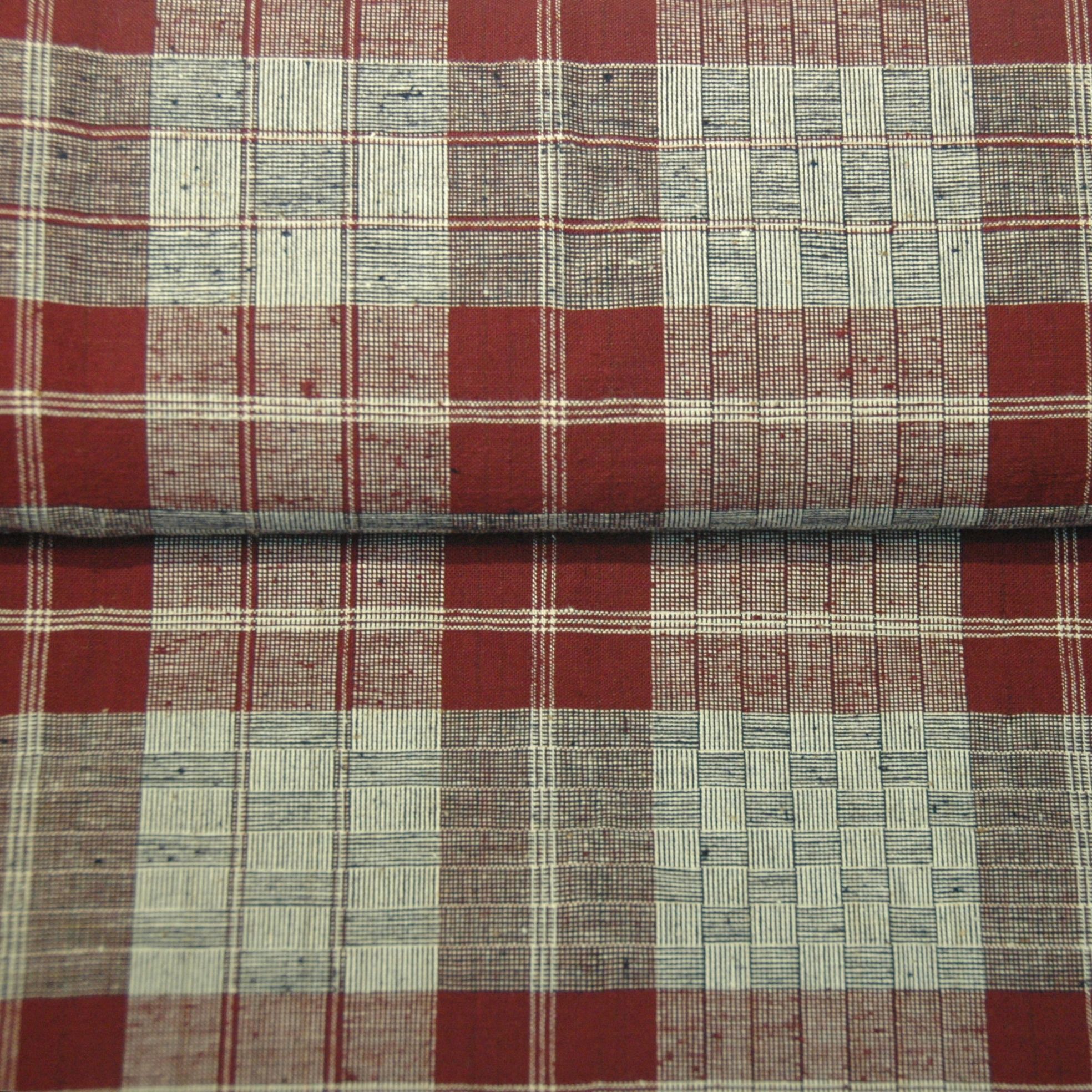
Hand weaving used to be a traditional household craft for the minority tribes in China, the females would spend their passtime weaving fabric for the use of the family. During these times, not only would the mother would be passing the technique to her girls, it is also a social gathering for the family.
However, with the industrial development of China, it is much easier to buy ready made clothes instead of starting from making a piece of yarn. For the younger generation, the prospect is also brighter to work in a factory in a city than farming in the village. Time has changed, social gathering happens in front of the telly or with the mobile.
This hand woven fabric from our collection is sadly becoming past of history.

 DIA95xH100mm, China
 Tomb cave painting of the Jin dynasty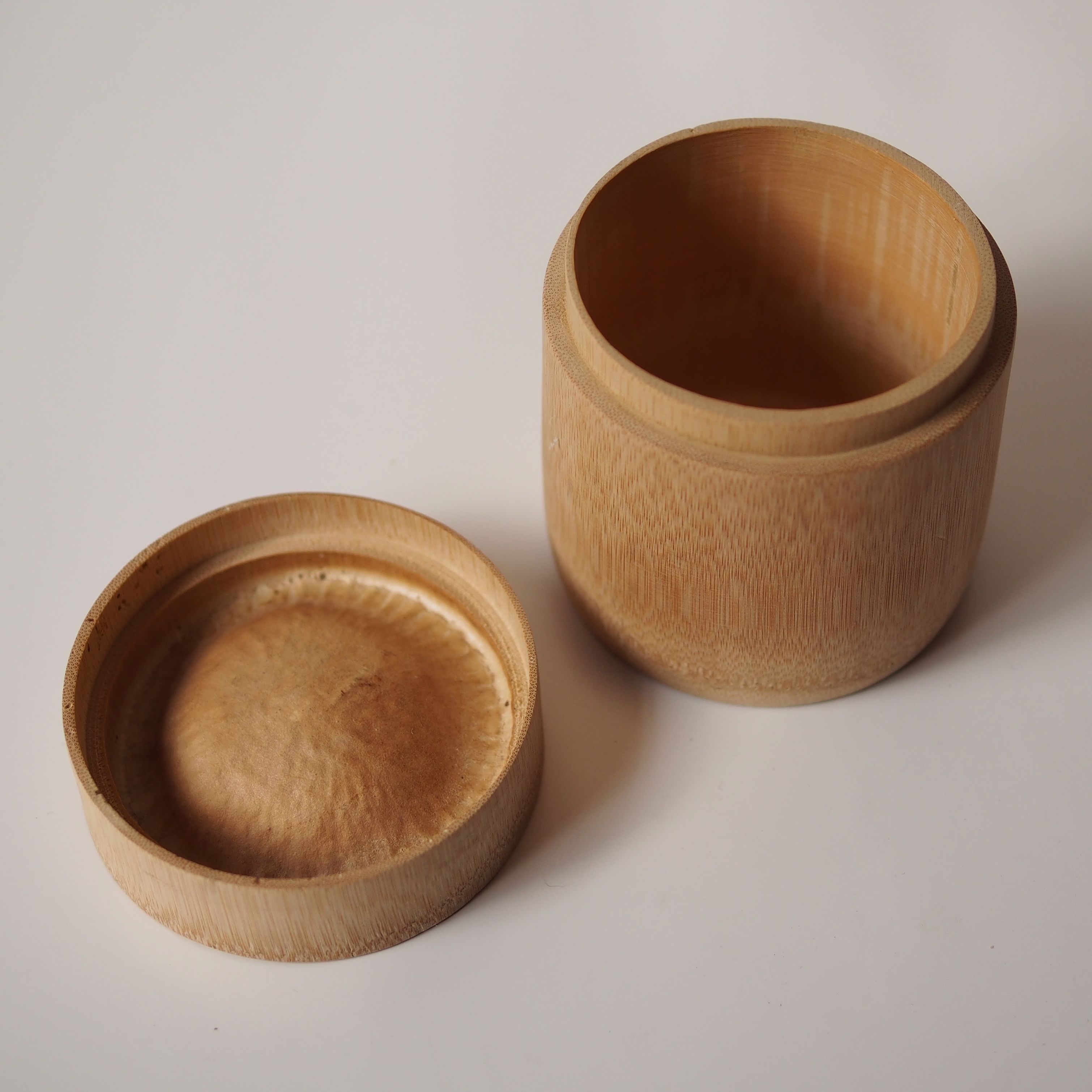



 Mountain Folkcraft