Archives for the month of: March, 2012

DIA400xH150mm, China

This is a bamboo weave box normally used for storing small items and for keeping offerings.  The lacquer coating on the interior makes the box more air tight.  The lacquer on the gives the opportunity for gold line decorative painting to be drawn on top if any.

DIA80xH100, China

This is a bronze compartment box for keeping small accessories.

I wonder if in the old days there would be a store like Muji selling a selection of compartments boxes for organisation of small items.

H170xW50xD70mm, Macau

I have been pondering about this figurine for a long time.  It is a Tanka god which would have been worshiped on the junk boat, keeping them safe on their fishing voyage.  But what kind of god would it be to be on a bicycle?!!  All my research led to dead ends.

A couple of days ago, I was in Tai O, an old fishing village in the remote part of Hong Kong.  I was attracted by the artworks surrounded a small convenience store, to my surprise they were created by the 84 years old owner, Mr. Lu, who was borned in Tai O of the Tanka clan.  He is like a walking history book and I took the opportunity to find out from him the nature of this figurine.  The figurine was indeed for worshiping, however it is not a proper god as such but someone in general who might harm you (giving you trouble, tummy ach, etc.)  So these people are made into figurines and offerings are made to them as if they are some kind of gods.  From the costume of the figurine, he is likely to be an official similar to today’s policeman.

Decoration outside Tokyo Store, Tai O.
They were created each year for the Chinese New Year with the corresponding animals from the zodiac signs, this was for the year of the rabbit.
If you are visiting Hong Kong, Tai O is a great place to go if the city and the malls becomes too overwhelming.

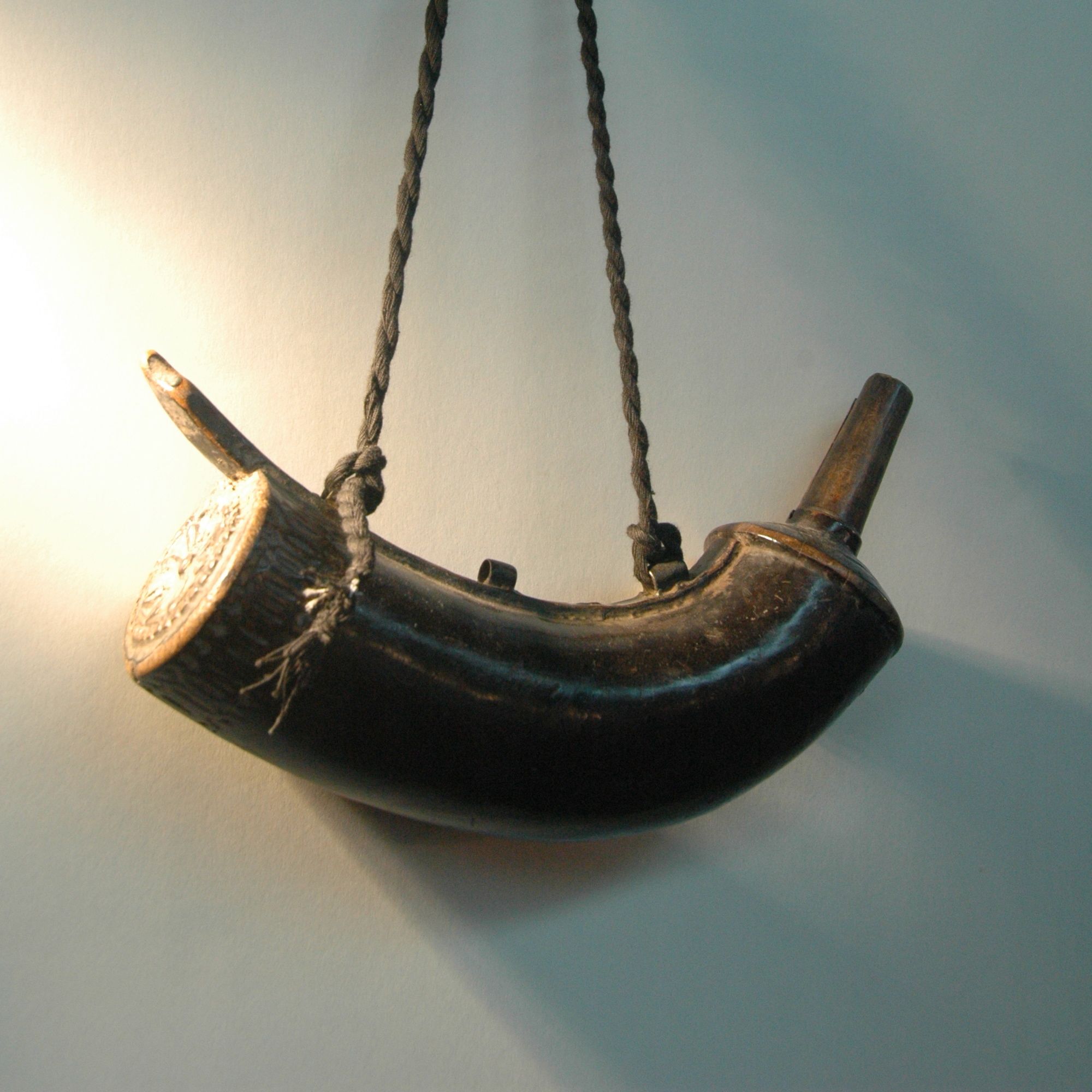
DIA70xL280mm, Thailand

This is a powder horn, a container for carrying gunpowder.  It is made with a a buffalo horn with a nonferrous metal for the base and the spout.  Powder horns were very common at a time when muzzle loading guns are used, people would store their black powder for ammunition reloads.  As the gun making technology advanced with the same ignition process, the need for carrying the powder horn diminished.

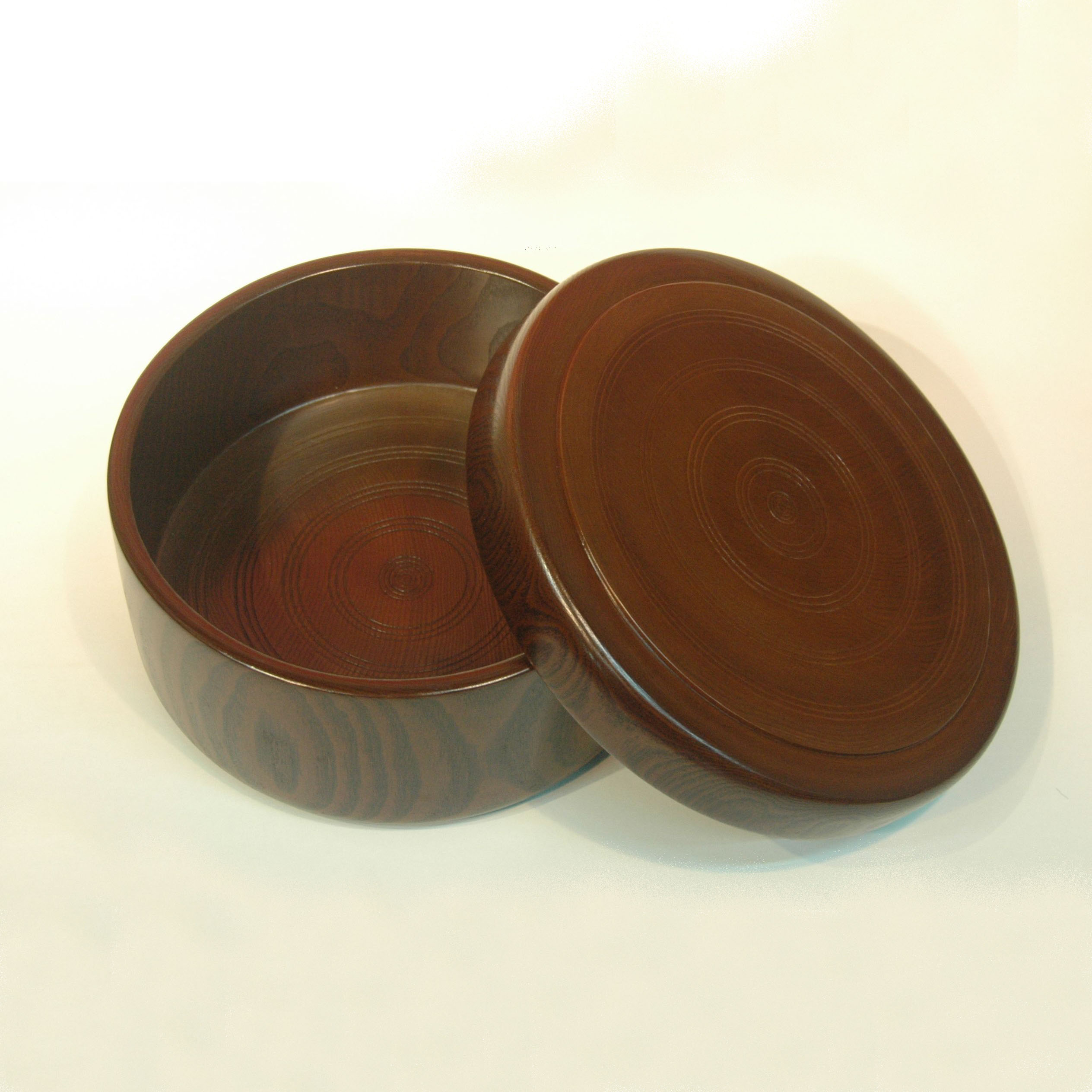
DIA300xH140mm, China

This wooden box is made out of  single piece of wood, with the void area taken out using a lathe.  The wood would be fixed and mounted, with the spindle (a spinning mechanism powered by foot paddle in the old days), it is spinned around on axial.  The wood is then hollowed out with a tool held against the spinning piece of wood.

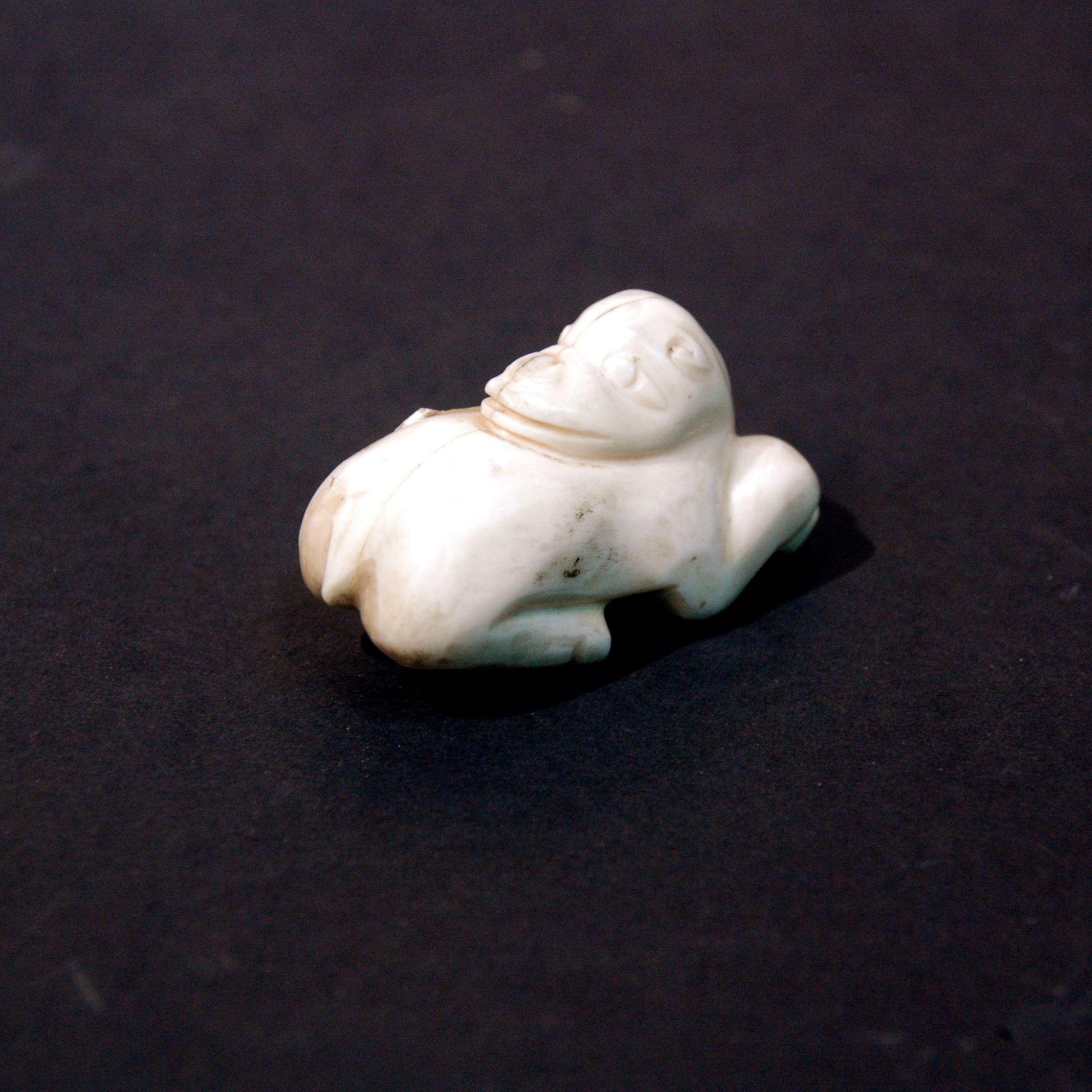
W30xL60xH80mm, China

This stone carving has puzzle me for a while; what creature can it be?

It has:
no horns,
a short neck,
long legs,
hoofs,
short tails

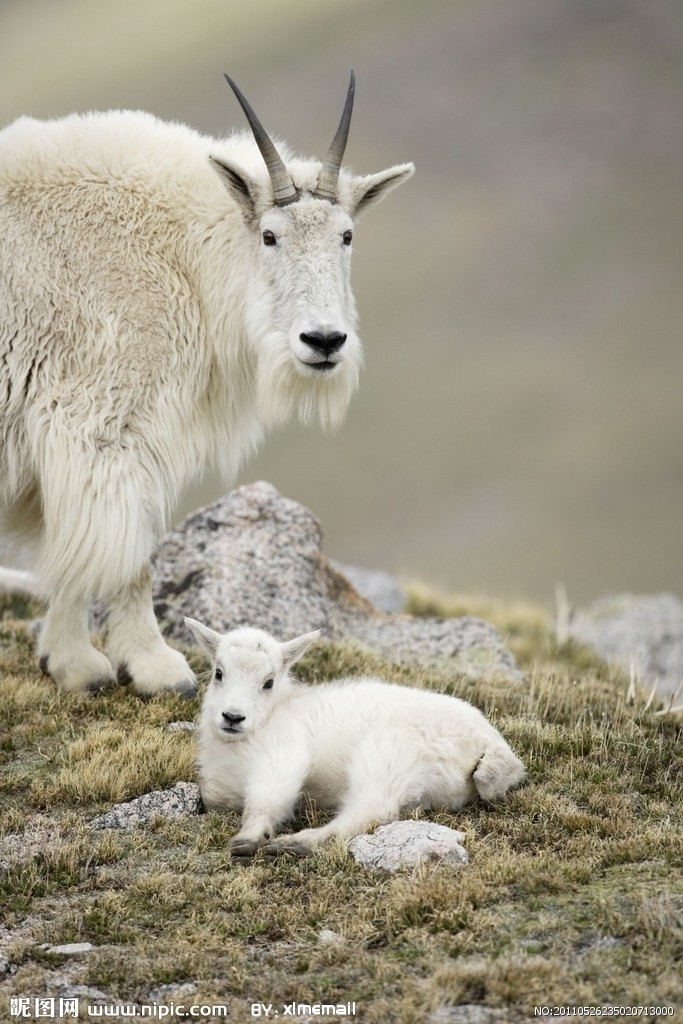
Baby goat?
let me know if you have a better guess.

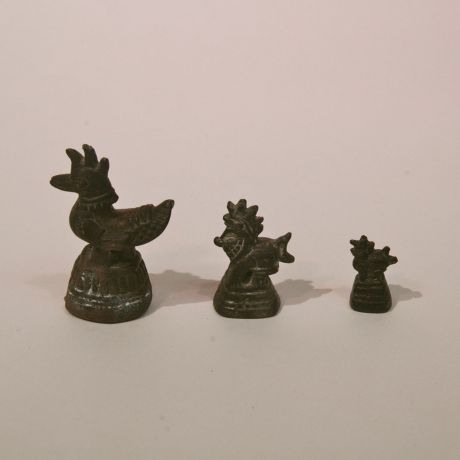
L40xW20xH50mm (L), Thailand

I used to play with these when I was a child, a flock of these metal birds.  I am certainly surprised to find out they are weights for measuring opium when i am older.  On further research, I am please again to know that because of the small weights they are used to measure anything light and precious (metal, spices etc).  The bird figure is of the Hamsa which represent a perfect balance, union and life.  As the Hamsa can walk, fly and swim; it is believed they have the power to transcend the limitation of the creation around it.

These brass weights are made with the method lost wax casting; a clay core model of the weight is made, a lay of molten wax is poured over the model.  The wax is refined and covered again covered by layers of clay which takes the negative form.  Drain duct as placed for the wax and gas to escape, the clay core secured, then molten metal is then pour in through an opening at the base, as this is going to be a precise weight the amount of metal used is carefully measured.  The wax is melted and replaced by the metal which takes the detail and shape of the wax, the outer layer is removed and the weight is casted.

The large hamsa weights 10 tical (164g), medium 3 tical (49g), small 1 tical (16g)

W100xH120mm, China

Apology for not blogging for the last few days.  The blog is back on again!

Knife-Horse-Man is the name for artifice whose subject is based on war based stories or opera.  K-H-M can be found in paintings, illustration of ceramics down to folk toys like these.  Some of the clay K-H-M figures can be as tall as 600mm, it is believed that they are able to protect the household.

L350xW200xH200mm, China

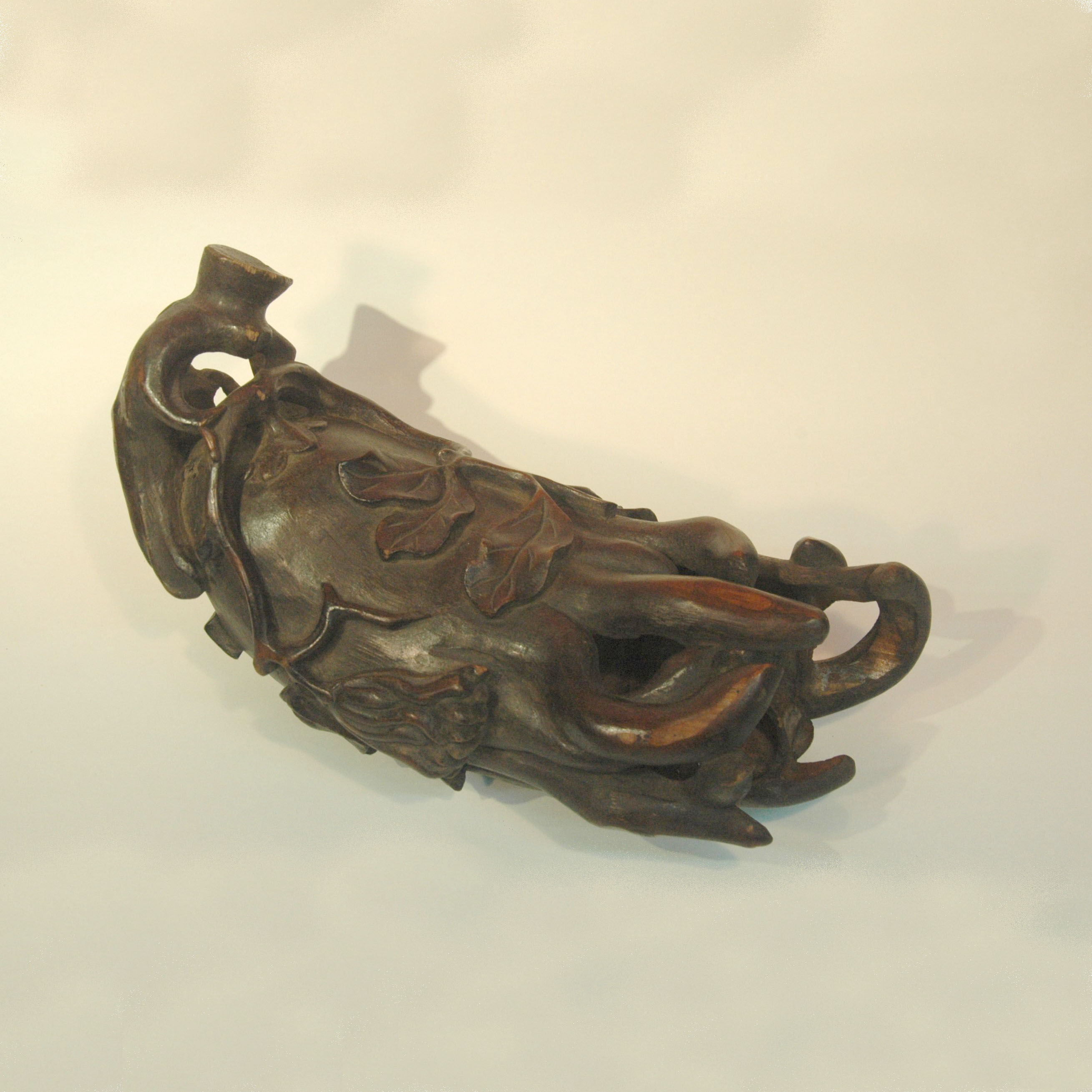
This is a wood carving of a plant known as the Buddha’s hand fruit (Citrus medica var. sarcodactylis).  It is a citrus fruit that is segmented into finger like section, the section resembles the fingers of the Buddha is tradition Chinese painting, hence the name.  In China the fruit is mainly used for perfuming the room and as an object for appreciation, it is also used in herbal remedy.  Because of the beautiful form of the fruit, it has become an subject for craving (wood, root, stone, jade, etc).