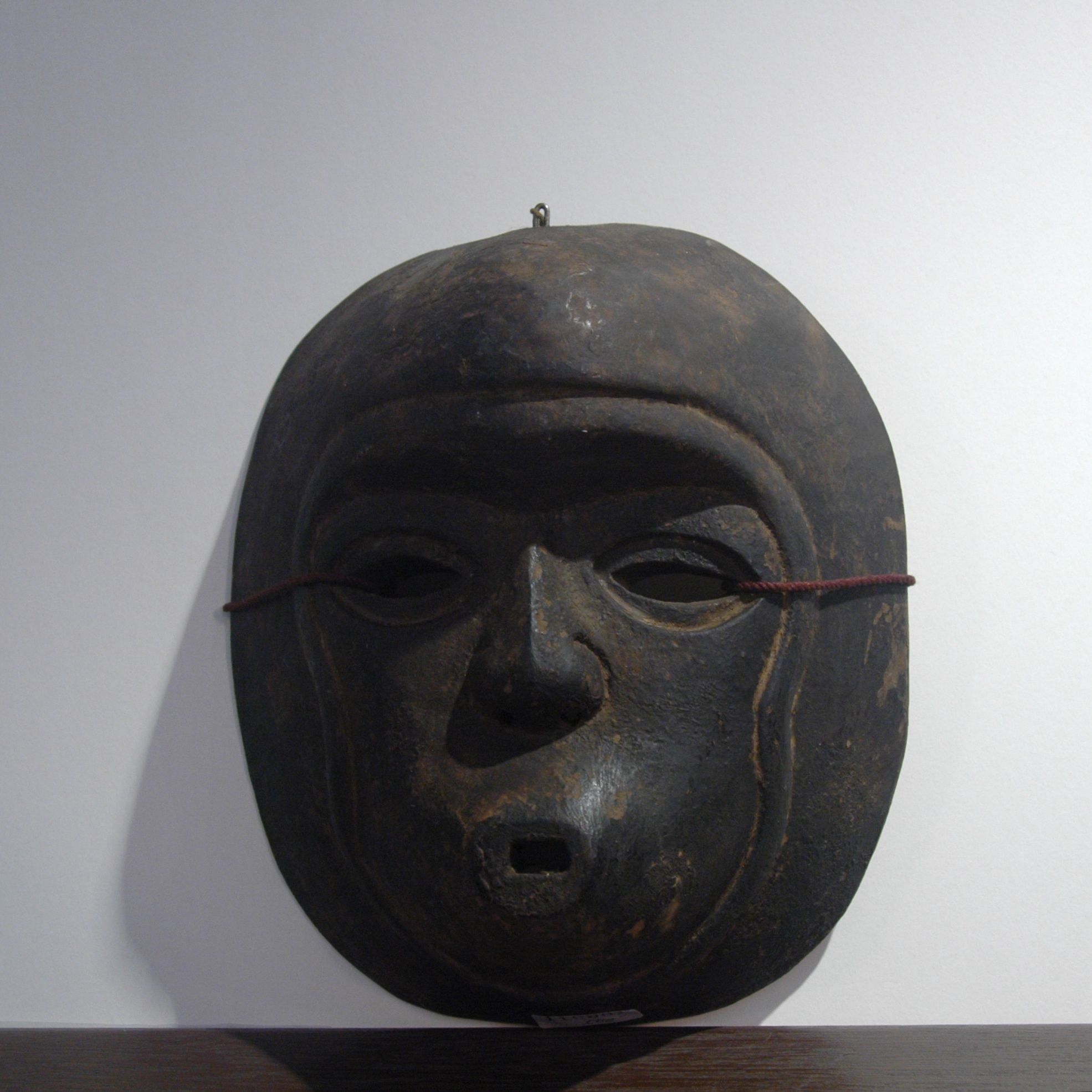
Along the coasts and waterway of the southern China there is a tribe called the Tanka who reside on the junk boats. Each family would have two small boats,one anchored for living and the other for fishing. Wooden figurines of Gods and ancestors are made for worshiping and to offer blessing when they are out at sea. With the decreasing number of fish and the better job opportunities on land, there are now only 1/5 of the Tanka still living at sea.
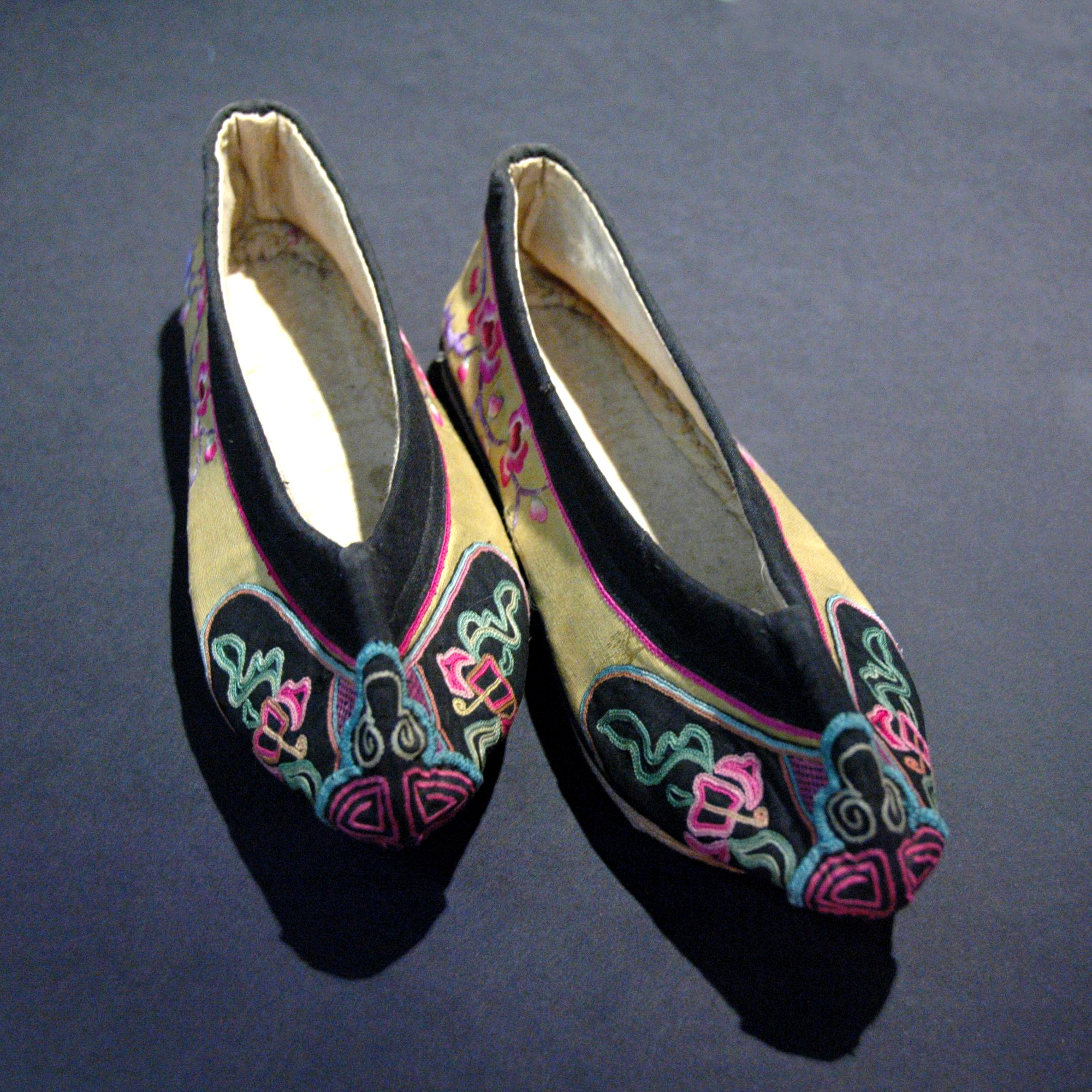
This is a pair of Miao Zu minority tribe embroidery shoes. The Miao has their own individual language but not an individual text; their history is passed down the generations by word of mouth in form of songs or as a design on their costumes (by embroidery, accessories, folding, stitching, etc). For example, Butterfly = ancestors, mother. As fashion is their form of literature, it goes hand in hand that they have superb embroidery skills. The skill would be passed down from mother to daughters. Traditionally, embroiled shoes are worn by single young ladies who would select different shoes for different suitors and occasions.
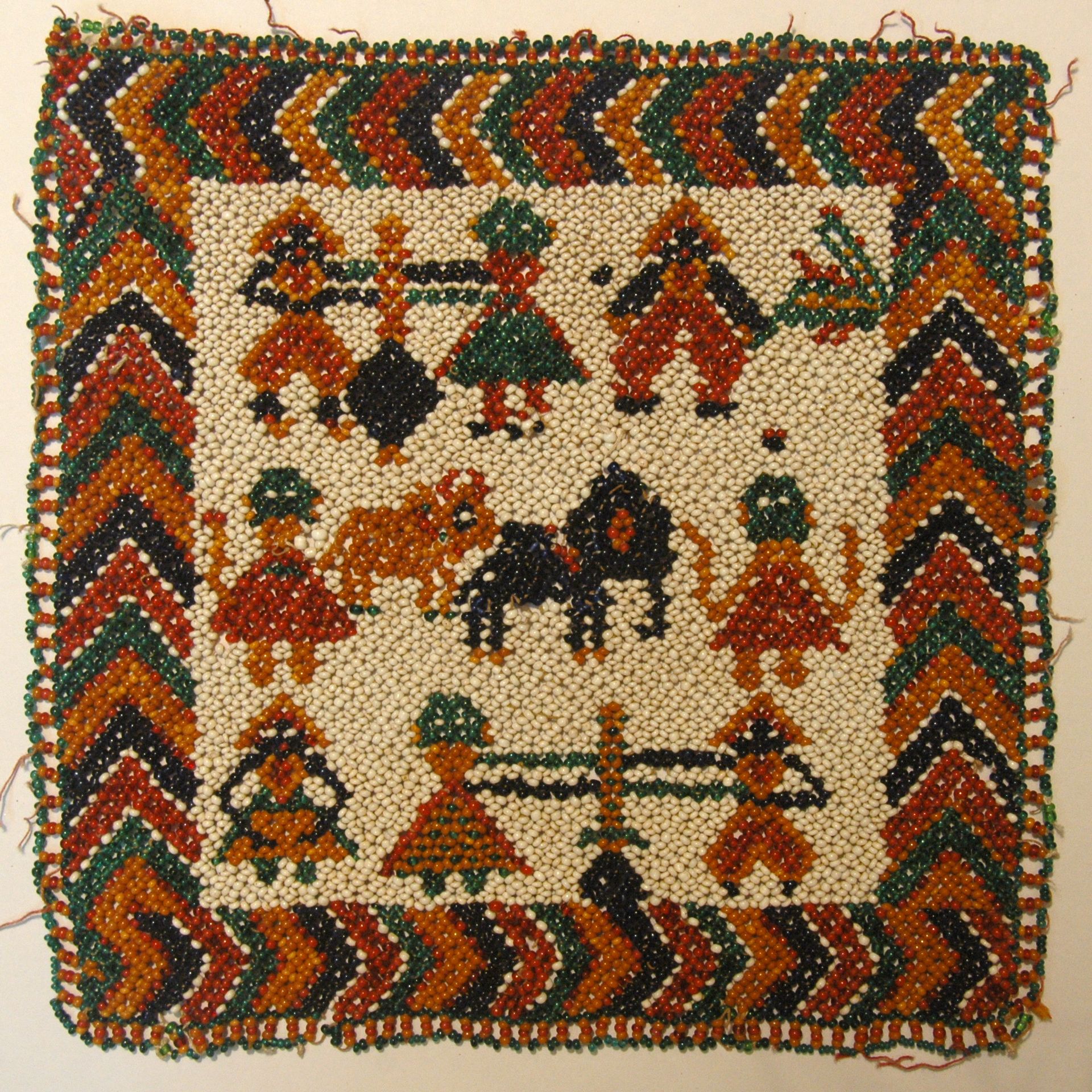
This is an Indian beaded chakla believed to be from the Kathi tribe in India. Beadwork (moti-bharat) was introduced into India through trades with East Africa in the 19th Century when Venetian Murano beads landed in western India. It became a very popular needlework craft among the Kathi women. These beadwork chakla would be traditional used as wall hanging decorations, usually over a door for attraction positive energy.
This is a musical instrument known as the Okokan which is in fact a cow bell. Originally the Balinese use the cow bell to keep track of their cows and buffalos in the field. When the herd of cows move, the bell would sound like music playing. This inspire the farmers to use it was an entertainment during harvest, it is also believe that the evil can be steered away as it does to the flies for the cows. This Okokan is in the shape of a head with the tongue being the clapper.